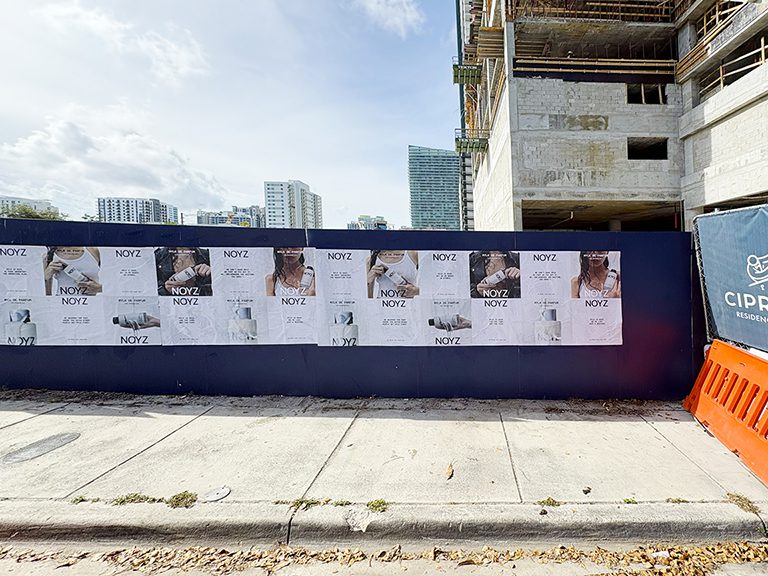
Calgary rewards brands that show up in the right neighborhoods with the right format. Here is how outdoor and guerrilla marketing actually works in this city, from the corridors that matter to the formats that land.
Calgary is a city that rewards bold marketing. It has a growing, affluent, and culturally engaged population. Its downtown core is active and walkable. Its neighborhoods have distinct identities and strong community attachment. For brands looking to build awareness and generate authentic consumer relationships in Calgary through outdoor and street-level marketing, the opportunity is real and frequently underexploited by competitors focused entirely on digital channels.
We execute campaigns in Canadian markets including Calgary. We understand the specific cultural and geographic context of outdoor marketing in this city: which neighborhoods carry cultural weight, which formats translate well to Calgary’s physical environment, and how to reach the specific demographic clusters that determine whether an outdoor campaign reaches the right people or just accumulates exposures. Here is what effective outdoor marketing in Calgary looks like, built from the ground up around how the city actually works.
Calgary’s demographics and geography create favorable conditions for outdoor and street-level marketing campaigns. Several specific factors make the city particularly receptive.
Young, affluent, and active population. Calgary has one of the youngest median ages of any major Canadian city. Its economy has historically supported high household incomes, creating a consumer base with both disposable income and strong spending on lifestyle, food, fitness, and entertainment brands. This demographic is highly responsive to brand presence in the physical spaces where they live and socialize.
Strong outdoor culture. Calgary’s proximity to the Rockies and its four-season outdoor culture mean the population is disproportionately active. Running, cycling, skiing, and outdoor recreation are embedded in the city’s identity. Brands aligned with active outdoor lifestyles find a naturally receptive audience in Calgary’s street-level marketing environment, and they find them in the specific parks, pathways, and commercial corridors where outdoor culture concentrates.
Dense walkable corridors. Despite Calgary’s reputation for car culture, the downtown core, 17th Avenue, and Kensington are highly walkable corridors with strong foot traffic. Street-level marketing in these areas reaches large numbers of the right consumers on a daily basis, and the concentration of those consumers in identifiable zones makes campaign targeting precise rather than diffuse.
Growing arts and culture scene. Calgary’s arts and culture sector has grown significantly, with the East Village revitalization and Inglewood’s emergence as a creative hub creating new high-density cultural spaces that attract engaged young professional audiences. These zones are increasingly attractive for brands that want to associate themselves with creative culture in the city.
Key Calgary Neighborhoods for Outdoor Marketing
Neighborhood
Primary Audience
Best Format
Peak Traffic Times
17th Avenue SW (The Red Mile)
Young professionals, nightlife crowd
Postering, street teams
Thursday to Saturday evenings
Kensington
Young professionals, creatives
Postering, sampling
Weekday lunch, weekends
Inglewood
Artists, creatives, early adopters
Wheat paste, postering
Weekends, evening markets
East Village
Mixed urban professional
Ambient, installations
Weekdays, weekend afternoons
Downtown Core
Office workers, professionals
Street teams, transit-adjacent
Weekday mornings, lunch
Bridgeland
Young families, professionals
Postering, sampling
Weekends, farmers market days
17th Avenue: Calgary’s Primary Street Marketing Corridor
17th Avenue SW between 1st Street and 14th Street is Calgary’s most commercially active pedestrian corridor and the primary target for most brand-focused outdoor campaigns in the city. The street hosts a mix of restaurants, bars, boutique retail, and cultural venues that attracts young professionals, creatives, and weekend foot traffic at volumes that make it the clear first choice for brands entering the Calgary market.
The highest-density zone on 17th Avenue runs from 4th Street to 8th Street SW, where bar and restaurant density is highest and evening foot traffic is most concentrated. This section is the right target for brands aiming at the 25 to 40 professional demographic, particularly for lifestyle, entertainment, and food and beverage categories.
Postering on 17th Avenue works best on the side streets adjacent to the main corridor, particularly along 5th, 6th, and 7th Streets SW where wall space is more available and the audience moves at a slower pace than on the main thoroughfare. Sampling and street team activations work best on the main avenue during peak hours, where the foot traffic volume is highest and direct brand encounters reach the most people per hour.
AGM Field Note: Calgary’s 17th Avenue is the closest equivalent to a neighborhood main street in Calgary’s outdoor marketing environment. It functions similarly to Kensington Market in Toronto or Commercial Drive in Vancouver: high-density, high-identity, and highly receptive to brand presence that feels appropriate to the street culture. Generic advertising that would work on a suburban arterial does not translate well here.
Kensington: The Creative Professional Zone
Kensington Village, centered on Kensington Road NW and 10th Street NW, is Calgary’s most established walkable retail and cultural neighborhood north of the downtown core. It draws a mix of young professionals, students from the adjacent post-secondary institutions, and long-term residents who define the neighborhood’s character as independent, creative, and locally engaged.
The commercial core of Kensington runs along Kensington Road between 10th Street and 14th Street NW. This zone supports postering campaigns, street team sampling, and branded ambient placements in coffee shops, bookstores, and independent retail. The audience here is receptive to brands with authentic stories and visual identities that feel appropriate to an independent neighborhood character. Corporate-feeling creative underperforms in Kensington. Creative that feels genuine and specific to the neighborhood context outperforms.
Kensington also benefits from proximity to Memorial Drive and the Bow River Pathway, one of Calgary’s most heavily used recreational corridors. Brands targeting active outdoor consumers can position sampling and ambassador activations at pathway entry points near Kensington to reach the morning and weekend recreation audience at the moment of highest physical engagement.
Inglewood: Calgary’s Emerging Creative Hub
Inglewood, anchored by 9th Avenue SE between 12th and 20th Streets SE, has undergone significant creative-sector growth over the past decade. The neighborhood now hosts an established cluster of independent galleries, vintage retailers, specialty food businesses, and creative studios that attract an audience with strong similarities to the arts district audiences in major US cities. Inglewood on a Saturday during the summer is one of the most concentrated foot traffic moments in Calgary’s cultural calendar.
For outdoor marketing, Inglewood supports wheat paste and large-format poster campaigns on the industrial and mixed-use buildings along the side streets off 9th Avenue. The neighborhood’s aesthetic tolerance for street art and creative visual expression is higher than most other Calgary areas, which makes it appropriate for more visually bold campaign executions that would be out of place in other parts of the city.
The Inglewood Night Market, which runs during summer months, is a high-density event that creates mob advertising opportunities for brands willing to participate in the neighborhood’s established cultural calendar. A coordinated ambassador presence at the Night Market reaches an engaged, socially active audience in a context where brand participation feels natural rather than imposed.
Outdoor Marketing Formats That Work in Calgary
Postering and Large-Format Print
Postering is the baseline outdoor marketing format in Calgary, as in most North American cities. The key variables are location specificity, production quality, and creative design appropriate for street-scale viewing. In Calgary’s context, postering works best in the three primary pedestrian corridors: 17th Avenue, Kensington, and Inglewood. Generic placements on arterial roads outside these corridors reach cars, not pedestrians, and produce minimal brand recall.
Large-format wheat paste campaigns on building walls in Inglewood and the East Village can produce the kind of visual impact that generates organic social documentation, particularly when the creative design is bold enough to be worth photographing. We scout specific wall opportunities in these neighborhoods before production begins to identify the highest-impact available surfaces.
Street Team Activations
Street teams work best in Calgary at the intersection of high foot traffic and contextual brand relevance. A food or beverage brand sampling at the Farmers Market in Hillhurst on Saturday mornings reaches a highly appropriate audience at the moment when food and beverage purchasing is top of mind. A fitness brand sampling near the Bow River Pathway entry points reaches active Calgarians in the precise context where fitness brand relevance is highest.
The downtown core, specifically the 8th Avenue pedestrian mall and the surrounding blocks, supports street team activations during weekday lunch hours when the office worker population is at its most concentrated. This is the primary zone for brands targeting the professional demographic in Calgary’s downtown.
Seasonal Adaptation
Calgary’s climate requires seasonal campaign planning that most US-focused agencies do not naturally account for. The outdoor marketing calendar in Calgary is concentrated in the period from May through October, when foot traffic in outdoor spaces is highest and the physical conditions for outdoor advertising materials are most favorable. Summer campaigns run the risk of direct sun fading in Calgary’s high-altitude UV environment, which requires specific material choices for placements expected to hold color over multi-week runs.
Winter outdoor marketing in Calgary shifts toward transit-adjacent and interior-accessible placements. The Plus 15 pedestrian walkway system connecting major downtown buildings is a significant indoor foot traffic corridor that supports ambient and transit-style placements during the coldest months. Brands that maintain presence through the winter in Calgary’s downtown professional market build a continuity of brand recognition that brands active only in summer do not achieve.
AGM Field Note: Calgary’s Stampede in July is the single highest-foot-traffic event week in the city’s calendar. Balmoral Park, the Stampede grounds perimeter on 17th Avenue SE, and the party corridors of the Beltline during Stampede week are the highest-density outdoor marketing opportunities in Calgary. Brands that plan around Stampede rather than ignoring it get access to an audience concentration that does not exist at any other point in the year.
Calgary Outdoor Marketing Across the Four Seasons
Calgary’s four-season climate creates a more sharply differentiated outdoor marketing calendar than most US markets. The practical outdoor marketing windows in each season differ significantly, and campaigns that account for this differentiation perform better than those planned as if Calgary’s outdoor environment were constant throughout the year.
Spring (April to May)
Spring in Calgary is highly variable: warm and active weather appears in late April through May, with genuine outdoor culture reactivating as temperatures rise and the city’s pathway network fills with runners, cyclists, and dog walkers. Spring is the ideal window for fitness, nutrition, and outdoor lifestyle brands whose audience is most engaged at the moment of returning to warm-weather activity. Street team activations at pathway entry points and neighborhood farmers markets are particularly effective in this window.
Summer (June to August)
Summer is the peak outdoor marketing season in Calgary. The Stampede in July anchors the summer calendar, but the full summer period supports outdoor campaigns at the highest foot traffic levels of the year. The evenings extend late, which opens evening outdoor advertising windows that do not exist in other seasons. Building projection campaigns are viable during the summer in a way they are not in winter. The Stampede period specifically creates a city-wide heightening of outdoor activity that benefits brands in every consumer category.
Fall (September to October)
Calgary’s fall is brief but active: September through mid-October before the cold settles in fully. The shoulder season is a strong window for brands targeting the professional and young professional demographic, who are back from summer travel and back to their regular neighborhood routines. Postering campaigns installed in September on 17th Avenue and Kensington maintain visibility through October, reaching the highest-frequency neighborhood audiences at a period of high social and professional activity.
Winter (November to March)
Calgary’s winter outdoor marketing shifts toward the city’s indoor pedestrian infrastructure. The Plus 15 walkway system connecting major downtown buildings is one of the most useful winter marketing environments in any Canadian city: a heated, fully pedestrian indoor network that carries the downtown professional population between their offices, hotels, and retail throughout the workday. Ambient and transit-style advertising within the Plus 15 system reaches the downtown professional demographic in the precise context of their daily movement pattern, regardless of the outdoor temperature.
How US Brands Should Think About Calgary
For American brands considering Calgary as a market, the city functions as a strong early-adopter and cultural influencer market within Western Canada. Calgary has a consumer culture with strong affinities to outdoor, lifestyle, food, and tech categories, and a population that is relatively young and relatively affluent by Canadian standards. Brand presence established in Calgary transfers credibility that extends into other Western Canadian markets.
The practical considerations for US brands running outdoor campaigns in Calgary include material sourcing, crew availability, and the specific neighborhood knowledge required to place campaigns effectively. We have executed campaigns in Calgary and can advise on all three. The city functions well for brands in the lifestyle, food and beverage, tech, and entertainment categories. The audience quality in Calgary’s core neighborhoods is comparable to the quality of audience you reach in secondary US cultural markets like Austin or Portland.
Measuring Outdoor Marketing Results in Calgary
Outdoor marketing measurement in Calgary follows the same approach we apply in US markets: brand recall surveys with the target demographic in the post-campaign period, organic social documentation volume during and after the campaign, and client-provided commercial data where available. Calgary’s relatively concentrated cultural neighborhoods make targeted surveying more efficient than in large US metros where the target audience is more geographically dispersed.
We also track competitive advertising environment in the target neighborhoods as part of campaign assessment. Calgary’s outdoor advertising density in cultural neighborhoods is lower than equivalent US markets, which means well-placed campaigns have less competition for visual attention. That lower competitive density is one of Calgary’s structural advantages for brands willing to invest in street-level presence there.
Building a Calgary Outdoor Marketing Campaign: The Planning Process
Planning an outdoor marketing campaign in Calgary follows the same operational framework we apply in US markets, adapted for the specific geography and culture of the city. The process starts with a brief that answers the foundational questions: who is the target audience, where do they move through the city, what do we want them to know or do after encountering the campaign, and what is the timeline and budget?
The target audience question in Calgary typically resolves to one of three broad profiles: the young professional who works downtown and lives or socializes in Kensington, Bridgeland, or 17th Avenue; the creative class resident of Inglewood or the East Village; or the active outdoor consumer who uses the Bow River Pathway, the river parks, and the trails connecting the city’s neighborhoods. Each of these profiles has a distinct geographic concentration and a distinct set of format preferences, and the campaign strategy should be built to match the profile of the target audience rather than covering the city generically.
Location scouting in Calgary follows the same protocol we use in US markets: a physical visit to the target neighborhoods at the times of day and week when the campaign will run, validating foot traffic, surface availability, competitive advertising environment, and the specific block-by-block conditions that determine which placements are worth the investment and which are not. Calgary’s neighborhood-level conditions are specific enough that a scout is valuable even for teams with prior Calgary market knowledge, because availability and competitive environment change over time.
Production for Calgary campaigns requires climate adaptation. Calgary’s winters are cold enough to affect outdoor advertising material performance, and its summers are sunny enough that UV degradation of inks is a real issue for long-run campaigns. We specify materials appropriate for the specific weather conditions during the campaign window: different paper weights, ink formulations, and protective finishes for summer versus shoulder-season versus winter campaigns.
Calgary-Specific Outdoor Advertising Formats
Transit Advertising in Calgary’s C-Train Network
Calgary’s C-Train light rail system serves the city’s primary commercial and residential corridors and carries significant ridership between the downtown core and the western and northern suburbs. Transit advertising within the C-Train network, including station platform advertising, interior car advertising, and the transit shelter advertising at major stops, reaches a professional commuter audience at the moment of peak receptivity: waiting for a train or riding with nothing to do but absorb the environment around them.
The downtown C-Train stations, particularly the 7th Avenue corridor between City Hall and 8th Street, serve as the connective tissue between the professional pedestrian zones of the downtown core. Transit advertising in these stations reaches a professional demographic comparable to transit advertising in downtown Chicago or Toronto, and at a competitive density that is lower than either of those markets.
Event-Tied Outdoor Campaigns
Calgary’s event calendar creates specific outdoor marketing opportunities that are not available in most other Canadian markets. The Calgary Stampede in July is the obvious anchor, but the city also hosts significant sporting events around the Flames and Stampeders seasons, major concerts at the Scotiabank Saddledome and McMahon Stadium, and a growing arts festival calendar centered on the East Village and Olympic Plaza. Outdoor campaigns timed to these events, positioned in the event approach corridors and the adjacent neighborhoods, reach highly concentrated audiences in states of heightened cultural engagement.
The post-event dispersal is a particularly effective window for street team activations. Crowds leaving a major event are in a relaxed, socially primed state, moving at walking pace through specific exit corridors. A well-positioned street team at a major event exit creates brand encounters with a large volume of the right audience in a brief window of high receptivity.
Pathway and Park-Adjacent Campaigns
Calgary’s extensive pathway network connecting the Bow River parks is one of the most heavily used outdoor recreation corridors in any major Canadian city. Brands targeting active outdoor consumers can reach this audience at pathway entry points, at the park spaces adjacent to major pathway nodes, and along the commercial corridors that connect pathway access points to surrounding neighborhoods. This format is particularly relevant for fitness, nutrition, outdoor gear, and wellness brands whose relevance to the active consumer is highest at the moment of physical activity.
Calgary Outdoor Marketing Measurement and ROI
Measuring the return on outdoor marketing investment in Calgary requires the same combination of brand recall surveys and organic social tracking that we use in US markets, calibrated for Calgary’s specific audience concentration and social media culture. The city’s relatively small size compared to major US metros creates some measurement advantages: the target audience is more geographically concentrated, which makes recall surveys more efficient and more statistically meaningful with smaller sample sizes.
Brand recall surveys in Calgary are conducted with target-demographic respondents in the neighborhoods where the campaign ran. The post-campaign period for surveying is one to two weeks after the campaign concludes, which captures the recall signal at the point where it is strongest while still reflecting the durable memory formation that the campaign created rather than just immediate recognition. Awareness lift, the difference between pre-campaign and post-campaign brand recognition in the target market, is the primary performance metric we report on for Calgary outdoor campaigns.
Organic social tracking in Calgary monitors brand and campaign mentions on Instagram, TikTok, and local social networks during and after the campaign period. Calgary’s arts and culture community, particularly in Inglewood and the East Village, has an active social documentation culture comparable to equivalent communities in US markets. Campaigns that run in these zones with strong creative consistently generate organic social content that reaches beyond Calgary’s geographic market to national and international audiences through the network effects of the creative community’s social connections.
The competitive outdoor advertising environment in Calgary is significantly less dense than in comparable US markets like Chicago or Miami. Fewer brands are running high-quality street-level outdoor campaigns in Calgary’s cultural neighborhoods, which means that well-executed campaigns face less visual competition and generate stronger recall simply by virtue of standing out in a less cluttered environment. That lower competitive density is one of Calgary’s structural advantages as an outdoor marketing market, and brands that recognize it early can build a strong position before the market becomes more competitive.
Brands considering their first outdoor marketing campaign in Calgary often ask how it compares to running the equivalent campaign in a comparable US secondary market like Denver or Portland. The honest answer is that Calgary offers a similar quality of culturally engaged urban audience, a lower competitive advertising density in the target neighborhoods, and a slightly more complex production logistics chain because of cross-border material shipping and crew coordination. For brands already running successful US guerrilla campaigns who want to extend their reach into Western Canada, Calgary is a natural starting point. For brands based in Western Canada who are considering their first professional outdoor marketing campaign, it is the right home market to start in before expanding to Toronto or Vancouver.
Frequently Asked Questions
What are the best neighborhoods for outdoor marketing in Calgary?
17th Avenue SW is the primary commercial pedestrian corridor and the best starting point for most outdoor campaigns. Kensington and Inglewood are the primary creative neighborhood zones. The downtown core supports campaigns targeting the professional demographic during weekday hours. Bridgeland and the East Village are emerging areas with growing foot traffic and culturally engaged audiences.
What outdoor marketing formats work best in Calgary?
Postering in the primary pedestrian corridors, street team activations at transit adjacencies and market events, wheat paste campaigns in Inglewood and the East Village, and sampling programs tied to the active outdoor recreation culture along the Bow River Pathway and in major parks all perform well. Format selection should match the specific audience and goal of the campaign.
How does Calgary’s climate affect outdoor marketing campaigns?
The outdoor marketing calendar in Calgary is strongest from May through October. Material choices need to account for Calgary’s high-altitude UV environment, which accelerates color fading in standard outdoor materials. Winter campaigns shift toward transit-adjacent placements and the Plus 15 pedestrian walkway system in the downtown core.
Is Calgary Stampede a good time to run outdoor marketing?
Yes. Stampede week in July is the single highest-foot-traffic week in Calgary’s annual calendar. The areas around the Stampede grounds, Balmoral Park, the Beltline entertainment corridor, and 17th Avenue see audience concentrations that do not occur at any other point in the year. Brands that plan campaigns around Stampede reach an audience density that is otherwise unavailable in Calgary.
Can American brands run outdoor marketing campaigns in Calgary?
Yes. We work with US brands entering the Canadian market and can advise on the specific neighborhood strategy, material requirements, and crew logistics for Calgary campaigns. The city is a strong early-adopter market within Western Canada and a good starting point for brands building Canadian market presence.
How does outdoor marketing in Calgary compare to other Canadian cities?
Calgary’s outdoor marketing environment is less competitive than Toronto or Vancouver, meaning well-placed campaigns face less visual clutter in the target neighborhoods. The audience in Calgary’s core neighborhoods is younger and more affluent than Canadian national averages, making it attractive for lifestyle, food, and tech brands. The city’s strong outdoor culture creates specific format opportunities that differ from eastern Canadian markets.
What is the lead time for planning an outdoor marketing campaign in Calgary?
Four to six weeks from brief to installation is the standard timeline for a Calgary outdoor campaign. Campaigns with custom fabrication or multi-format components take longer. For campaigns timed to events like Stampede, we recommend starting planning discussions eight to ten weeks before the target activation date to ensure material production and crew logistics are ready.
How do I discuss an outdoor marketing campaign in Calgary with AGM?
Call us at (646) 776-2770 or email [email protected]. We will discuss your brand, your target audience, your campaign goals, and your timeline, and advise on what a Calgary outdoor campaign would realistically look like in terms of format, location, and investment.