Mob Marketing: Flash Mobs, Crowd Tactics, and Brand Moments That Move People
Mob marketing uses coordinated groups of people to create brand moments that stop crowds, generate social content, and create memories that advertising alone cannot produce.
Mob marketing uses people as the medium. Instead of placing a static ad in an environment, it stages a coordinated human action that transforms a public space into a brand moment. The best mob marketing activations stop pedestrian traffic, generate immediate social documentation, and create a story that spreads far beyond the people who witnessed it in person.
The format is not new. Coordinated public actions as a form of brand communication have been part of guerrilla marketing since the early days of the discipline. But the social media era has made mob marketing significantly more powerful because the documentation spreads instantly and the reach extends far beyond the direct audience at the activation location.
We have planned and managed mob marketing activations in multiple cities. We have learned what works and what does not. This guide covers the structure of effective mob marketing, the types that work in different contexts, the planning requirements that make or break an activation, and the brands that get the most value from this particular approach.
Mob marketing is a category of guerrilla marketing that uses coordinated groups of people to create brand moments in public spaces. The key elements are coordination, public space, and brand attribution. Without coordination, it is just a gathering. Without a public space, it loses the social documentation dynamic that gives mob marketing its amplification value. Without clear brand attribution, it generates interest in the event without generating brand awareness.
The mechanism is fundamentally different from any static advertising format. A static ad waits for the audience to encounter it. Mob marketing creates an encounter that is impossible to ignore: a group of people doing something unexpected in a space where the audience was not expecting to see anything unusual. The witness’s attention is not requested. It is captured involuntarily by the simple fact that something unusual is happening in their field of vision.
That involuntary capture is the first step. The second step is what happens after the witness’s attention is captured: they recognize the brand, they feel an emotional response to what they are seeing, they reach for their phone, and they create the social content that extends the activation’s reach from the direct audience to their entire network. When that sequence works as designed, mob marketing creates an impression volume and quality that no static format can achieve at a comparable cost.
The Types of Mob Marketing That Work
Coordinated Performance Activations
Coordinated performance activations use a scripted, rehearsed action performed by a group in a public space. The action is unexpected in the context and clearly branded in its visual design, props, costumes, or signage. The performance has a defined beginning, middle, and end that creates a narrative arc the audience can follow and document.
Music and entertainment brands use this format particularly effectively because the audience relationship with performers and music is already highly emotionally engaged. A coordinated musical or dance performance in a transit hub, a plaza, or a commercial pedestrian zone creates an emotional response that is disproportionate to its physical scale and highly compelling as video content.
Coordinated Ambassador Deployments
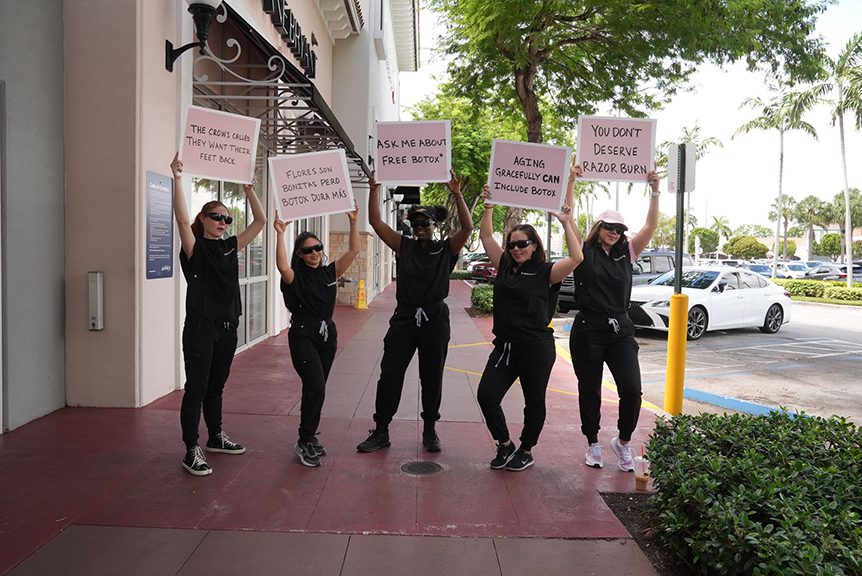
A coordinated ambassador deployment uses a group of trained brand representatives who appear at the same time at a specific location and engage with the audience through a defined interaction protocol. Unlike a solo ambassador program, the simultaneous appearance of multiple brand representatives in a specific space creates a visual effect that reads as an event rather than a standard brand encounter.
For product sampling campaigns, this format dramatically increases the volume and velocity of consumer interactions in a defined time window. For brand awareness campaigns, the simultaneous appearance of many brand representatives in a high-foot-traffic location creates an omnipresence effect that a small ambassador team cannot achieve.
Surprise Brand Moments
Surprise brand moments use a coordinated group to create an unexpected occurrence that is entirely branded but does not announce itself as an advertising activation. The audience encounters something surprising, forms a positive emotional response to the surprise, and then discovers that the brand is responsible. The discovery experience creates a stronger brand association than an upfront brand announcement would.
The challenge with this format is ensuring that the brand attribution is discovered quickly enough to capture the association before the moment passes. If too much time passes between the surprise and the brand discovery, the positive emotion from the surprise dissipates before it can be transferred to the brand. The attribution mechanism must be built into the activation’s design, not added as an afterthought.
Mob Marketing Type
Best For
Team Size
Social Video Potential
Coordinated performance
Entertainment, music, consumer brands
10-100+
Very High
Ambassador deployment
Product launch, sampling, awareness
5-30
Medium-High
Surprise brand moment
Emotional brand building
5-50
High
Interactive crowd event
Engagement, community building
10-50
High
Pop-up crowd experience
Product trial, brand exploration
5-20
Medium-High
Location Strategy for Mob Marketing
Location is the most important variable in mob marketing planning, even more than in static advertising. A mob marketing activation in the wrong location either reaches the wrong audience or creates a smaller spectacle than the concept requires to generate its intended response.
The ideal mob marketing location has four characteristics. It has high pedestrian volume at the planned activation time, so there are enough witnesses to create a genuine crowd response. It is a recognized public gathering space where crowds are not unusual, so the activation does not create anxiety. It has sightlines that allow a wide audience to see the activation from a distance, which multiplies the documentation angles and the number of people captured in each photograph. And it is a location that the target audience actually uses, more than a location that is famous or recognizable.
In New York, the concourse of Grand Central Terminal, the plaza in front of the Oculus at World Trade Center, and the steps of the Metropolitan Museum of Art are among the most effective mob marketing locations because they combine very high foot traffic with the spatial quality that allows coordinated activations to be seen and documented effectively. Union Square and Washington Square Park offer more organic, community-oriented contexts that work better for activations with an indie or community-aligned brand identity.
In Los Angeles, the Venice Beach boardwalk is the strongest mob marketing location for outdoor and lifestyle brands because the high foot traffic, the outdoor setting, and the culture of public performance all align with the format’s requirements. The Grove and Westfield Century City serve more mainstream consumer audiences in an outdoor retail context that works for consumer goods and fashion brands.
In Chicago, Millennium Park’s Crown Fountain area and the Bean plaza are the two highest-foot-traffic public spaces in the city and serve as effective mob marketing locations for activations targeting the city’s broad public audience. The Riverwalk works for more adult-oriented activations where the premium mixed-use setting of the waterfront creates an appropriate context.
The crowd creation principle: Mob marketing creates its own crowd. When a coordinated action starts in a public space, the witnesses attract more witnesses. People slow down, stop, pull out phones, and draw the attention of people who were not initially in the area. This secondary crowd creation effect multiplies the direct audience beyond the people who happened to be in the space when the activation started. Designing the activation to sustain engagement through this secondary crowd creation phase is essential for maximizing its impact.
Planning and Executing a Mob Marketing Activation
Mob marketing activations require more planning than almost any other guerrilla marketing format because the human element introduces complexity and unpredictability that static formats do not have. Every person in the activation team needs to know exactly what they are doing, when, and why. The coordination must be precise enough to create the intended visual effect while leaving enough flexibility for the team to adapt to the conditions they actually encounter on the day.
The planning timeline for a mob marketing activation typically runs six to ten weeks from concept confirmation to execution. The key stages are concept development, location confirmation and scouting, team recruitment, rehearsal, logistics planning, documentation team positioning, and day-of execution management.
Rehearsal is often underestimated. A mob marketing activation that has not been fully rehearsed in a comparable space will almost certainly have coordination failures in the field. Those failures are visible to witnesses and reduce the quality of the documentation that spreads. The activation needs to look effortless to the audience. That requires extensive preparation behind the scenes.
Documentation planning is equally critical. The documentation team must be in position, at the correct angles, before the activation begins. Late-arriving documentation captures the activation at reduced quality or misses the beginning entirely. The first seconds of a mob marketing activation are typically the highest-documentation-value moments, when the audience’s surprise is freshest and the contrast between the expected and the actual is strongest.
Mob Marketing Across Brand Categories
Mob marketing is not equally effective for all brand categories. The format works best for brands with audiences that are physically present in identifiable public spaces and are active on the social platforms where video content spreads. Those conditions are most consistently met by brands in specific categories.
Music and entertainment brands are the natural home of mob marketing because their audience is accustomed to gathering for performance and to associating brand with live experience. A music brand that stages a coordinated performance activation in a transit hub reaches an audience that already knows how to process and share the format of an unexpected public performance.
Consumer goods brands use mob marketing for product launches and seasonal campaigns where the goal is generating awareness and trial in a concentrated burst. A food brand that orchestrates a coordinated sampling experience in a plaza during lunch hour creates a trial opportunity that is orders of magnitude more memorable than a standard sampling booth in a grocery store.
Fashion and streetwear brands use mob marketing to create cultural moments that position the brand at the intersection of design and street culture. A coordinated brand ambassador deployment at a streetwear event, or a crowd-based installation in the Fairfax District in Los Angeles, creates brand visibility in the specific community context that those brands need to establish and maintain.
The brand that disappears in the crowd fails: Mob marketing activations where the brand attribution is not immediately clear produce crowd-witnessed events that generate social documentation without generating brand awareness. This is more than a wasted investment. It is a lost opportunity to convert genuine audience attention into brand recall. Every element of the activation design, from costumes to props to signage to scripted dialogue, must make the brand immediately identifiable. There is no such thing as too clear with brand attribution in mob marketing.
Mob Marketing Logistics: What the Planning Actually Looks Like
Mob marketing activations look spontaneous from the outside. Behind that appearance is an intensive planning process that typically runs four to eight weeks before the day of the activation. The complexity of coordinating human performance in an uncontrolled public environment requires a level of operational detail that most other guerrilla marketing formats do not demand.
The planning process starts with location confirmation. We walk every candidate location and assess it on four criteria: does it have the foot traffic volume to create a genuine crowd response, does it have the sightlines to allow documentation from multiple angles, does it have the acoustic and logistical characteristics the performance requires, and does the demographic of the audience at that location match the campaign’s target. Many candidate locations clear two or three of these criteria and fail on the fourth. We do not compromise on location quality because location is not recoverable once the activation begins.
Team recruitment and rehearsal follows location confirmation. For performance-based mob marketing, we recruit through existing talent networks and run structured auditions for roles that require specific physical or artistic capabilities. Rehearsal runs over two to four weeks, with dry runs in comparable locations before the final deployment. Performers who have not run through the activation in a space similar to the actual location bring variables into the execution that undermine the coordination the format depends on.
Documentation team positioning is planned with the same precision as the performance itself. We identify camera positions that capture the audience response, the full arc of the performance, and close-up detail of brand elements. Camera operators are in position before any other team member arrives so that the documentation starts before the activation begins, capturing the pre-activation environment as a baseline for the contrast the performance creates.
AGM Field Note: The documentation team is not an afterthought. We budget for the same level of pre-activation positioning and professional equipment for documentation as for the performance itself. A mob marketing activation that produces poor documentation has wasted most of its investment. The social and press reach from professional video content published within hours of the activation generates returns that dwarf the direct impression value of the audience present.
Mob Marketing in Practice: Cities and Venue Types
Mob marketing works across all major US cities, but the specific venue and location types that work vary significantly by market. The logistics of executing a coordinated activation in Midtown Manhattan are different from executing one in Chicago’s Millennium Park, which are different again from an activation in the Grove in Los Angeles. Each urban environment has specific crowd management dynamics, sightline constraints, and audience behavior patterns that shape what is possible.
New York City
New York’s transit hubs are the highest-yield mob marketing locations in the country. Grand Central Terminal’s main concourse, with its natural audience of thousands of people moving through at any given moment, creates a built-in witness pool that no outdoor urban location can match. Union Square, Times Square, and Fulton Center are secondary transit nodes with similarly large and diverse audience bases. The challenge in New York is the noise floor: the city’s ambient intensity means the activation needs to be genuinely dramatic to break through.
Chicago
Chicago’s lakefront and Grant Park offer outdoor mob marketing locations with enormous reach. The Millennium Park area, with the Bean as a natural gathering anchor, draws residents and visitors in a curious and visually engaged mindset that makes them highly receptive to unexpected brand moments. Millennium Park audiences are already documenting their experience when they arrive. A well-executed mob marketing activation there produces documentation volumes that compress weeks of traditional social media building into hours.
Los Angeles
Los Angeles mob marketing works best in concentrated pedestrian zones because the car-dependent urban structure of most of the city limits the natural audience density that makes mob marketing effective. The Venice Beach boardwalk, the Third Street Promenade in Santa Monica, the Grove shopping and entertainment complex, and the Melrose Avenue corridor in West Hollywood all deliver the pedestrian density and audience concentration that mob marketing requires. The Arts District in Downtown LA and the Fairfax District are strong choices for activations targeting creative and fashion audiences.
City
Top Mob Marketing Locations
Audience Type
Documentation Potential
New York City
Grand Central, Union Square, Fulton Center
Commuters, tourists, urban consumers
Very High
Chicago
Millennium Park, Riverwalk, Navy Pier
Residents, tourists, families
High
Los Angeles
Venice Boardwalk, The Grove, Third Street Promenade
Creative class, tourists, consumers
Very High
Miami
South Beach promenade, Wynwood, Bayside
Tourists, nightlife audience, fashion
High
Austin
Sixth Street, South Congress, UT campus
Students, music fans, tech workers
High
Frequently Asked Questions About Mob Marketing
Frequently Asked Questions
What is mob marketing?
Mob marketing is a form of guerrilla marketing that uses coordinated groups of people to create unexpected brand moments in public spaces. It includes flash mob activations, coordinated brand ambassador deployments, organized public demonstrations of a product or concept, and any brand campaign that uses crowd-based human action to create a memorable public event.
How does mob marketing work?
Mob marketing works by staging a coordinated human action in a public space that creates a visual spectacle, generates surprise in the people who witness it, and produces content that spreads through organic social media documentation. The brand is clearly identified in the action so that both direct witnesses and people who see the documentation associate the moment with the brand.
What is the difference between mob marketing and a flash mob?
A flash mob is one specific type of mob marketing tactic: a coordinated group that appears, performs a scripted action, and disperses. Mob marketing is a broader category that includes flash mobs, coordinated brand ambassador programs, organized crowd-based product demonstrations, and any campaign that uses coordinated group human action to create a public brand moment.
How many people do you need for mob marketing?
Effective mob marketing activations can be executed with as few as five to ten people in the right location at the right time. A small coordinated group that does something genuinely surprising in a high-foot-traffic location creates a disproportionate public impact relative to its size. Larger groups create larger immediate spectacles but require significantly more coordination and management.
How do you make mob marketing go viral?
Mob marketing goes viral when the action is genuinely surprising, visually legible in a phone video, clearly branded, and happens in a location where the audience is already present and documenting. The brand’s own documentation team must be in position before the activation begins to capture the moment from the best angles and publish professional content the instant the action starts.
How much does mob marketing cost?
Mob marketing campaigns range from $8,000 for a focused single-location activation with a small coordinated team to $80,000 or more for a large multi-location activation with significant logistical complexity. The main cost drivers are team size, rehearsal requirements, location logistics, and documentation team scale.
What brands use mob marketing effectively?
Music labels, entertainment companies, streaming services, fashion brands, food and beverage brands, and consumer technology companies all use mob marketing effectively. The common thread is an audience that is physically mobile and active on social platforms where video content spreads rapidly.
Contact us at (646) 776-2770 or [email protected]. We plan and execute crowd-based brand activations in New York, Los Angeles, Chicago, Miami, and cities across the US. Tell us your brand, your audience, and your goals and we will build the activation concept.