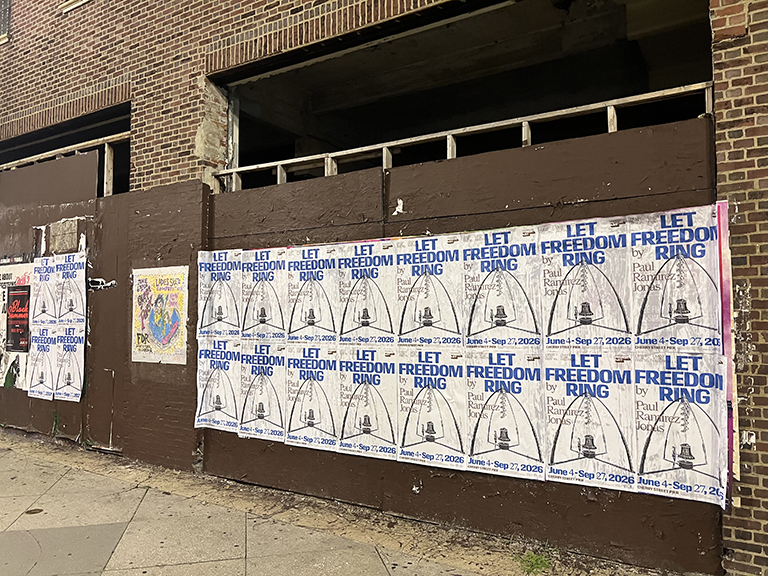
There is no single “normal” size for a poster. The size that is completely normal in a movie theater lobby is different from the size that is completely normal in a concert venue, which is different from what is normal in a street advertising campaign, which is different from what is normal at an academic conference. “Normal” is context-dependent — and understanding what is normal in your specific context is the first step to making the right size decision for your project.
At American Guerrilla Marketing, based in Brooklyn, we run wheatpaste poster campaigns across more than 50 North American markets and have worked with poster formats across every context: street advertising, event promotion, retail display, outdoor installations, and more. This guide explains what “normal” means for each of the major poster applications, organized by context, so you can identify the standard that applies to your specific situation and make confident decisions about size, format, and production.
We will cover the normal poster size for events, for movies, for outdoor street advertising, for retail, for classrooms, for academic conferences, and for residential display. Each context has its own standards driven by the display environment, the typical viewing distance, and the production economics of each application. Understanding these distinct norms is more useful than chasing a single universal answer to what “normal” means.
Normal Poster Size for Event Promotion
Event promotion — concerts, art shows, festivals, club nights, theater performances, community events — is the context most people think of first when they think about promotional posters. Two sizes dominate this category.
18×24: The Normal Event Poster
For most event promotion in indoor venues — concert venues, bars, clubs, music halls, galleries, community centers — 18×24 inches is the normal poster size. This format is large enough to communicate the essential event information (headline act, date, venue, ticket price) clearly from across a typical venue room or from a bulletin board or wall mount in a lobby. It is small enough to produce cost-effectively in the quantities that most event promoters need — typically 100 to 500 posters for a single event.
The 18×24 event poster is the format that promoters carry in a tube to post around the neighborhood, that venue staff put up in the ticketing area, and that record shops and coffee shops accept for community bulletin boards. It is the size that fits naturally in the informal promotional distribution ecosystem that keeps independent event promotion working.
24×36: The Normal Premium Event Poster
For larger events — major concerts, music festivals, theater seasons, high-profile cultural events — 24×36 is the normal poster size. This larger format is used when the event or brand has the budget to produce higher-impact promotional materials, when outdoor street campaign posting is part of the strategy, and when the brand equity of the event warrants premium production. Movie studios use 24×36 for retail distribution of movie promotion materials. Major music festivals use 24×36 for outdoor street campaigns in the run-up to the event. Premium theater productions use 24×36 for window display and outdoor placement near the venue.
When our team executes outdoor wheatpaste campaigns for event promotion, 24×36 is the standard format we use regardless of the event type. The outdoor context requires the larger format for adequate visibility at sidewalk distance.
Normal Poster Size for Movies
Movie posters have their own firmly standardized normal size: 27×40 inches for the US one-sheet. This standard has been in place for most of the 20th century and remains unchanged despite the shift to digital distribution and the evolution of movie marketing.
The 27×40 One-Sheet
The 27×40 one-sheet is the format that hangs in every movie theater lobby in North America. At 27 inches wide and 40 inches tall, it is slightly larger than a standard 24×36 promotional poster — approximately 25% more surface area. The 27×40 format is designed specifically to fill the standard display case found in US movie theater lobbies. The proportions are slightly different from the standard 24×36 (the movie poster is proportionally a bit wider relative to its height), which gives it a distinctive visual character that consumers associate with cinematic promotion.
For brands and designers using movie poster dimensions outside of theatrical film promotion, the 27×40 format is an available choice but requires confirming that your print shop handles this slightly non-standard size routinely. Not all print shops stock the specific paper or have equipment set up for 27×40 as a standard run; some treat it as a custom size and price it accordingly.
Other Movie Poster Formats
Beyond the one-sheet, theatrical movie promotion uses several additional formats. The 40×60 inch bus shelter format is used for transit advertising alongside theatrical campaigns. The 14×22 half-sheet was historically used for window display and lobby supplementary promotion. The 30×40 inch “door panel” appears in some theater door placements. For general movie promotion outside of theater-specific display (retail environments, record shops, video stores historically), 24×36 is the normal size that does not require the movie-specific display infrastructure.
Normal Poster Size for Outdoor Street Advertising
Outdoor street advertising — the wheatpaste campaigns, street poster programs, and guerrilla advertising that our team executes across US cities — has its own normal size standard driven by the realities of outdoor visibility.
The normal size for an outdoor street poster is 24×36 inches. This is the minimum standard for meaningful visibility at typical sidewalk viewing distances (15 to 25 feet). A 24×36 poster on a street wall is clearly visible and readable from across the street in good light conditions. At this viewing distance, headline text at 150 to 200 point type is readable, and a clear image registers as a coherent visual element.
Below 24×36 in outdoor contexts, effectiveness falls off quickly. An 18×24 poster is noticeable at typical sidewalk distance but requires the viewer to be within 8 to 12 feet for the poster’s content to be fully legible. In high foot traffic environments where most pedestrians pass within a few feet of the posting surface — narrow streets, subway corridors, dense shopping districts — 18×24 is adequate. In more open outdoor environments with greater viewing distances, it is not.
For premium outdoor locations — a prominent corner wall, a high-traffic transit entrance, a visible hoarding on a busy commercial street — our team often tiles multiple 24×36 posters to create a larger composite installation. A 2×3 arrangement of six 24×36 posters creates a 48×108 inch (4 foot by 9 foot) installation at standard poster production costs. This approach delivers large-format visual impact without the premium production cost of printing single large-format sheets at those dimensions.
Normal Poster Size for Retail Display
Retail display environments use posters across a wide range of sizes, but several formats have established themselves as normal for specific retail contexts.
Point of Sale and Window Display
For point-of-sale display on counters and near checkout areas, 8.5×11 and 11×14 are normal small-format promotional materials. For in-store wall display, 18×24 is normal for most retail categories. For window display that faces the street, 24×36 is normal for brands that want the poster to function as a street-facing advertisement as well as interior decor.
Large-Format Retail Display
Flagship stores and large-format retail environments often use 36×48 and larger for visual merchandising posters that anchor display areas or function as large-scale brand statements on interior walls. Fashion retailers use very large format prints (48×72 and above) for look-book-style wall installations. These formats are designed to be seen as environmental elements rather than traditional promotional posters and are typically produced on foam board or mounted canvas rather than standard poster stock.
Normal Poster Size for Academic Conferences
Academic conference posters exist at the intersection of research communication and visual design, and they have established clear standards driven by conference organizers’ display infrastructure.
The most common normal conference poster size is 36×48 inches (portrait orientation). This is the format specified by most major scientific and academic conferences in the US because it fits standard conference display boards and provides sufficient surface area to present research data, methodology, results, and conclusions in a readable format from a standing viewing distance of 3 to 5 feet.
Some conferences specify 48×36 (landscape), which provides the same surface area in horizontal orientation. Landscape formats benefit research presentations with multiple side-by-side panels, timelines, or comparative data visualizations. Check your conference’s specific size requirements before producing any conference poster — the specifications vary enough between organizers that assuming a standard without confirming can result in a poster that does not fit the designated display space.
A smaller minority of conferences accept 24×36 as an alternative for smaller presentations or when display space is limited. 24×36 is genuinely too small for complex research presentations that need to communicate multiple data sets and methodology in readable detail, but it can work for focused presentations with limited content. When in doubt, use 36×48.
Normal Poster Size for Home and Residential Display
Home and residential poster display has its own normal size standards driven by the frame sizes available in standard retail markets and the proportions of typical residential spaces.
The most common normal poster size for home display is 24×36 inches. This format has the widest availability of compatible frames in standard retail (IKEA, Target, Walmart) and fits comfortably on most standard wall sections without overwhelming the space. In a typical 8-foot ceiling height room, a 24×36 poster (3 feet tall) occupies a substantial but not dominant proportion of the vertical wall space.
The 18×24 format is the normal size for smaller rooms, gallery walls where multiple pieces will be displayed together, and any application where 24×36 would overwhelm the available space. Small bedroom walls, apartment hallway displays, and children’s room decoration often use 18×24 as the standard format.
Larger formats — 27×40, 36×48 — are normal for dedicated display spaces in larger homes, for media rooms or studios where wall-scale art is appropriate, and for any application where the poster is intended as a significant visual element rather than casual decoration. These formats require custom framing or floating mount display solutions because standard retail frames rarely go above 24×36.
How Normal Poster Sizes Became Standard
The standard poster sizes in use today are not arbitrary. They evolved from specific historical, technological, and economic constraints that shaped the print industry over the past century and a half.
The 18×24 and 24×36 formats align with the efficient use of standard large-format paper roll widths. Paper is manufactured and sold in rolls with specific widths that have been standardized to minimize waste in the most common print production applications. The 24-inch width is a foundational dimension in large-format print rolls, which is why both 18×24 (portrait) and 24×36 (portrait) use 24 as one of their dimensions — the sheet comes off a 24-inch wide roll with minimal waste.
The 27×40 movie poster standard evolved from theater lobby hardware rather than paper production economics. The size was set to match the display cases installed in movie theaters in the early 20th century, and once set, the entire supply chain — printers, distribution systems, display manufacturers, and theaters — adapted around it, making the standard self-perpetuating even as the original physical constraints became irrelevant.
The 36×48 conference poster standard evolved from the typical dimensions of trade show and conference display boards, which were designed based on what a standing adult can see and read comfortably in a conference poster session environment. The 4-foot height means that the top of the poster is at roughly eye level for most adults, and the 3-foot width is narrow enough that viewers can scan from left to right without needing to move laterally.
Frequently Asked Questions
What is the normal size of a poster?
The normal size of a poster is 24×36 inches for general purposes. This is the most widely used poster format across movie promotion, event advertising, outdoor campaigns, and retail display. For indoor event promotion specifically, 18×24 is also considered normal. The right normal size depends on the context — indoor venues, outdoor streets, movie theaters, and conference halls each have their own standard.
What is a normal poster size for a concert or music event?
The normal concert poster size is 18×24 inches for venue interior display and 24×36 for outdoor street posting. Premium concert promotions and major festival campaigns typically use 24×36 across all applications. Small independent venue events often use 11×17 as the minimum promotional format when budget requires it.
What is a normal poster size for a movie?
The normal movie poster size is 27×40 inches (one-sheet), the standard format used in US movie theater lobbies and display cases. For general movie promotion materials outside of theater display cases, 24×36 is commonly used. The international equivalent of the US one-sheet is 27×41 inches.
What size is a normal outdoor advertising poster?
A normal outdoor wheatpaste or street-level advertising poster is 24×36 inches. This is the standard AGM uses for street campaigns across the US because it is readable from a typical sidewalk distance of 15 to 25 feet. For larger outdoor installations, 36×48 or tiled multiples of 24×36 are used at prominent locations.
What is a normal poster size for school or classroom display?
Normal poster sizes for classroom and school display are 18×24 and 24×36 inches. Educational posters displaying charts, maps, vocabulary, or instructional content are typically 24×36 because this size is readable from the back of a standard classroom (25 to 30 feet). Motivational and decorative posters are more commonly 18×24.
Is a normal poster always vertical (portrait orientation)?
No. While portrait orientation is the default for most poster applications, landscape orientation is normal for specific contexts including conference posters, transit advertising panels, retail window displays, and any display environment where the available space is wider than tall. The landscape equivalents of the standard sizes are 24×18 (landscape version of 18×24) and 36×24 (landscape version of 24×36).
How does the normal poster size vary between the US and Europe?
For more on this, explore our experiential marketing.
In the US, poster sizes are measured in inches following inch-based standards (18×24, 24×36, etc.). In Europe, poster sizes typically follow the ISO A-series (A0, A1, A2, A3) in metric dimensions. The closest European equivalent to a 24×36 poster is A1 (594x841mm, approximately 23.4 x 33.1 inches), and the closest to 18×24 is A2 (420x594mm, approximately 16.5 x 23.4 inches).