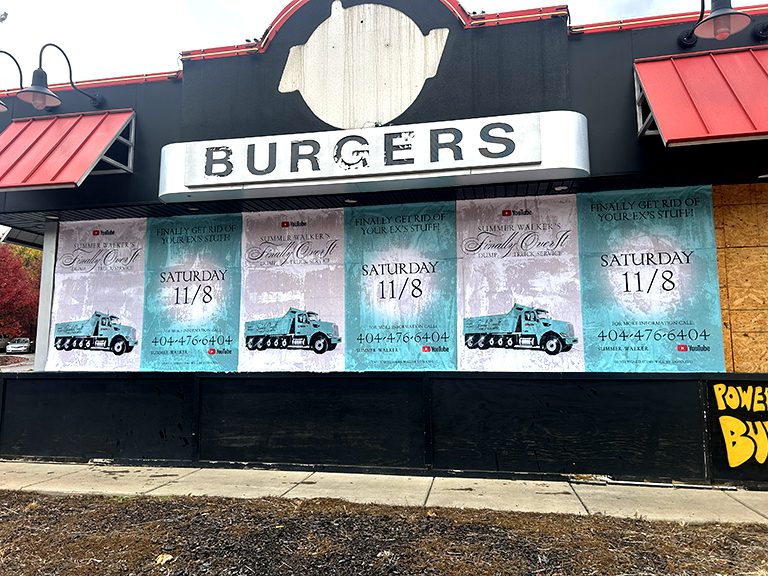
Poster Size Guide: Standard Dimensions for Print Campaigns
The first question on any print campaign brief is the same every time: what size are the posters? That single decision shapes your print budget, your file setup, your vendor relationship, and ultimately how loud your creative speaks in the real world. We have printed and placed millions of posters across cities in every format imaginable, and we know that choosing the wrong size costs money twice, once at the printer and once in the field when the artwork either disappears into a wall or overwhelms a space it was never meant to hold.
This guide covers every standard poster size from the smallest handbill to the largest paste-up sheets. We include the dimensions in both inches and centimeters, the aspect ratios that govern your design files, and the specific campaign scenarios where each format earns its keep. This is the reference we wish had existed when we started, and it is the one we share with every client who asks us where to begin.
Why Poster Size Is the First Decision in Any Print Campaign
Before you finalize a concept, before you choose paper stock, before you even lock a color palette, the poster size needs to be set. Here is why: every other decision flows downstream from the dimensions.
The aspect ratio of your poster determines how your designer lays out the artwork. An 18×24 poster (3:4 ratio) requires completely different compositional thinking than a 27×40 one-sheet (roughly 2:3). The resolution requirements change with the print size. A poster that will be read from two feet away needs 300 DPI; one being pasted at ten feet of viewing distance can hold at 150 DPI without losing visual quality. The print method changes too, small-format runs fit on offset presses that cut costs per unit, while large-format pieces move to wide-format inkjet or screen printing.
Beyond production, the size determines placement. A 24×36 poster fits neatly into a standard retail window mount or a construction site hoarding slot. A 40×60 is the standard for bus shelter backlit panels. Getting the size wrong means your beautiful creative never finds a home or, worse, gets trimmed and distorted in the field to make it fit.
We set the size first. Then we build everything else around it.
Standard Poster Sizes: The Complete Reference Table
Below is a consolidated reference covering every poster size we work with regularly. Measurements are given in inches first, centimeters second. Aspect ratios are simplified to their nearest common fraction.
Street handouts, bar/venue promotion, bar-top stacks
12 x 18
30.5 x 45.7 cm
2:3
Small Street Poster
Light pole wraps, community boards
16 x 20
40.6 x 50.8 cm
4:5
Medium Poster
Gallery shows, retail, event lobby signage
18 x 24
45.7 x 61.0 cm
3:4
Standard Street Poster
Street campaigns, paste-up, venue posting
20 x 30
50.8 x 76.2 cm
2:3
Small One-Sheet
Movie promotions, retail display, event signage
24 x 36
61.0 x 91.4 cm
2:3
Large Street Poster
High-visibility street, construction walls, windows
27 x 40
68.6 x 101.6 cm
~2:3
One-Sheet / Movie Poster
Lobby displays, movie house, event marquees
36 x 48
91.4 x 121.9 cm
3:4
Large Format
2-up paste campaigns, retail window full-fills
40 x 60
101.6 x 152.4 cm
2:3
Bus Shelter / Jumbo
Transit shelter panels, large venue entry displays
48 x 72
121.9 x 182.9 cm
2:3
4-Up / Jumbo Format
Multi-sheet paste-up, construction site coverage
Small-Format Poster Sizes: Under 18 Inches Wide
Small-format posters serve a different purpose than their larger cousins. They are not meant to stop traffic from across the street; they are meant to work at arm’s length and hand-to-hand. We use small formats as part of layered campaigns where the street presence is handled by larger sheets and the takehome piece is handled by something that fits in a jacket pocket or a bag.
4 x 6 Inches (10.2 x 15.2 cm)
This is technically a postcard rather than a poster, but it shows up on enough print briefs that it deserves mention. At 4×6, you are working with a 2:3 aspect ratio, the same ratio used by 35mm photography. We use this format for event reminders, QR-code handouts at activations, and stack displays at coffee shops and record stores. Print it on a 16-point card stock with a UV coating and it holds up well to handling. Resolution should be 300 DPI at final size.
8.5 x 11 Inches (21.6 x 27.9 cm)
The US letter format is the most printed size in the country for obvious reasons, every office laser printer handles it. For campaign purposes, it is an interior-only format. We use it for community board placements inside laundromats, bookshops, and cafes when we are running hyper-local campaigns. The limitation is that it disappears on a busy wall. Always laminate or use a heavyweight paper stock (80 lb text minimum) to prevent curl.
11 x 14 Inches (27.9 x 35.6 cm)
Eleven by fourteen (27.9 x 35.6 cm) is a format borrowed from photography. It fits standard frame sizes and works well in retail environments where a framed or mounted look matters. We use it for album release posters in music shops, for branded signage at product launch events, and as the tabletop format when we are running pop-up activations where a 4:5 composition reads well at close viewing distance.
11 x 17 Inches (27.9 x 43.2 cm)
The tabloid half-sheet is one of the most economical poster formats in street marketing. At 11×17 (27.9 x 43.2 cm), you can print hundreds of copies affordably on a digital offset press and still deliver a sharp, full-color result. The aspect ratio runs close to 2:3, which means designs sized for 24×36 can be scaled down without significant composition changes. We use 11×17 for bar and venue campaigns, for street team distribution, and as a supporting format alongside a hero 24×36 in multi-touchpoint campaigns. Minimum weight for outdoor use: 80 lb text with aqueous coating.
Mid-Format Poster Sizes: The Street Campaign Workhorses
Mid-format posters, those between 18 and 30 inches in their shorter dimension, are the formats we reach for most often in street marketing. They are large enough to read from across a sidewalk, small enough to paste efficiently in quantity, and they hit the sweet spot of cost-per-unit that makes city-wide saturation achievable.
18 x 24 Inches (45.7 x 61.0 cm)
This is the standard street poster. When a client says they want to “plaster the city,” this is the format that delivers that result. At 18×24 (45.7 x 61.0 cm), the 3:4 aspect ratio gives designers enough vertical room to work with a strong headline, supporting visual, and campaign details without feeling cramped. Print resolution at this size should be 150 to 200 DPI at final dimensions, which allows you to work at 300 DPI at 50% scale in your design file, a standard workflow for large-format work.
For paste-up campaigns, 18×24 is ideal because a single person can manage the sheets solo. The paste goes on fast, the paper aligns easily on flat surfaces, and you can move through dozens of locations per hour. We print 18×24 on 80 lb uncoated text for paste-up work so the wheat paste absorbs into the paper and creates a strong bond. For interior or mounted applications, 100 lb gloss cover gives a cleaner, more retail-ready result.
20 x 30 Inches (50.8 x 76.2 cm)
The 20×30 (50.8 x 76.2 cm) is a transitional size that not every printer stocks as a standard run size, but it is worth knowing. It shares the 2:3 aspect ratio with the 24×36, so designs transfer between the two cleanly. We use this format in retail display contexts where a full 24×36 would be too large for the allotted space. It is also a popular size for art print campaigns where a gallery-quality feel matters.
24 x 36 Inches (61.0 x 91.4 cm)
If 18×24 is the standard, 24×36 (61.0 x 91.4 cm) is the upgrade. Three feet tall, two feet wide, this format commands space. We use 24×36 for anchor placements: the high-traffic corner, the construction wall facing a crosswalk, the window of a venue that faces the street. It is also the format used by most concert tour promoters and was the default size for music venue promotion for decades before digital screens arrived.
At 24×36, a viewer standing ten feet away can read a headline set at 80 points clearly. That visibility range makes this format suitable for locations with brief dwell time, transit stops, busy intersections, sidewalks in entertainment districts. Print this at 150 DPI minimum on uncoated paper for paste-up or on gloss/matte cover stock for mounted display. The 2:3 aspect ratio is shared with 11×17, which makes it easy to produce both sizes from a single design in one press run.
Large-Format Poster Sizes: Presence at a Distance
Once you move past 30 inches wide, you are in large-format territory. These are not handbill campaigns, they are brand statements. Large format is where a campaign stops being something you see and becomes something you experience. We use these sizes for transit placements, multi-sheet paste-ups, event backdrops, and any application where the viewing distance is greater than fifteen feet.
27 x 40 Inches (68.6 x 101.6 cm)
The 27×40 (68.6 x 101.6 cm) is known in the industry as the one-sheet. It is the standard US movie poster format, and it has been the lobby display standard for more than a century. Outside of movie marketing, we use it for high-end event campaigns, for lobby displays at premier venues, and for any client who wants the cultural weight that comes with a format that audiences recognize as signifying something worth paying attention to.
The 27×40 is slightly narrower proportionally than the 2:3 ratio, it runs approximately 2.06:3, which is close enough that 24×36 designs transfer with minor adjustments. Resolution at this size should be 100 to 150 DPI at final print dimensions. This is a heavy sheet at full-size, use a 100 lb text or heavier for mounted applications, or 80 lb for paste-up.
36 x 48 Inches (91.4 x 121.9 cm)
At 36×48 (91.4 x 121.9 cm), you are working at four feet by three feet, two 18×24 sheets tiled side by side, or two 18×24 sheets stacked. We use this format for two-up paste campaigns where we want the impact of a larger format without the complexity of a single large-format print run. When printed as a single sheet, 36×48 requires wide-format inkjet or screen printing. Aspect ratio is 3:4, so it shares proportional logic with the 18×24 and 16×20.
40 x 60 Inches (101.6 x 152.4 cm)
Forty by sixty (101.6 x 152.4 cm) is the standard interior bus shelter poster size in most US markets. At five feet tall and over three feet wide, this format was designed to be read by commuters standing two to four feet from the panel. It is also used for large window graphics, trade show displays, and event entrance signage.
For transit placements, the 40×60 is printed on a specific substrate, either vinyl-backed paper or direct-print vinyl, that fits into the backlit panel frames in shelter structures. Resolution at this size is typically 100 to 125 DPI at final size. The 2:3 aspect ratio keeps it proportionally consistent with many of the smaller standard formats, so a well-designed 24×36 composition can scale up to 40×60 with minimal reworking.
48 x 72 Inches (121.9 x 182.9 cm)
The 48×72 (121.9 x 182.9 cm) is a four-up paste format: four 24×36 sheets tiled in a 2×2 grid, or a single large-format print that fills that footprint. We use this size for construction wall campaigns where we want continuous coverage across a long flat surface and for event backdrops. At six feet tall and four feet wide, this is a format that stops traffic. Design considerations at this scale: keep your headline type large enough to read from twenty feet (think 200-point type at minimum), avoid fine details in the center of the composition where seams may fall, and plan bleed generously.
Poster Resolution Requirements by Size
One of the most common mistakes we see from first-time clients is sending a low-resolution file for a large-format poster. The relationship between poster size and resolution is direct: the larger the print, the lower the DPI you can work at, but only if the viewing distance increases proportionally.
Poster Size
Minimum DPI at Final Size
Typical Viewing Distance
File Size at 300 DPI (approx.)
11 x 17
300 DPI
1 to 3 feet
~50 MB
18 x 24
150 to 200 DPI
3 to 6 feet
~80 MB at 200 DPI
24 x 36
150 DPI
5 to 12 feet
~70 MB at 150 DPI
27 x 40
100 to 150 DPI
5 to 15 feet
~55 MB at 125 DPI
40 x 60
100 DPI
2 to 8 feet (transit)
~56 MB at 100 DPI
48 x 72
72 to 100 DPI
10 to 25 feet
~50 MB at 72 DPI
Our standard workflow: design at 50% of final size at 300 DPI in Adobe Illustrator or Photoshop. This gives a manageable file that delivers print-quality output when output at 150 DPI at full dimensions. Always convert to CMYK before sending to press, and embed all fonts or convert to outlines.
Choosing Poster Size by Campaign Type
The right poster size depends on where the poster will live, how it will be installed, and how close audiences will be when they encounter it. Here is how we match format to campaign type.
Street Paste-Up Campaigns
The 18×24 is the primary format for street paste-up campaigns. It is large enough to be seen from across the street, small enough to install quickly, and fits most flat surfaces that paste-up crews typically work with: construction walls, scaffolding, plywood surfaces around building sites, and wooden fences. For high-visibility anchor spots with more wall real estate, we step up to 24×36. For building-scale coverage, think multi-story coverage or large blank walls, we tile multiple 24×36 sheets into a 4-up or 6-up grid.
Transit requires specific size compliance because the panels that posters go into have fixed dimensions. Bus shelter interior panels typically accept a 40×60 (101.6 x 152.4 cm) sheet. Subway platform posters run at 28.5×45 for the standard two-sheet and 28.5×22.5 for the one-sheet. Bus side kings measure approximately 30×144 inches, a wide, horizontal format that demands a completely different layout approach than vertical street posters. Always confirm panel dimensions with the transit authority or your media buyer before designing.
Event and Venue Marketing
Events use a layered poster strategy. The outdoor teaser campaign runs on 18×24 or 24×36 sheets in the weeks before the event. Venue-facing window posters run at 24×36 or 27×40. On-site directional signage uses 18×24. Day-of event programs use 11×17 folded in half. The 27×40 lobby format gets reserved for the headline act display or brand anchor in the main entrance. Each size serves a different role in the campaign arc, and planning all of them together is where the real use is.
Retail and Point-of-Sale Campaigns
Retail poster sizes are governed by the fixture. A standard retail window might accommodate a 24×36 vertically mounted or a 36×24 in environment orientation. Counter displays use 11×14 or smaller. Floor-standing frames typically hold 24×36 or 27×40. When we run retail campaigns, we design the creative at multiple sizes at the same time, 24×36 for windows, 18×24 for interior walls, 11×17 for counter stacks, and unify them with a consistent typographic and color system so the campaign reads as one piece across all the formats.
Aspect Ratios and What They Mean for Your Design
Aspect ratio is the proportional relationship between a poster’s width and height. It is independent of physical size, a 2:3 ratio applies to an 18×24 poster and to a 40×60 poster equally. Understanding aspect ratios lets you design at one size and scale to others without distorting your layout.
The most common aspect ratios in poster printing are:
2:3, Covers 12×18, 18×27 (approx), 20×30, 24×36, 40×60, 48×72. This is the most common ratio in street and concert poster formats.
3:4, Covers 18×24, 36×48. Very common in street campaigns and retail.
4:5, Covers 16×20. Common in photography and gallery print formats.
~2:3, 27×40 runs at 2.06:3, close enough to share design logic with the standard 2:3 family.
~3:4, 8.5×11 and 11×14 approximate the 3:4 ratio and share some design logic with 18×24.
When we onboard a new campaign, we establish the primary size first, then identify which other sizes in the campaign share its aspect ratio so the designer can work efficiently in one master file with resizing rather than rebuilding each layout from scratch.
Paper Stock and Substrate Choices by Poster Size
Size alone does not determine how a poster performs in the field. The substrate, the material it is printed on, determines durability, how it adheres to surfaces, how it holds up to weather, and how it reads visually at distance.
For small format (under 18×24), we typically use 80 lb to 100 lb gloss or matte cover stock. These weights hold their shape, resist curling, and take ink well for sharp text and photo reproduction. For paste-up campaigns at 18×24 and 24×36, we use 80 lb uncoated text. Uncoated paper absorbs wheat paste more readily than coated stock, which creates a stronger bond and reduces bubbling. For transit panels, the substrate is often a backlit-compatible paper or self-adhesive vinyl depending on whether the panel is illuminated. For outdoor pole and fence placements that need to survive rain, we step up to polypropylene or water-resistant coated paper with UV ink.
Poster Size Mistakes We See on Every First Campaign
We have onboarded enough new clients to have a clear view of the recurring errors. Here are the ones that cost the most time and money.
Sending the wrong size file. A client designs at 11×17 and sends it for 24×36 output. The proportions differ between 2:3 and ~3.4 ratios depending on exact dimensions, so the image either gets letterboxed with white bars or cropped in ways the designer did not intend. Always confirm the exact output dimensions before any design work begins.
Under-resolving the file. Sending a 72 DPI web-export file for print. At 18×24 printed at 200 DPI, you need approximately 3,600 x 4,800 pixels of actual image data. A 72 DPI web image that is 1,800 x 2,400 pixels will look fine on screen and severely pixelated in print. Ask your printer for their minimum native resolution requirement and build your file to match.
Not accounting for bleed. Most printers want 0.125 inches (3.2 mm) of bleed on each edge for smaller formats, and some wide-format printers want 0.25 inches (6.4 mm). Failing to include bleed results in a white border or, worse, an unprinted edge that looks unprofessional in the field.
Designing for the wrong viewing distance. Fine details and small type that look great on screen disappear at ten feet. For street posters, your primary message needs to land in less than three seconds at the distance a person first encounters the placement. Keep the hierarchy brutally simple and the primary type size generous.
Most campaigns we run involve at least three or four poster sizes working together. Here is how we structure the production process to keep it efficient and cost-effective.
We start with the hero size, almost always the 18×24 or 24×36 depending on campaign scale. The designer builds the master layout at that dimension. We then identify the other sizes needed and sort them by aspect ratio. Sizes that share the same ratio get resized from the master. Sizes with a different ratio get a new crop or a light redesign, typically requiring only an hour or two of additional design time rather than a full rebuild.
We print all the sizes in the same press run when possible. An 18×24 job and an 11×17 job that use the same ink profile and paper stock can often be combined into a single press run with a gang-up imposition, which reduces setup costs significantly. For wide-format sizes, 36×48 and above, those move to a separate wide-format printer, but we coordinate the runs to hit the same delivery date so the full campaign ships at once.
International Poster Sizes: ISO A-Series
Most of the United States uses the inch-based standard sizes listed above. The rest of the world largely uses the ISO 216 A-series, which is based on a root-2 aspect ratio (approximately 1:1.414). Here is how the international sizes map to US equivalents for teams working across markets.
ISO Size
Dimensions (mm)
Dimensions (inches, approx.)
Closest US Equivalent
A4
210 x 297 mm
8.27 x 11.69 in
Letter (8.5 x 11)
A3
297 x 420 mm
11.69 x 16.54 in
Tabloid (11 x 17, approx.)
A2
420 x 594 mm
16.54 x 23.39 in
Close to 18 x 24
A1
594 x 841 mm
23.39 x 33.11 in
Between 24×36 and 24×32
A0
841 x 1189 mm
33.11 x 46.81 in
Close to 33 x 47
When we run international campaigns, particularly in European markets, we brief the design team on the ISO sizes from the start. Converting a US-standard 24×36 file to A1 (23.39 x 33.11 in) requires a slight crop or scale adjustment. The proportions are similar enough (2:3 vs. 1:1.41) that a skilled designer can make the transition cleanly, but it is not automatic.
File Setup Checklist Before Sending to the Printer
After years of back-and-forth with print vendors, we built a pre-submission checklist that we walk through on every campaign. Here it is, adapted for poster files specifically.
Confirm final poster size in inches and verify it matches the vendor’s run spec.
Set document color mode to CMYK. Do not submit RGB files for offset or screen printing.
Resolve minimum DPI at final print size (150 DPI minimum for most street poster sizes, 300 DPI for small formats under 12 inches).
Include 0.125-inch bleed on all four edges (or as specified by the vendor).
Convert all fonts to outlines or embed all fonts in the PDF export.
Flatten transparency layers before export.
Export as PDF/X-1a or PDF/X-4 depending on vendor specification.
Include a printed proof (even a desktop inkjet output) with the submission for color reference.
Specify paper stock, finish (coated/uncoated), and quantity on the purchase order.
Frequently Asked Questions
What is the most common poster size for street campaigns?
The 18×24 inch (45.7 x 61.0 cm) format is the most widely used size in street poster campaigns across North America. It is large enough to command attention from across a sidewalk and small enough to install efficiently in quantity. Most paste-up crews are optimized for this size, and most paste-up-ready print vendors stock it as a standard run.
What is the standard size of a movie poster?
The standard US movie poster is the one-sheet, which measures 27 x 40 inches (68.6 x 101.6 cm). This format has been the industry standard for theatrical lobby display since the early 20th century. International markets use different sizes, the UK one-sheet is 27×40, while some European markets use the A1 (23.39 x 33.11 in) or B1 (27.8 x 39.4 in) formats.
What size are concert posters?
Concert posters have no single standard, but the most common formats for venue and street promotion are 18×24 inches (45.7 x 61.0 cm) and 24×36 inches (61.0 x 91.4 cm). Collectors’ edition gig posters are often printed in non-standard sizes, 12×18, 13×19, or custom, using screen printing on heavy card stock. For street campaigns supporting a tour, 18×24 is the production standard because it allows
What DPI do I need for a 24×36 poster?
A 24×36 inch poster printed for street or event use should be submitted at a minimum of 150 DPI at full size. This means your image data needs to be at least 3,600 x 5,400 pixels. If you work at 50% of final size in your design application, you can work at 300 DPI and output at 150 DPI at full dimensions. For close-viewing applications (lobby displays, trade shows), push to 200 DPI at final size.
What is the difference between a poster and a banner?
In practical print terms, a poster is a flat, paper-based or board-based print piece intended for mounting or pasting. A banner is typically a long, wide format printed on a fabric or vinyl substrate and designed to hang or stand free. A 24×36 is a poster; a 3×8-foot horizontal vinyl with grommets is a banner. The distinction matters for production, they use different printers, substrates, and ins
What size should I use for a window display poster?
The most common sizes for retail window display posters are 24×36 (61.0 x 91.4 cm) in vertical orientation and 27×40 (68.6 x 101.6 cm) for a more prominent one-sheet look. The right choice depends on the window dimensions and how much of the window you want the poster to occupy. For full-window coverage, we use a custom-cut vinyl or paper print sized to match the glass area. Always measure the cle
Can I print a poster at any size I want?
Yes, with wide-format inkjet printing, custom sizes are essentially unlimited. Wide-format printers can output up to 60 inches wide (and wider on some machines) at any length. Custom sizing is more expensive than standard-run sizes because standard sizes allow gang-printing (multiple jobs on one sheet) that reduces cost per piece. For small runs or one-offs, a custom size is fine. For high-quantit