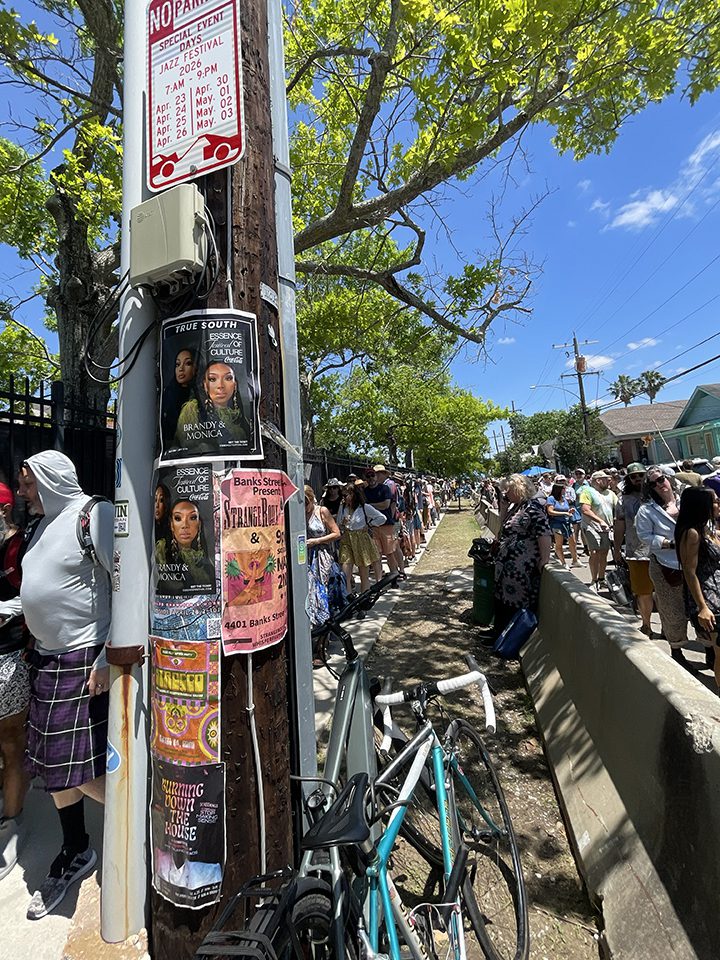
Music festival sponsorships are expensive. A presenting sponsorship at a major festival can run six to seven figures. The branded stage, the official social mentions, the on-grounds activation rights, those assets have value. They also have price points that put official festival sponsorship out of reach for most brands that are not operating at national scale with corresponding marketing budgets. What often gets missed in the conversation about festival marketing is the substantial activation opportunity that exists outside the official sponsorship framework.
The music festival audience does not appear only inside the festival grounds. They arrive, queue, park, move through surrounding neighborhoods, and fill the commercial zones adjacent to festival venues for hours before and after the event. That external audience is accessible without a sponsorship fee. The entry queue alone at a major festival can represent tens of thousands of people in a stationary, receptive state over a single morning window. The pedestrian approach corridors from transit and parking concentrate fan traffic in tight geographic zones that are ideal for street team deployment and sampling activation.
We have executed music festival marketing campaigns across major events in New York, Chicago, Los Angeles, Austin, and Nashville. Our work spans the full range of formats: sampling activations at festival entry queues, street teams in surrounding neighborhoods, LED billboard trucks on festival approach routes, and wheatpasting campaigns that build festival-district presence weeks before the event opens. This guide covers the full operational picture of music festival marketing beyond the official sponsorship framework.
The Festival External Geography
Every major music festival generates an extended geographic zone of activity that radiates outward from the festival grounds. Understanding the specific geography of that zone is the foundation of effective external festival marketing. The zone is not generic. It is specific to the festival venue, the surrounding urban or suburban character, and the transportation patterns that bring the audience in.
Urban Festival Markets: Lollapalooza and Governor’s Ball
Urban festival markets where the festival grounds are embedded in a dense commercial neighborhood create the richest external activation geography. Lollapalooza in Grant Park in Chicago activates a surrounding zone that includes the Loop, Michigan Avenue, and the bar and restaurant corridor along Wacker Drive and the River North adjacent blocks. The attendee population moves fluidly between the festival grounds and the surrounding commercial area across the multi-day event, creating extended engagement opportunities in the commercial zone that persist beyond the festival entry window.
Governor’s Ball on Randall’s Island in New York generates a different external geography. The island location means that nearly all attendees arrive through specific transit or ferry connections, creating highly concentrated pedestrian streams at the transit connection points in East Harlem and the ferry terminal that are among the most efficient festival marketing positions available in any market.
Destination Festival Markets: Bonnaroo and Outside Lands
Destination festivals where attendees travel significant distances and camp on the festival grounds create a different external geography. The arrival window, the day before and the morning of the first day, generates vehicle traffic on specific approach highways and through specific towns adjacent to the festival site. The camping entry queues and parking approach areas create the primary external activation positions. The extended on-grounds dwell time, multiple days, means that internal festival marketing has higher total exposure than single-day urban events.
Major Music Festival Markets: Campaign Approaches by City
Each major music festival city has a specific campaign approach that reflects the festival geography and the audience’s movement patterns.
Austin: SXSW and Austin City Limits
Austin is one of the most developed music festival markets in the country. SXSW creates a citywide activation environment across two weeks in March, with festival activity distributed across dozens of venues throughout downtown Austin. ACL concentrates the audience in Zilker Park for two weekends in October. The SXSW environment, because it is distributed across the city, produces a different festival marketing geography than the concentrated entry queue format. The sixth Street corridor, the Rainey Street bar district, and the convention center perimeter are the highest-density positioning zones for SXSW marketing activation.
Chicago: Lollapalooza
Lollapalooza’s four-day run in Grant Park generates Chicago’s highest-density summer festival marketing opportunity. The festival generates enormous pedestrian traffic along the Columbus Drive, Monroe Street, and Balbo Drive approaches to the park from the surrounding Loop hotel corridor. Morning arrivals from the hotel district create the highest-concentration entry window. The CTA Red and Blue Line approaches via State and Dearborn Street generate significant pedestrian streams from the north side and the transit-connected residential areas.
San Francisco: Outside Lands
Outside Lands in Golden Gate Park generates pedestrian traffic from multiple approach routes: the N Judah streetcar approach from downtown, the parking zones along Fulton and Lincoln, and the pedestrian walk from the surrounding Inner Sunset neighborhood. The festival district’s neighborhood character differs from a downtown venue, with a commercial strip along Irving Street that activates significantly during the festival weekend.
Entry Queue Activation: The Highest-Value Festival Window
The entry queue is the single most efficient festival marketing position for brands working the external geography. A major festival with 50,000 daily attendees concentrates that audience into a handful of entry points over a two to three hour morning window. Sampling crews, street teams, and give-away activations at the entry queue engage a captive audience in a social, anticipatory state with higher receptivity than almost any other format can achieve.
We position entry queue activations based on the specific entry gate geography of each festival venue. The highest-volume entry points receive the most crew. Gates with longer queues receive more dwell-time focused sampling crews. Gates fed by transit connections receive crews briefed on the faster-moving transit arrival audience. The positioning is specific, not generic.
LED Billboard Trucks on Festival Approach Routes
Festival approach routes, the highways, boulevards, and city streets that feed vehicle traffic toward the festival grounds, are high-efficiency advertising environments on festival days. Vehicle traffic is high-volume, slow-moving in the approach convergence, and heading toward a common destination. An LED billboard truck working the festival approach route generates sustained exposures from the approaching vehicle audience across the morning arrival window. The dynamic display capability allows creative rotation between festival-relevant messages, brand content, and calls to action that hold attention better than static out-of-home formats.
Wheatpasting and Poster Campaigns in Festival Districts
Advance wheatpasting and poster campaigns in festival districts and surrounding neighborhoods create physical brand presence that builds across the weeks before the festival opens. For an urban festival like Lollapalooza or Governor’s Ball, the festival district poster campaign covers the major pedestrian and commercial blocks within the audience’s geographic footprint. The advance presence means the brand is established in the visual environment before the festival audience arrives in force.
Festival poster campaigns work best with a strong visual identity that is clearly festival-adjacent without being officially festival-branded. The design should belong in the street context while creating a connection between the brand and the festival experience in the viewer’s mind. The campaign is not pretending to be the festival. It is being present in the same world as the festival, which is a legitimate and effective form of contextual brand positioning.
Sidewalk Stencils on Festival Approach Corridors
Sidewalk stencils applied to the pedestrian approach corridors to major festival venues create ground-level brand presence that every walking attendee encounters on their way in. Sidewalk stencil campaigns at festival venues work best when placed on the specific pedestrian routes from transit stops and parking areas to the festival entry gates. The stencil encounters happen at the moment when the audience’s festival anticipation is highest, creating the optimal emotional context for brand impressions.
Multi-Festival Season Planning
Brands that want to reach the music festival audience across an entire festival season, rather than at a single event, can build multi-festival campaigns that cover the major events in their target markets across the spring-to-fall festival calendar. Multi-festival programs allow for consistent creative presentation across markets, operational efficiency through standardized logistics, and cumulative learning from each activation that improves performance at subsequent festivals.
The festival season in the U.S. runs from March through October with concentration in May through September. A brand that wants comprehensive music festival presence can activate at six to ten major festivals across this window in markets matching their target audience. Our guerrilla marketing services include multi-festival season programs that coordinate all activations from a central operations framework while deploying locally in each market.
Measuring Music Festival Marketing Results
Music festival marketing results are measured through samples distributed, materials distributed by position and time window, crew engagement logs, GPS-documented photo reports, and LED truck impression estimates. Post-campaign field notes from crew supervisors capture the qualitative engagement quality that quantitative counts cannot fully represent. For campaigns with tracking codes or QR-linked materials, post-festival digital conversion data provides additional attribution of festival marketing activity to measurable outcomes.
Brand Alignment and Festival Audience Cultural Fit
Music festival audiences have well-developed cultural identities that extend beyond their musical preferences. The values, aesthetics, and social identities associated with specific festival communities shape how they receive brand communications in the festival context. A brand that communicates in ways that resonate with the specific cultural identity of the festival community generates a different response than a brand that treats the festival audience as a generic young consumer segment.
Reading Festival Cultural Identity
The cultural identity of a festival community is visible in the visual aesthetics of the event’s production and marketing, the artist lineup philosophy, the food and beverage offerings, the merchandise culture, and the social media content that the community creates and shares about the event. A brand that spends time understanding these signals before building its festival activation has a significant advantage over brands that show up with a generic campaign that would work at any consumer event.
The brand that shows up at a jam-band festival with an activation that feels like a corporate pop-up has missed the cultural fit requirement in a way that actively damages brand perception among a highly engaged community. The brand that shows up with an activation that feels like it belongs in the specific festival world, that understands and respects the community’s identity, generates engagement and word-of-mouth that extends well beyond the people directly contacted during the activation.
Pre-Festival Audience Building in Host Cities
Major multi-day festivals draw audiences from well beyond the immediate metropolitan area. A significant portion of the Lollapalooza audience in Chicago arrives from out-of-state. The Governor’s Ball audience on Randall’s Island draws from the tri-state metro area and beyond. Pre-festival marketing in the host city creates brand awareness in the local market, but brands with national target audiences also benefit from thinking about how to reach the non-local festival audience in the days before and during the event.
In-market brand building through physical campaigns in the weeks before a major festival establishes presence for the local audience that will attend. For the out-of-market audience, the arrival day, when festival-goers are checking into hotels, exploring the city, and orienting themselves to the event geography, creates an activation opportunity in the broader city geography beyond the immediate festival district. Brands that can identify the hotel corridors and neighborhood zones where out-of-market festival attendees concentrate before the event opens have a reach opportunity that is not accessible during the event itself.
Post-Festival Digital Amplification of Physical Campaigns
The photo and video documentation from well-executed festival marketing activations has significant value as social and digital content beyond the immediate campaign. Authentic imagery of real people engaging with a brand at a festival, crew interactions in a genuine crowd context, sampling moments with real emotional engagement, these visuals perform differently in digital channels than studio-produced brand content because they carry the visual credibility of the festival environment.
Brands that plan for content capture as part of the festival marketing program, designating a crew member as a content documentation role rather than only a distribution role, generate usable digital content as a by-product of the physical activation. The content from a festival day of sampling and street team activity can fuel weeks of social content across the brand’s digital channels, extending the return on the physical marketing investment well beyond the festival weekend itself.
Festival Marketing for Emerging Artists and Labels
Festival marketing is not exclusively for established brands with national recognition goals. Emerging artists and independent labels use festival district marketing to build audience in markets where they are building recognition ahead of headlining shows or album releases. A poster campaign in the neighborhood surrounding a major festival, where the target audience is highly concentrated, creates awareness for an emerging artist’s upcoming show in the same city more efficiently than most other local marketing formats.
For independent labels or artist management teams working in the festival market, the physical marketing investment in the festival district is often the most cost-effective awareness-building format available. The combination of a music-passionate, culturally engaged audience and a defined geographic concentration makes festival district marketing one of the highest-value investments per impression available in the music marketing toolkit. Our wheatpasting and poster campaigns are available as standalone programs for artists and labels that want festival district presence without the full multi-format campaign investment.
Festival Marketing for Sponsor Category Conflicts
Official festival sponsorship programs often include category exclusivity, which means that official competitors of the category sponsor cannot purchase official festival activation rights. This exclusivity does not extend to the external geography surrounding the festival. A beverage brand that is excluded from official festival sponsorship because a competitor owns the category can still operate in the public streets, entry queues, and surrounding neighborhood through external activation formats that fall outside the exclusivity scope of the official sponsorship agreement.
This is a critical distinction for brands in competitive categories where festival sponsorship exclusivity is common. The official sponsor pays for exclusivity inside the festival perimeter. The non-sponsor competitor can activate outside that perimeter without violating the exclusivity agreement, reaching the same audience at significantly lower cost. The external activation geography is not a consolation prize for brands that could not get the official sponsorship. For many objectives, it is the superior format because the cost efficiency is dramatically better and the audience is in a different, often more receptive, state than the audience inside the controlled festival environment.
Weather Contingency Planning for Festival Campaigns
Outdoor festival marketing campaigns are inherently weather-dependent, and professional campaign planning accounts for the weather variable in ways that reactive operations cannot. Rain during a festival entry queue activation does not necessarily end the campaign, but it changes the logistics: crew positions may shift under available cover, sampling product may require different handling, and audience movement patterns change when the weather turns. Pre-campaign weather contingency planning establishes the protocol for each weather scenario: what happens if it rains during the entry queue window, what happens if extreme heat affects sampling product, what happens if a severe weather warning cancels the festival’s outdoor programming.
Campaigns that have pre-planned contingency protocols continue operating effectively through weather changes. Campaigns without contingency plans improvise, and improvisation in the middle of a live activation produces worse outcomes than a planned response to a known scenario. We build weather contingency protocols into every outdoor festival campaign plan and brief the crew on the specific actions they should take in each scenario before the activation begins.
Frequently Asked Questions
What is music festival marketing?
Music festival marketing is the practice of building brand presence and engagement with music festival audiences through activations timed to major festival events. It includes both official sponsorship programs inside festival grounds and external street-level campaigns that reach festival audiences in the surrounding geography without requiring official access.
How can a brand market at music festivals without a sponsorship deal?
Brands market at music festivals without sponsorship by operating in the public geography surrounding the festival: entry queues, approach roads and transit corridors, surrounding neighborhood streets, and parking areas. Street teams, LED billboard trucks, wheatpasting campaigns, and sampling activations all operate outside festival-controlled property.
What music festivals are strongest for brand marketing in the U.S.?
Lollapalooza in Chicago, Governor’s Ball in New York, Austin City Limits and SXSW in Austin, Outside Lands in San Francisco, Bonnaroo in Tennessee, and Rolling Loud in Miami are among the major U.S. festivals that draw large, concentrated audiences with high brand engagement rates.
When should music festival marketing campaigns be activated?
Advance physical campaigns using posters and print materials should launch two to three weeks before the festival opens. Street team and sampling activations run on the festival days themselves. LED billboard trucks are most effective during the peak morning arrival windows on each festival day.
How do you target specific music genres or demographics at festivals?
Genre and demographic targeting in festival marketing comes from festival selection and positioning within the festival geography. Activating at a hip-hop festival reaches a different audience than activating at a country festival. Within a multi-genre festival, different stages draw different demographic concentrations.
How much does music festival marketing cost?
Street team deployments at a single festival day start at $2,000 to $5,000. Multi-day festival programs with sampling, street teams, and physical advertising run $8,000 to $20,000 per festival.