Lollapalooza is one of the best brand activation windows in the American music calendar. Four days. 400,000+ attendees. Grant Park in the heart of Chicago, surrounded by the city’s most walkable, transit-accessible neighborhoods. The audience is 18-35, culturally engaged, heavy social media users, and concentrated in a geographic zone that a well-planned street marketing campaign can saturate completely.
The challenge is that Lollapalooza official sponsorships are expensive and competitive. The opportunity is that the streets, sidewalks, and neighborhoods surrounding the festival are fully accessible without official sponsorship, and the audience moves through them continuously during the four-day event. A smart brand does not need a tent inside Grant Park to win the Lollapalooza audience. It needs the right formats in the right places on the right days.
American Guerrilla Marketing executes street-level activations in Chicago and 50+ U.S. markets. Our team is based in Industry City, Brooklyn, NY. We deploy LED billboard trucks, brand ambassador programs, poster campaigns, and sidewalk stencils. (646) 776-2770.
Understanding the Lollapalooza Audience and Movement Patterns
Before planning any activation, understanding how 100,000 people per day move through the Grant Park area is essential. The audience does not appear at the festival gates and disappear at the end of the day — they arrive from across the city, they move through the surrounding neighborhoods before and after the event, and many of them stay in the area for multiple days.
Arrival Corridors
The majority of Lollapalooza attendees arrive via CTA Red Line and Green/Orange Lines to the Loop, then walk through Millennium Park and along the lakefront to the Grant Park entrances. Michigan Avenue is the primary pedestrian corridor for attendees coming from hotels in the River North and Gold Coast neighborhoods. Columbus Drive along the eastern edge of the park is the second major entry corridor.
After-Party Geography
Lollapalooza generates significant after-party and post-festival activity in Wicker Park, Logan Square, and Lincoln Park — Chicago’s most active nightlife and music neighborhoods. Attendees who have spent the day at the festival move to these neighborhoods in the evenings for shows, dining, and nightlife. This post-festival migration is a second activation window that most brands miss entirely.
Hotel Cluster Zones
The majority of out-of-town Lollapalooza attendees stay in the Loop, River North, and Michigan Avenue hotel corridor. These zones see elevated foot traffic in the mornings before the festival opens and in the evenings after it closes. Morning breakfast and coffee corridors, afternoon retail streets, and evening restaurant and bar strips all carry above-normal foot traffic during the festival period.
LED Billboard Truck Strategy for Lollapalooza
LED billboard trucks are the highest-impact mobile format available for Lollapalooza activations. The visibility, the mobility, and the ability to find the audience wherever it concentrates make them the right lead format for a festival-adjacent campaign.
Michigan Avenue Route
Michigan Avenue from the Chicago River to Grant Park is the most valuable LED truck route during the festival. Attendees walking south toward the park gates pass through this corridor in waves throughout the day. The avenue’s wide sidewalks, moderate vehicle traffic, and dense concentration of hotels and retail mean that an LED truck running this route achieves high visibility from both pedestrian and vehicle sightlines.
Our team positions trucks on the Michigan Avenue route during the 10am to 2pm window (when attendance builds) and again during the 9pm to midnight window (when attendees exit and move toward evening activities).
Columbus Drive and Lake Shore Drive Route
Columbus Drive runs along the eastern perimeter of Grant Park, adjacent to the festival’s main entrance. During the festival, the vehicle traffic on Columbus Drive includes a high proportion of ride-share vehicles picking up and dropping off attendees — a captive audience for LED truck displays parked or moving on the adjacent roadway. Lake Shore Drive activation during the morning arrivals window is also effective for brands targeting the audience on its way into the festival.
Wicker Park and Logan Square Evening Routes
After the festival closes at 10pm, the LED truck routes should shift north to capture the after-party audience in Wicker Park and Logan Square. Milwaukee Avenue through Wicker Park is one of Chicago’s most concentrated nightlife corridors, and on Lollapalooza nights it operates at peak capacity. A truck running Milwaukee Avenue from 10pm to 2am reaches the same audience that attended the festival, in a relaxed, socially active state where brand impressions register strongly.
Street Team and Brand Ambassador Activations
Brand ambassador programs around Lollapalooza work best in the zones immediately outside the official festival perimeter — where the audience is present but not yet inside the controlled event space.
Festival Perimeter Activation
The blocks surrounding the Grant Park festival entrances see consistent, dense foot traffic throughout all four days. Brand ambassador teams positioned on these blocks — distributing samples, branded items, or simply engaging the audience in conversation — reach attendees in a pre-festival emotional state that is highly receptive. The excitement of approaching the festival is a brand-positive context.
Hotel Zone Morning Activations
Morning ambassador activations in the hotel corridor neighborhoods (River North, Gold Coast, Michigan Avenue) reach out-of-town attendees as they start their festival day. Breakfast spot activations near the highest-concentration hotel clusters deliver brand interactions at a moment when the audience is relatively unhurried and receptive to engagement.
Music Neighborhood Evening Activations
Deploying ambassador teams in Wicker Park and Lincoln Park in the evenings captures the after-party crowd in a relaxed, social context. The evening environment is less activation-saturated than the festival perimeter and allows for longer, more meaningful brand interactions.
Poster and Street Level Campaigns in Key Neighborhoods
Chicago’s music neighborhoods are the right zones for pre-festival poster campaigns that build brand presence before the Lollapalooza audience concentrates in the city.
Wicker Park and Logan Square
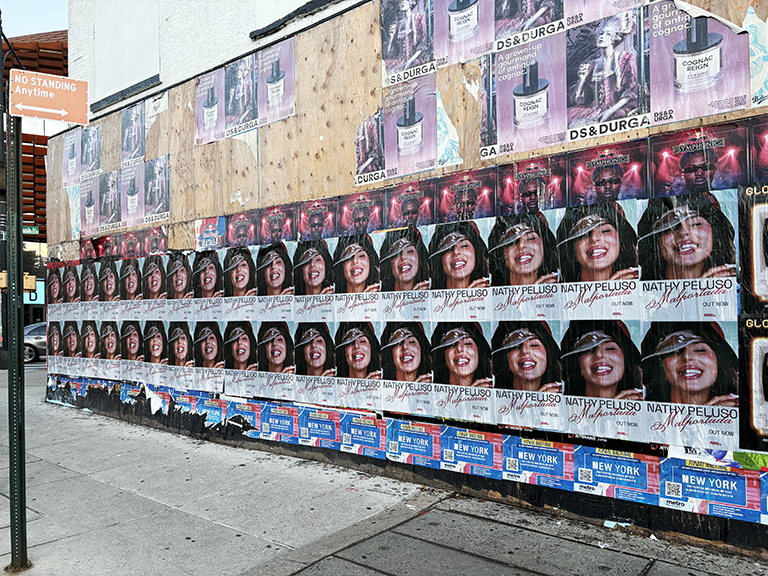
Wicker Park is Chicago’s most active music and arts neighborhood and the primary after-party destination during Lollapalooza weekend. A wheatpaste poster campaign in Wicker Park deployed in the week before the festival seeds brand recognition in the neighborhood before the audience arrives. By the time attendees move through Wicker Park on Friday and Saturday nights, the brand is already part of the visual environment.
Bucktown and Ukrainian Village
Adjacent to Wicker Park, these neighborhoods see spillover from the Lollapalooza nightlife activity and have their own active communities of exactly the demographic the festival attracts. Poster campaigns in these neighborhoods extend coverage into adjacent zones at relatively low cost.
The Loop and River North
For brands targeting the out-of-town hotel audience, poster placements in the Loop and River North neighborhoods reach festival attendees during the mornings and evenings when they are in their hotel neighborhoods rather than at the festival itself.
Sidewalk Stencils on Festival Approach Routes
Sidewalk stencils placed along the primary pedestrian routes from transit stations to the festival entrances reach 100% of the transit-riding festival audience.
The most effective stencil routes run from the Red Line stations at Lake and Grand/State south to the Grant Park entrances along State Street and Michigan Avenue. CTA platform exits leading south toward the festival are also high-value stencil locations — every attendee using transit exits through these zones multiple times over the festival weekend.
Our sidewalk stencil campaigns use water-soluble, compliant materials that meet Chicago Department of Transportation specifications. Stencils placed before the festival weekend survive through Sunday without requiring re-activation, delivering continuous impressions on all four festival days.
Measuring the Lollapalooza Activation
A well-documented Lollapalooza street marketing campaign provides measurable performance data across all formats.
LED Truck Impression Estimates
GPS-tracked routes combined with Chicago foot and vehicle traffic data by corridor and time of day generate credible impression estimates for LED truck activations. We provide this data in our post-campaign reporting package.
Ambassador Interaction Counts
Every brand ambassador interaction is logged with a digital counter tool by shift. Post-campaign reporting includes total interactions, interactions per zone, and peak interaction windows by day and time.
Social Coverage
Festival-adjacent activations in Chicago generate organic social coverage when the creative and execution are strong. We track relevant hashtag activity, photo tags, and social mentions associated with our campaign elements during the festival period and include this data in client reporting.
Frequently Asked Questions About Lollapalooza 2026 Brand Activation
When does Lollapalooza 2026 take place?
Lollapalooza 2026 takes place in Grant Park, Chicago, Illinois, typically during late July or early August. The festival draws 400,000+ attendees over four days in a concentrated downtown park setting with direct adjacency to Chicago’s Loop and the lakefront.
How can brands advertise around Lollapalooza without official sponsorship?
Brands can run street-level advertising campaigns in the public spaces surrounding Grant Park without official festival sponsorship. LED billboard trucks on Michigan Avenue and Lake Shore Drive, street team activations in Wicker Park and Lincoln Park, and poster campaigns in the city’s music neighborhoods all reach the Lollapalooza audience outside the official event perimeter.
What LED billboard truck routes work best during Lollapalooza?
Michigan Avenue north of Grant Park is the highest-value LED truck route during Lollapalooza. Attendees walk Michigan Avenue approaching and leaving the festival, creating consistent foot traffic alongside vehicle traffic. Columbus Drive, which runs along the park’s eastern edge, is also a high-value route during evening hours when the audience is densest.
Which Chicago neighborhoods see the most Lollapalooza-adjacent foot traffic?
The Loop, River North, and the Gold Coast neighborhoods immediately adjacent to Grant Park see the highest Lollapalooza foot traffic. Wicker Park and Lincoln Park see elevated activity in the evenings as attendees move to after-parties and shows following the festival’s daily close.
How much does a street marketing campaign around Lollapalooza cost?
A focused single-format campaign (LED truck only or street team only) around Lollapalooza typically costs $8,000 to $20,000 for the festival weekend. A full multi-format activation with LED trucks, street teams, and poster campaigns in key neighborhoods runs $25,000 to $75,000 for the four-day festival period.
Can American Guerrilla Marketing execute campaigns in Chicago during Lollapalooza?
Yes. Our team operates in Chicago and has experience with event-adjacent activations in the Grant Park corridor, Michigan Avenue, River North, and Chicago’s music neighborhood districts. We handle permits, production, crew, and documentation for all formats.
Frequently Asked Questions
What is lollapalooza 2026 chicago?
American Guerrilla Marketing provides lollapalooza 2026 chicago services across 50+ U.S. markets. Every campaign is planned, scouted, executed, and GPS-documented by our field teams. We work with regional brands and Fortune 500 companies on campaigns that require real street-level execution and documented proof of performance.
How does AGM approach 2026 chicago?
Our process starts with a market consultation to understand your goals, target audience, and budget. We then scout locations, handle any required permissions or permits, coordinate production and installation with our local crews, and provide a full GPS-tagged photo report after the campaign runs.
What markets does American Guerrilla Marketing cover for 2026 chicago?
We operate in 50+ U.S. markets including New York, Los Angeles, Chicago, Miami, Houston, Atlanta, Seattle, Denver, Boston, and dozens of secondary markets. Contact us to confirm availability and pricing for your specific market.
How much does a 2026 chicago campaign cost?
Campaign pricing depends on market, format, quantity, and duration. We work with budgets ranging from targeted single-market runs to national rollouts across multiple cities. Use our RFP Builder or contact us directly for a custom quote based on your specific campaign requirements.
How do I get started with 2026 chicago through AGM?
The fastest way to get started is to submit your campaign details through our RFP Builder at americanguerrillamarketing.com, or contact us directly at [email protected] or (646) 776-2770. Our team typically responds within one business day with availability and initial pricing.