
July 26, 2026
LED Billboard Trucks Los Angeles: Sunset Strip, DTLA, and the Permit Landscape
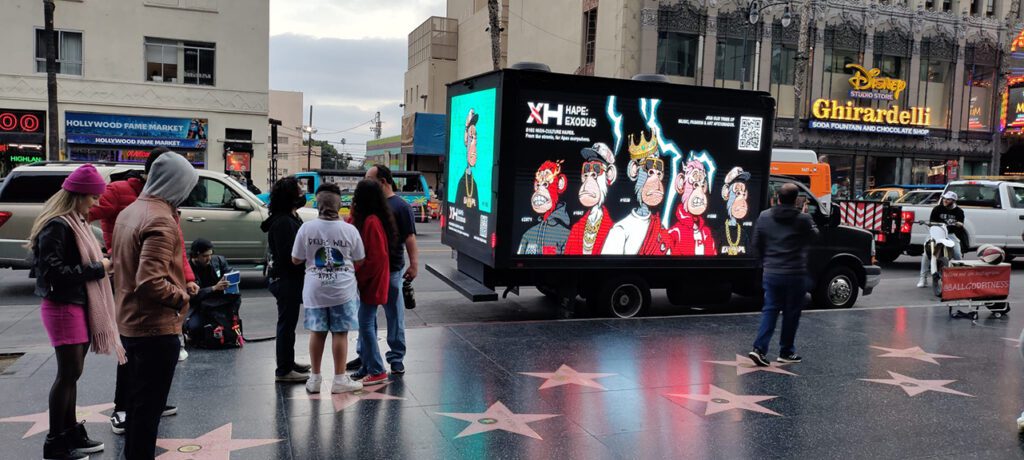
Los Angeles is one of the most competitive advertising markets in the world, and one of the most car-dependent. That combination makes LED billboard trucks uniquely effective here: in a city where most people spend significant time in vehicles, a large, bright, moving LED display on the road with them delivers brand impressions in an environment with few competing advertising formats reaching the same audience at the same moment. The Sunset Strip at night, the DTLA grid during a major event weekend, and the Santa Monica Pier corridor on a summer day are all environments where a well-positioned LED truck produces massive, documented impression volumes for brands that know how to deploy them.
At American Guerrilla Marketing, we deploy LED billboard trucks in Los Angeles as part of broader guerrilla marketing campaigns and as standalone mobile billboard programs. We handle permit coordination, route planning, content production optimization, and GPS-stamped documentation for every campaign. This guide covers what brands need to know about running LED billboard trucks in LA: the routes, the permit landscape, the cost structure, and the strategic approach that makes the format work at its best.
LA’s geography, traffic patterns, and entertainment culture create an LED truck environment that differs significantly from New York or Chicago. Understanding those differences is the starting point for effective LA mobile billboard planning.
Why LED Billboard Trucks Work in Los Angeles
Los Angeles is a vehicle-dominant city where residents spend substantial daily time in their cars. Unlike New York, where most of the target audience for street-level marketing is on foot, LA’s advertising environment must reach a significant portion of the audience through the windshield. LED billboard trucks operate in this environment as one of the few advertising formats that effectively reach both vehicle occupants and pedestrians simultaneously.
The Vehicle Impression Advantage
A vehicle moving through the Sunset Strip or the 10 Freeway approach to Santa Monica passes the same locations repeatedly and encounters LED trucks as a visible element of the roadway environment. Drivers who stop at red lights next to an LED truck have extended forced dwell time on the display content, equivalent to the captive dwell time of transit advertising but in a private vehicle context. This dwell time produces higher message recall than impressions from a passing vehicle that does not stop.
Entertainment Industry Visibility
The entertainment industry in Los Angeles has specific uses for LED trucks that differ from typical consumer brand applications. Music video drops, film releases, streaming premiere campaigns, and album launches all have defined geographic targets: the entertainment corridors where industry professionals and influencers are concentrated. A truck running Sunset Strip, Melrose, and Fairfax during a premiere evening reaches a self-selected entertainment industry audience that traditional billboard and digital placements also target, but with a mobile, unmissable physical presence at street level.
Event Amplification in a Venue-Dense City
Los Angeles hosts more major entertainment, sports, and consumer events per year than almost any city in the world. Staples Center (now Crypto.com Arena), SoFi Stadium, the Hollywood Bowl, the Shrine Auditorium, and dozens of other major venues draw concentrated audiences at predictable times. LED trucks positioned on the approaches to these venues during event periods deliver their impressions to exactly the audience the event’s sponsors, attending brands, and adjacent advertisers want to reach. Our guerrilla marketing team coordinates event-adjacent LED truck programs as part of integrated LA campaign packages.
Key Los Angeles Routes and Corridors
Effective LED truck deployment in Los Angeles requires route planning based on target demographic alignment, traffic volume at the planned activation time, and any venue or event anchors that concentrate the target audience at predictable points.
The Sunset Strip: West Hollywood and Hollywood
The Sunset Strip corridor from West Hollywood (beginning at Doheny Drive) through Hollywood (to Highland Avenue) is the single highest-visibility entertainment brand corridor in the city. During evening and weekend hours, the Strip concentrates a young adult, entertainment-oriented demographic with significant social media activity and above-average income. The corridor’s mix of restaurants, bars, music venues, and hotels keeps foot traffic and vehicle traffic both elevated well into the evening. LED trucks parked or circulating on the Strip between 6 PM and midnight capture peak engagement windows for entertainment, lifestyle, fashion, and consumer brand campaigns.
Downtown Los Angeles (DTLA): Arts and Business Districts
DTLA has undergone significant transformation over the past decade, developing a residential community, thriving arts district, and event ecosystem around Crypto.com Arena, the Staples District, and the growing DTLA East corridor. South Broadway through the historic Broadway theater district, Grand Avenue past the Music Center and Grand Park, and Spring Street through the Financial District all provide distinct demographic sub-corridors within DTLA. Business hours target the office and financial services worker population; evening and weekend hours target the arts and entertainment audience that the DTLA East and Arts District have developed.
Santa Monica and Venice
Santa Monica’s Third Street Promenade, the Santa Monica Pier approach, and the Venice Beach Boardwalk area are among the highest-foot-traffic pedestrian zones in Los Angeles and among the most tourist-heavy. LED trucks in this corridor deliver impressions to a mix of local residents, tourists, and the significant fitness and outdoor lifestyle consumer population that defines the beach communities. Daylight hours and weekend windows produce the highest impression volumes in this corridor.
Melrose Avenue and Fairfax District
Melrose between La Brea and Fairfax concentrates the streetwear, sneaker, and youth fashion consumer culture that has made this corridor one of the most influential brand activation zones in the country. The Supreme store on Fairfax, the continuing influence of vintage and streetwear retail, and the strong social media engagement of the community that frequents this area make it a high-value target for fashion, sneaker, music, and lifestyle brand campaigns. LED trucks running Melrose and Fairfax on weekend afternoons reach a specifically fashion-forward, social media-active demographic.
Culver City and Playa Vista: Tech Industry Corridor
The concentration of technology companies in Culver City (Amazon Studios, HBO, Apple Studios) and Playa Vista (Google, YouTube, and others) creates a daytime professional demographic with high income and strong technology and entertainment brand affinity. B2B technology brands, entertainment streaming services, and premium consumer brands targeting high-income professionals use the Culver City-Playa Vista corridor for targeted daytime LED truck programs.
Permit Requirements and Compliance in Los Angeles
Los Angeles has specific regulations governing mobile billboard advertising that operators must follow. Non-compliant programs face fines and, in some cases, vehicle impoundment.
California Vehicle Code and Mobile Billboard Regulations
California Vehicle Code sections governing advertising displays on vehicles establish baseline requirements for mobile billboard operations statewide. LED displays must comply with brightness and animation restrictions designed to prevent driver distraction. Trucks must be registered and in compliance with all state vehicle regulations. Operators who do not maintain compliance with CVC requirements are subject to traffic citations and, for repeat violations, more serious penalties.
City of Los Angeles Sign Ordinance
The City of Los Angeles has specific sign ordinance provisions that apply to mobile billboard advertising within city limits. These provisions have been the subject of legal interpretation over time, and the current regulatory landscape requires operators to understand which specific provisions apply to their planned operations. Our permit team stays current with the applicable City of LA regulatory framework and structures every LA campaign for compliance.
Route-Specific Restrictions
Some streets and neighborhoods in Los Angeles have additional restrictions on commercial vehicle operation, signage, or advertising display beyond the city-wide regulations. The Hollywood Hills residential areas above the Strip, certain residential blocks in Venice, and some portions of DTLA have specific restrictions that affect truck routing. Route planning must account for these restrictions to avoid enforcement issues mid-campaign.
Content Optimization for LA LED Truck Campaigns
Content designed for LED trucks must work in the specific viewing conditions of the LA environment: often at vehicle speeds, in strong daylight during the day and in the competing visual environment of the Strip at night, and sometimes from distances of 50 to 100 feet through a vehicle windshield.
Visual Hierarchy at Speed
The primary visual element, the brand name or key image, must read in under two seconds at typical vehicle speeds. Secondary information (event date, product name, website) is secondary and should be visually subordinate. Copy that requires more than three to four words to communicate the primary message is too long for a moving truck campaign. Every LA LED truck design should be tested for legibility at 30 miles per hour before campaign production is finalized.
Night vs. Day Content Optimization
LA’s Sunset Strip campaigns operate primarily in evening conditions where ambient light is lower and the LED display competes with neon, restaurant signage, and venue lighting rather than full daylight. Evening content can use darker backgrounds with bright typography that pop against the visual environment. Daytime campaigns in Santa Monica, DTLA, or Culver City compete against full California sun, requiring higher contrast ratios and potentially higher brightness settings to maintain legibility.
Documentation and Impression Reporting for LA LED Truck Campaigns
Every LED billboard truck campaign we execute in Los Angeles includes GPS-tracked route documentation and timestamped reporting that supports post-campaign impression estimation and client reporting.
GPS Route Tracking
All trucks operate with active GPS tracking throughout the campaign day. GPS data provides a precise record of every street traveled, dwell time at parked positions, and the total route coverage for each campaign day. This data feeds directly into impression estimation calculations and provides documentation for client reporting and any future audit of campaign execution.
Impression Estimation Methodology
Post-campaign impression estimates combine GPS route data with pedestrian and vehicle traffic counts for each specific corridor during the activation time windows. Traffic count data from Caltrans, the City of Los Angeles Department of Transportation, and commercial traffic data providers is applied to each street segment traveled to produce a documented impression estimate by corridor and by campaign day. The resulting estimate is presented with the underlying data methodology in the post-campaign wrap report.
Photography and Video Documentation
Campaign photography captures the truck in active deployment at key locations across the route, documenting the brand’s presence in the Los Angeles street environment. Photography is timestamped and geo-tagged for precise documentation. Video footage of the truck in operation at key locations is available for campaigns where video documentation is required for internal reporting or social content creation. Our experiential marketing team coordinates photography and video documentation for all LA campaigns.
Frequently Asked Questions
Do LED billboard trucks need permits in Los Angeles?
Yes. Los Angeles requires compliance with the city’s sign ordinance for mobile billboard advertising. LED trucks operating in LA must comply with California Vehicle Code requirements for vehicle-mounted advertising and relevant city regulations governing illuminated mobile signs. Some streets and neighborhoods have additional restrictions. A professional agency with LA permit experience navigates these requirements as part of campaign setup.
What are the best routes for LED billboard trucks in Los Angeles?
The Sunset Strip between Hollywood and West Hollywood is the highest-visibility single corridor in LA for entertainment, lifestyle, and consumer brand campaigns. DTLA’s South Broadway, Grand Avenue, and Spring Street corridors serve business and arts district audiences. Santa Monica’s Third Street Promenade area and Venice Beach’s Abbot Kinney Corridor target consumer and lifestyle demographics. Melrose Avenue serves fashion and youth culture audiences. Route selection depends on target demographic alignment.
How much does an LED billboard truck cost in Los Angeles?
LED billboard truck day rates in Los Angeles typically run $1,200 to $2,500 per truck per day including driver, depending on the truck’s screen size, route complexity, and campaign duration. Multi-day campaigns and programs using multiple trucks simultaneously are typically priced with volume discounts. Design production and permit fees are additional.
How many impressions does an LED billboard truck generate in Los Angeles?
Impression volumes depend on the route and time of day. A truck running the Sunset Strip during evening hours (6 PM to 10 PM) can generate 30,000 to 60,000 vehicle and pedestrian impressions per day on that corridor alone. Multi-route programs covering DTLA, Hollywood, and West Hollywood simultaneously can generate 100,000+ daily impressions across all routes. All impressions are estimated from documented traffic count data for each route.
What content works best on LED billboard trucks in LA?
High-contrast visuals with minimal text perform best at vehicle traffic speeds. Entertainment and event promotion with key art, dates, and a single call to action are the highest-performing content categories for LA LED truck campaigns. Consumer brand campaigns with strong visual identity, product photography, and a clear brand name read well. QR codes are effective in locations where the truck parks or moves slowly, but are difficult to capture at regular traffic speeds.
Can LED billboard trucks park in specific locations in Los Angeles?
Yes, within legal parking parameters. Parked LED billboard trucks deliver significantly higher impression quality than moving trucks because viewers have extended time to read and engage with the content. Strategic parking positions outside major venues, at event access points, or in high-foot-traffic zones like the Grove or Westfield Century City require coordination with relevant property owners or city parking authorities depending on whether the parking position is on public or private property.

Ready to Run Your Campaign?
Call us or email us. We’ll tell you exactly what we can do in your market and what it costs.
Related Services
Explore similar advertising solutions offered by American Guerrilla Marketing.
American Guerrilla Marketing — Los Angeles
Street-level campaigns in Los Angeles and nationwide. Wheatpasting, LED trucks, street teams, and more.
(646) 776-2770
Related Articles
-
Street Poster Advertising Ottawa: A Complete Campaign Guide
September 17, 2026
-
Activation Marketing: How Brands Win at Street Level
September 13, 2026
-
Experiential Marketing Firms Chicago | American Guerrilla Marketing
September 12, 2026
-
Pop Up Experiential
September 12, 2026
-
Mobile Pop Up
September 12, 2026