
July 26, 2026
LED Billboard Trucks Chicago: The Loop, Wrigleyville, and Nighttime Route Map
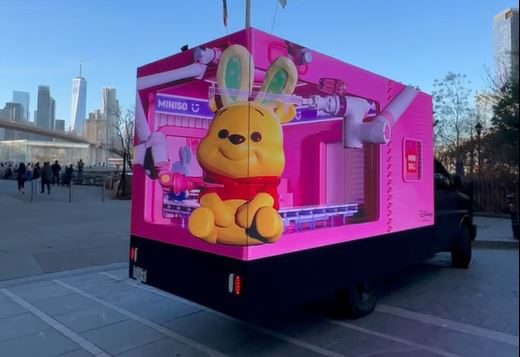
Chicago is one of the most consistent LED billboard truck markets in the country. The city’s grid street system, concentrated neighborhood entertainment districts, major sports venues, and dense downtown professional population create multiple high-value route options that produce reliable impression volumes for brands at different price points. Wrigleyville on a Cubs game night, the Loop during a weekday lunch hour, River North on a Friday evening, and the Museum Campus approach during Lollapalooza weekend all represent distinct high-density audience windows that LED truck programs can capture with the right route and timing.
Our team at American Guerrilla Marketing deploys LED billboard trucks in Chicago as part of guerrilla marketing programs and as standalone mobile billboard campaigns for brands targeting specific neighborhoods, events, or audience segments. This guide covers the routes, the timing, the permit landscape, and the strategic approach that makes LED billboard truck campaigns work in Chicago’s distinct market environment.
Chicago’s weather creates the most significant variable in LED truck campaign planning. Summer and fall are peak campaign windows. Spring programs need weather contingency plans for late-season cold snaps. Winter campaigns shift toward the indoor-adjacent corridors where pedestrian traffic remains despite temperature. The city’s covered walkway system (the Pedway) and the density of buildings along the Loop’s interior streets maintain pedestrian activity year-round in ways that open-air cities do not.
Why LED Billboard Trucks Work in Chicago
Chicago’s combination of pedestrian density in key neighborhoods, major sports culture that concentrates audiences around specific venues, and a nighttime entertainment economy that draws large crowds to defined geographic corridors creates multiple windows where LED trucks produce exceptional impression volumes.
The Neighborhood Concentration Advantage
Unlike Los Angeles, where population and activity are spread across a vast geographic area, Chicago’s entertainment and social activity concentrates in specific neighborhoods: Wrigleyville, River North, Wicker Park, the West Loop, Lincoln Park. This concentration means that a truck running a defined neighborhood route during the right time window reaches its target demographic at high density without the routing inefficiency of covering dispersed suburban zones.
Sports Culture Creates Predictable High-Value Windows
Chicago’s sports culture is intense and consistent. Cubs home games draw 40,000 to 42,000 fans per game to Wrigley Field, concentrating them in Wrigleyville before and after each contest. Bears games at Soldier Field draw 60,000+ and concentrate the audience in the Grant Park and Museum Campus corridor. White Sox games draw audiences to the Guaranteed Rate Field area on Chicago’s South Side. Each of these events creates a predictable, high-density audience window that LED truck programs can target with route accuracy impossible in non-sports markets.
Nighttime Visibility in a Vibrant Entertainment Economy
Chicago’s nighttime entertainment economy across River North, the West Loop, Wicker Park-Bucktown, and Lincoln Park creates consistent evening foot traffic that makes LED truck campaigns effective well past sunset. The enhanced visibility of LED displays against lower ambient light in evening conditions, combined with the self-selecting entertainment-oriented audience moving through these neighborhoods, produces excellent impression quality and brand recall rates in nighttime activation windows.
Primary Routes and Neighborhoods for LED Billboard Trucks
Effective LED truck deployment in Chicago requires route selection based on the specific audience segment, time window, and campaign objectives of each program.
The Loop: Business and Tourist Audience
Michigan Avenue’s Magnificent Mile from the Chicago River to Oak Street, State Street through the heart of the Loop, and Wacker Drive along the riverfront are the primary Loop corridors for LED billboard truck campaigns. Daytime Loop campaigns target the professional workforce and tourist audience that populates the central business district during business hours. The intersection of Michigan and Wacker, visible from multiple elevated positions and heavily trafficked by both vehicle and pedestrian traffic, is among the highest-impression single locations in the Chicago campaign portfolio.
Wrigleyville: Game Day Strategy
Wrigleyville centers on Clark Street north of Addison Street, with the primary activation zone running from roughly Addison to Grace Street and from Sheffield to Broadway. Game day activation begins approximately two hours before first pitch, with the heaviest foot traffic in the 90 minutes before game time. Post-game foot traffic is also substantial, particularly for evening games when fans move into the Wrigleyville bar and restaurant district after the final out. LED trucks parked on Clark Street during game day windows achieve extended dwell time with a highly concentrated, sports-engaged audience. Our guerrilla marketing team has executed numerous event-adjacent programs at Wrigley Field.
River North: Evening Entertainment Corridor
River North’s restaurant and bar cluster, concentrated on Hubbard Street, Ohio Street, and the blocks surrounding them, draws a professional adult dining and entertainment audience from Thursday through Sunday evenings. This is one of Chicago’s most affluent and socially active neighborhoods, with a demographic profile particularly valuable for premium consumer brands, food and beverage brands, and entertainment promotion. LED trucks running the River North grid from 6 PM to 10 PM on weekend evenings reach this audience at peak density.
Wicker Park and Bucktown: Creative and Young Adult Audiences
The Milwaukee Avenue corridor through Wicker Park and the Damen Avenue strip through Bucktown concentrate Chicago’s most creative and trend-forward young adult demographic. This area is highly relevant for fashion brands, music and entertainment campaigns, independent consumer brands, and any brand targeting the 22 to 35 creative professional demographic. Weekend afternoon and evening windows produce the highest foot traffic in this corridor, with significant social media documentation behavior from the young adult audience that makes Wicker Park content-generation-friendly for brands planning social amplification.
Pilsen: Latino Consumer Audience
Pilsen on Chicago’s lower west side is the heart of Chicago’s Mexican-American community and one of the most culturally vibrant neighborhoods in the city. 18th Street through Pilsen concentrates community retail, restaurants, and cultural institutions that serve a primarily Latino consumer base. Brands targeting Latino consumer audiences, food and beverage brands with Latin heritage, and brands seeking to establish presence in Chicago’s Latino community treat the Pilsen corridor as a distinct market with distinct route, timing, and execution considerations.
Nighttime Route Strategy: Maximizing After-Dark Impressions
Chicago’s nighttime LED truck campaigns perform differently from daytime campaigns because the audience, the visual environment, and the ambient conditions are all different. Planning specifically for nighttime activation maximizes the format’s evening-specific advantages.
Enhanced LED Visibility at Night
LED display visibility peaks in lower ambient light conditions. A screen running at a fixed brightness is dramatically more eye-catching at 9 PM on a dark street than at 2 PM in direct sunlight. Nighttime campaigns can run the same content on the same routes that daytime programs use and generate meaningfully higher impression quality because the display commands attention more forcefully when it is the brightest light source in the field of view. Content designed specifically for nighttime deployment can use darker backgrounds with high-brightness typography to maximize the contrast effect.
Bar and Restaurant District Timing
Chicago’s major bar and restaurant districts peak in foot traffic from 7 PM to 11 PM Thursday through Saturday. Positioning trucks within the primary entertainment corridors during these windows, with route coverage designed to maximize repeated exposure to the same audience over a two to three hour period, creates impression frequency that reinforces brand recall. Our experiential marketing team maps Chicago evening traffic patterns across all major entertainment neighborhoods for nighttime route optimization.
Post-Event Exit Windows
Post-event exits from major Chicago venues produce short, intense pedestrian flow windows with tens of thousands of people moving through defined geographic corridors simultaneously. A Wrigley Field post-game exit window, a Soldier Field post-game exit on Lake Shore Drive approaches, or a Lollapalooza evening closing window creates a 30 to 60 minute period of extraordinary pedestrian density. LED trucks positioned at exit approach corridors during these windows generate impression rates impossible to achieve through any other outdoor advertising format in the same time window.
Permit Requirements in Chicago
The City of Chicago regulates commercial advertising on vehicles under municipal code provisions that apply to mobile billboard advertising, and LED trucks must also comply with applicable state vehicle regulations.
Chicago Municipal Code Compliance
Chicago’s Municipal Code contains provisions governing mobile billboard operations within city limits. Our permit team maintains current knowledge of applicable code provisions and structures every Chicago LED truck program for full compliance before the first activation day. Permit coordination in Chicago is a standard pre-campaign service included in all LED truck program setup fees.
Special Event Coordination
Major Chicago events including Lollapalooza, the Chicago Marathon, the Air and Water Show, and large convention events at McCormick Place may require coordination with the City’s special events permitting office in addition to standard mobile advertising compliance. Our team handles special event coordination for all Chicago campaigns activated in proximity to permitted city events.
Campaign Documentation and GPS Tracking in Chicago
All LED billboard truck campaigns we execute in Chicago include GPS-tracked route documentation, timestamped photography, and post-campaign impression reporting using Chicago traffic count data.
GPS Route Documentation
Active GPS tracking on all trucks records the precise route traveled, dwell time at parked positions, and the time window of each route segment. This data provides a documented record of campaign execution for client reporting and impression estimation. GPS data is available as a post-campaign deliverable for brands with internal reporting requirements that specify GPS verification of campaign delivery.
Chicago Traffic Count Integration
Post-campaign impression estimates use Chicago Department of Transportation traffic count data and CMAP (Chicago Metropolitan Agency for Planning) pedestrian count data for the specific corridors and time windows covered by each campaign. These data sources provide documented basis for impression estimates that are more defensible than generic urban market averages. The impression estimate methodology is included in post-campaign wrap reports as supporting documentation.
Photography and Video from Chicago Campaigns
Campaign photography captures the truck at key Chicago locations across the route. For event-adjacent programs at Wrigley Field, Soldier Field, or Grant Park events, photography specifically documents the truck’s presence in the event environment for post-campaign reporting. Video documentation of the truck in operation at signature Chicago locations is available for campaigns requiring video as part of the deliverable package. Our full documentation standards apply to all Chicago LED billboard truck campaigns.
Frequently Asked Questions
Do LED billboard trucks need permits in Chicago?
Yes. The City of Chicago regulates mobile billboard advertising under the Municipal Code and requires compliance with signage and vehicle regulations applicable to commercial advertising displays. Some specific areas and events have additional restrictions. Our team handles Chicago permit coordination as standard pre-campaign setup for all LED truck programs in the city.
What are the best routes for LED billboard trucks in Chicago?
The Loop’s Michigan Avenue, State Street, and Wacker Drive corridors reach high-volume business and tourist audiences. Wrigleyville around Wrigley Field captures pre and post-game sports audiences. River North’s restaurant and bar corridor on Hubbard and Ohio delivers evening entertainment audiences. Wicker Park along Milwaukee Avenue targets young adult and creative demographics. Pilsen is effective for reaching Latino consumer audiences and arts-adjacent campaigns.
How much does an LED billboard truck cost in Chicago?
LED billboard truck day rates in Chicago typically run $1,000 to $2,000 per truck per day including driver, depending on screen size and campaign duration. Multi-day campaigns and multiple truck programs are priced with volume considerations. Design production, permit fees, and any event-specific coordination are additional.
What events in Chicago create the best LED truck opportunities?
Cubs and White Sox home games, Bears games at Soldier Field, the Chicago Marathon, Lollapalooza in Grant Park, the Chicago Air and Water Show, and major convention events at McCormick Place all concentrate large audiences in predictable locations at known times. LED trucks deployed in the approaches and adjacent corridors to these events reach concentrated audiences of tens of thousands within a defined activation window.
When is the best time to run LED billboard trucks in Chicago?
Evening hours from 5 PM to 11 PM produce the highest impression quality because LED displays are most visible against lower ambient light, and the evening entertainment audience is in a receptive state for brand engagement. Event-adjacent windows around major game days and festivals produce the highest impression volumes. Weekday lunch hours in the Loop target the business professional audience during a natural break window.
How does Chicago traffic affect LED billboard truck route planning?
Chicago’s grid street system and predictable Loop traffic patterns make route planning more reliable than in some less-structured cities. However, major events at Wrigley Field, Soldier Field, and Grant Park create significant traffic volume that can slow truck routes and increase dwell time at intersections, which actually increases impression time per vehicle passed. Route planning accounts for major event schedules to maximize dwell time in high-traffic windows.

Ready to Run Your Campaign?
Call us or email us. We’ll tell you exactly what we can do in your market and what it costs.
Related Services
Explore similar advertising solutions offered by American Guerrilla Marketing.
American Guerrilla Marketing — Los Angeles
Street-level campaigns in Los Angeles and nationwide. Wheatpasting, LED trucks, street teams, and more.
(646) 776-2770
Related Articles
-
Street Poster Advertising Ottawa: A Complete Campaign Guide
September 17, 2026
-
Activation Marketing: How Brands Win at Street Level
September 13, 2026
-
Experiential Marketing Firms Chicago | American Guerrilla Marketing
September 12, 2026
-
Pop Up Experiential
September 12, 2026
-
Mobile Pop Up
September 12, 2026