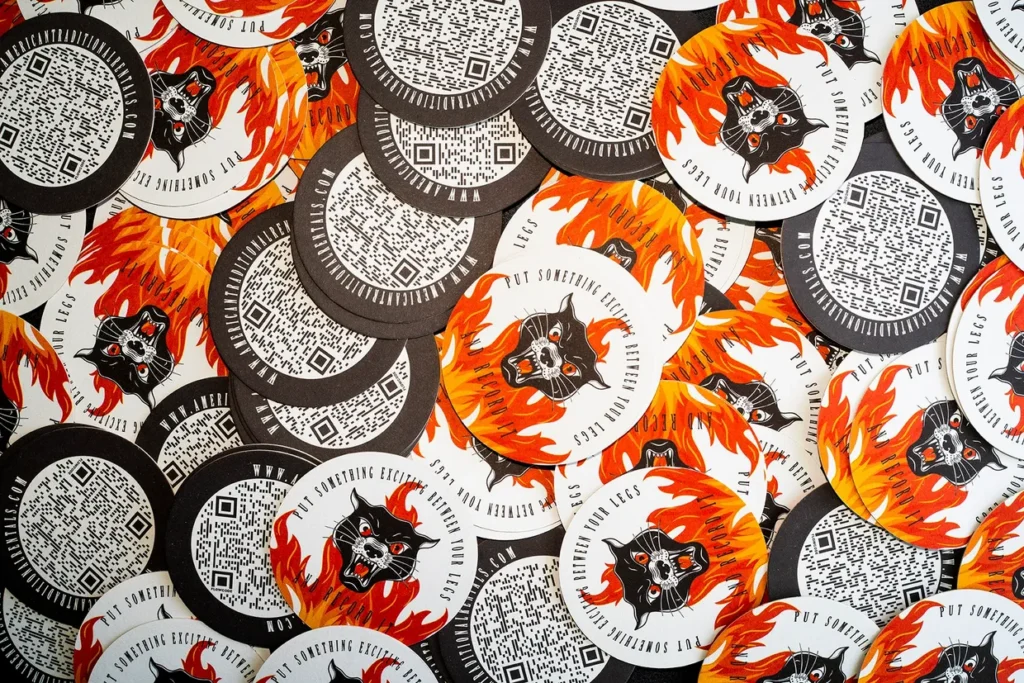
A guerrilla marketing campaign that generates no measurable downstream action is a campaign that cannot prove it worked. Physical street presence creates awareness and recognition in real space, but without a digital bridge connecting that presence to trackable behavior, the only evidence of performance is the campaign photos and the team’s word that people noticed. That is not enough for most marketing teams to defend a budget or plan a follow-up.
QR codes, dedicated landing pages, short URLs, and UTM-tagged links are the tools that turn street campaigns into accountable, data-producing investments. Used correctly, they create a clear measurement chain from physical placement to audience response to business outcome. Used poorly, they add friction to the experience without adding data to the report.
Our team designs measurement infrastructure into every campaign we deploy, from our base at Industry City in Brooklyn, NY, through markets across the country. What follows is the complete implementation guide for connecting street media to digital tracking.
Why the Digital Bridge Matters for Street Campaigns
Street campaigns reach audiences in physical space where attention is real and embodied but where automatic tracking does not exist. Digital campaigns create impressions in software environments where every event generates a data record. The gap between those two realities is where measurement fails for most outdoor campaigns.
The digital bridge fills that gap by giving the audience a clear, frictionless path from the physical encounter to a digital action that can be tracked. The path should feel natural and rewarding rather than obligatory. Audiences do not scan QR codes because they respect the brand’s measurement needs. They scan because scanning offers something worth having: a discount, more information, exclusive content, or a simpler way to complete an action they were already going to take.
Building that bridge requires thinking about the audience’s experience first and the measurement infrastructure second. The best setups are invisible to the user and comprehensive to the analyst.
QR Code Best Practices for Street Campaigns
QR codes in outdoor campaigns fail for three predictable reasons: the code is too small to scan at the distance people encounter the format, the creative around the code gives no reason to scan, or the destination delivers something irrelevant to what the audience expected. All three failures are preventable with proper planning.
Size and Placement Height
A QR code on a street-level poster should be large enough to scan at arm’s reach on a mid-range smartphone. For standard poster formats, a minimum size of three by three inches is a practical floor. Larger is generally better. The code should be positioned at a height where the audience does not need to crouch or stretch to align the camera. On a vertical poster, that typically means placing the code in the lower third of the layout at a standing viewing height of roughly three to five feet off the ground.
Surrounding Copy That Creates Scan Incentive
A QR code without a clear reason to scan is a design element, not a conversion tool. The copy around the code should tell the audience what they will get by scanning: a discount, an exclusive offer, early access, a free sample request, a link to the content that the campaign is promoting. The call to action should be specific. “Scan for 20% off your first order” outperforms “Scan to learn more” because it creates an explicit value exchange rather than a vague invitation.
Campaign-Specific Codes Per Format and Location
Using the same QR code across every format and every market in a campaign produces aggregate scan data with no ability to identify which placements drove the most response. Assigning unique codes per format type (poster vs. decal vs. handout card) or per neighborhood cluster creates the granular data that makes campaign optimization possible. For large campaigns with dozens of placement locations, grouping codes by zone or by market is a practical middle ground.
Short URL Strategy for Moving Formats
LED trucks, vehicle wraps, and street-facing formats in high-traffic vehicle corridors cannot rely on QR codes because the audience is moving too fast to stop and scan. Short, memorable URLs serve the same response-path function for audiences who encounter the brand from a moving vehicle or at a distance.
A short URL for a street campaign should meet three criteria: it is memorable enough to type from memory a few minutes after seeing the format, it is short enough to read at driving speed on an LED panel, and it redirects to the campaign landing page with UTM parameters attached so the traffic is attributed correctly in analytics. URLs structured as brand.com/launch or brand.com/nyc meet these criteria. Long URLs with tracking parameters visible in the string do not.
Vanity URLs vs. Branded Short Links
Vanity URLs using the brand’s own domain (brand.com/promo) are preferable to third-party shorteners for permanent campaign use because they maintain brand credibility and do not introduce external dependencies. Third-party shorteners are acceptable for temporary tracking but carry the risk of link rot if the service is discontinued or if the account lapses. For campaigns that will run repeatedly, vanity URL structures on the brand domain are the more durable setup.
Campaign Landing Page Design for Street Audiences
The audience arriving at a campaign landing page from a street QR scan is typically standing on a sidewalk, holding a phone in one hand, and has approximately fifteen to thirty seconds of attention to give the page before moving on. The page design needs to respect that context completely.
Speed and Mobile Optimization
A landing page that takes more than three seconds to load on a mobile data connection loses a significant portion of the scan-generated audience before the page is even visible. Mobile optimization is not a nice-to-have for campaign landing pages. It is the primary technical requirement. The page should be built specifically for mobile display, tested on multiple device types before the campaign launches, and optimized to load key content before any heavy images or scripts.
Page Structure That Converts
The optimal landing page structure for a street campaign response starts with a headline that confirms what the audience saw on the street (reinforcing that they are in the right place), followed immediately by the primary action: a button, a form, a redemption code, or a product link. Secondary content like product descriptions, brand story, or supporting imagery should appear below the fold. The primary conversion action should require no scrolling to reach on a standard smartphone display.
Market-Specific Pages
When a campaign runs across multiple markets, market-specific landing pages convert better than generic pages because they reflect the local context of the campaign. A page that says “You saw us in Williamsburg. Here’s what’s happening” creates a confirmation moment that reinforces the audience’s sense that this campaign was meant for them specifically. Generic pages that make no reference to the market or campaign context feel like misdirects even when the offer is relevant.
UTM Parameter Setup for Street Campaign Tracking
UTM parameters are the tagging system that connects street campaign traffic to specific entries in analytics reports. A properly structured UTM setup for a guerrilla campaign allows the marketing team to identify how much traffic, how many conversions, and what post-click behavior came from each specific campaign element.
Standard UTM Structure for Street Campaigns
A practical UTM structure for a street campaign uses five parameters: utm_source identifies the broad category (street, outdoor, guerrilla), utm_medium identifies the format type (poster, stencil, led-truck, street-team), utm_campaign identifies the campaign name and market (launch-nyc-summer26), utm_content identifies the specific creative or placement variant if applicable, and utm_term can be used to identify the neighborhood or specific location cluster. This structure creates five levels of attribution that can be filtered and compared in analytics reports.
Street Team Handout Cards and Trackable Offers
Street team handout cards are a common format for connecting physical interactions to measurable digital outcomes. A card with a unique offer code, a QR code, or a short URL gives the street team a leave-behind that the audience can act on after the interaction rather than requiring immediate conversion on the street.
Street team handout cards with unique codes per market or per event also allow the campaign to attribute redemptions by team, by location, and by day, creating the individual-interaction level data that complements the aggregate QR scan data from static placements.
Reporting QR and Link Performance in Campaign Reports
Campaign reporting for street activations should treat QR and link data as evidence of response rate, not as the primary measure of campaign reach. A campaign that placed three hundred poster installations in a dense neighborhood and generated eight hundred QR scans has a response rate of approximately two to three scans per installation per campaign day. Whether that is strong or weak depends on format, market, offer quality, and placement quality, not on the raw scan count alone.
Good reporting combines the digital response data with the physical documentation: GPS-verified installation photos, route maps, and placement counts. The combination creates a picture of what was deployed, where it was deployed, and what the audience that encountered it actually did. That picture is more honest and more useful than a number without context.
Iterating on Response Data
The most valuable use of QR and link data is planning the next campaign. Which neighborhoods generated the highest scan rates? Which formats drove the most landing page completions? Which markets showed the strongest post-click conversion? Those answers should directly inform the brief for the next activation: more placements in high-response neighborhoods, stronger incentive copy on formats with low scan rates, optimized landing page flow for the high-traffic markets.
Campaigns that are measured well build compounding data advantages over time. The third campaign in a market benefits from two prior data sets. The tenth campaign in a format has a benchmark that makes optimization much more precise than starting fresh every time.
Designing the QR Code Scan Incentive
The most common reason QR codes in outdoor campaigns go unscanned is not technical failure. It is that the campaign gives the audience no compelling reason to scan. People do not scan codes out of curiosity about what is on the other side. They scan when the expected value of scanning is clearly greater than the friction of taking out their phone, pointing it at a code, and waiting for a page to load. That calculation happens instantly and usually unconsciously, but it always happens.
The scan incentive should be specific and prominent in the creative. Specific incentives consistently outperform vague ones. “Scan to get 20% off your first order” outperforms “Scan to learn more” because the value exchange is clear. “Scan for early access” outperforms “Scan here” because early access implies something the audience cannot get another way. The incentive does not have to be a discount. Exclusive content, first access, a digital giveaway entry, or a shortcut to something the audience would want to find anyway are all effective scan incentives when stated clearly in the creative.
Placement of the Code Within the Creative
The QR code should be positioned as a primary element in the layout, not tucked into a corner as an afterthought. When codes are treated as secondary elements in outdoor creative, they typically generate minimal scans even when the rest of the campaign is well-executed. Treating the code as a primary response element, giving it prominent placement, generous sizing, and a clear surrounding call to action, signals to the audience that scanning is the intended next step rather than an optional extra.
A/B Testing QR Code Placements and Incentives
Campaigns that use location-specific QR codes per placement zone or per format type can run a simple A/B test across the campaign by assigning different creative variants to different zones. If one version of the poster carries a discount incentive and another carries an early access incentive, and both are tracked through unique codes, the scan rate comparison between the two variants shows which incentive structure resonates more strongly with the target audience in that market.
This type of creative testing is more accessible in outdoor campaigns than most brands assume because the data collection mechanism (unique QR codes) already exists in a well-structured campaign. The additional cost is only the production of a second creative variant, which is minimal relative to the planning and logistics costs of the campaign overall. The testing value, knowing which creative approach drives higher response rates in the target market, compounds across future campaigns in the same market.
Technical Setup Checklist for Campaign Launch
Before a street campaign deploys, the complete digital tracking setup should pass a technical review to verify that all components are functional and properly connected. The checklist should include verification that each QR code resolves correctly to the intended destination when scanned on both iOS and Android devices, that the destination URL carries the correct UTM parameters and those parameters are being captured correctly in the analytics platform, that the landing page loads under three seconds on a mobile data connection, that the primary conversion action on the landing page is accessible without scrolling on a standard smartphone screen, and that any offer codes or form submissions are being captured and stored in the intended destination.
Testing should be conducted at least 48 hours before the campaign deploys to allow time to address any issues discovered. A tracking setup that fails on launch day produces a campaign that runs without generating any useful data, which means the entire measurement investment is wasted and the results can only be reported qualitatively.
Backup Tracking Options
For campaigns where technical failures during deployment could result in lost data, having a backup tracking option reduces the risk of complete measurement loss. A campaign that carries both a QR code and a short memorable URL gives the brand two response channels rather than one. If the QR code generates low scans due to placement issues or low scan incentive, the short URL data supplements the QR data and may capture audience members who prefer manual URL entry over code scanning. The two data sets together provide a more complete picture of campaign response than either alone.
Managing QR Code Links After Campaign Deployment
QR codes embedded in printed campaign materials cannot be changed after the materials are deployed. The URL behind the code is fixed at print time. This creates a permanent link between the code and its destination that has no edit button once the campaign is in the field. If the destination URL changes, returns a 404, or redirects to the wrong page after the campaign is live, every scan generates a failed experience rather than a conversion.
Dynamic QR codes, which route through a redirect service that can be updated after printing, solve this problem by allowing the destination URL to be changed without changing the printed code. Using dynamic codes for guerrilla campaigns is standard practice for teams that want the flexibility to update the destination page during the campaign window, for example to switch from a pre-launch sign-up page to a live purchase page on the day the product becomes available. Set up monitoring alerts for the destination URLs behind all campaign codes so any failure is detected immediately rather than discovered at the end of the campaign when the scan data shows a sudden drop to zero.
Integration With Broader Campaign Analytics
Street campaign digital tracking data should feed into the same analytics environment as digital campaign data so the combined picture of audience behavior is available in one place. That integration requires consistent UTM taxonomy, consistent landing page architecture, and a reporting structure that distinguishes street-generated traffic from paid digital, organic, and direct traffic without double-counting.
For brands running simultaneous paid digital and guerrilla campaigns in the same market, the integration also allows branded search lift analysis: if branded search volume in the campaign market increases during the street activation window while it remains flat in markets where only digital ads are running, that differential provides evidence of the incremental awareness contribution from the street work.
Frequently Asked Questions
Do QR codes actually work in guerrilla marketing campaigns?
QR codes work in guerrilla marketing when the placement and context make scanning feel worthwhile. A code on a poster at eye level in a location where the audience has a reason to stop and engage produces meaningful scan rates. The code design, size, placement height, surrounding copy, and the incentive offered for scanning all affect whether people actually use it.
Should every street campaign have a dedicated landing page?
Yes, whenever the campaign includes a digital response path. A dedicated campaign landing page converts at higher rates than a homepage redirect because it confirms what the audience saw on the street, presents the relevant offer or next action clearly, and eliminates navigation friction. The page should load quickly on mobile, complete within thirty seconds, and not require the visitor to search for what they came for.
What is the difference between a QR code and a short URL for street campaigns?
QR codes are best for formats where the audience is stationary or slow-moving and has time to take out a phone and scan: posters at eye level, decals at event queues, handout cards. Short memorable URLs are better for formats where the audience is moving and cannot scan: LED truck panels or formats at intersection corners. Many campaigns use both: the QR code for easy scanning and the short URL as a manual fallback.
How do brands use UTM parameters for outdoor campaign tracking?
UTM parameters are appended to the URL behind the QR code or short link so that analytics platforms can identify traffic from specific campaign sources. A well-structured UTM setup might use utm_source=street, utm_medium=poster, utm_campaign=launch-nyc, utm_content=williamsburg, allowing reporting to break down response by format, by market, and by neighborhood cluster.
What should a guerrilla marketing landing page include?
A campaign landing page should include a clear headline that confirms what the audience saw on the street, a brief description of the offer or next action, one primary call to action button or form, and optionally a secondary supporting element like a product image or social proof. The page should load under three seconds on mobile and complete within thirty seconds of arrival.
How should brands report QR scan data from street campaigns?
QR scan reporting should include total scans by day, scans by location or format if unique codes were used per placement, post-scan conversion rate on the landing page, and comparison to any baseline or benchmark from previous campaigns. The scan data should be contextualized against estimated audience size for each placement so the response rate can be calculated, not just the raw scan count.