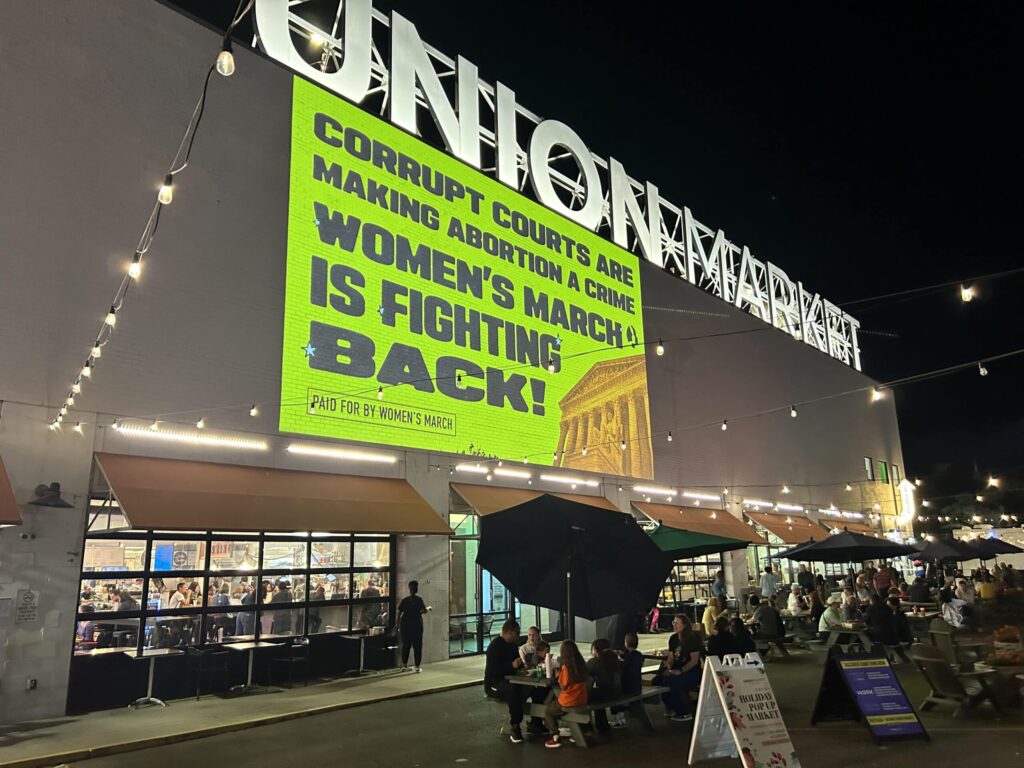
The most effective guerrilla marketing campaigns in Oklahoma City generate reach beyond their placement footprint. When creative is visually compelling enough to earn photographs and shares from Oklahoma City residents and visitors, the campaign’s effective reach multiplies without additional spend. American Guerrilla Marketing builds guerrilla marketing campaigns with that organic amplification potential built into the strategy, deploying in Oklahoma City locations where social sharing is highest.
Market timing matters as much as placement location for guerrilla marketing in Oklahoma City. Campaigns running during Oklahoma City Pride, Tulsa Golden Driller events, Route 66 Marathon, and OU-Texas weekend reach concentrated audience volumes that normal operating windows can’t match. American Guerrilla Marketing calendars Oklahoma City campaigns around these peak windows, ensuring that budget is deployed when the audience-to-impression ratio is highest. The brands that consistently get the strongest ROI from Oklahoma City street-level advertising are those that coordinate campaign timing with the city’s commercial rhythm rather than running on continuous flat deployment.
This page is built for brand and marketing teams who need a serious grounding in guerrilla marketing in Oklahoma City before making a campaign decision. It covers commercial geography and audience concentration in Oklahoma City’s key neighborhoods, tactical format options and their documented performance in this market, American Guerrilla Marketing’s execution process from planning through post-campaign reporting, and budget structures from entry-level campaigns to full-market saturation programs.
What Is Guerrilla Projection Advertising?
Guerrilla projection advertising deploys high-powered projectors to display brand imagery, messaging, animations, or video on the exterior surfaces of buildings, bridges, landmarks, and urban infrastructure in public spaces. Unlike conventional OOH advertising that appears in designated commercial placements (billboards, transit panels, digital screens), guerrilla projections appear in unexpected locations, creating the element of surprise that is the format’s most powerful audience engagement mechanism.
When a pedestrian turns a corner in Bricktown and finds a building-scale brand projection on the historic brick warehouses that line the canal, they stop. They look. They reach for their phone and take a photo or video. That organic social content creation is the format’s multiplier effect, a single night of projections can generate hundreds of individual social posts from witnesses, extending campaign reach far beyond the physically present audience at zero additional cost.
Oklahoma City: Market Overview and Key Projection Locations
Oklahoma City has undergone one of the most remarkable urban transformations of any American city in the past two decades. The MAPS (Metropolitan Area Projects) civic investment program has produced a stunning downtown physical transformation, the Bricktown Entertainment District, the Chesapeake Energy Arena (now Paycom Center), the Scissortail Park, the revitalized Convention Center, and the ongoing development of new mixed-use districts has created a genuine downtown urban environment out of what was largely suburban sprawl surrounding a modest city center. The result is a downtown OKC that now draws significant foot traffic and hosts a growing urban creative community.
Bricktown Entertainment District
Bricktown is Oklahoma City’s most active entertainment destination and the city’s most projection-friendly architectural environment. The historic brick warehouse buildings that line the Bricktown Canal provide spectacular large-format projection surfaces, the combination of genuine architectural character and the concentrated evening foot traffic that the district’s restaurants, bars, and entertainment venues generate makes Bricktown the highest-quality guerrilla projection environment in Oklahoma. The Bricktown Canal itself, with its water taxis and the reflections that projection content creates on the water surface, adds a visual dimension that’s unique in the state.
Bricktown’s evening foot traffic peaks on Thursdays through Saturdays during the entertainment season, on Thunder (NBA) game nights when Paycom Center draws 19,000+ fans into the district, and on major event nights at Chickasaw Bricktown Ballpark. Projection campaigns activated during these high-foot-traffic moments reach extraordinary audience densities for an Oklahoma City campaign.
Midtown Oklahoma City
Midtown OKC, the stretch along NW 10th Street between Classen Boulevard and the Broadway Extension, has emerged as the city’s hippest dining and bar corridor, with independent restaurants, craft cocktail bars, and the visual language of a neighborhood in active creative development. The architectural character here is different from Bricktown, smaller-scale buildings, more intimate streetscape, but the demographic is exceptionally well-aligned for brands targeting the 25-40 creative professional audience that has made Midtown OKC one of the city’s fastest-appreciating residential zones. Projection campaigns in Midtown reach a demographic that is more social media active and brand-engaged than Bricktown’s broader entertainment crowd.
Film Row and the Automobile Alley
OKC’s Film Row district (along California Avenue) and the Automobile Alley (along Broadway Ave between 4th and 13th) are both experiencing rapid growth in creative businesses, restaurants, and arts organizations. The Film Row name comes from the district’s historic identity as a distribution hub for the film industry, and the neighborhood’s warehouses and storefronts provide excellent projection surfaces for brands with creative and cultural positioning. Automobile Alley’s Art Deco commercial architecture is among the most visually distinctive in the city.
Paycom Center and the Sports Zone
Oklahoma City Thunder games at Paycom Center create one of the highest-density audience concentration events in Oklahoma, 19,000+ fans in an arena and the surrounding blocks, concentrated on approximately 40+ game nights per season plus playoffs. The streets surrounding the arena on game nights are among the best projection advertising environments in the state in terms of raw audience count. Brands with sports-adjacent positioning or the Oklahoma market demographic as a target can reach extraordinary volumes through Thunder game night projection campaigns.
Scissortail Park
Scissortail Park, the 70-acre urban park in downtown OKC developed as part of the MAPS 3 civic investment program, has become one of the city’s primary gathering spaces for events, recreation, and cultural programming. The park’s proximity to the Convention Center and its design as a public gathering space means that Scissortail events draw broad, diverse Oklahoma City audiences in an outdoor context well suited to guerrilla projection campaigns.
Tulsa: The Arts District and Secondary Markets
Tulsa’s downtown has its own distinct character, anchored by one of the highest concentrations of Art Deco architecture in the world, a vibrant arts and music scene centered on the Brady Arts District, and the gathering momentum of Tulsa’s economic development initiatives. The Gathering Place, a $465 million privately funded park on the banks of the Arkansas River, has become one of Oklahoma’s most visited attractions and one of Tulsa’s defining civic achievements.
Brady Arts District
The Brady Arts District along Brady Street and the surrounding blocks is Tulsa’s most culturally vibrant neighborhood, anchored by the Cain’s Ballroom (one of America’s most historically significant music venues), the Circle Cinema, the Tulsa Artists’ Coalition, and a growing constellation of bars, restaurants, and galleries. The district’s industrial and early 20th-century commercial architecture provides excellent projection surfaces, and the arts-forward community that animates the neighborhood creates a particularly receptive audience for creative visual interventions. First Fridays in the Brady Arts District, a monthly gallery walk that draws thousands of Tulsans into the neighborhood, is one of the best projection campaign activation moments available in the Oklahoma market.
The Gathering Place
The Gathering Place’s riverfront location and architectural features, designed by Michael Van Valkenburgh Associates to be one of America’s most beautiful urban parks, offer extraordinary projection environments for the right campaign objectives. The park’s combination of architectural features, water elements, and consistent visitor traffic creates both physical projection surfaces and the audience context to justify activation there. Projection campaigns at the Gathering Place during major events (concerts, festivals, holiday programming) reach broad Tulsa demographics in the state’s most premium civic setting.
Art Deco Downtown Tulsa
Tulsa’s Art Deco architectural legacy, the Philcade Building, the Philtower, the Tulsa Club, the Atlas Life Building, and dozens of other buildings from the city’s 1920s oil boom era, creates a distinctive architectural canvas for projection advertising that is unlike any other Oklahoma market. Projections that engage with the Art Deco aesthetic rather than ignoring it can achieve extraordinary visual integration with the built environment that makes Tulsa’s downtown uniquely distinctive among Oklahoma cities.
Technical Considerations for Oklahoma Campaigns
Oklahoma’s climate creates specific technical considerations for guerrilla projection campaigns. The state’s dramatic weather, from summer heat exceeding 100 degrees Fahrenheit to winter ice storms, from spring tornado season to gusty plains winds, requires campaign timing and equipment specifications that account for these conditions.
Summer Heat and Dust
Oklahoma’s summer temperatures (peak July-August) reduce the effective darkness window for projection campaigns, sunset is late (8:30pm in June), limiting the earliest projections to late evening. Summer heat also affects projector cooling requirements; high-ambient-temperature environments require more strong cooling provisions for extended projector operation. The Oklahoma panhandle’s dry conditions create dust that can affect lens and sensor performance, AGM manages equipment for Oklahoma’s specific environmental conditions.
Optimal Campaign Seasons
Oklahoma’s best projection campaign seasons are spring (March-May) and fall (September-November), when temperatures are moderate, the darkness window is reasonable, and outdoor foot traffic is at its annual peaks. Spring brings Art Walk events and outdoor festival season openings. Fall brings football season (OU and OSU game days are major foot traffic events in Norman and Stillwater), harvest festivals, and the pre-holiday consumer surge. Winter campaigns are viable for indoor-adjacent projections and for brands targeting the Thunder NBA season audience concentrated around Paycom Center.
Creative Strategy for Oklahoma Projection Campaigns
Oklahoma City and Tulsa are markets where the creative bar for guerrilla projections is meaningfully lower than in NYC, LA, or Chicago, because the format is genuinely rare in Oklahoma’s urban environments. This doesn’t mean creative standards should be reduced; it means that well-executed creative that would be competitive in any market achieves even greater relative impact in Oklahoma’s less-saturated projection advertising space.
The most effective Oklahoma projection creative is bold, simple, and visually distinctive, designed to be read from across the block and to be worth photographing for social media. Oklahoma’s cities have genuine civic pride and strong local identity; creative that demonstrates knowledge of the specific Oklahoma City or Tulsa context, rather than generic brand messaging dropped into an Oklahoma frame, earns the community engagement that converts projection viewers into brand advocates.
The historic architectural character of both Oklahoma City’s Bricktown warehouses and Tulsa’s Art Deco downtown creates opportunities for projection creative that engages with the architecture rather than ignoring it. Brands that commission projection content designed specifically for the architectural features of the target surfaces, content that uses the windows, cornices, and structural elements as part of the composition, achieve visual integration effects that generic content placed on the same surface simply cannot.
Oklahoma Event Calendar Alignment
Oklahoma’s event calendar creates projection campaign timing opportunities that can dramatically amplify impact:
Campaign Strategy and Market Considerations
AGM works through Oklahoma’s specific market considerations for projection campaigns, including location suitability assessment, equipment positioning logistics, timing coordination with local event calendars, and the community relationships that ensure campaigns launch and execute smoothly in both Oklahoma City and Tulsa markets.
Oklahoma’s cities are large geographically but have concentrated downtown entertainment cores that are smaller than comparable-population cities in denser states. This geographic concentration is an advantage for projection campaigns, the relevant pedestrian environments are tightly defined, making saturation of the target audience more achievable per deployment than in sprawling metro areas. A well-positioned projection in Bricktown reaches a large proportion of Oklahoma City’s active downtown social population on any given evening.
AGM Oklahoma Guerrilla Projection Capabilities
Building a Guerrilla Marketing Strategy That Performs in Oklahoma
Guerrilla marketing is often described in terms of tactics, the unconventional, the unexpected, the street-level. But the brands that consistently generate results from guerrilla campaigns don’t think of it as a collection of tactics. They think of it as a strategic framework for reaching audiences in environments where conventional advertising doesn’t follow them, at the moment when they’re most receptive to brand messages embedded in their actual physical world.
Why Guerrilla Marketing Works Differently Than Digital
Digital advertising delivers impressions inside the screens that compete for attention. The consumer’s relationship with digital advertising is fundamentally adversarial: the ad is interrupting something they were trying to do, and their instinct is to dismiss it as quickly as possible. Physical guerrilla marketing meets consumers in their environment on their own terms. A compelling mural, a perfectly placed Wheat Paste Poster Campaign, or a brand activation at a community event delivers a brand encounter that feels native to the environment rather than imposed on it, and that distinction produces meaningfully different psychological responses in the consumer.
The Integrated Campaign Advantage
Guerrilla marketing is most powerful when it functions as part of an integrated campaign rather than in isolation. Physical street-level campaigns build the brand awareness that makes digital retargeting more effective. Brand activations generate social content that extends campaign reach beyond the immediate audience. Snipe and sticker campaigns reinforce broader brand messaging from billboards or digital advertising. When all these elements are coordinated around consistent creative and messaging, the total campaign effect exceeds the sum of its parts.
Measuring Guerrilla Marketing Effectiveness
Guerrilla marketing measurement requires a broader framework than the click and conversion metrics that digital advertising normalizes. Physical campaigns build brand awareness, mental availability, and word-of-mouth that manifest in business results over longer time horizons. Branded search volume tracking, social mention monitoring, brand awareness surveys in campaign geographies, and business-side metrics, foot traffic, trial rates, sales velocity, provide the most complete picture of guerrilla campaign performance. AGM provides campaign documentation including geotagged photography and deployment data to support client measurement processes.
Campaign Scalability
One of guerrilla marketing’s underappreciated advantages is scalability. A campaign concept that works in one market can be deployed simultaneously across dozens of markets using the same creative system and strategic framework. AGM executes integrated guerrilla marketing campaigns in Oklahoma as standalone market programs or as part of national multi-market rollouts, maintaining the same execution standard whether the campaign covers one city or thirty.
Find American Guerrilla Marketing on Google: View American Guerrilla Marketing’s Google Business Profile for Oklahoma campaign reviews, installation documentation, and service details.