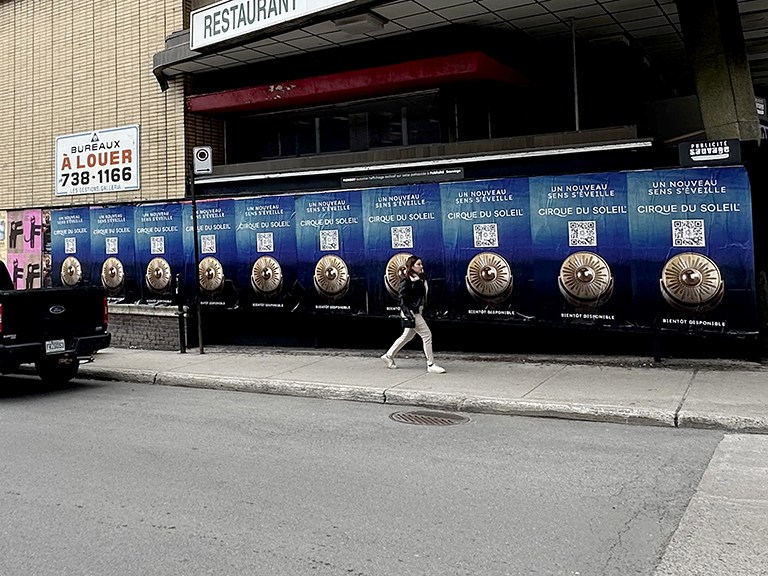
Seven core strategies behind every high-performing street campaign we have run across New York, Los Angeles, Chicago, Miami, and Austin over the past decade.
Guerrilla marketing strategies are built around a simple premise: create more impact with less budget by being more creative, more targeted, and more present in the physical world than your competition. The word “strategy” matters here. Guerrilla marketing is not random or impulsive. The best campaigns are as carefully planned as any conventional media buy. The difference is that the planning happens in neighborhoods and streets rather than in media-buying dashboards.
We have executed hundreds of guerrilla marketing campaigns in cities across the United States. We have worked with brands at every stage, from indie labels and startup consumer goods companies to national brands that want to activate cultural credibility in specific markets. Across all of those campaigns, the strategies that consistently deliver results follow patterns worth laying out in detail.
The Foundation of Every Guerrilla Marketing Strategy
Before any campaign goes live, we work through three foundational questions with every client. Who are we trying to reach? Where are they? What do we need them to feel or do after encountering the campaign? The answers to these questions determine every subsequent strategic decision.
The audience question is the most important. Guerrilla marketing does not work as a broadcast medium. It works as a precision instrument aimed at a specific audience in a specific place at a specific time. The more precisely you define your audience, the more specifically you can execute, and the better your results will be. We push every client to resist the temptation to define their audience broadly. “People aged 18 to 35 in New York” is not an audience. “Sneaker-collecting, culturally engaged young men who spend time on Fairfax and in Williamsburg” is an audience you can actually market to on the street.
The geography question flows directly from the audience question. Once you know who you are reaching, you know where they are. We combine audience intelligence with our own neighborhood knowledge and foot traffic data to build location strategies that put campaigns exactly where the right people will encounter them.
The response question shapes the creative. Do you want people to feel something? Know something? Do something? The answer determines the format, the message, and the execution approach. A campaign designed to drive event attendance looks different from a campaign designed to build brand awareness. Both can be effective guerrilla campaigns, but they are built differently from the ground up.
The Seven Core Guerrilla Marketing Strategies We Use
1. Neighborhood Saturation
Saturation strategy concentrates campaign placements within a small geographic area to create the sensation of brand omnipresence. When a person walks through a neighborhood and encounters the same brand at three different points in a ten-minute process, the cumulative impact is far greater than three isolated exposures would suggest. Saturation builds familiarity quickly and creates a cultural moment within a specific community.
We use this strategy for product launches, event support, and brands entering a new market that need to establish presence fast. In practice, saturation in Williamsburg means covering Bedford Avenue from the waterfront at North 1st up to the Bedford L train stop at North 7th, plus the cross streets of Metropolitan Avenue and Grand Street. That six-by-three-block zone is where the neighborhood concentrates. Hit every available wall and board in that zone and you have genuine saturation.
2. Cultural Community Targeting
This strategy targets specific cultural communities rather than broad demographic groups. The goal is to put the brand in front of the people who matter most for cultural momentum: the tastemakers, the early adopters, the community members whose endorsement carries weight within their network. A campaign that reaches the right 500 people in a specific neighborhood can generate more downstream impact than one that reaches 5,000 people in a generic zone, because the 500 include the people whose opinions and recommendations drive behavior for a much larger group.
Fairfax Avenue in Los Angeles is a perfect example. The blocks between Melrose Avenue and Oakwood Avenue on Fairfax are home to the nation’s most concentrated streetwear and sneaker culture. A campaign that runs on those specific blocks, with creative that speaks authentically to that culture, reaches the exact audience that drives consumer behavior in streetwear globally. The same campaign on Sunset Boulevard a mile away reaches a broader but far less culturally influential audience.
3. Context Integration
Context integration places campaign creative in environments where it feels like it belongs, using the context of the environment to amplify the message. A fitness brand that places advertising at the entrance to parks and running routes is using context integration. A food brand that places advertising near transit exits that lead to its target neighborhoods is using context integration. The message feels more relevant because the environment reinforces it, and relevance increases the probability of the message being received and remembered.
The most powerful context integration we run is food and beverage sampling at or near transit hubs during commuter windows. 7am to 9am at Grand Central or Union Square positions the product in the morning routine context, where it belongs. The physical act of handing someone a coffee or energy drink as they start their day creates a usage occasion association that a banner on a bus shelter never achieves.
4. Event Ambush and Adjacency
Campaigns that position a brand in the physical vicinity of major events, concerts, festivals, and cultural gatherings reach event audiences without the cost of official event sponsorship. The strategy requires proximity, not participation. A brand that places advertising along the routes people walk to and from a major festival is putting its message in front of the festival audience at the moment when they are most culturally engaged and receptive.
We have executed this strategy around major events in New York, Los Angeles, Chicago, and Miami with consistently strong results. Around Lollapalooza in Grant Park in Chicago, we run postering on the approach routes from the North Side: Clark Street from Belmont down to Chicago Avenue, and the Michigan Avenue corridor approaching Grant Park from the north. The audience walking those routes is exactly the right audience for music-adjacent brands, and they encounter the campaign at peak engagement.
5. Serial Reveal Campaigns
Serial reveal campaigns build awareness and anticipation by unfolding campaign content in stages. The first placement teases without revealing. The second adds information. The third completes the message. This strategy works particularly well for product launches, album releases, and brand reintroductions where the element of mystery drives engagement.
People who encounter the campaign multiple times across its stages feel rewarded for their attention in a way that a single complete message does not produce. The curiosity generated by a strong tease placement is itself a form of brand recall. The audience actively looks for the next stage of the campaign. That kind of active engagement with brand content is almost impossible to create through conventional advertising.
6. Cross-Channel Physical and Digital Integration
This strategy uses physical street placements to seed digital behavior. A street campaign with a hashtag, a QR code, or a visual element designed to be photographed and shared creates a bridge between physical and digital reach. The physical placement is the trigger. The digital behavior it generates is the amplification. When these two elements are properly aligned, the combined reach can be many multiples of what either element would produce in isolation.
The most effective version of this we run is the projection campaign with a live social element. We project brand content onto a building, our documentation team captures it and posts immediately to the brand’s channels, and we brief the client’s social team to be ready to amplify the content during the activation window. The physical event produces authentic social content that performs better than any produced social asset because it is real.
7. Sustained Presence
Sustained presence strategy keeps a brand consistently visible in its target markets over extended periods. Rather than single campaign bursts, this approach maintains a continuous level of street-level activity that builds cumulative awareness and brand familiarity. The brands that use this strategy most effectively become part of the visual environment of their target neighborhoods. That kind of embedded presence creates a depth of brand recognition that single campaigns cannot achieve regardless of their scale.
We run sustained presence programs for several clients across their core markets. These programs typically combine monthly postering refreshes, quarterly street team activations, and periodic projection or event adjacency campaigns. The consistency of street-level visibility builds brand recognition in the way that repeated exposures always do, but the physical format creates a stronger memory trace than digital repetition.
Strategy
Best For
Key Advantage
Typical Timeline
Neighborhood Saturation
Launches, market entry
Fast presence building in a defined zone
2 to 4 weeks
Cultural Community Targeting
Credibility, early adoption
Authentic influence, word of mouth
3 to 6 weeks
Context Integration
Relevance and timing
Message amplification via environment
Ongoing
Event Adjacency
Festival and event seasons
Audience capture without sponsorship cost
Event window
Serial Reveal
Launches, drops, releases
Anticipation and active engagement
3 to 6 weeks
Cross-Channel Integration
Social-first brands
Physical-to-digital amplification
1 to 4 weeks
Sustained Presence
Established brands, ongoing
Cumulative recognition and familiarity
Quarterly or annual
How Strategy Drives Location Decisions
Every guerrilla marketing strategy resolves into specific location choices. The strategy tells you which neighborhoods to prioritize and which blocks within those neighborhoods to target. The location scout validates those choices on the ground before production begins.
For neighborhood saturation strategies, we prioritize the blocks with the highest available placement density: the streets with active boards, available wall space, and strong pedestrian flow. In Williamsburg that is Bedford Avenue. In SoHo that is the Broadway and Spring Street intersection and the Prince Street corridor. In Wicker Park in Chicago that is the Milwaukee and Damen intersection extending east and west on North Avenue.
For cultural community targeting strategies, we prioritize the blocks where the specific culture congregates. Streetwear culture in LA is on Fairfax and Melrose. Music culture in New York is on Rivington, Orchard, and Bowery. Food and beverage culture is at the transit hubs where the relevant consumer moves at scale.
For event adjacency strategies, we reverse-engineer the audience movement. Where does the crowd come from? How do they get there? What do they walk past? The answers tell us exactly where to concentrate placements to reach the maximum percentage of the event audience before or after they attend.
AGM Field Note: Strategy and location are not separate decisions. The strategy determines which locations serve the campaign. Location choices made before the strategy is locked almost always produce campaigns that are in the right city but on the wrong blocks.
Guerrilla Marketing Strategy by Brand Category
Consumer Packaged Goods
CPG brands benefit most from context integration and saturation strategies. The goal is usually trial generation combined with awareness building, which maps onto sampling activations at high-traffic transit hubs combined with postering in the retail neighborhoods where the product is available. We build CPG campaigns to hit the awareness and trial goals simultaneously: the poster tells you the product exists, the street team puts it in your hand.
For food and beverage launches in New York, the standard approach is a five-day street team deployment at Grand Central, Penn Station, and Union Square, combined with a postering run covering the retail-dense blocks from 14th Street up to 28th Street on both the east and west sides. The street team drives trial and creates a first-hand experience. The postering runs alongside and behind to reinforce the brand in the ambient visual environment.
Music and Entertainment
Entertainment brands almost always benefit from the serial reveal strategy combined with cultural community targeting. The tease phase builds curiosity in the specific neighborhoods where the target audience is most concentrated. The reveal phase generates organic documentation and sharing. The follow-through phase, whether a street team, a projection, or a postering campaign, maintains momentum through the release window.
Music release campaigns in New York follow a predictable and effective playbook: two weeks of teaser postering in Williamsburg, the Lower East Side, and the Flatbush corridor in Brooklyn. Release week brings a projection campaign on a building in Williamsburg or the Arts District. Post-release, a street team runs in the same neighborhoods with product samples or promotional materials. The campaign runs for three to four weeks total and builds momentum rather than releasing all impact at once.
Fashion and Lifestyle
Fashion brands benefit from cultural community targeting combined with sustained presence in their core markets. The specific blocks where the brand’s target consumer lives, shops, and socializes should be visible with the brand at all times. That means regular postering refreshes, strategic wheat paste placements on owned or permitted walls, and seasonal activations that align with the brand’s own calendar.
The most effective fashion guerrilla campaigns we have run use the city itself as a creative medium. A wheat paste campaign on the side streets off Melrose Avenue that treats the wall as a gallery surface rather than a traditional advertising placement creates an installation that people photograph because it is interesting, not just because it has a brand logo. That organic photography is worth more than the media cost of the placement itself.
Tech and App Brands
Tech and app brands benefit most from cross-channel integration strategies. The physical street activation exists to generate organic social content that amplifies to a digital audience far larger than the foot traffic at the location. Building projections are the most effective single format for this, because the spectacle of a projection on a major building in SoHo or the Arts District in LA is inherently photograph-worthy and generates organic content at a rate that few other street formats match.
AGM Field Note: Tech brands often underestimate how much the physical execution quality affects the digital output. A projection that is technically excellent, sharp, bright, correctly scaled, on a beautiful building, generates far more organic photography than one that is technically marginal. The digital reach of a physical activation is a direct function of how compelling the physical execution actually is.
Multi-City Guerrilla Marketing Strategy
Running guerrilla marketing campaigns across multiple cities simultaneously requires a strategy that is consistent at the brand level and calibrated at the market level. The brand story does not change. The markets where that story is told each have their own geography, their own cultural centers, and their own execution requirements.
For a four-city launch campaign across New York, Los Angeles, Chicago, and Miami, we build a unified creative brief that produces consistent brand messaging across all markets. Then we build separate location strategies for each market based on the target audience profile and the specific neighborhoods where that audience is concentrated in each city. The campaign looks cohesive because the creative is unified. The campaign performs because the placement is market-specific.
Coordination across markets requires a central project management structure with market-level contacts in each city. Our crews in each market execute to the same standards, use the same documentation procedures, and report through the same channels. That consistency is what allows multi-city campaigns to deliver coherent results rather than a fragmented collection of individual market executions.
Timing and Sequencing in Guerrilla Marketing Strategy
The timing of a guerrilla marketing campaign is as strategic as the location. What day of the week does the target audience move through the target location at the highest volume? What time of day? What event, seasonal, or cultural context makes the campaign most relevant in the week it runs?
Street team campaigns in retail-focused neighborhoods perform best Thursday through Saturday, when foot traffic in those zones is highest. The same crew working Monday and Tuesday on the same block reaches a fraction of the audience at a fraction of the engagement level. We advise clients on optimal timing for their specific format and location combination based on what we know from running campaigns in those zones over years.
Postering campaigns are typically installed on Tuesday through Thursday to ensure the placements are fresh for the weekend, when the highest-traffic days in most cultural neighborhoods occur. A poster installed on a Saturday is already three days old by the following Friday. A poster installed on Wednesday is fresh and clean through the weekend. Timing installation correctly is part of the execution discipline that separates professional campaign management from amateur postering.
Projection campaigns run best Thursday through Saturday in most markets because the combination of high foot traffic, lower ambient light (later sunset in most seasons), and social media activity peaks on those nights creates the maximum audience concentration. A Thursday-to-Saturday projection in SoHo runs during the three highest-traffic evenings in that neighborhood and captures the social documentation cycle when it is most active.
Building a Guerrilla Marketing Strategy for Your Brand
The process for building a guerrilla marketing strategy starts with a direct conversation about the brand, the audience, the markets, and the goal. We do not produce templates. Every strategy we build is specific to the brand we are building it for and the situation they are navigating. A brand launching its first product in a new market has different strategic needs than an established brand defending its position in a home market. Both require genuine strategic thinking, not a repurposed playbook.
What we bring to every strategy conversation is ten years of knowing what works on the street. Not what looks good in a presentation, not what generates excitement in a client meeting, but what actually produces results when it is executed in a real neighborhood at a real time of day. That field knowledge is the foundation of every strategy we build.
We start with your audience and your goal. We identify the markets and specific neighborhoods where the strategy should execute. We validate location choices with a scout. We produce or direct the creative. We execute with our own field teams. We report on results with honesty. That is the process. It works because every step of it is grounded in what the street actually tells us, not what the brief assumed.
Guerrilla Marketing Strategy and Budget Reality
One of the most persistent myths about guerrilla marketing strategy is that it is inherently a low-budget discipline. The origin story of the approach, small businesses competing with larger competitors without a comparable advertising budget, has attached itself permanently to the format in ways that sometimes cause brands to miscalibrate their expectations and their investment levels.
The truth is that guerrilla marketing strategy can be executed at any budget level, and the return-to-investment ratio is typically stronger than conventional media at comparable spend. But a street-level campaign that is underfunded in production or compressed in timeline will underperform not because guerrilla marketing does not work, but because the specific execution was not given what it needed to succeed. A postering campaign with cheap paper and weak print quality on the wrong blocks does not represent guerrilla marketing failing. It represents an underfunded and poorly planned execution in a format that rewards quality and precision.
We advise clients to think about guerrilla marketing budget in three categories. The minimum viable budget for a single-market, single-format campaign, typically a postering or street team run in one neighborhood, sits at a level that makes professional production and professional installation possible without compromise. The growth budget, which supports two to three markets with mixed formats including a projection or large-format component, is where campaigns begin to compound across formats and geographies. The sustained presence budget, which maintains regular street-level activity across multiple markets over a quarter or a year, is where guerrilla marketing builds the kind of cumulative brand presence that changes competitive positioning.
Each budget tier requires a different strategic approach. The minimum viable campaign should concentrate everything on the one or two locations where impact is highest, rather than spreading thin across many locations. The growth campaign can use format diversity to create different kinds of brand encounters in different contexts, which produces a more complete campaign picture than any single format repeated at higher volume. The sustained presence campaign needs a planning architecture that refreshes creative and rotates locations to maintain novelty, because the same placements in the same locations with the same creative lose impact over time even with the right audience.
How We Document and Report Every Campaign
Documentation and reporting are parts of campaign execution that many brands undervalue until they need the information and do not have it. We treat documentation as an operational requirement, not an afterthought, because the post-campaign report is the foundation for every subsequent campaign planning conversation.
Every placement we install is documented with GPS-tagged, date-stamped photographs taken before the installation team leaves the location. The documentation package gives clients proof of placement for every location in the campaign, delivered before the next business day. We do not present installation reports as estimates of what ran. We provide photographs of every specific board, wall, and placement location in the campaign.
Social monitoring during and after the campaign tracks organic documentation volume: the photographs and posts created by real people who encountered the campaign in the wild. This is qualitatively different from the brand’s own documentation of its placements. Organic posts from people who encountered the campaign are evidence of genuine audience engagement. We track this volume and include it in post-campaign reporting as a signal of campaign resonance.
Brand recall surveys, conducted with target-demographic respondents in the markets where the campaign ran, measure awareness lift: the change in brand recognition and recall attributable to the campaign. We use this metric as the primary performance indicator for campaigns where awareness building is the stated goal, because it connects the campaign activity directly to the brand building outcome rather than using proxy metrics like impression counts that do not indicate whether the brand message was actually received.
Frequently Asked Questions
What is a guerrilla marketing strategy?
A guerrilla marketing strategy is a planned approach to using unconventional, street-level tactics to create brand awareness and engagement. It covers the choice of format, the selection of locations and markets, the timing of the campaign, and the creative approach, all aligned to the specific audience and goal the brand is trying to reach.
How is guerrilla marketing strategy different from traditional marketing strategy?
Traditional marketing strategy builds campaigns around paid media placements in channels that the audience is already present in but often ignoring. Guerrilla marketing strategy builds campaigns that intercept the audience in physical spaces where they are not expecting advertising, which produces stronger attention and recall. The planning process is equally rigorous; the execution medium is different.
Which guerrilla marketing strategy works best for a product launch?
Neighborhood saturation combined with a serial reveal approach works best for product launches because it creates concentrated brand presence in the target market quickly while building anticipation through a staged reveal. Adding a street team sampling component creates the trial dimension that turns awareness into first-hand product experience.
How does AGM validate its strategic location recommendations?
We validate location recommendations through a market scout: a field survey of the target locations that confirms foot traffic, available placement surfaces, competitive environment, and cultural context. The scout is the bridge between the strategic recommendation and the actual execution plan, and it prevents campaigns from being planned against assumptions that do not hold on the ground.
Can small brands use professional guerrilla marketing strategies?
Yes. Scale is not a requirement for strategic sophistication. A small brand that runs a tightly targeted postering campaign in the three most relevant blocks of its home market is executing a more effective strategy than a large brand running untargeted placements across a broad geography. The strategy adapts to the budget; the thinking behind it does not change.
How does multi-city guerrilla marketing strategy work?
We build a unified creative brief that produces consistent brand messaging across all target markets. Then we build separate location strategies for each market based on where the target audience is concentrated in each city. The campaign looks cohesive because the creative is unified. It performs because the placement is market-specific. Our crews in each city execute to the same standards and report through the same channels.
How do you select locations for AGM campaigns?
Location selection combines foot traffic data, neighborhood audience profiles, existing location relationships, and campaign-specific objectives. We walk locations ourselves to validate data with ground-level observation. Location decisions are strategic, not logistical.
How do I get started with a guerrilla marketing strategy for my brand?
Contact us at (646) 776-2770 or [email protected]. We start every engagement with a strategy conversation about your brand, your audience, your markets, and your goals. That conversation produces the strategic framework for a campaign that is right for where you are and where you want to go.