
November 5, 2026
Street Team Staffing and Training: A Field Guide
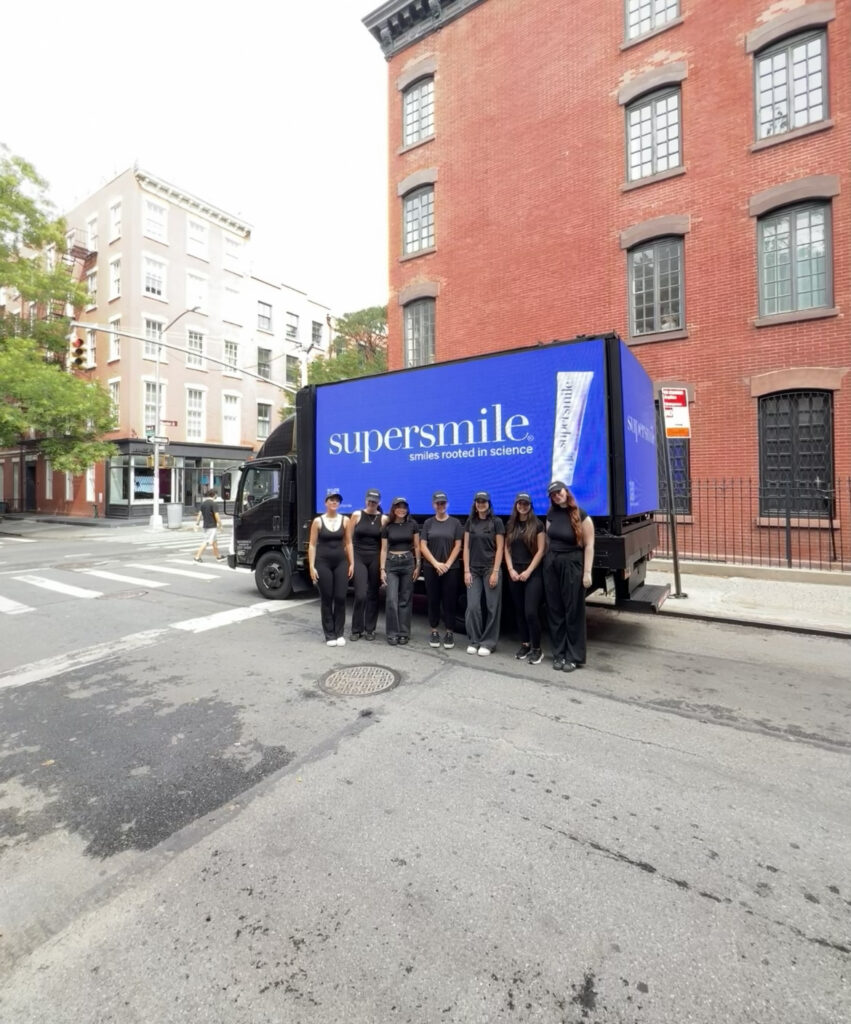
A street team is the only format where the medium can have a bad day.
A poster goes up and it performs the same on Tuesday as it does on Saturday. A projection either runs or it does not. An LED truck drives its route. But a street team is people, and people arrive tired, get cold, lose confidence after a run of rejections, and drift off their spot if nobody is managing them.
That is the whole challenge of this format, and it is why staffing and training deserve far more attention than they usually get. Most street team programmes that disappoint did not fail because the concept was wrong. They failed because the wrong people were hired, briefed badly, placed poorly and left unsupervised.
I have run teams on cold mornings outside transit entrances and on summer evenings outside venues, and the difference between a team that works and one that does not is almost entirely upstream of the shift itself.
This is the field guide: how we recruit, what we actually train, how shifts are structured, how quality gets maintained on the ground, and the things I talk clients out of.
What a street team is really for
Before staffing, be clear about the job, because the staffing follows from it.
Street Teams do things no other out of home format can do. They can hand someone a physical object. They can answer a question. They can adapt to the person in front of them. They can capture something, a sign-up, a code redemption, a conversation. They are the only element of a street campaign with a two-way exchange in it.
What they are not is a cheap way to generate impressions. If the objective is pure visibility, posters and trucks do that far more efficiently per hour. People are expensive in effort and attention and they should be pointed at jobs only people can do.
The objectives that genuinely suit a team look like this.
Sampling and distribution. Getting a physical thing into hands, where the product itself is the argument.
Driving footfall to a specific nearby location. A store opening, a venue, an activation. The team works the approaches.
Capturing something measurable. Sign-ups, downloads prompted in person, codes issued and later redeemed.
Explaining something that needs explaining. New categories and unfamiliar propositions benefit from a person who can answer the obvious question.
Qualitative feedback. A well-briefed team comes back with what people actually said, which is frequently the most valuable output and almost always the least planned for.
Decide which of those it is before hiring anybody, because each one needs a different kind of person.
Hiring for the job, not for a type
The default image of a street team is young, attractive, high energy. That is a casting brief, not a staffing strategy, and it produces mixed results.
What I actually screen for depends on the objective.
For sampling at volume, the priority is stamina and consistency. The job is repetitive, physically demanding and heavily weather exposed. Someone who is brilliant for ninety minutes and fading by hour three is the wrong hire. I want people who maintain the same approach at the end of a shift as at the start.
For explanation-led work, the priority is comprehension and composure. They need to hold the proposition accurately, answer off-script questions without inventing anything, and know how to say they do not know. Charisma without accuracy is a liability when the product is unfamiliar.
For conversion work, the priority is the ability to handle rejection without hardening. Most people walk past. Someone who takes that personally becomes either apologetic or aggressive within an hour, and both kill results.
For feedback gathering, the priority is listening and note discipline. Different skill entirely.
Across all of them, three things matter more than personality.
Reliability. The single biggest operational risk on this format is people not showing up. Attendance history matters more than audition performance.
Judgement. They will face situations the brief did not cover: an unhappy member of the public, a property manager asking what they are doing, a request they are not authorised to answer. I want people who de-escalate and escalate appropriately rather than improvising.
Local knowledge. People who know the area know where the crowd actually stands, which exit is busy, which corner is dead. That knowledge is worth a lot and it cannot be trained quickly.
Benchmark I apply: overstaff the roster relative to the shifts required, because attrition and no-shows are real, and a team running short is worse than a team running right-sized.
What training actually has to cover
Training for this work is short and intense. It is not a seminar. If it takes more than a focused session plus a supervised start, it is probably over-engineered.
Here is what has to be in it.
The proposition, in a form they can say in one breath. Not the brand deck. One sentence they can deliver while someone is still walking. Then one or two supporting points for people who stop.
The answers to the obvious questions. Every campaign has five or six questions that come up constantly. Write them down, give the answers, and make sure everyone has the same ones.
What to do when they do not know. This is the most important twenty seconds of training. The correct behaviour is to say so plainly and point to where the answer is. Inventing an answer on a street corner creates problems that surface later.
The approach itself. How to open, how long to persist, when to disengage. The most common failure is over-persistence, which makes people avoid the whole block. The second most common is a weak opener that nobody registers.
Hard boundaries. What they must not say, what claims they cannot make, who they escalate to, and what to do if someone becomes hostile or if a property owner or official asks questions. Clarity here protects the staff and the client.
Positioning discipline. Where the spot is, why it is there, and the rule about not drifting. Teams migrate towards each other for company. It is natural and it ruins coverage.
Capture and reporting. Exactly how they log what they are supposed to log, during the shift, not from memory afterwards.
Physical and safety basics. Where the breaks are, where the toilets are, hydration, layering for the weather, where to stand so nobody is stepping into traffic.
Benchmark: training is not finished until somebody has been observed actually doing it. The first thirty minutes of the first shift, supervised, is worth more than an hour of briefing.
Shift structure and crew reality
The physical shape of a street team day drives performance more than motivation does.
Shift length. This work degrades with time on feet. Long shifts produce a strong first half and a weak second. Shorter shifts timed at genuine peaks produce more output in fewer hours. I would rather run two sharp shifts at the right moments than one long one spanning a dead middle.
Day parts follow the audience, not the working day. Transit entrances peak at commute hours. Entertainment districts peak in the evening. Campus edges follow class timetables. Venue work runs on doors and let-out. A team standing on a corner at 2pm because that was convenient is being paid to be ignored.
Team size and structure. Pairs work better than individuals for most tasks. People approach a pair more readily than a lone person, pairs can cover a wider spot, and morale holds up. Above a certain footprint you need a lead on site whose job is not handing out but running the team: rotating positions, replenishing stock, handling questions from property staff, and keeping energy up.
Benchmark: there should always be a named lead physically present. Remote supervision does not work on this format. The lead is the single most important hire on the roster.
Rotation. Positions should rotate through the shift. The best spot is tiring and the worst spot is demoralising, and rotating both spreads the load and keeps people sharp.
Breaks. Scheduled, not improvised. A team that is not given breaks will take them informally, which looks worse and is harder to manage.
Stock. Someone owns replenishment. Running out mid-peak is a completely avoidable waste of the best hour of the day.
Weather, and why it decides more than you think
This is the format most exposed to conditions, and plans frequently ignore it.
Rain thins foot traffic quickly and changes behaviour. People walk faster, look down, and do not want to take anything that will get wet. Hoods and umbrellas remove eye contact, which is the mechanism the whole format runs on. A sampling shift in persistent rain delivers a fraction of its dry-day output.
Cold works differently. It does not necessarily reduce foot traffic, but it shortens every interaction and it degrades the staff fast. Standing still in cold weather is much harder than walking in it. Teams need layers, shorter rotations, somewhere to warm up, and realistic expectations.
Heat is the one people underestimate. Direct sun on a pavement for hours is genuinely punishing. Midday shifts in a hot market produce poor interactions and real welfare risk. Shift the hours to morning and evening and the same team performs far better.
Wind is a practical nuisance that ruins printed material and anything freestanding.
Benchmark: every street team plan needs a weather position agreed in advance. What triggers a shift being moved, who decides, and what the alternative date is. Deciding that at 7am on the morning of a wet shift, with a team already travelling, goes badly.
Materials matter here too. Anything paper-based needs a plan for wet conditions. If the handout is destroyed by drizzle, the campaign has a design problem rather than a weather problem.
Permission and the grey area for teams on the street
The permission picture for street teams differs from surface-based formats, and it is worth being precise.
The variables are things like occupying space, distributing material, setting up any kind of structure or table, and amplified sound. Each of those is treated differently across municipalities, and some are handled by the property owner rather than by the city at all.
Rules vary by municipality and enforcement is inconsistent, so this sits in a grey area rather than a settled yes or no. I am not going to tell you what is permitted where you want to run, because that depends on the specific city, the specific location and what the team is doing. Specific determinations belong with local counsel.
What I can describe is how we reduce exposure.
The gating item is usually property permission rather than anything else. A team working on private property with the owner’s or operator’s documented consent, a forecourt, a plaza under private management, a venue’s own frontage, is in a much more comfortable position than one on a contested public space.
We establish who controls the space before a position goes into the plan, and a position whose controller we cannot establish does not get used.
We document consent in writing, naming the location, the dates and what the team will be doing.
We brief the team explicitly on what to do if someone in authority asks questions: be polite, stop if asked, contact the lead, and let the lead handle it. Staff should never be put in the position of having to argue a point on the client’s behalf.
We avoid anything that creates an obstruction, because that is the thing most likely to turn a non-issue into an issue regardless of the local rules.
We clean up. Distributed material becomes litter in the surrounding blocks, and a team that leaves a mess in a plaza will not be welcome back. We brief on this and we sweep the area at the end of the shift.
Quality control on the ground
Everything above can be right and the shift can still underperform if nobody is watching.
The lead’s job during the shift is specific.
Check positions are being held and nobody has drifted.
Watch the approach and correct it early. A single over-persistent team member can sour a whole block, and the fix is a thirty-second conversation, not an end-of-shift debrief.
Monitor stock and replenish before peaks, not during them.
Track output against expectation through the shift rather than discovering at the end that one position was dead. If a spot is not working, move it. The plan is a starting hypothesis, not a contract with the pavement.
Capture documentation. Photographs of the team working, in context, timestamped. Clients need to see the activation happened, and a non-specialist stakeholder can evaluate a photo instantly in a way they cannot evaluate a spreadsheet.
Log conditions and anything unusual, during the shift. Written at the time, not reconstructed.
Benchmark: a short written shift report per shift, produced within the day, covering output, positions used, conditions, issues and verbatim feedback. Weekly summaries assembled from memory are worth very little.
What goes wrong
No-shows. The most common operational failure. The mitigation is overstaffing the roster and confirming attendance the day before, every time.
Drift. The team migrates to be near each other. Coverage collapses. Constant low-level management problem.
Script fatigue. By hour three the opener has become a mumble. Rotation and shift length are the fix.
Over-persistence. Creates avoidance and occasionally complaints.
Dead positioning. A spot that looked busy on a site visit at the wrong hour turns out to be empty at the actual shift time. Visit at the hour you intend to work.
Material that fails. Handouts people immediately discard, or that disintegrate in light rain. The object should be worth keeping or it is litter with a logo on it.
No measurement. The team hands out thousands of things and nobody can tell whether anything happened. Codes, distinct landing paths, venue footfall, these have to be designed in beforehand.
Staff put in a position they were not briefed for. Someone asks a hard question and the team member improvises. That is a briefing failure, not a staff failure.
What we talk clients out of
Using a team for pure impressions. If you want visibility, other formats deliver it far more efficiently. Use people for things only people can do.
Very long shifts. Output falls away. Shorter shifts at real peaks beat endurance.
Over-scripting. Long scripts produce staff who sound like robots and pedestrians who walk faster. Give them the point, the boundaries and the answers, then let them be human.
Staffing on appearance alone. Reliability, judgement and local knowledge outperform casting nearly every time.
Running a team with no lead on site. I will not do it. It is the one staffing line that is never worth cutting.
Placing a team somewhere with no nearby point of conversion. If the objective is footfall, the team has to be on the approaches, close enough that acting on it is easy.
Running a team in isolation. A team on a corner where the brand is otherwise invisible has to do all the work cold. The same team working a corridor that has been carrying Wheatpasting & Poster Campaigns for two weeks is approaching people who have already seen the brand several times that week. The conversation starts warm, and the difference in reception is obvious to anyone who has worked both.
That combination is the one I recommend most. Let the posters build recognition in a tight geography, then put people into the same streets to convert it.
Frequently asked questions
What should I look for when hiring street team staff?
Reliability first, because no-shows are the biggest operational risk. Then judgement, meaning they de-escalate and escalate appropriately rather than improvising when something unexpected happens. Then local knowledge, since people who know the area know where crowds actually form. Match the rest to the objective: stamina for sampling, comprehension for explanation-led work.
How long should a street team shift be?
Shorter than most plans assume. Performance degrades with time on feet, so a long shift delivers a strong first half and a weak second. Two sharper shifts timed at genuine audience peaks usually produce more than one long shift spanning a dead middle. Day parts should follow the audience rather than conventional working hours.
Do we need a supervisor on site?
Yes, always, and it is the staffing line I never cut. A named lead physically present handles position rotation, stock replenishment, early correction of approach problems, questions from property staff and documentation. Remote supervision does not work on this format, because the problems that need fixing are visible only on the ground.
How much training do street team staff need?
A focused session plus a supervised start, rather than a long seminar. Cover the proposition in one sentence, the five or six questions that always come up, what to do when they do not know, how to open and disengage, hard boundaries and escalation, positioning discipline, and exactly how to log output. Observe them working before considering training complete.
What happens if the weather is bad on the day?
Agree a weather position in advance: what triggers a move, who decides and what the fallback date is. Rain thins foot traffic and removes the eye contact the format depends on. Cold shortens interactions and degrades staff quickly. Direct midday sun in hot markets is punishing and carries welfare risk, so shift those hours earlier or later.
Is street team activity permitted in public spaces?
It varies by municipality, the rules differ depending on whether you are distributing, occupying space, setting up a structure or using sound, and enforcement is inconsistent, so it stays a grey area. The gating item is usually property permission. We establish who controls a space before using it, document consent, avoid creating obstructions and brief teams to stop and escalate if asked.
Request a campaign quote
If you are planning street team activity and want it staffed and run by people who treat it as an operation rather than a casting exercise, tell us the market, the locations you have in mind, the objective, the dates and what the team actually needs to achieve.
We will come back with a staffing structure, a shift pattern built around real audience peaks, a training outline, a documentation standard, a weather position and an honest view of whether people are the right format for the job at all.
Request a campaign quote and we will plan the shifts around the street, not the office clock.

Ready to Run Your Campaign?
Call us or email us. We’ll tell you exactly what we can do in your market and what it costs.
Related Services
Explore similar advertising solutions offered by American Guerrilla Marketing.
American Guerrilla Marketing — Los Angeles
Street-level campaigns in Los Angeles and nationwide. Wheatpasting, LED trucks, street teams, and more.
(646) 776-2770
Related Articles
-
Guerrilla Warfare Marketing: How It Actually Works
November 5, 2026
-
Experiential Companies: How It Actually Works
November 5, 2026
-
Experiential Branding: How It Actually Works
November 5, 2026
-
Projection Advertising Minneapolis: Corridors and Permits
November 5, 2026
-
Street Marketing Agency: Where It Works and Where It Fails
November 4, 2026