
July 26, 2026
Guerrilla Marketing NYC: The Borough-by-Borough Street Campaign Playbook
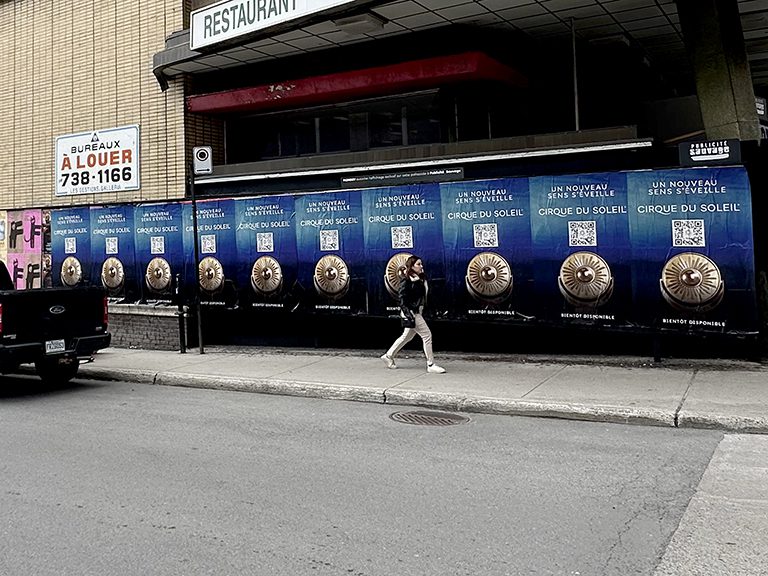
New York City is the most complex street marketing environment in the world. This guide breaks it down by borough, neighborhood, and format so you know exactly where your campaign should run and why.
We’ve run campaigns in every major US city. New York is different from all of them. Not just in scale, but in texture. The walls in Williamsburg read differently than the walls in SoHo. The foot traffic on the L train corridor is not the same as the foot traffic on the A. The streets of Harlem and the streets of the Lower East Side attract different audiences at different hours, and a campaign that ignores those distinctions is leaving reach on the table.
This is our field-tested playbook for guerrilla marketing in NYC. It covers the formats that work, the neighborhoods that perform, the permit realities, and the campaign structures we recommend based on years of on-the-ground execution.
Why NYC Demands a Different Approach
New York City has over 8.3 million residents across five boroughs, plus another 60+ million visitors per year. That density creates both opportunity and complexity. Unlike most cities where a single creative execution covers a market, NYC requires layered thinking. Manhattan alone has neighborhoods with distinct demographic identities that are sometimes only ten blocks apart.
The other reality: New York is a high-visibility city where street campaigns get noticed, photographed, and shared. A strong wheat paste poster campaign in Bushwick or a sidewalk stencil in SoHo doesn’t just reach the people walking by. It gets picked up by Instagram, TikTok, and local media. We’ve seen campaigns earn five to ten times their physical reach through organic social documentation.
AGM Field Note: In NYC, production quality matters more than in almost any other market. New Yorkers are visually sophisticated and will ignore or dismiss low-quality creative. Invest in the materials and the execution.
The city also has real regulatory complexity. What’s permissible in one borough may not be in another. Enforcement varies by neighborhood. We navigate this environment daily and know which formats work where without creating liability for our clients.
Manhattan: The Formats and Neighborhoods That Perform
Lower East Side and SoHo
The Lower East Side remains one of the strongest wheat paste poster campaign corridors in the country. The stretch from Houston Street down through Delancey, along Orchard, Ludlow, and Essex Streets, sees dense foot traffic from a young, culturally engaged audience from Thursday through Sunday. Brands in music, fashion, food and beverage, cannabis, entertainment, and consumer tech consistently find strong ROI here.
SoHo offers a slightly different opportunity. The foot traffic skews older and has higher purchasing power. Spring Street, Prince Street, and the Broadway corridor attract a mix of local residents, tourists, and fashion-forward shoppers. Wheat paste poster campaigns on the side streets off Broadway and Mercer consistently produce strong visibility at an audience with real buying power.
Midtown and Times Square Approaches
Midtown is the highest-traffic zone in the city, but it’s also the most regulated. Traditional guerrilla formats are harder to execute directly in the Times Square core. Where we see the most success is in the approach corridors: 9th and 10th Avenues in Hell’s Kitchen, the side streets between 34th and 42nd on the west side, and the corridors approaching Penn Station. Street team campaigns, sample distributions, and branded activations work well in these zones.
Harlem and Upper Manhattan
125th Street is one of the most high-traffic pedestrian corridors in the entire city. We’ve run wheat paste poster campaigns, street team distributions, and sidewalk stencil activations here to great effect. The audience skews local and community-rooted, which means the messaging has to feel authentic and relevant. Brands that try to parachute generic creative into Harlem get ignored. Brands that bring relevant, community-resonant messaging get embraced.
Chelsea and the Meatpacking District
Chelsea’s gallery corridor on West 20th-26th Streets between 10th and 11th Avenues is one of the best environments in the city for art-adjacent brand activations. The High Line draws a consistent stream of tourists and locals who are primed to engage with visually interesting street-level marketing. Brands in lifestyle, art, fashion, and experience categories see strong returns here.
Brooklyn: The Engine of NYC Street Marketing
Brooklyn is where the most concentrated guerrilla marketing activity happens in New York. The combination of creative culture, walkable neighborhoods, strong pedestrian density, and receptive audiences makes it the anchor of any serious NYC campaign.
Williamsburg
The stretch from Bedford Avenue north to McCarren Park and south along Kent Avenue is one of the most photographed street marketing corridors in the country. We’ve placed wheat paste poster campaigns here for major music labels, fashion brands, streaming platforms, and food and beverage companies. The creative expectations are high, but when you meet them, the audience response is disproportionate. Local blogs, Instagram accounts, and tastemakers regularly document campaigns they find compelling on these walls.
North Williamsburg and the Graham Avenue corridor extend the reach into a slightly more residential, younger demographic that’s still culturally active. The L train stops at Bedford and Lorimer are key anchors.
Bushwick
Bushwick is the city’s most actively decorated outdoor canvas. The Bushwick Collective has legitimized large-format outdoor art on this corridor, and brands that operate adjacent to that energy find strong resonance. The stretch from Wyckoff Avenue along Troutman and Jefferson is dense with surface opportunity. We’ve run campaigns here for music festivals, streetwear brands, sneaker releases, and tech startups targeting a creative-class, 21-35 demographic.
Park Slope and Carroll Gardens
These neighborhoods offer access to a slightly older, higher-income Brooklyn demographic. Families, professionals, and long-term residents who are deeply local in their orientation make up the core audience. Door hanger campaigns and neighborhood-specific wheat paste poster campaigns perform here for brands in health, food, parenting, financial services, and home goods.
Crown Heights and Flatbush
These neighborhoods are often overlooked by brands doing NYC campaigns, which means lower competition and stronger attention. We’ve run campaigns on Nostrand Avenue and Flatbush Avenue for clients in music, food and beverage, and retail who needed to reach Caribbean, African American, and West Indian communities with authenticity. Surface quality is excellent and dwell time is high.
Queens: Underused and Highly Effective
Queens is the most ethnically diverse urban county in the United States, and most brands completely miss it. That’s a competitive advantage for the ones who don’t. We regularly execute campaigns in Jackson Heights, Astoria, Flushing, and Long Island City for clients who need to reach specific demographic communities with precision.
Astoria
The foot traffic along 31st Street and Steinway Street, combined with strong local dining and nightlife culture, creates a pedestrian environment where street marketing performs well. The demographic is a mix of Greek, Middle Eastern, and younger professional residents who are receptive to brand discovery through street-level creative.
Jackson Heights
The 74th Street and Roosevelt Avenue corridor is one of the densest pedestrian environments in the outer boroughs. For brands targeting South Asian and Latin demographics specifically, this is often the highest-value surface in the entire city. We’ve run food and beverage campaigns, telecom campaigns, and music campaigns here with response rates that exceed what we see in more traditionally “trendy” neighborhoods.
Long Island City
LIC has transformed over the past decade into a young professional hub with strong daytime foot traffic from office workers and strong weekend traffic from residents. The area around Court Square and the Queens Plaza station gives easy subway access, and the wall inventory along Queens Boulevard and Jackson Avenue is strong.
The Bronx: A Market That Rewards Authenticity
The South Bronx, specifically the corridor along Third Avenue and 149th Street near the Hub, is one of the highest-foot-traffic pedestrian zones in the entire city. We’ve run campaigns here that consistently outperform what we see in some Manhattan neighborhoods. The key is authentic creative that doesn’t feel like it was air-dropped in from somewhere else.
Fordham Road is another strong corridor: heavy foot traffic, dense retail environment, and a community audience that responds to local presence. For brands targeting urban youth culture, hip-hop adjacency, or Latinx demographics, the Bronx is not optional. It’s essential.
Staten Island: Niche but Not Negligible
Staten Island is the least-used borough for guerrilla marketing campaigns, but it’s not without opportunity. St. George along the North Shore has seen significant arts and creative development, and the ferry terminal creates a natural funnel point. For brands targeting commuters and local residents in an environment where there’s virtually no competitive street-level advertising, the ROI can be surprisingly strong.
NYC Guerrilla Marketing Formats: What We Run and Where
| Format | Best Boroughs/Neighborhoods | Ideal Campaign Duration | Audience Profile |
|---|---|---|---|
| Wheat Paste Poster Campaigns | Williamsburg, LES, Bushwick, SoHo, Harlem | 2-4 weeks | 18-35, culturally engaged |
| Sidewalk Stencils | SoHo, Chelsea, Williamsburg, LIC | 1-2 weeks | Urban professionals, event attendees |
| Street Team Distribution | Midtown, Times Square approaches, LES, Brooklyn | 1-3 days | Broad urban, commuters |
| Brand Ambassador Programs | All five boroughs, targeted by demo | 1-4 weeks | Specific by deployment zone |
| LED Billboard Trucks | Manhattan core, major artery routes | 1-7 days | Commuters, tourists, event crowds |
| Guerrilla Projection | SoMa, DUMBO, Times Square adjacent | 1-3 nights | Event audiences, nightlife, media |
Wheat Paste Poster Campaigns in NYC: The Operational Reality
Wheat paste poster campaigns, also called flyposting or street poster advertising, are the core of most guerrilla marketing campaigns we run in New York. The city has a long history of this format: concert promoters, film studios, fashion brands, and political campaigns have all used it for decades. We’ve formalized and scaled what was once a DIY practice into a professional campaign format with documented placement, photo verification, and geographic precision.
Our team knows which surfaces hold paste longest, which neighborhoods see the fastest cleanups, and which walls have implicit or explicit permission from property owners. That operational knowledge is what separates a professional campaign from a waste of print budget.
Print Spec Note: Standard NYC wheat paste poster campaign sizes run 24″x36″ and 40″x60″. We also run full-sheet and double-sheet poster formats for high-impact single-surface placements. We always recommend UV-coated paper stock in markets with weather variability.
Sidewalk Stencils in NYC
Sidewalk stencil campaigns in NYC use water-soluble paint or chalk-based materials to create high-visibility ground-level impressions. We run these in environments with high foot traffic and natural eye-level downward gaze: subway station approaches, crosswalks, bar and restaurant districts, and retail corridors.
The regulatory environment around sidewalk stencils in NYC is specific. Water-soluble applications in public rights of way generally operate in a grey zone, while permanent or semi-permanent applications require authorization. We work within the legal boundaries of each specific execution and advise clients on the risk profile of each approach.
Street Team and Brand Ambassador Campaigns
New York City is the world’s best street team market. The density of foot traffic means that a well-deployed street team can reach more people in a four-hour shift than a billboard in most mid-market cities reaches in a week. We staff teams ranging from two-person activations to 40-person deployments across multiple boroughs simultaneously.
Our brand ambassadors are trained on product knowledge, engagement scripts, and geographic deployment. Every distribution comes with GPS-verified check-in data, photo documentation, and count verification. We don’t just deploy teams. We report on them.
LED Billboard Trucks in NYC
LED mobile billboard trucks in New York create high-visibility moving impressions that bypass the permit requirements of fixed installations. We route trucks along specific corridors based on target audience geography: through the West Village and SoHo for fashion campaigns, through the Barclays Center area for sports and entertainment campaigns, through the Flatiron and Union Square area for tech and startup campaigns.
Nighttime routes in Manhattan during events create particularly strong impressions. The combination of ambient darkness and high-brightness LED panels creates a visibility level that static placements can’t match.
Multi-Format Campaign Architecture for NYC
The most effective NYC guerrilla marketing campaigns we’ve run combine multiple formats to create what we call a surround strategy. Here’s how a typical multi-format NYC campaign is structured:
- Base layer: Wheat paste poster campaign across 3-5 key neighborhoods, 150-300 individual placements over a two-week period
- Amplifier: Sidewalk stencils at 15-25 key intersection or venue approach points on launch day
- Human layer: Street team distribution at 3-5 high-traffic nodes during peak hours, Tuesday through Saturday
- Nighttime punch: LED billboard truck routing through campaign neighborhoods on weekend evenings
- Documentation: Full photo audit delivered within 48 hours of installation completion
This architecture creates a campaign that’s visible at multiple times of day, across multiple surface types, and in multiple modalities. Consumers encounter it walking, commuting, and socializing. That repetition drives recall in a way that single-format campaigns can’t match.
Campaign Planning: Timeline and Lead Time in NYC
New York campaigns require more lead time than most markets. Print production for wheat paste poster campaigns runs 5-7 business days for standard quantities. Pre-campaign location scouting, surface assessment, and installation crew scheduling typically require another 5-7 days. We recommend a minimum 3-week lead time from brief to first installation for simple campaigns, and 4-6 weeks for multi-format or multi-borough programs.
For campaigns tied to specific events (product launches, album drops, film releases, brand anniversaries), timing is everything. We build backward from the target date and identify the critical path for each format.
What Good NYC Campaign Reporting Looks Like
We document every campaign with geo-tagged photography, GPS placement data, and installation crew reporting. After each campaign, clients receive a photo deck organized by neighborhood and format, a coverage map showing placement distribution, and a summary of any placements that required modification due to surface changes.
For street team campaigns, we layer in count data (how many units distributed), geographic breakdown by deployment zone, and time-of-day distribution patterns. Some clients also request social monitoring reports to capture organic documentation of the campaign.
Industries That Run the Most NYC Guerrilla Campaigns
Based on our experience executing campaigns in New York, the industries that consistently use guerrilla marketing most effectively include:
- Music and entertainment: Album releases, concert tours, streaming platform launches, film releases
- Fashion and streetwear: Product launches, seasonal campaigns, flagship store openings
- Food and beverage: Restaurant and bar openings, product launches, CPG sampling campaigns
- Cannabis brands: Street-level awareness campaigns where other advertising is restricted
- Tech and apps: Pre-launch awareness, user acquisition drives, product launches
- Financial services: Challenger banks, fintech platforms, credit card campaigns targeting young professionals
- Real estate: Development launches, new neighborhood branding, rental campaigns
Why Brand Authenticity Matters More in NYC Than Anywhere Else
New Yorkers are sophisticated, skeptical, and quick to call out anything that feels inauthentic. We see this in every campaign we run. Creative that feels like it belongs in the neighborhood lands. Creative that feels like it was created in a boardroom gets ignored or, worse, mocked on social media.
Our recommendation to every client running a NYC campaign: involve people who actually live in the target neighborhoods in the creative review process. Test your concept against the street reality before you commit to a print run. And don’t try to be something you’re not. New Yorkers will see through it in about three seconds.
How to Plan a Guerrilla Marketing Campaign in Nyc
Effective guerrilla marketing in Nyc starts with a clear understanding of the city’s geographic and cultural environment. The neighborhoods that deliver the strongest campaign performance are not always the ones that make the shortlist in a first meeting. We’ve found that the most successful Nyc campaigns come from clients who trust local market knowledge over generic assumptions about where their audience spends time.
A well-planned Nyc campaign begins with a brief that answers four fundamental questions: Who is the specific audience we’re trying to reach? Where does that audience concentrate in Nyc? What behavior do we want to drive with this campaign? And what does success look like in a measurable way? From those four answers, we build a campaign architecture that matches format to audience environment and objective to format capability.
Creative Considerations for Nyc Campaigns
Creative quality matters more in guerrilla marketing than in most other advertising formats. Unlike a digital banner that a user can scroll past in milliseconds, a wheat paste poster campaign or a sidewalk stencil occupies physical space in someone’s daily environment. It competes for attention against the rest of the visual environment of the city, not just other ads. The standard for noticeability and engagement is correspondingly higher.
In Nyc, we recommend creative that feels indigenous to the specific neighborhood where it’s deployed. Creative that’s designed in a boardroom and deployed without adaptation to local visual culture consistently underperforms creative that feels genuinely rooted in the community it’s reaching. We advise clients to consider the aesthetic character of the target neighborhoods, the cultural references that resonate with the target demographic, and the tone that aligns with local expectations before finalizing campaign creative.
Creative Tip: For wheat paste poster campaigns, high-contrast imagery and a single clear message perform significantly better than complex multi-element designs. At street level, you have 1-2 seconds to capture attention. Simplicity wins.
Campaign Formats: Choosing the Right Mix for Nyc
Not every guerrilla marketing format works equally well in every city. Nyc’s specific pedestrian culture, neighborhood structure, and regulatory environment determine which formats deliver the strongest return on investment. We recommend format mix after assessing:
- Pedestrian density: How many people walk the target corridors daily, and at what times?
- Surface availability: What wall inventory exists in target neighborhoods, and what’s the competitive clutter from other campaigns?
- Audience behavior: Does the target demographic move through the city primarily on foot, by transit, or by vehicle?
- Regulatory environment: What formats are permissible in the target zones, and what risk profile is acceptable for the client?
- Campaign duration: Is this a short burst campaign or an ongoing presence program? Different formats deliver differently over time.
Operational Excellence: What Sets Professional Campaigns Apart
The difference between a professional guerrilla marketing campaign and an amateur attempt is almost entirely operational. Professional campaigns have:
- Pre-campaign surface scouting that identifies the specific walls and locations that deliver best in target neighborhoods
- Print production quality standards that ensure materials look sharp in real-world conditions, not just in a design mockup
- Installation crews with local market knowledge who know which surfaces to prioritize and how to execute efficiently
- Real-time deployment tracking that ensures the campaign plan is being executed as designed
- thorough photo documentation of every placement, organized for client reporting
When campaigns miss on any of these operational elements, the gap between creative potential and actual performance is significant. We’ve rescued campaigns that started poorly executed by other vendors and seen firsthand how much operational quality affects real-world campaign performance.
Budget Allocation for Nyc Campaigns
Guerrilla marketing campaigns are not uniform in their cost structures. The four primary cost components in any campaign are: production (print, materials, fabrication), media or surface access (property owner agreements, licensed posting sites), labor (installation crews, street teams), and reporting (photo documentation, reporting compilation). Understanding how these components are allocated in your specific campaign helps avoid unpleasant budget surprises.
In Nyc specifically, labor costs reflect local market wage rates. Surface access costs vary significantly by neighborhood: high-traffic creative districts command premium access rates while emerging neighborhoods may offer strong surfaces at lower cost. We provide detailed budget breakdowns before campaign execution so clients understand exactly what each component costs.
Multi-Format Campaign Architecture
The most effective guerrilla marketing campaigns we run in Nyc combine multiple formats into a layered strategy that reaches the target audience at multiple touchpoints. A typical multi-format program might include:
- A wheat paste poster campaign covering 3-5 target neighborhoods, running for 2-4 weeks as the awareness foundation
- Sidewalk stencils at 10-20 high-foot-traffic intersection points providing ground-level impressions in the same zones
- A street team deployment at 2-3 high-traffic transit hubs or event venues during peak audience hours, delivering direct touchpoints with the target demographic
- LED billboard truck routing through the campaign neighborhoods during peak evening hours, amplifying visual presence for the nighttime audience
This architecture creates a campaign that’s visible at multiple times of day, across multiple surface types, and in multiple interaction modalities. Frequency across different contexts is what drives brand recall, and multi-format campaigns achieve this systematically.
Seasonal and Event Timing Considerations
Nyc has specific seasonal and event dynamics that affect campaign planning. Understanding when the target audience is most present in the target zones, and what events concentrate that audience in specific locations, allows for campaign timing that maximizes reach and frequency within a given budget.
We maintain a calendar of major events, festivals, sports seasons, and cultural moments in Nyc that affect campaign deployment. Campaigns timed to peak audience concentration moments consistently outperform campaigns timed by client preference alone. We advise on optimal timing as part of every campaign planning process.
The Business Case for Guerrilla Marketing
Guerrilla marketing consistently delivers strong return on investment when executed professionally. The reasons are structural: physical campaigns operate in an environment with far less competitive saturation than digital advertising, where millions of brands compete for the same inventory. A well-placed wheat paste campaign in the right neighborhood reaches a concentrated target audience with a physical brand impression that persists in the environment for days or weeks, generating repeated exposures at a cost structure that’s highly competitive with comparable digital reach.
The second structural advantage is memorability. Research consistently shows that physical advertising generates stronger brand recall than digital advertising. When a consumer sees your brand on their street, in the neighborhood where they live and walk, it creates a real-world context for the brand that digital advertising cannot manufacture. That physical-world familiarity translates into greater receptiveness when the consumer encounters the brand in other contexts, including digital ones.
Third, guerrilla marketing creates organic social media amplification that multiplies the paid investment. Compelling street-level creative gets photographed and shared by the audiences who encounter it. In markets with strong social media documentation culture, like New York, Los Angeles, Miami, and Austin, this organic amplification routinely extends campaign reach by multiples of the original physical footprint. We track this amplification as part of our post-campaign reporting.
Understanding Your Target Audience at Street Level
The most common planning failure we see in guerrilla marketing is demographic targeting that isn’t specific enough to drive useful campaign decisions. “18-34 urban professionals” describes tens of millions of people across hundreds of neighborhoods. The campaign planning question is: where do the specific 18-34 urban professionals who are likely to buy your product actually walk, congregate, and spend their time in the target city?
Answering that question requires neighborhood-level audience intelligence, not just broad demographic data. We assess pedestrian corridor demographics using a combination of census tract data, business category mapping (what kinds of businesses are in this area and who do they attract?), public transit ridership profiles, and our own accumulated market knowledge from years of campaign execution. That neighborhood-level specificity is what allows us to allocate campaign budget to the corridors where the actual target audience is, not just the corridors that sound strategically appealing in a presentation.
We also consider behavioral targeting beyond demographics. The 32-year-old professional who goes to CrossFit, drinks craft beer, and browses sneaker releases is a different campaign target than the 32-year-old professional who goes to the farmers market, shops at Whole Foods, and attends gallery openings, even if their demographics are identical. Behavior-based geographic targeting, using the types of businesses in a neighborhood as a proxy for the behavioral profile of the audience, allows for precision that demographic data alone cannot provide.
Campaign Timing: When Guerrilla Marketing Lands Hardest
Timing is one of the most underappreciated variables in guerrilla marketing campaign planning. The same creative, in the same location, at the wrong time of year or the wrong point in the consumer’s decision journey, delivers dramatically weaker results than the same campaign at the optimal moment. We analyze timing as a core component of every campaign plan.
For brand launches, timing guerrilla campaigns to coincide with the beginning of the target audience’s consideration cycle is critical. For entertainment campaigns, the timing window before ticket sales open is optimal for awareness, while the final week before the event is optimal for action driving. For retail campaigns, the weeks immediately preceding peak shopping seasons (spring fashion, holiday, back to school) capture consumers at their highest purchase intent moment.
We also consider competitive timing. If a major competitor is known to be planning a campaign launch in the same market, getting your campaign into the market first creates the visual context for the subsequent competitive presence rather than the other way around. Early mover advantage in street-level marketing is real and worth planning around.
What Happens After the Campaign: Sustaining Momentum
One of the most common questions we hear after a successful campaign launch is: how do we maintain this momentum? The answer depends on the campaign objective, but generally involves a sustained presence program that keeps the brand visible in the target market without the full investment of a launch campaign.
For brands targeting ongoing consumer awareness in a specific market, monthly or quarterly wheat paste campaigns in core neighborhoods maintain the visual presence that builds long-term brand familiarity. For brands that launch seasonally, recurring pre-season campaigns create the anticipation that accelerates each new season’s sales velocity. For brands that have achieved initial awareness and are focused on retention, community event presence programs and ongoing brand ambassador activities maintain human-level brand connection in the target communities.
We design ongoing campaign programs that fit our clients’ budgets and objectives. The most effective ongoing programs are designed at the campaign launch stage, building the maintenance program into the initial campaign architecture rather than treating it as an afterthought.
The AGM Difference: What Sets Our Campaigns Apart
American Guerrilla Marketing executes street-level campaigns differently from most vendors in the market. The differences that matter most to our clients are: operational depth (we have installation crews with specific local knowledge in every major US market and many international cities, not a patchwork of subcontractors we’ve never met), documentation standards (every placement is photographed with geo-tagging, not a representative sample), creative collaboration (we bring format-specific expertise to every campaign brief, not just execution of whatever the client sends us), and campaign architecture experience (we design multi-format, multi-neighborhood campaign programs based on what actually works, not what sounds good in a proposal).
We’ve run campaigns for brands at every scale, from independent restaurant groups running their first neighborhood awareness program to major entertainment companies executing simultaneous 30-market campaigns. The process is the same regardless of scale: a detailed brief, a thoughtful campaign architecture recommendation, precise execution with real-time oversight, and thorough documentation that proves value delivered.
If you’re considering a street-level marketing campaign, we’d be glad to talk through what the right approach looks like for your specific brand, market, and objective. Contact us at the link below.
Frequently Asked Questions
What is guerrilla marketing and how is it used in NYC?
Guerrilla marketing refers to unconventional, street-level marketing tactics designed to create high visibility and strong brand impressions at a lower cost than traditional advertising. In NYC, it includes wheat paste poster campaigns, sidewalk stencils, street teams, brand ambassador programs, and mobile LED billboard trucks deployed across the city’s five boroughs.
Which NYC neighborhoods are best for guerrilla marketing campaigns?
The most effective neighborhoods for street-level marketing in NYC include Williamsburg, Bushwick, the Lower East Side, SoHo, Harlem, Long Island City, and Astoria. The best neighborhood for your campaign depends on your target demographic, campaign format, and budget. We assess all of these factors before recommending a deployment map.
How much does a guerrilla marketing campaign in NYC cost?
Campaign costs vary by format, neighborhood count, duration, and scale. Wheat paste poster campaigns start at a few thousand dollars for a focused single-neighborhood run and scale to mid-five-figures for multi-borough, multi-format programs. We provide detailed estimates after understanding your specific objectives and target geography.
Are wheat paste poster campaigns legal in New York City?
Wheat paste poster campaigns, also called flyposting, operate in a regulatory grey zone in NYC. Posting on private property without permission can result in fines. We work with a network of permitted surfaces and property owners to place campaigns legally and advise clients on risk profiles for each format and location type.
How long do wheat paste posters last in NYC?
In high-cleanup zones like parts of Manhattan, placements may last 5-10 days. In less actively monitored corridors in Brooklyn and Queens, placements can remain for 2-4 weeks. Weather is also a factor: rain accelerates degradation, while dry conditions extend poster life. We build campaign timelines with realistic duration expectations baked in.
Can you run guerrilla marketing campaigns in all five NYC boroughs simultaneously?
Yes. We operate across all five boroughs with dedicated installation crews and local knowledge in each. Multi-borough campaigns are coordinated from a single point of contact on our side, with synchronized installation timelines, photo documentation, and unified reporting for the client.
What reporting do you provide after an NYC guerrilla marketing campaign?
Every campaign includes geo-tagged photography for each placement, a coverage map showing installation locations, and a written summary report. Street team campaigns include count data, geographic breakdown, and hourly distribution logs. We deliver reporting within 48-72 hours of campaign completion.
How far in advance should I plan a NYC guerrilla marketing campaign?
We recommend a minimum of 3 weeks lead time for focused single-format campaigns, and 4-6 weeks for multi-format or multi-borough programs. Campaigns tied to specific dates (product launches, event dates, album drops) should be planned further in advance to ensure production and installation crews are properly scheduled.

Ready to Run Your Campaign?
Call us or email us. We’ll tell you exactly what we can do in your market and what it costs.
Related Services
Explore similar advertising solutions offered by American Guerrilla Marketing.
American Guerrilla Marketing — Los Angeles
Street-level campaigns in Los Angeles and nationwide. Wheatpasting, LED trucks, street teams, and more.
(646) 776-2770
Related Articles
-
Street Poster Advertising Ottawa: A Complete Campaign Guide
September 17, 2026
-
Activation Marketing: How Brands Win at Street Level
September 13, 2026
-
Experiential Marketing Firms Chicago | American Guerrilla Marketing
September 12, 2026
-
Pop Up Experiential
September 12, 2026
-
Mobile Pop Up
September 12, 2026