
July 26, 2026
Flyposting Materials Guide: Paste Formulas, Paper Types, and What Lasts in Different Weather
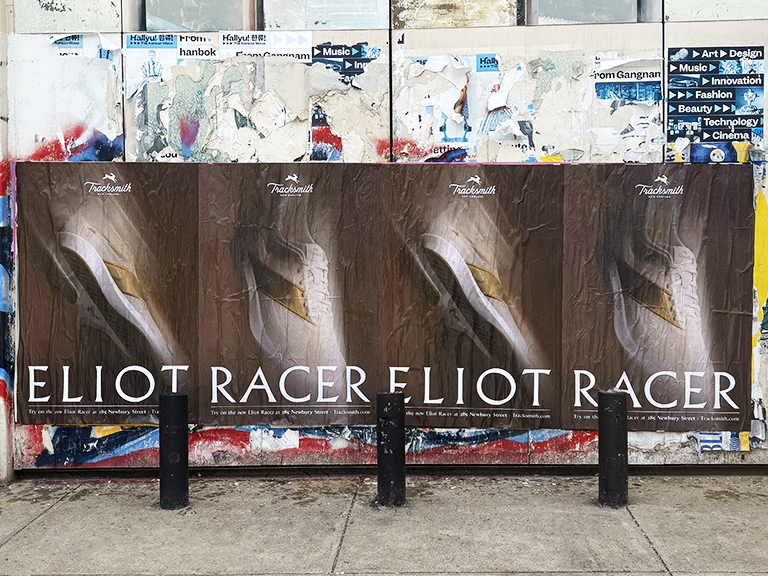
The difference between a wheat paste poster that lasts three weeks and one that peels off in three days comes down to materials and application technique. The formula of the paste, the weight and coating of the paper, the condition of the surface, the season, and the application method all interact to determine how long a flyposting campaign maintains visible presence. Getting this right matters whether you are running a professional brand campaign or managing your own grassroots promotion.
Our team at American Guerrilla Marketing has executed wheat paste poster campaigns across 50+ US markets and in international cities including Paris, London, and Berlin. The material choices and application techniques covered in this guide reflect what we have learned from running thousands of placements across every climate zone, surface type, and season. This is not theory. It is field-tested practice.
This guide covers paste formulas for different conditions, paper specifications that balance cost and longevity, surface preparation, application technique, and how weather affects campaign planning decisions. Whether you are briefing a professional agency or managing production in-house, understanding these variables helps you make better decisions and get longer-lasting results.
Wheat Paste Formula Basics
Wheat paste, the adhesive medium for flyposting campaigns, comes in two primary formulations: flour-based paste and methylcellulose paste. Each has specific performance characteristics that make it appropriate for different conditions.
Flour-Based Wheat Paste
The classic flyposting formula is flour mixed with water. The standard ratio is 1 part flour to 4 parts water, cooked over heat until the mixture thickens to a consistency similar to thin gravy. Uncooked flour paste can be used but provides weaker adhesion. Cooked flour paste dries harder and grips more aggressively to porous surfaces.
Adding a small amount of dish soap (about a teaspoon per quart of paste) improves surface penetration and wetting, which matters on dusty or slightly oily surfaces. Adding a few tablespoons of white glue (PVA) to flour paste significantly increases final adhesion strength and resistance to peeling under humidity.
Flour paste performs best in warm, dry conditions. It is the preferred formula for summer campaigns in dry climates (Southwest US, Mediterranean cities in summer, Southern California). In wet or cold conditions, flour paste degrades more quickly and is prone to mold growth if it remains wet for extended periods.
Methylcellulose Paste
Methylcellulose (available as wallpaper paste or art supply methyl cellulose) provides stronger adhesion in wet and cold environments. It does not mold, it remains flexible when dry, and it resists moisture better than flour paste. These characteristics make it the preferred formula for fall and winter campaigns in markets with regular rainfall (Pacific Northwest, Northeast US, UK and Northern Europe).
Methylcellulose dissolves in cold water (unlike some other cellulose products) and is typically used at a concentration of 1 tablespoon per cup of water, adjusted for desired thickness. It is more expensive than flour paste but delivers meaningfully better performance in challenging weather. Our team switches to methylcellulose formulations for all campaigns running in markets with precipitation forecasts during the campaign window.
Top-Coat Application
The single most effective technique for extending poster lifespan is applying a diluted paste coat over the top of the installed poster. A 50/50 dilution of paste and water brushed over the face of the installed poster seals the paper, creates a weather-resistant barrier, and significantly extends visible lifespan. This step adds approximately 5 to 10 minutes per poster to installation time but can double or triple the effective campaign window in wet conditions.
Paper Types and Specifications
Paper selection for street-level marketing campaigns involves balancing print quality, paste absorption characteristics, weight, and cost. The right paper for a 500-piece campaign running for one week differs from the right paper for a 50-piece premium campaign running for a month.
50lb Uncoated Newsprint
The traditional flyposting standard. Uncoated newsprint is lightweight, highly absorbent (which means it pastes quickly and adheres well), inexpensive, and widely available through large-format print vendors. Print quality is adequate for bold, high-contrast designs but does not reproduce fine detail or subtle color gradations accurately. For campaigns where print cost is the primary concern and volume is high, 50lb newsprint is the standard choice.
Newsprint tears more easily during installation, which can be a factor on windy days or with very large formats. The lighter weight also means it degrades faster in wet conditions.
60lb and 70lb Uncoated Text Stock
Moving to 60lb or 70lb uncoated text paper improves print quality, durability during installation, and weather resistance compared to newsprint. The additional weight makes the paper more tear-resistant during paste application and reduces the chance of installation damage. Print reproduction is meaningfully better, allowing for more nuanced designs with gradient colors and finer typography.
The trade-off is cost. A run of 100 posters at 24×36 on 60lb uncoated text costs roughly 40 to 60 percent more than the equivalent run on newsprint. For campaigns where brand impression quality matters and quantity is under 500 pieces, the upgrade is typically worthwhile.
Coated Paper: Avoid for Wheat Paste Applications
Coated paper (gloss or semi-gloss) resists paste absorption. This means the paper does not wet through and bond to the surface the way uncoated papers do. The result is weaker adhesion, faster peeling, and poor weather resistance. Coated paper is not recommended for wheat paste applications regardless of the quality of the print. The print finish advantage is completely offset by the adhesion disadvantage.
Premium Durable Paper and Synthetic Materials
For high-value placements where a poster needs to last 4 to 8 weeks, heavy-weight synthetic papers (like Yupo or similar polypropylene sheet materials) provide excellent durability and can be printed with high-quality results. These materials are significantly more expensive than paper options but are appropriate for permanent or semi-permanent installations, high-visibility single-location placements where replacing materials is not practical, and premium brand campaigns where material quality is part of the brand message.
Surface Preparation and Selection
The surface a poster is applied to has as much impact on longevity as the paste formula and paper choice. Understanding which surfaces perform and which do not is a key part of professional flyposting campaign execution.
Best Surfaces for Wheat Paste Applications
Bare wood absorbs paste deeply and provides excellent grip. Plywood construction hoarding is the ideal flyposting surface: flat, consistent, porous, and widely available in urban environments. Dry concrete and brick are strong performers. Rough-textured concrete provides more mechanical grip than smooth-finished concrete. Metal surfaces (utility boxes, scaffolding panels) hold paste well in dry conditions but may develop adhesion problems with temperature cycling in cold weather as the metal expands and contracts.
Surfaces to Approach with Caution
Painted walls perform inconsistently depending on the paint condition. Fresh, well-adhered paint is a workable surface. Peeling or flaking paint will separate from the underlying wall when the poster is applied, taking the poster with it. Dirty or oily surfaces require cleaning before application. Glass is a functional but temporary surface. Paste applies easily but peels off in sheets once dry, making glass useful for indoor or controlled-environment applications but unreliable for outdoor campaigns.
Surface Preparation Protocol
Our installation crews check surfaces for dust, moisture, and structural integrity before applying paste. Dusty surfaces are swept or lightly dampened. Pre-existing poster material is evaluated for stability. A rough surface is better than a smooth one. No preparation that requires significant time is done in the field during a live campaign deployment. Surface selection is made during pre-campaign scouting, and surfaces that require preparation are either avoided or noted for crew attention.
Weather Performance by Season and Climate
Weather is the primary variable that affects poster campaign longevity after materials and application technique. Campaign planning should account for the weather forecast for the campaign window and adjust materials and refresh scheduling accordingly.
Summer and Dry Conditions
Summer campaigns in dry climates deliver the longest poster lifespan. In markets like Los Angeles, Phoenix, and Denver in summer, flour paste on 60lb uncoated text can maintain visible placements for 3 to 6 weeks without refresh. The absence of rain, the stable warm temperatures, and the absence of freeze-thaw cycling all contribute to extended lifespan. The primary enemy of summer posters is direct sun exposure on south-facing walls, which can bleach print color over extended periods.
Fall and Spring Conditions
Transition season campaigns face the most variable conditions. Unexpected rainfall can reduce a planned 3-week campaign window to 10 days. Our team builds fall campaigns with a refresh wave scheduled at 10 to 14 days for any market with more than 2 inches of precipitation forecast during the campaign window. Spring campaigns in markets that have recently emerged from freeze-thaw cycling should account for surface instability on older walls where moisture has been cycling through the substrate.
Winter and Wet Climate Campaigns
Winter campaigns in rain-heavy markets (Pacific Northwest, Northeast US from November through March) require methylcellulose paste, heavier paper stock, and realistic expectations around poster lifespan. A well-executed winter campaign in Seattle or New York using professional materials should sustain 7 to 14 days before visible degradation. Multi-wave campaign structures that plan for refresh at day 10 to 14 maintain brand presence through a full month-long campaign window even in challenging conditions.
Creative Specifications for Maximum Street Performance
Materials and application technique can only do so much for a poster with design problems. The campaigns that consistently outperform in street environments share a set of design characteristics that hold up at street viewing distances and in visually competitive environments.
Bold, High-Contrast Design
Street-level viewing rarely gives a pedestrian more than 5 to 10 seconds of focused attention before they pass. Posters need to communicate brand identity and a core message within that window. High contrast between background and foreground, large bold typography, and a single clear visual hierarchy perform significantly better than designs that reward extended viewing time with layers of detail.
Color Considerations for Print-to-Paste Accuracy
Colors shift slightly when printed on uncoated paper versus coated sheets. Designs should be proofed on uncoated paper before production to verify that brand colors are rendering correctly. Neon and highly saturated colors often print duller on uncoated stock. Adjusting for this at the design stage prevents disappointment when placements go up.
Installation Technique That Matters
Even with the right materials, poor installation technique undermines results. Our installation crews follow a consistent protocol across every market.
Pre-Application Paste Layer
Before the poster is applied, a paste layer is applied to the surface. This pre-wets the surface and improves initial adhesion. The poster is then placed onto the wet surface and smoothed from the center outward to eliminate air bubbles and ensure full contact. A top-coat paste layer is applied immediately after installation.
Edge and Corner Treatment
Edges and corners are the first areas to lift, particularly in wet conditions. Our crews pay specific attention to pressing edges and corners firmly into the paste and, for longer-duration campaigns, applying an additional paste concentration at edges. This detail is often skipped in low-quality installations and is consistently the difference between a poster that lasts two weeks and one that starts peeling at day five.
Large Format Tiling
For oversized poster formats created by tiling multiple sheets, our team works from top to bottom with each sheet, overlapping edge seams by half an inch and ensuring alignment before the paste dries. Large format tiling work is done with two-person teams, one smoothing the applied sheet while the other holds the next sheet ready. Quality tiling work at the production stage, using registration marks on the print, significantly speeds installation and improves alignment accuracy.
Working with a Professional Wheat Paste Agency
The material knowledge and application technique described in this guide reflects years of professional execution. For brands running campaigns at any scale beyond small DIY projects, working with a professional agency that brings vetted crews, quality materials, and documented installation protocols delivers meaningfully better results than coordinating independently sourced labor without this experience base.
Our team at American Guerrilla Marketing manages all material sourcing, paste production, crew coordination, surface scouting, and installation documentation for every wheat paste poster campaign we run. Clients provide the creative, the brief, and the print materials (or we coordinate print production on their behalf). We deliver GPS-documented placements and a proof-of-performance report. For brands pairing poster campaigns with street team and LED billboard truck components, we coordinate all formats through a single operational team from our Industry City, Brooklyn NY base.
Frequently Asked Questions
What is the best wheat paste formula for flyposting?
For dry summer conditions, cooked flour paste at 1:4 flour-to-water ratio with a small amount of dish soap works well. For wet or cold conditions, methylcellulose paste provides better adhesion and mold resistance. Adding PVA glue to either formula increases final bond strength. A top-coat paste application over the installed poster is the single most effective technique for extending lifespan in any condition.
What paper type works best for wheat paste posters?
50lb uncoated newsprint is the cost-effective standard for high-volume campaigns. 60lb to 70lb uncoated text paper provides better print quality and durability for campaigns where brand impression quality matters. Coated papers resist paste absorption and should be avoided. Premium durable or synthetic materials are appropriate for high-value, long-duration placements.
How long do wheat paste posters last in rain?
Standard newsprint posters in wet winter conditions last 1 to 2 weeks before degrading. Heavier paper with methylcellulose paste and a top coat can extend this to 2 to 3 weeks. Planning for a mid-campaign refresh wave at day 10 to 14 maintains brand presence through a full month-long campaign window even in challenging conditions.
Can you apply wheat paste posters over existing posters?
Yes. This is standard practice. A fresh layer applied over existing dry poster material provides a workable surface. Apply paste to both the existing surface and the back of the new poster for secure adhesion. Active campaign zones often have multiple layers of poster material built up over time.
What surfaces are best for wheat paste applications?
Bare wood, plywood construction hoarding, dry concrete, brick, and metal are all excellent surfaces. Painted walls work well when paint is not peeling. Glass works but is temporary. Dirty, oily, or wet surfaces require preparation or avoidance. Surface selection during pre-campaign scouting is a critical step that amateur operators often skip.
What poster sizes work best for flyposting campaigns?
Standard sizes are 24×36 inch and 27×40 inch for single-sheet applications. Larger formats are created by tiling multiple sheets, with 4-up configurations creating a 4 to 5 foot tall presence on suitable walls. Include registration marks in the print file to simplify tiling alignment during installation.

Ready to Run Your Campaign?
Call us or email us. We’ll tell you exactly what we can do in your market and what it costs.
Related Services
Explore similar advertising solutions offered by American Guerrilla Marketing.
American Guerrilla Marketing — Los Angeles
Street-level campaigns in Los Angeles and nationwide. Wheatpasting, LED trucks, street teams, and more.
(646) 776-2770
Related Articles
-
Street Poster Advertising Ottawa: A Complete Campaign Guide
September 17, 2026
-
Activation Marketing: How Brands Win at Street Level
September 13, 2026
-
Experiential Marketing Firms Chicago | American Guerrilla Marketing
September 12, 2026
-
Pop Up Experiential
September 12, 2026
-
Mobile Pop Up
September 12, 2026