Guerrilla Marketing London: The Neighborhood-by-Neighborhood Field Guide
London is not one place. It is a collection of neighborhoods with distinct identities, distinct pedestrian cultures, and distinct rules about what a street campaign looks like when it is done well and what it looks like when it is done by someone who flew in and guessed. We have run guerrilla marketing campaigns in London across multiple neighborhoods and we can tell you: the campaign that works on Brick Lane does not work on Carnaby Street, and the format that reads as authentic in Hackney reads as try-hard in Soho.
At American Guerrilla Marketing, we are an NYC-based street marketing agency that operates in London. We bring the same field methodology we use in New York, specific streets, specific transit exit points, specific dwell-time analysis, to the London geography. This guide is a neighborhood-by-neighborhood breakdown of how we approach guerrilla marketing in London: where we go, what we do, and why the specifics matter.
We will walk through Shoreditch, Camden, Hackney, Soho, and South Bank. For each neighborhood, we will cover the specific streets and locations that drive campaign performance, the transit infrastructure that concentrates foot traffic, and the format mix that works best for the audience that lives and moves through each area.
What Guerrilla Marketing in London Actually Requires
London has some of the most photographically active street culture in the world. The city’s neighborhoods are visually documented constantly, on Instagram, on TikTok, in the editorial photography that defines how the world sees British street culture. That constant visual documentation is both an opportunity and a quality filter. A guerrilla campaign that looks good stops for a photo. A campaign that looks generic or mismatched to its environment gets walked past.
The other thing London requires is neighborhood literacy. Each area has its own visual language, the murals and independent retail aesthetic of Shoreditch, the market-market-market energy of Camden, the quieter residential-creative mix of Broadway Market in Hackney. A guerrilla campaign should feel like it belongs in the neighborhood it is placed in. When it does, the neighborhood’s existing audience adopts it as content. When it does not, it sits there as ignored advertising.
Guerrilla campaigns in London that we run include street poster campaigns on hoarding and permission walls, street team deployments at markets and transit exits, brand ambassador programs at high-concentration pedestrian locations, and mobile brand presence on key approach corridors. Each format gets calibrated to the specific neighborhood it is deployed in.
Field note: London’s neighbourhood-specific foot traffic patterns are predictable but not obvious. Shoreditch peaks Thursday through Saturday evening. Camden peaks Saturday afternoon. Soho peaks Friday and Saturday night. South Bank peaks on weekend afternoons and whenever there is programming at the Southbank Centre. We build campaign timing around these neighborhood-specific patterns rather than treating London as a single market.
Guerrilla Marketing Shoreditch: Brick Lane, Bethnal Green Road, Rivington Street
Shoreditch is the neighbourhood that defines London street marketing for a generation of brands. Its concentration of independent retail, creative industry offices, music venues, and young professional residents creates a permanent audience that responds to street-level brand presence, if that presence is genuinely on-brand for the area.
Brick Lane: The Primary Corridor
Brick Lane runs south from Bethnal Green Road to Whitechapel Road, and the stretch from Bethnal Green Road down to Hanbury Street is where street marketing in Shoreditch is most concentrated. The Sunday market draws enormous foot traffic and creates a dwell-time environment where street teams can engage directly with an audience that is not rushing anywhere. The permanent retail and food environment on Brick Lane means there is sustained weekday foot traffic in addition to the weekend market peak, the area is active every day, not just on Sundays.
Poster campaigns on the hoarding and permission walls along Brick Lane benefit from the neighborhood’s existing visual culture of street art and independent graphic design. The visual bar is high here, artwork that would be striking anywhere else needs to be genuinely excellent to stand out on a street where the walls are already covered in high-quality original work. We brief our creative teams on the Brick Lane visual environment specifically before designing campaign artwork for this neighbourhood.
The nearest Overground station is Shoreditch High Street on the East London line, and the exit delivers foot traffic directly onto Shoreditch High Street, from which Bethnal Green Road and Brick Lane are a short walk. Fans of brands deploying in Shoreditch should note that the Shoreditch High Street Overground exit sees significant throughput on Thursday through Saturday evenings, the pre-going-out crowd heading toward the Shoreditch nightlife district.
Bethnal Green Road: East-West Transit Spine
Bethnal Green Road runs east from Shoreditch High Street toward Bethnal Green tube station (Central line), and the stretch between Shoreditch High Street Overground and the Bethnal Green tube exit carries mixed pedestrian traffic, local residents, office workers, hospitality industry workers, and weekend visitors. Brand ambassador deployments on this stretch work best positioned near the transit exits at either end: the Shoreditch High Street Overground exit on the west and the Bethnal Green Central line exit on the east.
The street itself has a character distinct from Brick Lane, less market energy, more day-to-day neighbourhood movement. Street teams working Bethnal Green Road reach a more local, resident-heavy audience than those working Brick Lane on a Sunday. For brands targeting East London residents rather than the tourist-and-creative visitor mix, this stretch is the better choice.
Rivington Street and the Truman Brewery Area
Rivington Street between Shoreditch High Street and Great Eastern Street is the concentrated nightlife and bar strip of Shoreditch. The street’s bars and venues mean it comes alive Thursday through Saturday evening, and the foot traffic during those windows is among the densest in the East End. Brand ambassador deployments on Rivington Street during evening windows reach an audience that is specifically in leisure, social, and spending mode.
The Truman Brewery complex on Brick Lane, the old brewery converted into a creative and market space, generates its own gravitational foot traffic pull at weekends. The Sunday Upmarket and the Vintage Market at Truman Brewery draw thousands of visitors to the immediate area, and the pedestrian flow between the brewery entrance on Brick Lane and the surrounding streets is heavy and slow-moving during market hours. Outdoor urban poster campaigns on the hoardings around the Truman Brewery perimeter reach this weekend market crowd directly.
Guerrilla Marketing Camden: High Street, Camden Lock, Chalk Farm Road
Camden is London’s most concentrated counterculture retail and entertainment district. Camden Market, Camden Lock, the music venues on Chalk Farm Road, and the distinctive visual aesthetic of the High Street create a neighbourhood identity that is globally recognized. Running a guerrilla marketing campaign in Camden means understanding that identity and working with it rather than against it.
Camden High Street: The Approach Corridor
Camden High Street from Camden Town tube station (Northern line) north toward Chalk Farm Road is the primary pedestrian approach to Camden Market. Camden Town tube is one of the busiest stations in Zone 2, and the exit onto Camden High Street deposits foot traffic directly into the commercial and market district. Brand ambassador deployments at the Camden Town tube exit are standard practice for brands targeting the Camden weekend audience, the exit is a natural chokepoint where everyone heading north toward the market passes through a compressed zone.
The Camden High Street itself, between the tube exit and the Buck Street Market entrance, is lined with the independent retail and food outlets that define the Camden commercial identity. Poster campaigns on permission walls and hoardings along this stretch reach the maximum volume of Camden-bound foot traffic before it disperses into the market complex. The visual competition is lower here than in the market interior, which means a well-produced urban poster campaign stands out more effectively on the High Street approach than it would inside the market itself.
Camden Lock and the Market Approach
Camden Lock Market, the historic market complex centered on the lock on the Regent’s Canal, is the geographic and commercial heart of Camden. The approach routes from the High Street and from Chalk Farm Road converge at the market entrances, and the internal walkways and bridge areas around the lock itself are extremely high-density on weekend afternoons.
Street teams working the Camden Lock approaches have the benefit of a slow-moving, browsing audience. Camden Market visitors are not in transit, they are shopping, eating, looking, and spending time in the area. That deliberate, unhurried movement is the ideal condition for direct brand engagement. A well-briefed street team at the Camden Lock entrance can achieve a remarkably high interaction rate because the audience is neither rushing nor ignoring its environment.
The canal itself, running east to west through the market, creates a natural pedestrian corridor with consistent foot traffic on both towpaths. The towpath between Camden Lock and Hawley Wharf (the newer development to the east of the market) is a growing pedestrian zone as the Hawley Wharf development has added restaurants and retail to the canal frontage. Street marketing along the towpath reaches an audience that has specifically chosen a slow, exploratory pedestrian experience.
Chalk Farm Road: Toward the Roundhouse
Chalk Farm Road runs north from Camden Lock toward Chalk Farm tube station (Northern line) and the Roundhouse music venue at the junction with Haverstock Hill. The stretch between Camden Lock and the Roundhouse carries foot traffic from the market district toward the Roundhouse venue on event nights, and from Chalk Farm tube station southward toward the market on afternoons and weekends.
The Roundhouse is a significant anchor for evening foot traffic on Chalk Farm Road. On show nights, the approach from Chalk Farm tube station, a five-minute walk down Chalk Farm Road to the venue entrance, is a natural corridor for street team deployments targeting the music and arts audience that frequents the Roundhouse. This audience skews 18 to 35, music-literate, and strongly responsive to brand presence that acknowledges its cultural context.
Field note: Camden attracts significant tourist foot traffic in addition to the local and music-industry audience. The two audiences behave differently. Tourists browse slowly and respond to visual novelty. Local regulars move purposefully and respond to brand credibility. We brief differently for each and often position different team members for each audience segment on the same deployment.
Guerrilla Marketing Hackney: Broadway Market, London Fields, Mare Street
Hackney’s street marketing geography is shaped by its village-within-a-city structure. Broadway Market, London Fields, and Mare Street each have distinct identities that make them different activation environments. The Hackney audience skews creative, independent-minded, and brand-literate, they can tell the difference between a brand that genuinely understands the neighbourhood and one that is parachuting in for the Instagram.
Broadway Market: The Saturday Centre of Gravity
Broadway Market is a Saturday street market running along a short street between London Fields to the north and Regent’s Canal to the south. It draws a highly concentrated weekend audience of local residents, food enthusiasts, independent retail shoppers, and the creative class that has made the E8 postal code one of London’s most sought-after. The market runs from approximately 9am to 5pm, and the peak pedestrian density is between 11am and 2pm.
Street team deployments at Broadway Market work best at the approach ends, the London Fields side (where people approach from the Overground at London Fields station or from the park itself) and the canal side (where people approach from the Bethnal Green Road direction). The narrow street itself is too congested during peak hours to run a high-volume distribution deployment, but the approach zones allow teams to intercept the arriving audience before they enter the market proper.
Poster campaigns in the Broadway Market area benefit from the neighbourhood’s highly visual outdoor culture. The walls and hoardings around London Fields and the approaches to the market carry significant independent art and event advertising, and a campaign that fits the aesthetic language of that environment will be engaged with as content rather than dismissed as advertising.
London Fields Approach and the Park Perimeter
London Fields station on the Overground (Suffragette line) delivers foot traffic directly to the east end of London Fields park. The pedestrian flow from the station exit across London Fields Road and into the park, and then south toward Broadway Market, is a natural activation corridor. Brand ambassador deployments at the station exit or along the park perimeter path on Saturday mornings reach the market-bound audience at the beginning of its journey.
The park itself is a significant activation venue in summer months. London Fields is one of the most-used parks in East London, with consistent weekend crowds using the lido, the lawns, and the outdoor dining options adjacent to the park. Brand presence on the perimeter of London Fields reaches a large, dwell-heavy weekend audience that is receptive to sampling and direct engagement.
Mare Street: The Hackney Commercial Spine
Mare Street runs north-south through central Hackney, connecting Hackney Central Overground and National Rail station in the north to Cambridge Heath in the south. The street is Hackney’s primary retail and dining corridor, a mix of independent shops, chain retail, and the Hackney Town Hall complex that anchors the northern end of the street near the Overground station.
Street team campaigns on Mare Street reach a predominantly local, resident audience, less tourist-heavy than Camden or Shoreditch, more reflective of Hackney’s actual population mix. For brands targeting 25-to-40 urban residents with strong local identity, Mare Street deployments reach that audience in its own commercial environment rather than in a destination tourism context.
Guerrilla Marketing Soho: Carnaby Street, Berwick Street, Old Compton Street
Soho is central London’s most concentrated entertainment, dining, and nightlife district. Its street grid, a dense network of narrow streets west of Charing Cross Road and north of Leicester Square, creates a pedestrian-dominated environment where street marketing is a natural fit. The Soho audience is cosmopolitan, diverse, and spans a wider demographic range than the East London neighborhoods, which requires a different creative and tactical approach.
Carnaby Street: The Fashion and Brand Corridor
Carnaby Street and the surrounding Carnaby neighbourhood, which includes Kingly Court, Newburgh Street, and Foubert’s Place, is London’s most concentrated independent fashion and lifestyle retail district. The Carnaby Street pedestrian zone runs between Beak Street to the north and Great Marlborough Street to the south, and the foot traffic is sustained throughout the day from late morning onward.
Oxford Circus tube station (Central and Victoria lines) is the nearest major transit node, and the exit onto Regent Street delivers foot traffic that disperses in multiple directions, some toward Oxford Street, some down into Soho, and a significant volume specifically toward Carnaby. The five-minute walk from Oxford Circus exit to Carnaby Street is a natural brand ambassador corridor, with the pedestrian density on Great Marlborough Street and Carnaby Street itself high enough to justify ambassador positioning at multiple points along the approach.
Poster campaigns in the Carnaby neighbourhood benefit from the existing hoarding and permission wall culture around the independent retailers. The visual aesthetic in Carnaby skews bold, fashion-forward, and graphic, campaign artwork that matches this language lands well; work that looks like generic advertising does not.
Berwick Street: The Market and Independent Retail Core
Berwick Street market, a traditional fruit, vegetable, and fabric market that has operated since the 18th century, runs along Berwick Street from Broadwick Street south toward Peter Street. The market atmosphere creates a slower-moving pedestrian environment compared to the surrounding Soho streets, and the mix of market shoppers, local office workers, and the music and fashion retail on the street (several independent record shops remain) produces an audience that is more receptive to direct street interaction than the average Soho pavement.
The tube exits most relevant to Berwick Street are Oxford Circus (a 10-minute walk south) and Piccadilly Circus (a 10-minute walk south), which means Berwick Street sits in a transit dead zone that most of its foot traffic reaches on foot from surrounding streets rather than directly from a tube exit. Brand ambassador deployments in the Berwick Street area work best positioned at the entrances from Wardour Street to the east and from Poland Street to the west, where foot traffic flows in from the surrounding Soho grid.
Old Compton Street: The Soho Village Core
Old Compton Street is Soho’s most iconic street, the heart of the neighbourhood’s LGBTQ+ cultural identity and a benchmark for the kind of inclusive, independent street life that makes Soho distinct from every other central London district. The street runs from Charing Cross Road west to Wardour Street, and its bars, cafes, and independent shops generate sustained foot traffic from mid-afternoon through the late evening seven days a week.
Street team deployments on Old Compton Street require cultural sensitivity and genuine neighbourhood literacy. The Soho community on this street is particularly attuned to brand authenticity, brands that show up here in a way that reflects genuine understanding of the neighbourhood’s identity are welcomed; brands that are obviously using the street as a demographic-targeting exercise are not.
Poster campaigns in the Soho area, on the hoardings and permission walls visible from the Old Compton and Carnaby precincts, need to meet a high visual standard. The concentration of art directors, designers, and creative professionals who work and play in this neighbourhood means the aesthetic quality of street campaign work is evaluated critically by a significant portion of the audience.
Guerrilla Marketing South Bank: Southbank Centre, Bermondsey Street, Blackfriars Bridge
The South Bank is one of London’s highest-footfall leisure corridors, the walkway running from Waterloo Bridge east past the Southbank Centre, the Tate Modern, and Shakespeare’s Globe to Borough Market handles enormous pedestrian volumes on weekend afternoons and during any of the dozens of events and festivals that programme the area throughout the year.
The Southbank Centre Walkway
The pedestrian path along the south bank of the Thames from Waterloo Bridge to Blackfriars Bridge is the primary activation corridor for South Bank campaigns. The Royal Festival Hall, the Hayward Gallery, the BFI Southbank, and the National Theatre are anchors that generate consistent cultural foot traffic throughout the week, with weekend and evening peaks driven by the programming at each venue.
Brand ambassador positions along the riverside walkway, particularly at the high-dwell-time nodes like the BFI cafe terrace, the space in front of the Royal Festival Hall, and the approach to the Tate Modern from the west, reach a London cultural audience: arts-engaged, mixed age, strongly middle-class, and likely to be in a receptive, leisure mindset. This is not a rushing-to-work audience; it is a Saturday-afternoon-in-the-sun audience.
The Waterloo station exit (Northern, Jubilee, and Bakerloo lines, plus National Rail) deposits significant foot traffic onto the South Bank via the pedestrian underpasses leading to the riverside path. The approach from Waterloo station to the Southbank Centre is a well-worn route that handles thousands of pedestrians per hour on weekend afternoons, and it is one of the most productive brand ambassador corridors in London for reaching the cultural-leisure demographic.
Bermondsey Street: The South Bank Village
Bermondsey Street, running south from London Bridge station (Northern and Jubilee lines, plus National Rail) toward the Bermondsey tube station on the Jubilee line, is one of London’s best examples of a neighbourhood street that has become a destination in its own right. The mix of independent restaurants, galleries, fashion shops, and the White Cube gallery gives the street a distinctly creative-professional character.
Street marketing on Bermondsey Street reaches a higher-income, design-literate audience than most South Bank locations. The Friday evening and Saturday afternoon windows are when foot traffic on the street is highest, driven by the concentration of destination dining and the gallery crowd. Brand ambassador deployments at the London Bridge station exit on Bermondsey Street (the Tooley Street exit, a few minutes walk from the start of the street) and at the junction with Tower Bridge Road to the south capture the arrivals and departures of this Bermondsey-specific audience.
The Tate Modern Approach from Blackfriars Bridge
The approach to Tate Modern from Blackfriars Bridge, walking south from Blackfriars station (Circle and District lines) across the bridge and east along the Bankside riverside path to the museum entrance, is a consistently high-traffic pedestrian route on weekends. The Tate Modern is the most-visited modern art museum in the world by attendance, and its gravitational pull on the South Bank draws international visitors alongside London residents.
Brand ambassador and street team positions at the south end of Blackfriars Bridge, where visitors begin the walk toward the Tate Modern along the riverside, intercept this tourist and cultural audience at the moment it commits to the South Bank direction. The visual backdrop of the Millennium Bridge and the Tate building makes this location inherently photogenic, which increases the organic social sharing potential of any activation placed here.
Field note: The South Bank is one of the few locations in London where a street marketing campaign can reach international visitors in significant numbers alongside London residents. If your brand has an international awareness objective, not just a UK market objective, South Bank deployments should be factored into the campaign geography.
Urban Poster Campaigns Across London Neighbourhoods
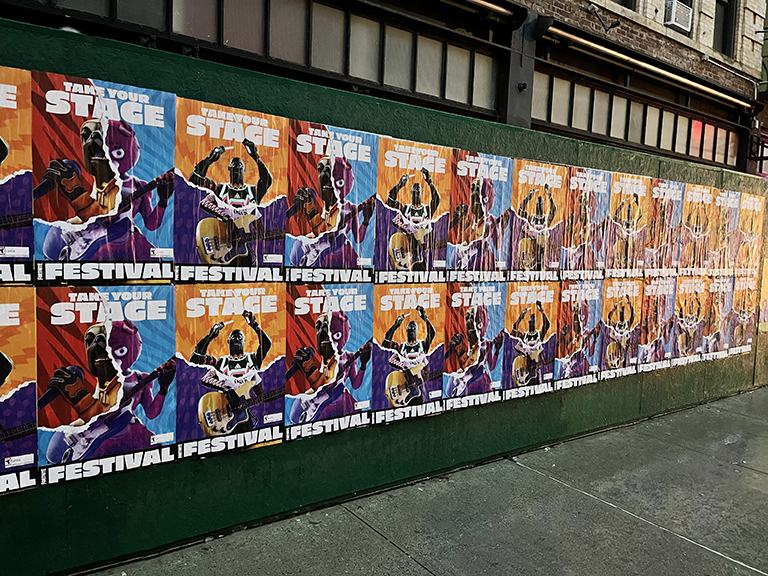
Poster campaigns on hoardings and permission walls are one of the most visible guerrilla marketing formats in London. The city has a strong tradition of outdoor poster culture, and the walls available for brand campaigns, in the right neighbourhoods, carry genuine street credibility when the artwork is strong.
In Shoreditch, the permission walls on Brick Lane, Bethnal Green Road, and the streets around the Truman Brewery are the most valuable outdoor poster locations in the East End. These are walls that receive significant photography and social media coverage in their own right, major street artists have work on them, and a brand campaign on the same walls benefits from that cultural context.
In Camden, the approach hoardings on Camden High Street from the tube exit north toward the market are the highest-reach poster locations in the neighborhood. Camden’s visual culture is less street-art-specific than Shoreditch’s, but the sheer volume of foot traffic past these locations makes them among the highest impression-count outdoor locations in Zone 2.
In Soho, the limited availability of genuine hoarding and permission wall space makes poster campaigns a premium format. The walls that do exist, typically on the sides of buildings in the secondary streets off Carnaby and Old Compton, carry significant value precisely because of their scarcity.
Flyposting as a format name gets used in the London outdoor advertising world to describe smaller-format poster campaigns on hoardings and construction boarding. It is a common format in all the neighbourhoods we work in, Shoreditch, Camden, Hackney, Soho, and South Bank, and our campaigns in London include flyposted materials as part of the overall format mix.
Transit Hub Deployments: Where London’s Foot Traffic Concentrates
Tube Station
Neighbourhood
Lines
Best Activation Window
Shoreditch High Street
Shoreditch
East London Overground
Thurs-Sat evening
Camden Town
Camden
Northern line
Sat-Sun afternoon
London Fields
Hackney
Overground (Suffragette line)
Sat morning (market)
Oxford Circus
Soho approach
Central, Victoria lines
Daily 11am-7pm
Waterloo
South Bank
Northern, Jubilee, Bakerloo + National Rail
Weekend afternoons
Blackfriars
South Bank (Tate approach)
Circle, District lines
Weekend afternoons
London Bridge
Bermondsey/South Bank
Northern, Jubilee + National Rail
Fri evening, Sat all day
Street Marketing Campaigns in London: What the Execution Actually Looks Like
A guerrilla marketing campaign in London from AGM starts with a site visit. We walk the routes. We time the transit connections. We identify the specific positions, not general zones, specific positions, where ambassador engagement rate will be highest based on pedestrian flow direction, dwell time, and audience composition. Then we build the deployment plan around those positions.
Our team in London is experienced with the operational specifics of running street campaigns across multiple London boroughs simultaneously. A campaign spanning Shoreditch, Camden, and South Bank in the same day requires borough-specific logistics, transit routing for the team, supply vehicle positioning that works within the parking and loading restrictions of each area, team communications across multiple neighbourhoods, and real-time supervision to redeploy resources if one location underperforms.
We manage all of this in-house. Our London campaigns are not handed off to local subcontractors who do not know the brief. The same team that planned the campaign runs the campaign, which means the person who decided to position the brand ambassador at the Shoreditch High Street Overground exit is the same person confirming that the position is correct when the team arrives at 6pm on a Thursday.
Frequently Asked Questions
What is guerrilla marketing and how is it different from standard outdoor advertising?
Guerrilla marketing uses unconventional, street-level tactics, brand ambassadors, poster campaigns, sampling, street teams, to create brand awareness in public spaces. Unlike standard outdoor advertising which relies on fixed placements (billboards, bus shelters), guerrilla marketing is direct, human-scale, and designed to create surprise and engagement rather than passive visual impressions.
Which London neighbourhoods are best for guerrilla marketing campaigns?
The strongest neighbourhoods for street marketing campaigns are Shoreditch (Brick Lane, Bethnal Green Road, Rivington Street), Camden (Camden High Street, Camden Lock, Chalk Farm Road), Hackney (Broadway Market, London Fields, Mare Street), Soho (Carnaby Street, Berwick Street, Old Compton Street), and the South Bank (riverside walkway, Bermondsey Street, Blackfriars approach). Each has a distinct audience and format mix that works best.
What is the best tube station for reaching the Shoreditch audience?
Shoreditch High Street on the East London Overground is the primary transit arrival point for the Shoreditch creative and nightlife audience. It delivers foot traffic directly onto Shoreditch High Street with easy walking access to Brick Lane, Bethnal Green Road, and Rivington Street. For the Shoreditch Overground exit, Thursday through Saturday evenings are the highest-traffic windows.
How does a poster campaign on London hoardings work?
We identify and secure permission wall and hoarding locations in the target neighbourhood, produce the printed poster materials, and carry out the installation. In Shoreditch, the key walls are around Brick Lane and the Truman Brewery. In Camden, the approach hoardings on Camden High Street from the tube exit are the highest-reach locations. Each neighbourhood has specific wall locations that carry the most visual traffic and cultural credibility.
What is the best time to run a street team campaign in Camden?
Saturday afternoon between 11am and 4pm is the peak window for Camden street team campaigns. The Camden Market draws its largest weekly crowds during this period, and the approach routes from Camden Town tube station along Camden High Street and toward Camden Lock are at maximum foot traffic density. Sunday mornings are a secondary peak period.
Does AGM run guerrilla marketing campaigns across multiple London neighbourhoods simultaneously?
Yes. We run multi-borough London campaigns with simultaneous deployments in different neighbourhoods. This requires neighbourhood-specific logistics, transit routing, supply vehicle positioning, team communications across multiple zones, which we manage in-house rather than through subcontractors. The same team that plans the campaign runs the campaign.
What makes a poster campaign work in Shoreditch specifically?
Shoreditch has among the highest concentrations of design professionals, street art enthusiasts, and visually literate consumers of any neighbourhood in London. A poster campaign that looks like advertising gets ignored. A campaign with strong, original artwork that fits the visual language of the street art environment on Brick Lane and Bethnal Green Road gets photographed and shared. The creative quality requirement in Shoreditch is higher than almost anywhere else in the city.
How far in advance should we plan a London guerrilla marketing campaign?
For most London guerrilla campaigns, three to four weeks of lead time allows for site scouting, team briefing, material production, and logistics coordination. Campaigns spanning multiple neighbourhoods and boroughs benefit from five to six weeks of lead time for proper planning. Rush timelines are sometimes possible, contact us with your campaign date and we will tell you what is achievable.
Is American Guerrilla Marketing a London-based agency?
AGM is a New York City-based street marketing agency that operates in London. We have the field knowledge and operational infrastructure to run London campaigns across Shoreditch, Camden, Hackney, Soho, and South Bank. We bring the same street-level discipline we apply in NYC to every London deployment.