A national tour that plays 30 cities in 60 days needs 30 city-specific marketing programs that feel like one unified campaign to audiences across the country. This is the core operational challenge of multi-city tour advertising: maintaining creative consistency and brand coherence across markets that are geographically, demographically, and culturally distinct from each other, while adapting execution to the specific conditions of each market’s audience, neighborhoods, and tour date timing.
The brands, labels, management teams, and promoters that approach multi-city tour advertising as a logistics problem get mediocre results. The ones that approach it as a creative and operational problem simultaneously, understanding that field execution quality in each market is as important as creative quality, consistently outperform on ticket sales, brand awareness, and the social media buzz that drives discovery among the secondary audience that the direct marketing campaign does not reach.
Our team has coordinated multi-city tour advertising campaigns across 30+ market runs, managing the centralized creative and coordination layer while deploying through local field operators in each market who understand the specific neighborhoods, the specific placement relationships, and the specific timing windows that produce results in their city. This guide covers the full structure of multi-city tour advertising from planning through execution and reporting.
The Multi-City Campaign Architecture
Multi-city tour advertising requires a two-layer organizational structure: centralized coordination and local execution. Neither layer functions without the other. Centralized coordination without local execution produces consistent creative that gets placed in generic locations by operators who do not know the market. Local execution without centralized coordination produces market-by-market inconsistency that undermines the unified brand message the campaign is trying to build.
The centralized coordination layer manages creative production and distribution, campaign briefing for all markets, timing coordination across the tour schedule, budget allocation by market, and consolidated reporting. This layer handles the elements that need to be consistent across all markets and cannot be delegated to individual market operators without risking inconsistency.
The local execution layer manages market-specific placement selection, local logistics and permit considerations, field team staffing and briefing, day-of execution, and market-specific field documentation. This layer handles the elements that require on-the-ground knowledge of the specific market, knowledge that no centralized team can fully replicate for 30 different cities without local partners who have established relationships and field experience in each one.
Market Segmentation: Primary, Secondary, and Tertiary Markets
A 30-city national tour does not allocate equal advertising investment to every market. The commercial importance of each market to the tour, measured by expected ticket sales, streaming market influence, and media coverage potential, determines the level of advertising investment each market receives. Campaign planning starts with market segmentation that categorizes each tour stop into primary, secondary, and tertiary tiers.
Primary markets on a national tour, typically New York, Los Angeles, Chicago, and one or two others depending on the tour routing, receive the most substantial street-level campaign investment. Multi-neighborhood poster coverage in the key areas where the target demographic concentrates, multiple days of street team deployment in the highest-value activation locations, and in some cases, mobile billboard or LED truck coverage on top of the standard street-level program. New York and Los Angeles concerts generate national press coverage and social media attention that amplifies to audiences far beyond the cities themselves, justifying higher per-market investment than the pure ticket sales economics might indicate.
Secondary markets, which include the mid-size cities that appear consistently on national tour routing like Philadelphia, Boston, Washington DC, Atlanta, Dallas, Denver, Seattle, and Miami, receive campaigns focused on the specific neighborhoods where the target demographic concentrates, rather than the multi-neighborhood saturation approach used in primary markets. A well-targeted secondary market campaign that saturates the two or three neighborhoods where the target audience lives outperforms a broader campaign that spreads the same budget across more neighborhoods with lower density in any one area.
Tertiary markets, which include smaller tour stops where the show may be a distinctive event in the local entertainment calendar rather than one of many competing options, receive campaigns focused on the highest-impact placements in the local environment. A university town on the tour that is also a college radio market may warrant specific campus-area placement and university student environment activation that would not be a priority in a larger market with a more dispersed target demographic.
Poster Campaigns Across 30 Markets
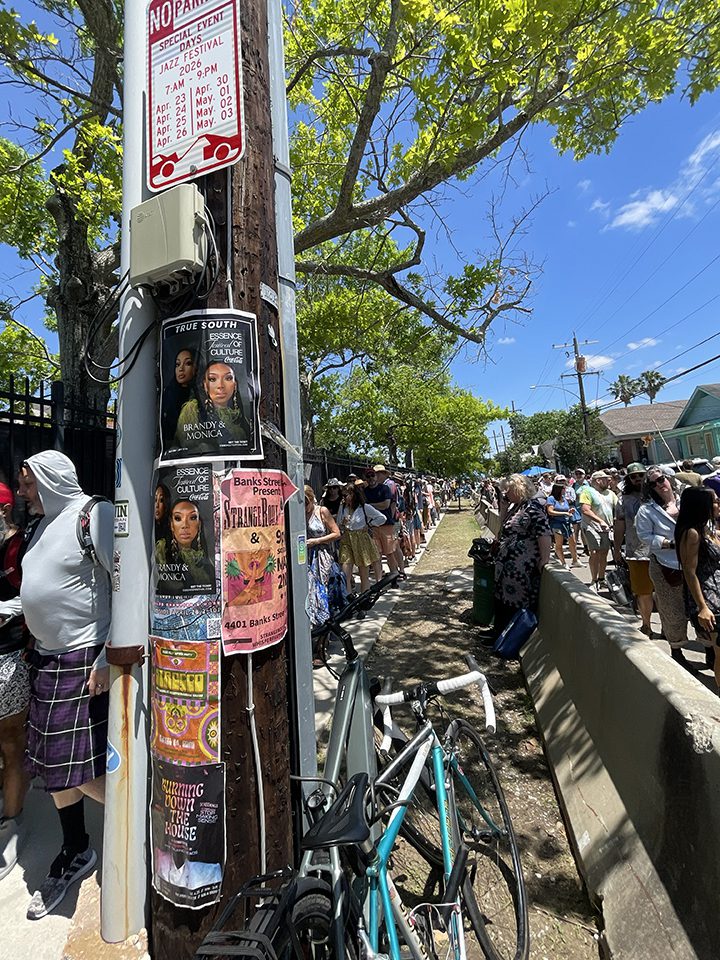
Poster campaigns are the scalable core of multi-city tour advertising because they can be produced centrally with consistent creative, shipped to local market operators for placement, and deployed in each market on a schedule tied to the specific show date with minimal centralized coordination overhead once the initial setup is complete.
Our poster and wheatpaste campaigns for multi-city tour programs are produced with market-specific date and venue information printed on a consistent creative template. The core creative, the visual identity, the artist image, and the primary messaging, remains consistent across all markets. The market-specific information, dates, venues, and local market copy, is customized for each city’s deployment package.
Placement selection in each market is determined by pre-campaign market research that identifies the neighborhoods with the highest concentration of the target demographic and the specific postering positions within those neighborhoods that produce the highest visibility and dwell time. This research is conducted by local field operators who know the market rather than by centralized team members working from maps and demographic data alone.
The timing of poster placement in each market is tied to the specific show date. In major markets where the promotional window is longer, posters go up four to six weeks before the show. In secondary markets with shorter promotional windows or less visual competition for the audience’s attention, three to four weeks is typically sufficient. In tertiary markets where the show may be weeks after a long gap in the tour schedule, the promotional window can be shorter because the competitive landscape for audience attention is less dense.
Street Teams Across Multi-City Tour Runs
Street team programs in multi-city tour contexts require more careful resource allocation than poster campaigns because the cost-per-activation-day is higher and the execution quality variation between markets is greater. Our brand ambassador agency network includes vetted field staff in major tour markets who can be deployed for tour advertising programs with the specific briefing and execution standards that consistent multi-city tour programs require.
Street team deployment timing in multi-city tour programs concentrates in the two to three weeks before each market’s show date, when the audience’s attention to show-related content is highest and the conversion rate from awareness to ticket purchase is most favorable. Teams deployed too early in the promotional window reach an audience that has not yet entered the ticket purchase consideration phase. Teams deployed too late cannot generate enough interaction volume to move meaningful numbers of additional tickets in the remaining sales window.
The specific deployment locations for street teams in each market are identified through the same pre-campaign market research that determines poster placement priorities. Record stores, music venues, music retail, and the neighborhood environments where the target genre’s fan demographic concentrates are the primary deployment targets. Secondary targets include high-foot-traffic transit corridors in neighborhoods adjacent to the primary fan demographic zones.
Mobile Billboards and LED Trucks for High-Visibility Market Saturation
Mobile billboard campaigns in primary tour markets add a high-visibility layer to the street-level program that static poster placements cannot provide. A wrapped vehicle or LED billboard truck moving through the primary neighborhoods of a major market on the days immediately before the show creates a large-format, high-visibility presence that complements the granular poster and street team coverage with something impossible to miss.
LED truck campaigns on show day in primary markets are particularly effective for driving last-minute ticket sales. A truck running a route through the venue approach neighborhood, the entertainment district, and the residential neighborhoods where the target demographic concentrates on the day of the show reaches the audience at the maximum moment of conversion opportunity: close to the show time, in a geographically relevant location, with a high-visibility format that creates urgency through its scale and presence.
For multi-city tour programs where mobile billboard budgets are available only for primary markets, we route the LED truck programming to maximize coverage of the specific neighborhoods that concentrate the target demographic in each primary market. A New York tour date might route through Williamsburg, the East Village, and the area immediately surrounding the venue in the afternoon before show time. A Los Angeles tour date might route through Echo Park, Silverlake, and the Hollywood venue approach corridor.
Venue Approach Activations on Show Night
Venue approach activations on show night are the final element of the multi-city tour advertising sequence, and in some cases the highest-conversion-rate element in the entire program. The audience moving through the venue approach corridor is concentrated, identified, and at maximum motivation to engage with tour-related content. The environment captures two distinct audiences simultaneously: existing ticket holders who are already committed to attending the show and can receive merchandise or sponsor content, and non-ticketed pedestrians who might purchase remaining tickets at the door.
Venue approach activations in each tour market are coordinated with the venue and promoter to ensure that the activation is positioned correctly relative to the venue’s security perimeter and the municipal regulations governing public space use around large event venues. Our local field operators in each market manage these logistics as standard components of tour advertising program execution, ensuring that venue approach activations run smoothly without logistical problems that would compromise the activation’s effectiveness on show night.
Consolidated Reporting Across All Tour Markets
Multi-city tour advertising programs require reporting infrastructure that gives labels, management teams, and brand partners a clear picture of campaign execution across all markets simultaneously. Our consolidated tour campaign reporting aggregates field documentation from every market into a single report that shows the full scope of program execution, market by market, across the entire tour run.
The consolidated report includes GPS-tracked placement documentation for poster campaigns in each market, field photography showing team deployment and activation coverage, interaction counts from street team programs, mobile billboard route documentation, and venue approach activation photography. All documentation is timestamped and location-verified, providing verifiable proof of campaign execution that satisfies the due diligence requirements of label A&R departments, brand partner marketing teams, and tour management groups who need to account for promotional budget spend across a large and complex multi-market program.
Our broader guerrilla marketing services for multi-city tour advertising connect to the full range of street-level formats including sidewalk stencils, experiential activations, and brand ambassador programs that can be integrated into tour advertising programs at any scale, from single-market test campaigns to full national tour runs across 30 or more markets.
Frequently Asked Questions
What is multi-city tour advertising?
Multi-city tour advertising refers to coordinated out-of-home and street-level campaigns that run simultaneously or sequentially across multiple markets on a touring artist’s or brand’s national tour itinerary. These campaigns deploy consistent creative across all markets while adapting timing and placement to local market conditions, tour date schedules, and the specific neighborhoods where the target audience concentrates in each city.
How does AGM coordinate campaigns across 30+ tour markets?
We coordinate multi-city tour campaigns through a centralized campaign management structure with local field operators in each tour market. The centralized team manages creative distribution, campaign briefing, timing coordination, and consolidated reporting. Local field operators execute the campaign in each market according to the brief while handling local logistics and documentation. GPS-tracked photo documentation from each market feeds into a single consolidated report.
What formats work best for multi-city tour advertising?
Poster campaigns are the foundational format for multi-city tour advertising because they scale efficiently across markets and reach the target audience in music-adjacent environments. Street teams supplement poster coverage with direct consumer contact in key markets. In major markets, LED billboard trucks and venue approach activations add high-visibility layers to the street-level program. Format mix varies by market tier and available budget.
How far in advance does multi-city tour advertising need to be planned?
Multi-city tour advertising campaigns require minimum four to six weeks of lead time for planning, creative production, and market coordination. Campaigns spanning 30 or more markets benefit from eight to twelve weeks of planning lead time to ensure consistent creative quality, proper local market research in each city, and coordination of local field operators across all markets simultaneously.
How is multi-city tour advertising documented and reported?
Every market in a multi-city tour advertising campaign is GPS-tracked and documented with timestamped photographs and field reports. Consolidated reporting aggregates field data from all markets into a single campaign performance document. Market-by-market breakdowns allow comparison of coverage and performance across different market sizes and types.
What is the difference between primary and secondary market tour advertising?
Primary markets like New York, Los Angeles, and Chicago receive multi-neighborhood campaigns with higher poster density, more street team deployment days, and higher-visibility placement positions. Secondary markets receive more concentrated campaigns in the specific neighborhoods that concentrate the target demographic. Budget allocation across primary and secondary markets reflects the relative commercial importance of each market to the overall tour.
Can multi-city tour advertising be integrated with digital campaigns?
Yes. Multi-city tour advertising integrates with digital campaigns through geo-targeted digital advertising that matches the physical campaign geography, social media content that amplifies street-level activation photography, and QR code or link elements in physical campaign materials that direct audiences to digital destinations. The combination of physical and digital advertising in each tour market creates a multi-channel presence that neither format achieves independently.