The best guerrilla marketing examples do not just demonstrate what a brand did. They reveal why the execution worked in that specific environment, for that specific audience, at that specific moment. Campaign examples are only useful when you can extract the strategic logic that made them effective and apply that logic to a different budget, category, or market. This guide analyzes 25 campaigns with that goal in mind.
Our team at American Guerrilla Marketing has executed street-level campaigns for brands across 100+ markets. The patterns in what produces results versus what generates activity without impact are consistent across industries and budgets. The 25 examples below are organized around the strategic lessons they illustrate most clearly, not just the spectacle they produced.
Campaign Cluster 1: Street Presence and Repeated Placement
1. Supreme Street Poster Drops
The lesson is not that posters work. It is that repeated placement in culturally loaded blocks builds authority over time. Supreme did not drop posters in every neighborhood. They placed them in a small number of blocks that carried specific cultural meaning to their target audience, and they placed them consistently over years, not just once. The authority that built from that consistency is what makes the brand’s physical presence feel inevitable rather than purchased. Brands can borrow this logic by identifying the two or three blocks in their target market that carry the most cultural weight for their audience and building concentrated, consistent presence there before expanding.
2. Spotify Artist Poster Waves
Music campaigns succeed when street repetition reinforces an artist’s identity rather than just announcing a release. Spotify’s poster waves worked because the creative was designed to be encountered multiple times by the same audience. A single encounter registered the release. The third or fourth encounter on the same daily route built the mental connection that drove streaming behavior. The strategic lesson: frequency is the mechanism, not novelty. One brilliant placement is less valuable than three good ones in the same audience’s daily route.
3. Campus Ambassador Blitzes
Campus campaigns succeed when the ambassador is genuinely part of the community, not a brand representative deployed into it. The most effective campus blitzes use students who already have social capital in the target community and provide them with authentic tools for sharing rather than scripted talking points. The distribution network is the audience’s own social graph, which is far more trusted than any brand message delivered from outside.
4. Convention Perimeter Takeovers
The most valuable real estate at any major convention or trade show is not the booth inside the venue. It is the approach corridors, hotel lobbies, and transit routes that the audience travels to reach the venue. Brands that own those perimeter environments before the audience reaches the convention floor generate high-frequency, high-attention impressions at the moment the audience is most focused on the category. Perimeter takeover campaigns using wheat paste, LED trucks, and street teams consistently outperform booth spending for category visibility among convention attendees.
Campaign Cluster 2: Environment as the Message
5. Netflix City Takeovers
Entertainment launches win when the environment extends the story world instead of simply advertising it. Netflix’s most successful city takeovers transformed physical environments to feel like they belonged to the property being promoted: street elements, window treatments, ambient audio, and contextually relevant material placements created an immersive environment rather than a promotional overlay. The lesson: the format should feel indigenous to the environment it occupies, not imported into it.
6. IKEA Room Takeovers
IKEA has used public spaces as product demonstrations by transforming real-world environments (bus stops, subway cars, airport waiting areas) into staged living spaces from their product catalog. The takeaway is to place the brand into a context where the audience instantly understands the benefit. The product demonstration happens in the real environment where the audience will eventually use it, which is more persuasive than any ad that asks them to imagine it.
7. Red Bull Stratos
A giant-scale example of turning spectacle into content. Felix Baumgartner’s stratospheric jump was not just an activation. It was a media production that generated global coverage and years of subsequent brand reference. The strategic lesson: production quality and narrative discipline matter as much as scale. The event worked because the story was coherent, the execution was flawless, and the brand connection was authentic rather than imposed. Most brands cannot execute at this scale, but the principle of building campaigns around genuine narratives rather than promotional messaging applies at every budget level.
8. Sidewalk Route Campaigns
Directional sidewalk installations that guide audiences from a street discovery point toward a store, venue, or event create an interactive experience that static placements cannot replicate. The audience becomes a participant in following the campaign rather than a passive recipient of an impression. These campaigns are particularly effective for retail openings, pop-up events, and location-based promotions where getting the audience to a specific physical destination is the campaign objective.
9. Projection-Led Launch Nights
Projection campaigns on building facades create temporary takeovers of landmark surfaces that generate photograph-worthy moments without requiring permanent installations. The best projection campaigns align their content with the architectural context of the surface, creating a visual experience that feels specific to the location rather than generic content applied to a convenient surface. Media and social amplification from projection campaigns consistently exceeds what static installations at the same locations would generate.
Campaign Cluster 3: Audience-Matched Targeting
10. Nike Hyperlocal Activations
Nike’s most effective guerrilla campaigns are not the globally broadcast stunts. They are the hyperlocal activations in specific neighborhoods, parks, and athletic venues that make the brand feel genuinely connected to the local athletic community. Placing product demonstrations and brand events in the specific locations where the target audience is already engaged in relevant activity (running routes, basketball courts, training facilities) creates authentic context that advertising cannot manufacture. The lesson: go to where the audience already is rather than creating a new destination for them.
11. Glossier Sampling Pushes
Glossier’s street-level sampling campaigns deployed brand ambassadors into the specific neighborhoods and routines of their target demographic, meeting the audience in their natural habitat rather than expecting them to come to a brand event. The sample itself was the media. The brand ambassador was the distribution mechanism. The neighborhood was the media buy. This model scales down to extremely accessible budget levels while maintaining the targeting precision that expensive media buys try to achieve through data.
12. Pop-Up Swaps and Trade-Ins
Pop-up campaigns built around an exchange or trade-in mechanic create natural audience participation and word-of-mouth spread because they create a story worth telling. Audiences who participated in the activation share their experience organically because the exchange creates a personal narrative. The strategic lesson is that participation produces more organic sharing than passive observation. Give the audience something to do, and they will tell others what they did.
13. Fiji Water at the Golden Globes
Fiji’s 2019 Golden Globes placement is a masterclass in earned media through contextual placement. By positioning a Fiji brand representative in formal wear carrying a water tray at a media-saturated celebrity event, the brand generated thousands of photographs placing their product in the most aspirational visual context available without purchasing traditional advertising space. The placement was so unexpected and contextually specific that it became a story rather than an ad. Brands can apply this logic by identifying media-dense events adjacent to their category and finding genuine, non-intrusive ways to be present in the visual environment of that event.
14. Duolingo Stunt Campaigns
Duolingo’s brand character (the owl) created activation assets through stunt appearances in real-world contexts that felt authentic to the brand’s irreverent personality. The campaign’s success came from the consistency between the brand’s established digital personality and the physical expression of that personality in stunt formats. The lesson: street activations should express a coherent brand personality, not just generate attention. Attention without brand fit creates the wrong kind of memory.
15. Burger King Whopper Detour
A location-based response path made the stunt measurable. Burger King’s geofencing mechanic, which offered a one-cent Whopper to customers within 600 feet of a McDonald’s location, integrated the response path directly into the creative mechanic. The measurable response (app downloads, redemptions) was the campaign’s accountability mechanism. This direct-response logic is what many physical campaigns still miss. Building the response path into the campaign mechanics rather than hoping for organic measurement is the difference between a stunt and a performance campaign.
Campaign Cluster 4: Scale, Saturation, and Market Dominance
16. Nightlife District Saturation
Concentrating campaign presence across an entire nightlife or entertainment district on a single night creates a market saturation effect that individual placements cannot achieve. When every surface, corner, and approach route in a target district carries the same creative message on the same evening, the brand effectively owns the district’s visual environment for the duration. The cumulative impression volume from saturation events exceeds what the same placement count spread across weeks would generate because frequency compression within a short window creates stronger immediate recall.
17. Music Festival Perimeter Programs
Music festivals concentrate large numbers of highly engaged, music-adjacent consumers in defined geographic areas over defined time windows. Brands that own the perimeter environment around major festivals through poster campaigns, mobile billboard circuits, and street team activations reach audiences at peak cultural engagement while avoiding the premium costs associated with official festival sponsorships.
18. Neighborhood Poster Dominance Programs
A poster dominance program covers every legal and permitted surface in a target neighborhood within a compressed deployment window, creating the sense that the brand is everywhere within the target geography. The psychological effect of ubiquity is qualitatively different from the effect of individual placements. When an audience encounters a brand on every block they travel for a week, it creates a presence that feels structural rather than promotional.
19. Sticker and Decal Saturation
Small-format sticker campaigns at relevant dwell points (coffee shops, record stores, bookshops, skateparks) create micro-environments of brand presence in the specific locations where the target demographic spends extended time. Sticker campaigns are accessible at extremely modest budgets and can build substantial neighborhood presence when executed with discipline in the right locations over time.
20. Multi-Format Market Takeovers
The most comprehensive guerrilla takeover campaigns coordinate multiple simultaneous formats across a single market: LED truck circuits running while street teams distribute materials while poster installations go up while projection campaigns activate in the evening. The coordinated multi-format approach creates a total environment impression that builds across every touchpoint the audience encounters throughout their day.
Campaign Cluster 5: Measurement-First Guerrilla
21. QR-Integrated Poster Campaigns
Integrating trackable QR codes into outdoor and poster placements creates a direct attribution bridge between street impressions and digital engagement. This transforms a traditionally difficult-to-measure format into a performance channel with concrete conversion data. Every poster campaign we execute includes campaign-specific QR codes routed to trackable landing pages. This is not optional. It is what separates accountable campaigns from spending without accountability.
22. Promo Code Street Team Programs
Street teams armed with unique promo codes create a direct sales attribution mechanism for every physical encounter. The promo code functions as both a call to action and a measurement instrument, tracking redemption back to the specific deployment location, date, and team member. This model is particularly effective for food and beverage, retail, subscription, and event-ticket campaigns where a specific transaction is the conversion objective.
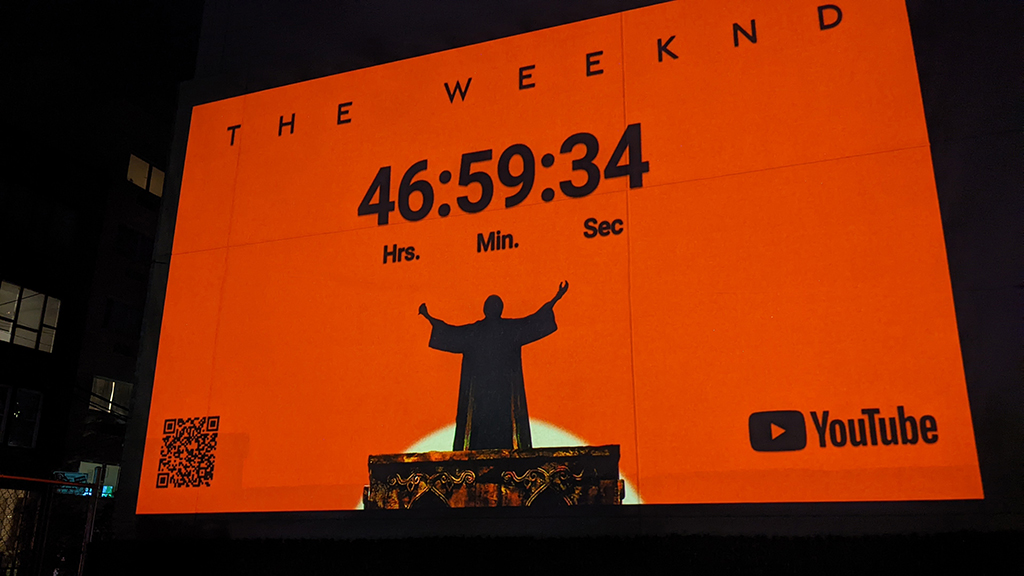
23. Event-Countdown Campaigns
Time-bounded campaigns with clear countdown creative create urgency that generates a higher-quality response than open-ended brand awareness messages. Countdown campaigns work best when the event or deadline is genuinely relevant to the audience’s interests and when the response path is clear and immediate. Digital boards with dayparting allow countdown creative to update in real time without reprinting.
24. Geofenced Social Amplification Programs
Pairing physical campaign deployments with geofenced social media advertising in the same target geography creates a multi-touchpoint environment where the audience encounters the brand in physical space and in their digital feed simultaneously. The compound frequency effect from physical plus digital reinforcement in the same geography produces stronger recall than either format achieves independently.
25. Post-Campaign Documentation as Earned Media
A comprehensive campaign documentation package, GPS-tagged photography, video documentation, and deployment data, is itself a media asset that generates ongoing earned media value. Press releases built around well-documented campaigns generate editorial coverage that extends the campaign’s impression count far beyond what the physical placements alone delivered. This secondary media value is one of the most consistently underexploited assets in guerrilla marketing campaign management.
Frequently Asked Questions About Guerrilla Marketing Examples
What makes a guerrilla marketing campaign successful?
Successful campaigns share common traits: a clear objective defined before tactic selection, placements concentrated where the target audience is actually present, creative that communicates instantly, and a response path that allows the brand to measure impact and capture audience action. Campaigns that miss any of these elements consistently underperform against their potential.
What are the best guerrilla marketing campaign examples?
The examples with the most broadly applicable strategic lessons include Supreme’s poster drops (consistency in culturally loaded environments builds authority), Netflix city takeovers (environments should extend the story world, not just advertise it), Burger King’s Whopper Detour (response paths make physical campaigns measurable), and Spotify’s artist poster waves (frequency is the mechanism, not novelty).
Should brands copy famous guerrilla marketing campaigns?
No. Extract the strategic principle and apply it with your own brand logic. Copying the format without understanding why it worked in its specific context for its specific brand produces derivative work that lacks the authenticity that made the original effective.
Can smaller brands execute effective guerrilla marketing?
Yes. Many of the most effective guerrilla strategies are specifically advantaged by limited budgets because they require precision rather than scale. Concentrated neighborhood dominance, hyperlocal street team programs, and well-placed poster campaigns are all accessible at budgets far below what traditional media requires.
What is the difference between guerrilla marketing and traditional advertising?
Traditional advertising rents time or space in media environments the audience passively consumes. Guerrilla marketing inserts brand messages into the audience’s real physical environment in ways that create genuine surprise, engagement, or cultural resonance. The encounter happens in the audience’s world, not in a designated advertising space.
How do brands measure guerrilla marketing campaign impact?
QR code scans, promo code redemptions, branded search volume monitoring, site traffic correlation with campaign dates, social media volume and sentiment analysis, and GPS-documented proof-of-placement photography all provide measurable accountability. The right model depends on campaign objective and must be defined before the campaign launches.
Frequently Asked Questions
What is guerrilla marketing examples 25 campaigns?
American Guerrilla Marketing provides guerrilla marketing examples 25 campaigns services across 50+ U.S. markets. Every campaign is planned, scouted, executed, and GPS-documented by our field teams. We work with regional brands and Fortune 500 companies on campaigns that require real street-level execution and documented proof of performance.
How does AGM approach 25 campaigns?
Our process starts with a market consultation to understand your goals, target audience, and budget. We then scout locations, handle any required permissions or permits, coordinate production and installation with our local crews, and provide a full GPS-tagged photo report after the campaign runs.
What markets does American Guerrilla Marketing cover for 25 campaigns?
We operate in 50+ U.S. markets including New York, Los Angeles, Chicago, Miami, Houston, Atlanta, Seattle, Denver, Boston, and dozens of secondary markets. Contact us to confirm availability and pricing for your specific market.
How much does a 25 campaigns campaign cost?
Campaign pricing depends on market, format, quantity, and duration. We work with budgets ranging from targeted single-market runs to national rollouts across multiple cities. Use our RFP Builder or contact us directly for a custom quote based on your specific campaign requirements.
How do I get started with 25 campaigns through AGM?
The fastest way to get started is to submit your campaign details through our RFP Builder at americanguerrillamarketing.com, or contact us directly at [email protected] or (646) 776-2770. Our team typically responds within one business day with availability and initial pricing.