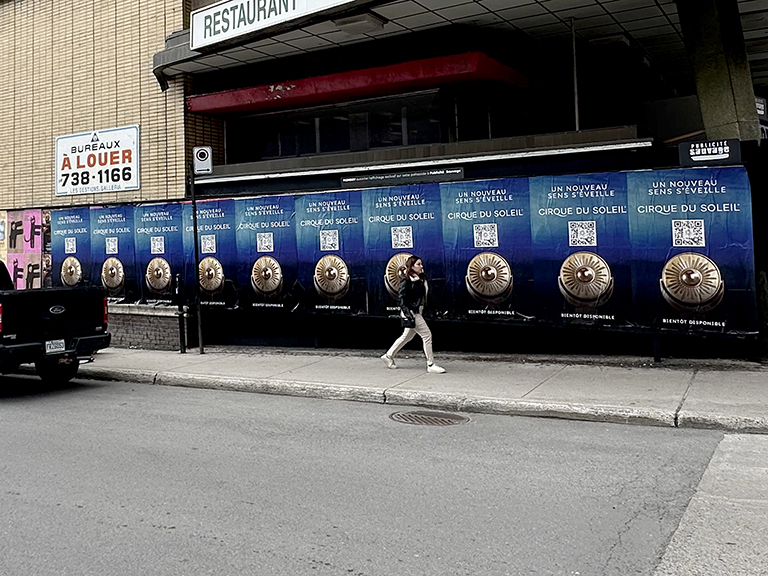
Guerilla Marketing Advertising: The NYC Street Campaign Guide 2026
We’ve posted massive print campaigns on the construction barriers along Canal Street at 2 a.m. on a Tuesday. We’ve run street teams through the Saturday morning crowd at the entrance to the High Line at Gansevoort Street and handed out 8,000 branded pieces before noon. We’ve projected 40-foot brand imagery onto the face of a SoHo building while people watched from the corner of Mercer and Prince and pulled out their phones. This is what we do. This is guerilla marketing advertising, and after years of running campaigns across New York City’s most trafficked corners and corridors, we can say with absolute certainty: it works.
American Guerrilla Marketing is a New York City street marketing agency. Our crews know these streets. We know which exit of the Bedford Avenue L train station carries the heaviest commuter flow between 6 and 8 p.m. on a weekday. We know that the corner of Prince Street and Broadway in SoHo is one of the highest-density pedestrian intersections in the country on a Saturday afternoon. We know that Bryant Park on a summer Tuesday at lunch is a completely different audience than Bryant Park on a Friday evening. That knowledge is the product. We put it to work for brands that want real human attention, not screen exposures that disappear in a scroll.
This article breaks down what guerilla marketing advertising actually is, how we approach it across New York City’s five boroughs, what it costs, and why some of the fastest-growing brands in the country are moving budget away from digital-only strategies and onto the streets where their customers live, work, and move every single day.
What Guerilla Marketing Advertising Is and Why We Swear By It
The Core Idea
Guerilla marketing advertising is unconventional, street-level brand promotion that earns attention through creativity, surprise, and physical presence. It doesn’t rely on a 30-second television slot or a banner ad that gets scrolled past in under a second. It shows up in the physical world, in places people actually go, and it earns attention through execution and originality rather than through paid exposures.
The term comes from guerilla warfare tactics. Small, agile forces create outsized impact by moving fast, hitting unexpected targets, and disappearing before anyone knows exactly what happened. That’s precisely how our teams operate on the ground in New York City. We move quickly. We pick the right location at the right hour. We create something worth looking at. Then we document it, track the social spread, and report back on what it generated.
We’ve seen campaigns we ran on a Tuesday morning go viral by Wednesday afternoon. That kind of amplification doesn’t happen with a Google Display ad. It happens when something real and surprising appears in someone’s physical world at the exact moment they’re open to it.
How It Differs from Traditional Advertising
Traditional advertising is interruptive by design. A television commercial interrupts your show. A banner ad interrupts your scroll. A radio spot interrupts your music. People have learned to tune all of it out. Ad blockers, skip buttons, banner blindness. The attention economy has made traditional formats significantly less effective than they were twenty years ago, and the data reflects that.
Guerilla marketing advertising earns attention instead of buying it. It creates moments people choose to engage with, photograph, and share. When our street team activates at the corner of 23rd Street and Sixth Avenue with a compelling product experience and a sharp visual hook, people stop. They look. They take out their phones. They post. The campaign doesn’t end when our crew packs up and leaves. It continues for days as those photos and videos circulate through feeds and group chats.
The efficiency difference is real and significant. A 30-second national television spot can cost $100,000 or more in production and media placement alone. We’ve run guerilla marketing advertising campaigns in New York City that generated more qualified organic exposures than that for a fraction of the cost. The math isn’t close, and the quality of each impression is dramatically higher because the person encountered the brand in a moment of genuine attention, face-to-face, at street level.
Why New York City Is the Best Place to Run It
New York City is the most concentrated collection of human attention on Earth. On a single city block in SoHo on a Saturday afternoon, you’ll pass more potential customers in an hour than many regional cities see in a full day. The density is extraordinary. The social media activity per square mile is extraordinary. And the culture of looking, sharing, and reacting to what appears on the street is deeply embedded in how New Yorkers experience their city.
Every time we activate here, we’re operating in front of an audience that’s digitally connected, visually literate, and culturally curious. That’s the ideal environment for guerilla marketing advertising to thrive.
NYC Streets Are Our Canvas: Neighborhoods We Know Cold
We don’t treat New York City as one market. We treat it as dozens of distinct micro-markets, each with its own pedestrian rhythms, demographic profile, cultural temperature, and best hours for activation. That granularity is what separates our work from agencies that show up with a van and a stack of flyers and call it street marketing.
SoHo and Lower Manhattan
SoHo is one of the most brand-saturated neighborhoods in the world, which means the bar for standing out is genuinely high. Our crews have run campaigns along Broadway between Houston and Canal Street, on the corners of Spring Street and Greene Street, and along Wooster Street where foot traffic is dense and the audience skews fashion-forward, design-conscious, and digitally active. When they see something worth sharing, they share it within minutes.
We’ve done projection activations on building walls along Grand Street and Greene Street. We’ve run street teams outside the Apple Store on Prince Street at peak shopping hours. We’ve deployed poster campaigns on the construction barriers lining Lafayette Street during major development projects, turning temporary infrastructure into valuable media surfaces. Every corner in this neighborhood is an opportunity if you know how to read the flow.
In Lower Manhattan, the foot traffic patterns around Fulton Center, the World Trade Center PATH entrance at Church Street, and the Oculus shopping complex create specific windows for targeted street activations. We’ve run campaigns timed to morning commuter flow at Fulton Street that reached 5,000 to 8,000 professionals in under three hours.
Brooklyn’s Creative Corridors
Williamsburg and Bushwick are two of the most fertile grounds for guerilla marketing advertising in the entire country. The culture moves fast here. Artists, designers, tech workers, and early adopters live within blocks of each other along Bedford Avenue, Graham Avenue, and the stretch of Jefferson Street connecting the two neighborhoods. They’re quick to notice what’s new and quick to share what they find interesting.
We love the Bushwick Collective corridor along Troutman Street and St. Nicholas Avenue. That entire stretch is already an outdoor gallery, which means audiences come specifically to look at things. Our campaigns in that area consistently outperform brand recall benchmarks because the context is exactly right. People arrive expecting to be visually engaged. We meet them there.
In DUMBO, the arch under the Manhattan Bridge at Washington Street and Front Street is one of the most photographed spots in New York City. Our activations near that location reach an audience that is already in photo-taking mode. That’s a powerful state to meet someone in when you want them to document your brand and share it. We’ve placed guerilla installations in that area that generated social media reach far beyond what any paid placement in the same geography would have produced.
Park Slope, Greenpoint, and Crown Heights each carry their own distinct audiences and rhythms. We’ve run successful street activations on Atlantic Avenue between Third and Fourth Avenue, along Manhattan Avenue in Greenpoint, and around the Franklin Avenue corridor in Crown Heights. Every campaign in Brooklyn gets a neighborhood-specific strategy, not a copy-paste of what worked in SoHo.
Midtown and Times Square Adjacents
Midtown is high-volume, high-stakes territory. Times Square itself is a billboard competition we approach carefully, but the streets surrounding it are consistently valuable. Seventh Avenue between 34th and 42nd Street carries enormous foot traffic, particularly around Macy’s and the Penn Station exits. The pedestrian flow on 42nd Street heading toward the Port Authority moves through a captive corridor we know how to work.
We’ve run street teams at the Herald Square exit of Penn Station, coordinating deployment timing with the arrival of specific New Jersey Transit trains for maximum commuter impact. We’ve placed large-format poster campaigns on scaffolding wraps along Eighth Avenue and 34th Street. We’ve activated product sampling experiences outside the Bryant Park subway entrance on 42nd Street, reaching a lunch crowd that’s already in a relaxed, outdoor state of mind.
Madison Square Garden on event days is one of our favorite high-concentration targets. We’ve deployed teams along Seventh Avenue and 33rd Street ahead of major concerts and games, reaching tens of thousands of people in a positive, anticipatory mood. The combination of high density and high energy makes those moments particularly effective for guerilla marketing advertising.
The East Village and Lower East Side
The East Village and Lower East Side are night-and-weekend goldmines for brands targeting a 21-to-35 demographic. The stretch along St. Marks Place between Second and Third Avenue, the cluster of bars and restaurants along Rivington Street, and the weekend foot traffic on Orchard Street and Ludlow Street create high-engagement windows from Thursday through Sunday evenings.
We’ve run sticker campaigns in the stairwells and corridors of the First Avenue L train station, poster placements on the boards along Second Avenue during construction periods, and street team activations in Tompkins Square Park during weekend afternoon events. The audience here is urban, culture-forward, and genuinely responsive to brands that show up with creativity rather than conventional media.
The Tactics We Deploy: What Guerilla Marketing Advertising Looks Like on the Ground
Guerilla marketing advertising isn’t one thing. It’s a toolkit of street-level tactics we mix and match based on your goals, your target audience, the time of year, and the specific geography. Here’s what our crews actually do, and how each tactic creates value for your brand.
Street Teams and Human Activation
Street teams are our most versatile and consistently effective tool. A well-briefed, high-energy team of brand ambassadors can do things no poster or projection can do. They can answer questions. They can hand someone a product sample and watch them try it in real time. They can make someone laugh and turn a brief sidewalk encounter into a genuine brand memory. They can create a moment that turns a stranger into a brand advocate in under 60 seconds.
We’ve deployed street teams outside Madison Square Garden before Knicks games, handing out branded merchandise to tens of thousands of fans walking up Seventh Avenue. We’ve activated teams in Bryant Park during the summer concert series, reaching a crowd that’s already in a good mood and open to new experiences. We’ve stationed teams at the Union Square Greenmarket on Saturday mornings, where the audience is moving slowly, engaged with their surroundings, and genuinely open to conversation.
Our teams don’t just stand there holding signs. We train every brand ambassador specifically for each campaign. They know the product. They know the core message. They know when to approach someone and when to let them come to you. They know how to handle the most common questions and objections. That level of preparation shows in the results, and it shows in the documentation. Our activations look professional because they are.
Sticker and Poster Campaigns
Street-level print placements, stickers, and poster campaigns are a foundational element of guerilla marketing advertising. We’ve been placing high-quality print materials across New York City for years. We know which surfaces hold up through weather and foot traffic, which neighborhoods have the highest visual retention, how to design print materials that stop people mid-stride, and how to cluster placements for maximum impact.
We’ve run poster campaigns along the construction barriers on the west side of the High Line between 14th and 18th Street. We’ve placed sticker campaigns in the corridor of the Bedford Avenue L train station in Williamsburg, where weekday evening commuters and weekend visitors pass in enormous numbers. We’ve deployed materials along St. Marks Place in the East Village, along the commercial strip on Graham Avenue in Williamsburg, and on scaffolding wraps throughout SoHo during active construction periods.
The key to a great poster campaign is design quality and placement density working together. One poster does almost nothing. A tight, consistent cluster of high-quality placements across the right three blocks creates a presence that feels significant. People notice it. They photograph it. They mention it to friends. We manage the full operation, from design consultation to production to placement to documentation and reporting.
Projection Advertising
Projection is one of the most visually dramatic tools in guerilla marketing advertising, and it photographs beautifully. We’ve projected brand imagery onto building facades in SoHo, onto the face of warehouses in Bushwick, onto the waterfront structures in DUMBO with the Manhattan Bridge and East River as a backdrop, and onto buildings along Fifth Avenue during Fashion Week when the city’s cultural attention is at its peak.
The scale of a well-executed projection is genuinely impossible to ignore. A 30-foot brand logo on a building wall at Grand Street and Broadway stops foot traffic. People gather. They photograph it from multiple angles. Those images circulate on Instagram and Twitter for days after the activation. The equipment, the scouting, the technical execution, and the documentation are all handled by our team. Projection activations typically run during evening hours when the visual contrast is strongest, and we coordinate the timing with your broader campaign calendar.
Pop-Up Brand Experiences
Pop-up activations move people from passive observers to active participants. We create physical brand environments that appear in public spaces, invite people in, and give them something real to do: sampling, games, photo moments, product demonstrations, conversations with brand representatives who genuinely know the product. The goal is always the same. Create a memory, earn a share, generate a story worth telling.
We’ve built pop-up experiences in Washington Square Park, on the piers along Hudson River Park at the 14th Street entrance, at seasonal events in Prospect Park, and at weekend markets along the Williamsburg waterfront. We’ve partnered with existing festivals and markets in locations from Flushing Meadows Corona Park in Queens to Fort Greene Park in Brooklyn to place brand experiences inside events that already have crowds. The built-in audience reduces our acquisition cost and increases our reach efficiency dramatically.
Ambient and Environmental Media
Ambient media uses the physical environment itself as the medium. Chalk installations on the sidewalk outside a subway entrance. Custom stencils on pavement near a venue entrance. Branded wraps on construction barricades that turn a block of scaffolding into a 200-foot brand impression. These placements don’t interrupt people. They become part of the environment people move through, which means the brand association feels organic rather than forced.
We’ve run ambient campaigns on the pavement outside the entrance to the Brooklyn Bridge walkway on the Manhattan side at Tillary Street. We’ve worked with brands to wrap the scaffolding outside major retail locations in SoHo during renovation periods. The scale of ambient media placements in a city like New York is something digital advertising simply cannot replicate.
How We Plan and Execute a Guerilla Marketing Advertising Campaign
Every campaign we run starts with the same question: where does your target audience actually go? Not where do they scroll. Where do they walk, commute, shop, eat, and spend time? That question drives every decision that follows.
Foot Traffic Research and Location Intelligence
We combine location data, our own on-the-ground observation, and years of accumulated institutional knowledge about New York City’s pedestrian patterns. We know that the corner of Houston Street and Lafayette Street draws a very different morning commuter mix than it does on a Saturday afternoon. We know that the stretch of Atlantic Avenue in Brooklyn between Third and Fourth Avenue carries different demographic traffic on a weekday morning than on a Saturday evening. These details matter more than most brands realize.
Before we finalize any guerilla marketing advertising plan, we walk the locations. Our team physically visits every target site at the time of day and day of week we plan to activate. We confirm the conditions on the ground: foot traffic volume, surface conditions, line-of-sight from key pedestrian approaches, ambient noise levels, competing visual elements. There is no substitute for being there before we show up with a crew.
Creative Development and Street-Reality Testing
Our creative process is built around one core principle: the street is a competition for attention, and we intend to win it. A poster, a projection, a street team activation, a pop-up build. Whatever we put out there has to be the most interesting thing in someone’s field of vision at that moment. That’s a high bar. We clear it by designing everything specifically for street-level consumption.
We work with your existing brand standards and push them into physical-world execution. We’ll tell you honestly when a concept won’t work on the street. We’ve seen too many brands bring beautiful digital creative that falls completely flat when printed and placed on a physical wall. The viewing distances are different. The ambient lighting is different. The context around the image is different. The rules of effective street creative are specific, and we know them from experience.
Execution and Real-Time Adjustments
On activation day, our field managers stay in constant contact with every crew in the field. If weather changes the conditions at the corner of Grand Street and Broadway, we pivot to Spring Street immediately. If an event at Madison Square Garden starts an hour late, we extend the street team deployment window to match the audience flow. Guerilla marketing advertising rewards the teams that adapt fastest, and our field experience across hundreds of campaigns means we make good decisions under pressure without needing to escalate every call.
We document everything in real time. Our field crews photograph and video every placement, every street team moment, every projection activation. That documentation gives you a complete record of what we executed, where we executed it, and what it looked like. That content also feeds your social channels, your internal reporting, and your planning for future campaigns.
Post-Campaign Reporting
Within 72 hours of campaign completion, we deliver a full activation report. It covers locations activated, crew hours deployed, materials placed or distributed, QR code scan counts where applicable, and a curated gallery of professional photography from the field. For campaigns with social amplification goals, we include an organic reach summary tracking mentions, hashtag volume, and documented shares in the campaign window. We don’t hand you a receipt and disappear. We close the loop with data.
Measuring the Impact of Guerilla Marketing Advertising
One of the most common objections we hear is about measurement. How do you quantify street marketing? The honest answer is that measurement looks different from paid digital, but it’s absolutely trackable. Here’s how we approach it.
Social Media Amplification and Organic Reach
Every guerilla marketing advertising campaign we design is built to be photographed and shared. That’s a primary objective, not a side effect. We track social mentions, hashtag volume, and organic reach generated by each activation in the 48 to 72 hours following execution. For campaigns in high-traffic visual locations like SoHo or the Bushwick Collective corridor, that organic social reach can easily exceed 100,000 exposures from a single activation day with zero additional media spend.
We’ve run campaigns that earned press coverage in Time Out New York, Hypebeast, and a range of New York City culture publications and local blogs. A well-executed street installation in Williamsburg or a projection activation in SoHo can attract attention from photographers, street culture journalists, and large Instagram accounts that document the city’s visual environment. That earned media multiplies the reach of every dollar spent on the ground activation itself.
Direct Response Attribution
We build direct response mechanics into campaigns whenever possible. Custom landing page URLs printed on street materials. QR codes on flyers, posters, and handouts that drive to specific campaign pages. Unique promo codes tied to specific locations or activation dates. These create clean attribution trails connecting street activity to measurable online behavior.
When our street team hands a commuter a flyer at the corner of Bedford Avenue and North 7th Street with a QR code that drives to a campaign-specific landing page, every scan is logged. When that person converts on the landing page, we attribute the conversion. It’s not as automatic as a Facebook pixel, but it produces reliable directional data that clients use to evaluate campaign performance and allocate future budgets.
Brand Recall and Awareness Lift
For campaigns with a primary brand awareness objective, we’ve commissioned pre- and post-campaign surveys in specific zip codes to measure the lift in brand awareness attributable to street activation. The method is straightforward: survey unaided brand recall in the target neighborhood before the campaign, run the activation, and survey the same demographic again two weeks later. The results consistently show measurable increases in unaided brand recognition among consumers who frequent the neighborhoods we activated in.
For clients with physical retail locations near activation zones, we also track foot traffic in the days following major activations to identify any attributable lift. The data is directional rather than deterministic, but combined with the other measurement approaches, it builds a credible picture of campaign impact that most clients find more than sufficient for budget justification.
Guerilla Marketing Advertising Costs: What to Expect and What You Get
Let’s talk about money. One of the most persistent misconceptions about guerilla marketing advertising is that it’s automatically cheap. Some tactics are exceptionally cost-efficient relative to their impact. Others involve significant production, logistics, and field management costs. Here’s an honest breakdown of what different campaign types cost and what you actually get for each.
Major brand launches, sustained city-wide presence
These ranges reflect the real cost of operating in New York City, where labor, logistics, production, and field management costs are higher than in other markets. What you’re paying for is execution quality, location intelligence built from years of on-the-ground campaigns, experienced field management on every activation, and thorough documentation. A poorly executed guerilla campaign generates zero exposures and wastes every dollar. We don’t cut corners on the things that determine what actually works.
Guerilla Advertising vs. Traditional Media: A Direct Comparison
Channel
Estimated Cost (NYC)
Estimated exposures
Engagement Quality
Social Amplification Potential
NYC Subway Car Ad (4 weeks)
$15,000 – $40,000
2M – 5M
Passive, low attention
Minimal
Digital Display, NYC geo-targeted
$5,000 – $20,000
1M – 10M banner views
Very low, high skip rate
None
Street Team, 3 days / 3 locations
$10,000 – $18,000
50K – 150K direct contacts
High, face-to-face, memorable
Strong
Poster Campaign, SoHo and Williamsburg
$5,000 – $10,000
500K – 2M ambient views
Moderate, visual engagement
Moderate to strong
Projection Activation, 2 nights
$8,000 – $20,000
10K – 50K live / social spread
Very high, stop-and-stare
Very strong, viral potential
The comparison isn’t just about raw impression numbers. It’s about the quality of each impression and the ripple effect each channel generates. A person who has a 90-second conversation with one of our brand ambassadors at the corner of 23rd Street and Sixth Avenue has a fundamentally different relationship with your brand than someone who saw a banner ad load between article paragraphs. The memory is different. The emotional residue is different. The likelihood of sharing is different. The downstream conversion potential is different. Impression for impression, street-level contact is the highest-quality brand exposure we know of.
What’s Included When You Work With Us
Every campaign we manage includes strategy development and location planning, creative direction and production coordination, field management and crew deployment, real-time reporting from activation sites, and full professional photo and video documentation. We also provide post-campaign analysis covering social amplification reach, direct response attribution where applicable, and geographic distribution of campaign materials.
We’re a campaign partner, not a vendor. Our field managers have run hundreds of activations across every major New York City neighborhood and they bring that depth of experience to every brief we take on, at every budget level.
Real Campaign Examples from Our Work on NYC Streets
We’ve run guerilla marketing advertising campaigns for brands across fashion, technology, food and beverage, entertainment, fitness, and consumer products. Here are three examples that show how this work operates in practice, from brief to execution to results.
A Fashion Brand Launch in SoHo
A direct-to-consumer fashion brand came to us ahead of their New York City market launch. They had a strong digital following but zero street-level presence or recognition. We built a three-week campaign combining poster placements on the scaffolding along Mercer Street between Houston and Prince, street team activations outside the Spring Street subway station on two consecutive Saturdays, and a pop-up styling station inside a SoHo retail partner’s space on Spring Street.
The street teams handed out printed lookbooks and exclusive discount codes to approximately 8,000 people over those two Saturdays. The poster placement generated over 40 documented social shares from passersby who photographed the creative and posted it with the brand’s handle tagged. The pop-up drew over 300 visitors across its three-day run, with a 22 percent on-site conversion rate to email list sign-up. By the official launch date, the brand had a measurable physical presence in the neighborhood before spending a single dollar on paid media in the market.
A Tech Startup at Penn Station and Brooklyn Transit Hubs
A mobile app startup targeting young professionals wanted to drive app installs in New York City at a cost-per-install below what they were paying through paid social channels. We identified Penn Station at 34th Street and the Fulton Center exits in Lower Manhattan as primary street team activation sites, supplemented by targeted sticker and flyer campaigns in the corridors of the Bedford Avenue L train station and the 14th Street Union Square station complex.
Our street teams engaged over 12,000 commuters across four activation days, with a QR code flyer driving directly to the App Store listing with a campaign-specific UTM parameter. We tracked 1,100 documented QR scans from flyers our teams distributed. The attributed cost per install from our guerilla campaign came in at less than one-third the cost the client was paying through paid Instagram and Facebook placements. They reallocated a meaningful portion of their acquisition budget to street marketing for the following quarter.
A Beverage Brand Building Street Credibility in Brooklyn
A new ready-to-drink beverage brand wanted to establish credibility in Brooklyn before pursuing broader retail distribution. Our crews activated street teams at the entrance to Smorgasburg on the Williamsburg waterfront at Kent Avenue over four consecutive Saturdays, reaching weekend crowds who were already in the mindset of trying new food and drink products. We ran the sampling alongside a poster and sticker campaign along Graham Avenue, the commercial strip on Greenpoint Avenue, and the blocks around the Morgan Avenue L train station in East Williamsburg.
The combination of product sampling and consistent visual presence over those four weeks created the impression of a brand already embedded in the neighborhood. Buyers at independent retailers along Bedford Avenue told the client they’d been seeing the brand around before the client’s sales team ever walked in to pitch them. That kind of street credibility is something no digital advertising campaign can create. It requires real physical presence in the real neighborhood over real time, and that’s exactly what guerilla marketing advertising builds.
Why Brands Come Back to Guerilla Marketing Advertising
It Creates Physical Reality for Your Brand
There’s something that happens when people encounter a brand in the physical world that simply doesn’t happen with digital advertising. A sense that the brand is real. That it has the resources and the conviction to show up somewhere people actually are. That it matters enough to spend money on something you can touch and walk past. This perception shift matters enormously, particularly for newer brands trying to establish themselves in competitive markets where awareness is the first obstacle to everything else.
When our crews run a coordinated campaign in SoHo and Williamsburg in the same week, people start to feel like the brand is everywhere. That feeling of ubiquity is almost impossible to create through digital channels alone, because every screen experience is siloed and private. Physical presence in shared public space creates shared perception. It’s one of the most underrated advantages of guerilla marketing advertising.
It Reaches People in the Right State of Mind
When someone is walking through Nolita on a Saturday afternoon, they’re in a receptive, exploratory state. They’re not distracted by a work email. They’re not juggling multiple browser tabs. They’re looking at things. That’s the exact moment guerilla marketing advertising is designed to intercept. The physical context of the street, at the right time of day, in the right neighborhood, dramatically increases the quality of every brand impression we generate. Location is part of the message.
It Earns Press and Organic Media Coverage
The best guerilla campaigns become news. We’ve had client activations covered by Time Out New York, Hypebeast, local Brooklyn media outlets, and Instagram accounts with audiences in the hundreds of thousands who document the city’s visual culture. That earned media multiplies the reach of every dollar spent on the ground activation. A clever installation at the corner of Bedford Avenue and North 7th Street on a Saturday morning can be in front of 50,000 people on social media by Sunday night with no additional media spend.
It Builds Brand Identity Through Neighborhood Association
When your brand appears on Bedford Avenue in Williamsburg, it carries the cultural associations of that street: creative, independent, forward-thinking. When it appears on Mercer Street in SoHo, it carries the associations of SoHo: style, quality, design consciousness. Location is brand messaging. Where your brand appears shapes what your brand means to the people who see it. We choose locations deliberately for this reason, because the neighborhood context is part of what we’re buying for your brand with every placement we make.
Frequently Asked Questions
What exactly is guerilla marketing advertising?
Guerilla marketing advertising is unconventional, street-level brand promotion that earns attention through creativity and surprise rather than through purchased media space. It includes tactics like street teams, poster and sticker campaigns, projections, pop-up experiences, ambient media installations, and product sampling activations. The goal is to create high-impact brand moments that generat
How long does it take to plan and execute a guerilla marketing campaign?
Most campaigns we run take two to four weeks from initial briefing to first activation day. Simpler campaigns, like a targeted street team day or a focused poster placement run, can be turned around in under two weeks with complete creative in hand. More complex campaigns involving pop-up builds, custom fabrication, or multi-neighborhood coordination across several weeks require more lead time. We
What’s the minimum budget to run a guerilla marketing advertising campaign in New York City?
Our minimum engagement starts around $2,500 for a focused single-day street team activation or a targeted poster and sticker campaign in one neighborhood. For campaigns designed to build meaningful brand awareness across multiple neighborhoods or sustain a presence over multiple activation days, budgets in the $8,000 to $25,000 range deliver the most impactful results. We’ll tell you honestly what
How do you measure the results of a guerilla marketing advertising campaign?
We use multiple measurement approaches depending on campaign objectives. For street team activations, we track direct contacts made, materials distributed, and QR code scans where applicable. For print campaigns, we document placements with photography and track organic social sharing. For all campaigns, we monitor social media mentions and organic reach in the 72 hours following each activation w
Can guerilla marketing advertising work for B2B brands?
Yes, with the right targeting approach. B2B brands benefit most from activations around specific business districts, conference venues, or industry events. We’ve run campaigns targeting specific professional audiences in the Meatpacking District, around the Javits Center on 11th Avenue during major trade shows, and in the corporate office corridors of Midtown Manhattan. We’ve also targeted specifi
Do you work with small businesses or just larger brands?
We work with businesses at every scale. Some of our most satisfying campaigns have been for independent New York City brands looking to establish a street presence in their own neighborhood. A restaurant launching in Park Slope. A clothing brand making its first big push in Williamsburg. A fitness studio opening in Astoria. Our smaller-format offerings are specifically built for brands that want p
Which New York City neighborhoods do you know best?
We operate across all five boroughs and we know all of them well. Our deepest campaign history is in SoHo, Williamsburg, Bushwick, DUMBO, the East Village, Midtown, and Lower Manhattan. We’ve also run extensive campaigns in Astoria and Jackson Heights in Queens, along Fordham Road and the Grand Concourse in the Bronx, in the North Shore of Staten Island, and across Crown Heights, Bed-Stuy, and Gre