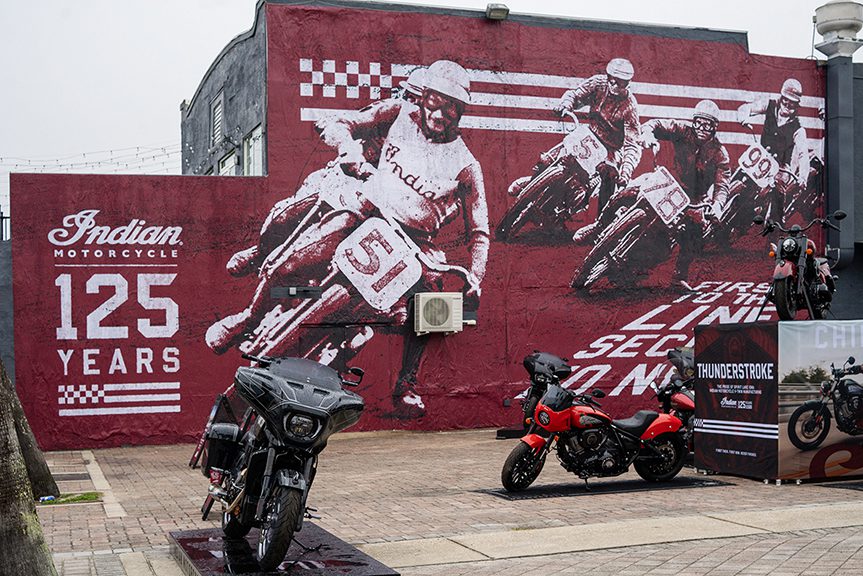
We run guerilla advertising campaigns in New York City. That sentence covers a lot of ground, and we want to be precise about what it means. Guerilla advertising is any form of brand communication that reaches the consumer in an unexpected, attention-commanding way outside of conventional media channels. It is the chalk message on the sidewalk in front of a brand new restaurant on Smith Street in Carroll Gardens. It is the projection of a film title on the side of a building on Prince Street the night before the theatrical release. It is the street team handing out cold drinks from a branded cooler outside the Barclays Center on a July afternoon. It is the oversized branded installation sitting in the middle of the Domino Sugar Park waterfront on a Saturday in June.
What unites all of these formats is intention and surprise. Guerilla advertising gets attention because it does not look like an ad until the consumer is already engaged with it. And the best guerilla advertising earns more attention after the fact, through photography and social sharing and word of mouth, than it does in the moment of initial contact. That multiplication effect is what makes the format so valuable for brands working with budgets that cannot compete with major media buys on reach alone.
This guide covers the full scope of guerilla advertising formats we execute in New York City, where we execute them, how we design campaigns, what brands should invest, and the questions we get asked most often by clients approaching this format for the first time.
The foundational layer of guerilla advertising is street-level visual work: wheatpaste posters, sticker campaigns, chalk art, sidewalk messaging, and any other format that turns the urban environment into a brand communication surface. These formats work because they appear where the consumer already is, as part of the visual environment they move through every day, rather than demanding that the consumer seek out the brand message.
Wheatpaste poster campaigns are our most frequently requested street-level visual format. A run of 50 to 100 posters across a target neighborhood, installed overnight on construction hoarding, scaffolding, and plywood barriers, creates a ubiquitous brand presence in that zone that builds recognition through repeated daily exposure. The format is highly targetable, fast to execute, and cost-efficient relative to conventional outdoor buys.
Chalk art campaigns are an underused guerilla format that can be extremely effective for local businesses and neighborhood-focused brands. We execute sidewalk chalk art at target intersections, transit entrances, and high-foot-traffic corners using professional artists who produce large-scale, visually striking works that stop pedestrians in their tracks. Chalk art is inherently temporary, which creates urgency: see it today, because it may be gone tomorrow. That ephemerality can be part of the campaign concept rather than a limitation.
Sticker campaigns are our fastest format to execute and our most cost-effective for urban saturation in specific corridors. Custom die-cut stickers with high-quality vinyl printing distributed through street teams or installed on approved surfaces in target zones create a low-cost, high-density brand presence that can launch within days of a campaign brief. For brands entering a new neighborhood market or building underground awareness, sticker campaigns are the starting point.
Ambient and Environmental Advertising
Ambient guerilla advertising transforms public spaces and everyday objects into brand communication touchpoints. A branded doormat outside a partner retailer’s entrance. A custom-wrapped food cart parked at the corner of Canal and Broadway. A series of branded park bench wraps along the Hudson River Park waterfront from Pier 25 to Pier 40. A branded construction hoarding wrap that turns a block-long plywood barrier on a Midtown construction site into a 200-foot-long brand message.
Our ambient advertising work starts with identifying locations and objects in the target zone that the audience already interacts with as part of their daily routine. The brand then enters that daily routine as an element of the familiar environment. When the ambient touchpoint is well-designed, the consumer often has a moment of amused recognition before they consciously register that they are looking at an advertisement. That moment of recognition is the core of what makes the format effective.
We have wrapped benches in Prospect Park near the Flatbush Avenue entrance, installed custom manhole cover decals on the blocks around a restaurant opening in SoHo, placed branded street corner signage at key intersections in Williamsburg during a product launch week, and produced large-scale branded window wraps for partner retail locations on Bedford Avenue. Each of these touchpoints was designed to fit the visual environment so naturally that it read as part of the neighborhood rather than an intrusion into it.
Projection Advertising
Brand projection campaigns use high-powered projectors to display brand content on building facades, bridges, and other large-scale surfaces at night. The format is attention-commanding in a way that most outdoor advertising cannot match, because it creates light and movement in an environment where those qualities naturally draw the eye. A projection on the side of a cast-iron building on Prince Street in SoHo, or on the Brooklyn-facing facade of a Williamsburg warehouse on the East River waterfront, is visible from a significant distance and stops pedestrians in the street.
We run projection campaigns for film studios before theatrical releases, for music labels around album drops, for consumer brands launching new products, and for events requiring pre-event buzz generation. A well-timed projection campaign in a high-visibility location generates social media content from passersby that extends the campaign’s reach far beyond the people who see it in real time. When someone photographs a projection on a landmark building and posts it to their social channels, the brand message reaches everyone in their network.
Projection campaigns are most effective in the two to four-week window leading up to a major event or launch. The format creates anticipation. When the brand has something specific to announce or build toward, projection advertising in advance of the announcement creates a street-level conversation that primes the audience for the news when it drops.
Street Team and Experiential Guerilla Campaigns
Street team guerilla advertising puts trained brand representatives on the street at target locations to make direct consumer contact. The format delivers something no visual advertising format can: a live human interaction with the brand. A street team member who hands someone a product sample and has a 30-second conversation about what it is and what it does creates a brand encounter that sticks differently than a poster on the wall.
Our street teams operate as brand ambassadors with product knowledge, communication training, and a clear brief on the consumer interaction we want them to create. We do not hire warm bodies and put them in branded t-shirts. We recruit people with direct consumer interaction experience, train them specifically on the brand and campaign, and supervise each team in the field with a shift supervisor who tracks interactions, manages quality, and handles unexpected situations.
Guerilla experiential campaigns at this level include flash mob-style brand moments, surprise product deliveries coordinated through social media, pop-up product experiences that appear without advance notice in unexpected locations, and stunt activations designed to generate press coverage through their sheer unexpectedness. These campaigns require more planning than they look like from the outside. The spontaneous appearance is the result of extensive logistics management behind the scenes.
Where Guerilla Advertising Works Best in New York City
The High-Density Manhattan Corridors
Manhattan’s highest-foot-traffic corridors are the obvious starting point for guerilla advertising campaigns targeting a citywide audience. The SoHo blocks between Broadway and West Broadway from Canal to Houston carry a dense mix of shoppers, tourists, and creative industry workers throughout the day and into the evening. The Lower East Side blocks around Orchard, Rivington, and Ludlow Streets carry the nightlife and creative crowd that makes this zone valuable for fashion, music, and entertainment brands.
The Union Square perimeter, specifically the sidewalks on 14th Street between University Place and Park Avenue South and the Broadway blocks between 17th and 10th Streets, is one of the city’s most productive guerilla advertising locations. Union Square is a convergence point for multiple subway lines, a farmers market anchor, and a gathering spot for the diverse demographic mix of the surrounding neighborhoods. A street team at the 14th Street and Broadway corner can reach thousands of pedestrians in a single morning shift.
The blocks around Grand Central Terminal on 42nd Street between Vanderbilt and Lexington Avenues carry some of the city’s highest pedestrian counts at morning and evening rush hour. Grand Central-adjacent guerilla campaigns targeting commuters benefit from the captive attention of people who are moving between transit and destination and have a natural pause in their momentum at street level.
Brooklyn’s Neighborhood Hubs
Brooklyn’s guerilla advertising geography centers on neighborhood hubs that concentrate foot traffic and cultural activity. Bedford Avenue at North 7th Street in Williamsburg, where the L train deposits thousands of riders daily, is our most active Brooklyn guerilla location. The intersection of Flatbush and Atlantic Avenues in downtown Brooklyn, anchored by the Barclays Center and the Atlantic Terminal transit hub, is our highest-volume Brooklyn location for sampling and street team campaigns.
DeKalb Avenue at Fulton Street in Fort Greene, anchored by the Dekalb Market Hall food court and surrounded by the Fort Greene and Clinton Hill residential neighborhoods, carries a strong Saturday and Sunday foot traffic pattern that makes it productive for weekend guerilla campaigns. The combination of the market, the park proximity, and the BAM cultural district traffic creates a foot traffic mix that is concentrated enough to justify the focus of a guerilla team for a full weekend day.
The Prospect Park entrance on Flatbush Avenue at Eastern Parkway carries strong weekend foot traffic from park visitors, farmers market shoppers, and the surrounding Park Slope, Crown Heights, and Prospect Lefferts Gardens residential communities. Weekend morning guerilla activations at this location reach an audience that skews slightly older, more family-oriented, and more locally rooted than the Bedford Avenue Williamsburg crowd.
Event-Adjacent Guerilla Locations
New York City’s event calendar creates time-limited guerilla advertising opportunities around concerts, sporting events, festivals, and cultural moments. The perimeter of Madison Square Garden on 7th Avenue between 31st and 33rd Streets, and the blocks around the Barclays Center on Atlantic and Flatbush, are our two most frequently requested event-adjacent guerilla locations. On event days, these corridors carry foot traffic densities comparable to the city’s busiest commercial intersections.
Outdoor summer events in parks and on waterfronts create additional high-density guerilla opportunities. The Great Lawn events in Central Park, the concerts and film screenings at Hudson River Park, and the outdoor festivals in Prospect Park and on the Williamsburg waterfront all create temporary concentrations of target consumers that a well-positioned guerilla campaign can reach efficiently.
Campaign Design and Strategy for Guerilla Advertising
Starting with the Objective
Every guerilla advertising campaign we design starts with a single question: what do we want the consumer to do, feel, or believe after this encounter? The answer to that question determines the format, the location, the creative approach, and the measurement framework.
A brand whose objective is product trial needs a sampling campaign with a strong in-person interaction component. A brand whose objective is building awareness in a specific neighborhood needs a high-coverage visual campaign: posters, ambient touchpoints, and street team coverage concentrated in that zone. A brand whose objective is generating press coverage around a launch needs a stunt activation or projection campaign that is designed to be photographed and shared. Different objectives require different tools.
We push back on briefs where the objective is unclear or where the format is specified before the objective is defined. A client who says “we want a guerilla campaign” without a clear sense of what they want it to achieve is asking us to design a tactic before we have a strategy. We spend time on the briefing to make sure the strategy is clear before we start designing the tactic.
The Integration of Street and Digital
Guerilla advertising campaigns that integrate with digital strategy outperform campaigns that treat street and digital as separate channels. The relationship works in both directions. Street-level campaigns drive digital behavior: QR code scans, social media check-ins, search volume spikes in the campaign geography, and organic social sharing from consumers who photograph the street-level work. Digital campaigns drive street-level traffic: consumers who see a campaign on social media and then seek out the physical installation to experience it in person.
We design the digital integration layer into every guerilla campaign brief. For campaigns with a social media amplification objective, we identify the moments in the consumer’s street-level experience that are most likely to generate photography and sharing, and we design the creative and the location strategy to maximize those moments. A wheatpaste poster at a visually interesting location in Bushwick, a projection on a landmark wall in SoHo, a branded installation at a waterfront park: these generate social content because the location and the creative make them worth photographing. We engineer those conditions intentionally.
Creative Development for Guerilla Formats
Guerilla advertising creative needs to communicate faster and more compellingly than conventional advertising creative. The consumer is not seeking out the message. The message is interrupting their day. It has two to five seconds to earn their attention before they move on. In those seconds, the creative needs to deliver one clear idea, one emotional reaction, or one compelling visual that makes the consumer stop, look again, and register the brand.
The creative principles we apply to guerilla advertising are consistent: strong visual contrast, one primary idea per execution, brand presence that is legible at the scale and distance of the target location, and a creative concept that earns attention on its own terms before the consumer processes it as advertising. The last point is the hardest to execute and the most important to get right. Creative that feels like advertising the moment you look at it gets tuned out. Creative that earns attention before revealing its commercial intent gets remembered.
Guerilla Advertising Campaign Pricing
Investment by Format and Scale
Guerilla Advertising Campaign Investment, New York City
Campaign Type
Scope
Duration
Investment Range
Sticker Campaign
5 neighborhoods, 500 units
Ongoing
$800 to $2,000
Chalk Art Campaign
3 locations, 1 day
1 day
$1,500 to $4,000
Wheatpaste Poster Run
50 locations
2 weeks
$3,500 to $8,000
Street Team Sampling
2 locations, 1 day
1 day
$3,000 to $6,000
Projection Campaign
2 locations, 1 night
1 night
$4,000 to $10,000
Ambient Environment Campaign
5 to 10 touchpoints
2 weeks
$6,000 to $18,000
Multi-Format Guerilla Campaign
Posters + street team + projection
2 to 4 weeks
$15,000 to $45,000
Full Launch Campaign
All formats, multi-borough
4 weeks
$35,000 to $100,000
Comparing Guerilla Advertising to Conventional Media
Guerilla Advertising vs. Conventional Media, NYC Market
Guerilla advertising’s primary advantage over conventional formats is the social media multiplier: the organic photography, sharing, and press coverage that strong guerilla work generates beyond the immediate audience. A projection campaign that reaches 5,000 passersby in real time but generates 50,000 social media exposures from photography delivers a total cost-per-impression significantly better than the real-time number suggests. This multiplier effect is difficult to predict with precision and varies significantly based on creative quality and location, but it is a genuine and consistent feature of well-executed guerilla campaigns.
Building a Guerilla Advertising Campaign from Scratch
The Brief We Need from You
To build an initial guerilla advertising proposal, we need five inputs: the campaign objective, the target consumer profile, the target geography (neighborhoods or specific corridors), the campaign window (dates or duration), and the production budget range. With those five inputs, we can build an initial strategy recommendation with format selection, location list, timeline, and cost estimate within 48 hours.
We do not need a finished creative brief to start this conversation. We regularly brief campaigns where the creative concept does not exist yet and where part of our role is helping the client find the right creative direction for the format and location. If you have an existing campaign concept that needs a street-level format plan, we can work from that. If you have a budget and an objective and need everything else, we can start there too.
Our Production Timeline
Our production timeline for guerilla advertising campaigns varies by format. A sticker campaign can launch within five to seven business days of contract execution. A wheatpaste poster campaign with print-ready files can launch within the same window. Street team campaigns typically need two weeks to recruit, train, and brief the team properly. Projection campaigns need one to two weeks for equipment coordination and location confirmation. Multi-format campaigns with a significant production component need three to four weeks from brief to launch.
We are direct with clients about what is possible within a given timeline. If a client needs a campaign in market in ten days and the production requirements do not support that timeline for the format they are asking about, we tell them immediately and propose an alternative that can hit the date. We do not overpromise and underdeliver.
Campaign Reporting and Accountability
Every campaign we execute includes a documentation and reporting component. For visual campaigns, we provide geo-tagged installation photography within 24 hours of the first installation. For street team campaigns, we provide daily interaction counts and summary reports from each shift supervisor. For projection campaigns, we provide documentation photography from the projection night. For multi-format campaigns, we consolidate reporting across all formats into a single campaign recap delivered within 48 hours of campaign conclusion.
The recap covers every metric we committed to tracking in the campaign plan: units distributed, interactions logged, QR scans, social mentions in the campaign geography, and any press coverage generated. Where we can connect campaign activity to downstream metrics like website traffic or sales, we include that analysis. We hold ourselves accountable to the numbers we committed to and we are direct when a campaign performed above or below projection and why.
Frequently Asked Questions
What makes guerilla advertising different from conventional outdoor advertising?
Conventional outdoor advertising occupies designated commercial advertising spaces: billboards, transit shelters, bus sides, subway cars. Guerilla advertising occupies unexpected spaces in the consumer’s existing environment. The surprise and unexpectedness of the encounter is what creates the attention. A guerilla campaign earns its attention rather than purchasing a placement that the consumer h
How do you measure the success of a guerilla advertising campaign?
We measure guerilla advertising success through a combination of direct and indirect metrics. Direct metrics include units distributed (for sampling campaigns), direct consumer interactions logged (for street team campaigns), QR code scans (for campaigns with QR components), and documented placement counts (for visual campaigns). Indirect metrics include social media mention volume in the campaign
Can guerilla advertising campaigns be coordinated across multiple cities?
Yes. We coordinate multi-city guerilla campaigns with operational partners in Los Angeles, Chicago, Miami, Philadelphia, Boston, and Washington DC. Multi-city campaigns run under a unified strategy with city-specific execution adapted to each market’s geography and culture. We manage the full campaign from New York and provide consolidated reporting across all markets.
What is the turnaround time for a guerilla advertising campaign?
Format determines turnaround. Sticker and flyer campaigns can launch within five to seven days. Wheatpaste poster campaigns with print-ready files can launch in the same window. Street team campaigns need two weeks for recruiting and training. Projection campaigns need one to two weeks. Complex multi-format campaigns need three to four weeks. We have executed rush campaigns in tighter windows when
Do guerilla advertising campaigns require permits?
Some do and some do not, depending on the format and location. We know the permit requirements for the formats and locations we work in and we manage the permit process as part of the campaign production when permits are required. Clients do not need to navigate this process on their own.
What industries use guerilla advertising most effectively?
Entertainment, fashion, music, food and beverage, consumer technology, and retail are the most frequent users of guerilla advertising in New York City. Film distributors use street-level campaigns in the weeks before theatrical releases. Streetwear and footwear brands use them for drops and launches. Food and beverage brands use sampling campaigns to drive trial. Consumer tech brands use experient
How does guerilla advertising interact with social media strategy?
Guerilla advertising and social media are complementary. Street-level campaigns generate social media content when the consumer photographs and shares what they encounter. Social media campaigns can direct consumers to a street-level activation to experience it in person. QR codes in street-level creative drive consumers from the street to specific digital destinations. The most effective guerilla