Guerilla Advertising Campaigns: How to Plan and Execute Them
A guerilla advertising campaign is not a single tactic. It is a coordinated plan. Here is how we build them and what they look like when they are working correctly.
The word “campaign” matters. A guerilla advertising campaign is not a one-off stencil installation or a single night of projection advertising. It is a coordinated effort across formats, locations, and time that creates a sustained brand presence in the physical environments where the target audience moves. The campaign thinking is what separates effective guerilla advertising from random acts of street-level marketing.
We are American Guerrilla Marketing. We plan and execute guerilla advertising campaigns for brands across every major category: music and entertainment, fashion and streetwear, food and beverage, technology, film and streaming, consumer goods, and B2B. We build every campaign from a specific brief, against specific geographic targets, with a specific arc from launch through sustained presence. This guide walks through how we do that, from the first client conversation through the post-campaign debrief.
What a Guerilla Advertising Campaign Actually Includes
A guerilla advertising campaign is a package of coordinated field work across multiple formats and locations, timed and sequenced to create a sustained brand presence. The typical campaign we design and execute includes some combination of the following elements:
A location strategy that maps the target audience’s movement patterns in the target market
A format mix that covers different modes of audience engagement: stencils for foot-level presence, murals for scale and permanence, projection for high-impact moments, street teams for direct engagement
A production timeline that sequences the campaign elements to arrive in the right order relative to the campaign’s key dates
A documentation plan that captures every installation for client reporting and social amplification
A post-campaign reporting package that covers exposures, social sharing, press pickup, and tactical recommendations for the next campaign
Each of those elements requires specific expertise and field experience. Location strategy requires knowing the actual foot traffic patterns and surface conditions of the specific market. Format selection requires understanding which format serves which goal. Production timeline management requires experience coordinating multiple moving pieces with different lead times. Documentation requires investment in the right photography equipment and process to produce images that work for social distribution. Post-campaign reporting requires an honest analytical framework rather than inflated metrics.
Phase 1: The Brief and Format Selection
Every guerilla advertising campaign starts with a brief. We need to understand six things before we make a format recommendation:
The target audience: who are they, what do they value, where do they move in the physical world, and what kind of brand encounter are they most likely to respond to? The geographic market: which city or cities, which neighborhoods, which specific corridors and locations? The campaign goal: brand awareness, product launch, event activation, sustained presence, social content generation, press pickup, or some combination? The timeline: when does the campaign need to be visible, and how long does it need to run? The creative assets: what existing brand material can we work with, and what needs to be produced? The budget: what is the total campaign investment, and how should it be allocated across formats?
From those six inputs, we build a format recommendation. We do not recommend formats before we have all six inputs because the right format for one set of inputs is wrong for another. A brand that needs a PR moment for a product launch has different format requirements than a brand that needs sustained neighborhood presence over six months.
Brief quality matters: The quality of our campaign recommendation is directly proportional to the quality of the brief we receive. A brief that clearly defines the audience, the geography, the goal, the timeline, the creative, and the budget allows us to produce a specific and effective campaign plan. A brief that leaves those variables open produces a generic response. We ask clients to invest time in the brief because it pays off in campaign quality.
Phase 2: Location Scouting
Location scouting is the most important field work we do before any production begins. Scouting answers the questions that a map cannot: what is the actual surface condition of a specific sidewalk block, and will chalk paint hold on it? What is the actual foot traffic at the intersection we are proposing at 7 PM on a Thursday, and does it match the demographic we are targeting? What is the actual visibility of the building wall we are considering for a mural, and does the angle of the adjacent street give pedestrians a clear sightline to it?
We conduct location scouting on foot, at the time of day the campaign will be most active. For a stencil campaign targeting concert approach traffic, we visit the proposed locations on an evening when a comparable event is happening to verify actual foot traffic conditions. For a mural campaign, we walk the full perimeter of the building to check visibility from all approach directions. For a street team deployment, we stand at the proposed location at the proposed deployment time and observe the actual flow and density of pedestrian movement.
Scouting sometimes changes the location recommendation. A wall that looked ideal from the map turns out to have an obscured sightline from the primary approach direction. A sidewalk that appeared high-traffic is actually dominated by vehicle traffic with minimal pedestrians. A concert approach route carries a different demographic than the one the campaign is targeting. Scouting catches those mismatches before production begins, which is the only time catching them is cheap.
Phase 3: Creative Review and Production
We review every piece of client creative before production begins. The review checks for format suitability: does this design communicate in the brief encounter window that the chosen format provides? For stencil work, that means checking whether the design reads clearly from a standing position on a moving pedestrian’s trajectory. For murals, it means checking whether the scale works at the proposed wall dimensions and whether the detail level holds at that scale. For projection, it means verifying that the file format and resolution match the projector’s output specifications.
When creative needs adjustment for format suitability, we advise the client before production. Making changes after stencils are cut is expensive. Making them after a mural is painted is nearly impossible. We flag issues early and work with the client’s creative team to resolve them before any material goes into production.
Production Lead Times
Stencil cutting for a standard campaign takes 2 to 4 days from approved artwork file. Poster printing takes 3 to 5 days depending on print shop load. Mural production takes 1 to 3 weeks after design approval, depending on wall surface preparation requirements and muralist availability. Projection content formatting is typically the fastest element: a correctly spec’d file can be formatted and tested within 24 to 48 hours of receipt.
Phase 4: Field Execution
Field execution is where plans meet reality, and reality is never exactly what the plan anticipated. Weather changes. A proposed surface has been cleaned or altered since scouting. A location has more foot traffic than expected, or less. The crew encounters a logistical issue at a specific location that requires a rapid decision about whether to proceed, substitute, or defer.
Our crews are experienced and briefed on the full campaign plan, more than their individual installation assignments. That means when they encounter a problem in the field, they have the context to make a good decision rather than defaulting to a phone call that delays the entire run. We train our crews specifically for autonomous decision-making in the field because the middle of a three-AM overnight run in January is not the time to be waiting for a conference call.
Campaign Phase
What We Do
Timeline
Client Input Required
Brief and Format Selection
Review brief, build format recommendation
3 to 5 days
Complete brief submission
Location Scouting
On-foot site visits, location list development
3 to 7 days
Market and neighborhood confirmation
Creative Review
Format suitability review, adjustment recommendations
1 to 2 days
Artwork file submission
Production
Stencil cutting, printing, fabrication
2 to 14 days
Artwork approval
Field Execution
Installation, deployment, photography
1 to 3 nights/days
Final location confirmation
Documentation and Reporting
Photo report, impression estimates, social tracking
24 hours post-install
Report format preference
Phase 5: Documentation and Reporting
Documentation is our accountability standard. Every installation is photographed at multiple angles with GPS timestamp. The photo report the client receives the morning after a field run shows every location, every surface, and every element of the installation exactly as it appeared when the crew left. No creative interpretation, no flattering angles. What was installed, where it was installed, what it looked like.
Impression estimates are calculated from location-specific foot traffic data. For high-traffic surfaces, we use documented pedestrian count data from city transportation agencies, transit authority data, and our own field observations. The estimate is honest and conservative rather than optimistic. We present the impression numbers the client can defensibly take to their team, not the numbers that sound best.
Documentation standard: If we cannot photograph an installation to our documentation standard, we do not count it in the client report. Equipment failure, lighting conditions, or a location that prevented proper photography means that location gets credited, not billed. Our clients pay for what they can see.
What Makes a Guerilla Advertising Campaign Fail
The most common failure modes in guerilla advertising campaigns are ones we have seen in campaigns we were asked to rescue after another vendor ran them. Generic location selection. Creative that does not communicate in the format’s encounter window. No scouting before installation. No documentation after installation. No coherent timeline that aligns campaign elements to the campaign’s key dates. A single overnight run with no follow-through.
We take on campaigns after the fact when clients come to us having experienced these failure modes with another vendor. We also try to prevent them proactively by being honest at the brief stage about what a given budget and timeline can realistically achieve. A campaign built on honest expectations is a campaign that delivers what it promised. That is the standard we hold ourselves to on every project.
Guerilla Advertising Campaign Formats and When to Use Each
Format selection is driven by the specific campaign goal, the target market’s physical characteristics, and the duration of the campaign. Each major guerilla format has specific strengths that make it the right choice in certain situations and the wrong choice in others.
Stencil Campaigns
Stencil campaigns are ideal for high-frequency, geographically concentrated awareness. A single stencil image can be applied to hundreds of sidewalk locations in a single overnight run, creating a brand footprint across an entire neighborhood that communicates both the brand’s presence and its comfort operating in urban street culture. Stencil work is the right format when the goal is dense, repeated exposure across a specific geography in a short window. We use stencils for music releases, sneaker drops, app launches, and any campaign where the urban street context is part of the brand message.
Large-Format Poster Campaigns
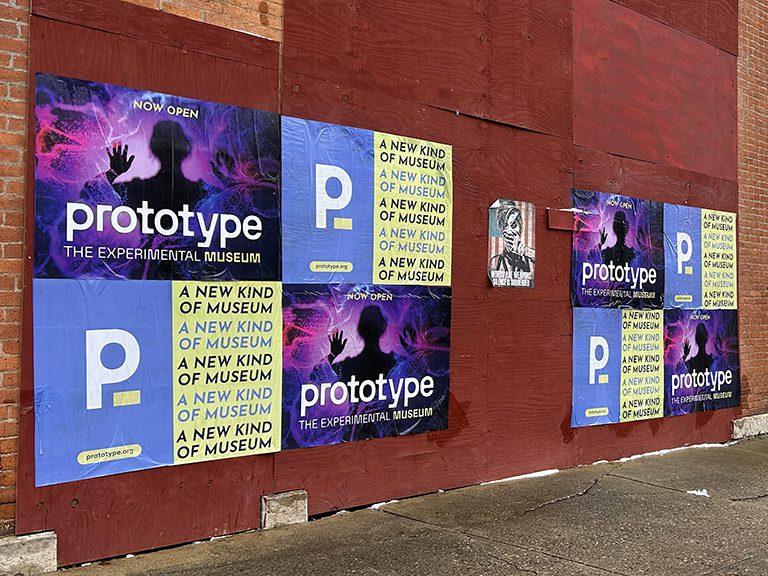
Large-format poster campaigns create visible, high-quality brand presence at pedestrian height in specific locations. Unlike stencil work, poster campaigns require permitted or licensed walls but deliver a professional quality output that carries detailed visual content and complex brand messaging. Poster placements in the right locations, SoHo in New York, Melrose Avenue in Los Angeles, Division Street in Chicago, reach exactly the right audience in the physical context where they are most receptive to brand discovery.
Mural Campaigns
Murals are the permanent end of the format spectrum: large-scale painted installations that become features of a neighborhood’s visual environment and generate ongoing organic documentation and sharing. A well-executed mural in a high-traffic location generates exposures for months and years after installation. They require the longest production lead time and the highest installation budget of any street-level format, but they deliver a return on that investment through sustained presence that no temporary format can match.
Projection Campaigns
Projection campaigns are event-driven formats that create a dramatic, high-visibility brand moment in a specific location on a specific night. Projecting brand content onto a landmark building, an empty billboard face, or a busy public plaza creates an unmissable moment that draws immediate attention and generates immediate documentation. Projection campaigns work best for product launches, event announcements, and cultural moments where the brand needs maximum impact in a single night rather than sustained presence over time.
Street Team and Sampling Campaigns
Street team and sampling campaigns deploy trained representatives to create direct human contact between the brand and its target audience. Street teams distribute samples, hand out branded materials, conduct brief product demonstrations, and create the kind of direct, personal brand encounter that no passive format can replicate. We run street team campaigns in high-traffic pedestrian environments: outside transit hubs, in popular commercial corridors, near events that draw the target audience. The geography of the deployment is everything: a street team in the wrong location does not reach the target audience, while a street team in the right location creates hundreds of personal brand encounters per hour.
National and multi-city guerilla advertising campaigns are a core part of our business. We coordinate simultaneous field deployments in New York, Los Angeles, Chicago, Miami, Austin, Atlanta, and other major markets from a single campaign plan managed by one client-facing project lead. Multi-city campaigns require specific coordination infrastructure: a unified location strategy adapted for each market’s unique geography, a consistent creative execution standard maintained across different field crews in different cities, and a consolidated reporting system that gives the client a single view of all markets in one document.
The logistical complexity of multi-city execution is significant, and it is where many agencies fail to deliver what they promised. We have pre-existing relationships with vetted crews in every major market we operate in. Those crews know our documentation standards, our execution process, and our quality expectations. When we plan a campaign in six cities simultaneously, we are activating a network of known, trusted operators rather than sourcing new vendors under deadline pressure. Each city crew receives a detailed brief that mirrors the client’s campaign plan: specific locations, specific formats, specific installation standards, and specific documentation requirements. We do not leave field interpretation to local judgment on national campaigns. Consistency is a deliverable, not an aspiration.
AGM Field Note: A national campaign for a streaming service launch ran simultaneously in New York, Los Angeles, Chicago, and Austin over a single weekend. Each market had its own neighborhood-specific location list, but all four ran the same creative with minor local adaptations. Brand managers could follow the campaign city by city through a shared photo documentation link that updated in real time as crews completed each installation. A national campaign for a streaming service launch ran simultaneously in New York, Los Angeles, Chicago, and Austin over a single weekend. All four cities received coordinated stencil and poster work with a unified visual theme adapted to each city’s specific neighborhood context. The consolidated photo report delivered to the client Monday morning showed over 200 documented installations across all four markets. That kind of coordination requires a logistics system built over years, not improvised per campaign.
Frequently Asked Questions
What is a guerilla advertising campaign?
A guerilla advertising campaign is a coordinated brand marketing effort using unconventional, street-level formats to reach a specific audience in physical environments. Unlike traditional campaigns that buy space in designated advertising channels, guerilla campaigns create brand presence in unexpected locations using formats that earn attention rather than buying it.
How do you plan a guerilla advertising campaign?
Planning starts with a clear brief: target audience, geographic market, campaign goal, timeline, and budget. From that brief, we identify the formats that best serve the goal, scout specific locations in the target market, produce all required materials, schedule field installation, and build documentation and reporting into the plan before execution begins.
How long does a guerilla advertising campaign take to execute?
Execution timeline depends on format complexity. A stencil or poster campaign can be planned and installed in 7 to 14 days. A multi-format campaign including mural production takes 4 to 6 weeks. Experiential activations and flash mob campaigns require 4 to 8 weeks of planning before field execution. We always provide a specific timeline at the proposal stage.
What makes a guerilla advertising campaign successful?
Successful guerilla campaigns are defined by specific location selection that matches the target audience’s movement patterns, creative that communicates in the brief encounter window the format provides, execution discipline that produces field results matching the planning intent, and documentation that extends the campaign’s reach into social and press channels.
What is the difference between a guerilla campaign and a standard outdoor campaign?
Standard outdoor campaigns buy space in designated advertising locations (billboards, bus shelter cards, transit posters). Guerilla campaigns create brand presence in non-designated spaces. The audience encounters the guerilla message without expecting to find advertising in that context, which changes the quality and memory depth of the impression.
Can guerilla advertising campaigns be run nationally?
Yes. We coordinate national guerilla campaigns with simultaneous field deployments in multiple markets, managed from a single brief and reporting to a single client contact. National campaigns require more lead time for logistics and coordination but deliver unified brand presence across all target markets.
How much does a guerilla advertising campaign cost?
Poster campaigns start at $4,500 for 100 standard posters (24×36). Multi-format single-city campaigns depend on the combination of services selected. National multi-city programs scale based on format mix, city count, and campaign duration. We build custom proposals for every client based on their specific requirements.
How does AGM document and report on guerilla advertising campaigns?
Every installation is photographed with GPS timestamp. Clients receive a full photo report within 24 hours of each field deployment. We provide impression estimates based on location foot traffic data and social amplification tracking. Post-campaign debrief reports cover what performed, what could be improved, and what we recommend for future activations.