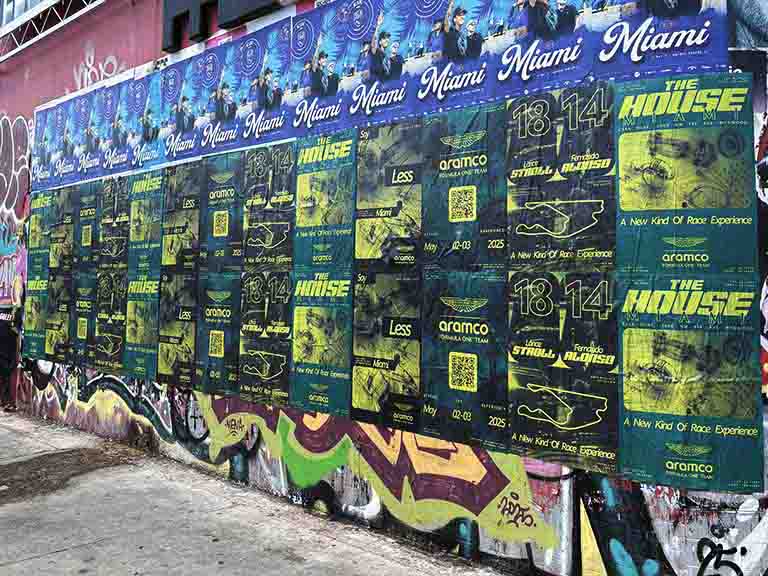
Flyposting regulation is one of the most misunderstood areas in outdoor advertising. Most brands approaching their first street poster campaign either assume everything is illegal and avoid the format entirely, or assume nothing requires a permit and run into enforcement problems mid-campaign. The reality is more nuanced: the legal landscape for flyposting varies significantly by surface type, property ownership, city, and placement method — and understanding these distinctions is what separates a well-executed legal campaign from one that generates fines and negative press.
Our team has managed wheatpaste and poster campaigns across dozens of U.S. markets and navigated the regulatory environments in every major city. The key insight that drives all professional flyposting work is this: the legal question is almost never about the format itself (posters, wheatpaste) and almost always about the surface. Posting on private property with owner permission is legal. Posting on public property without authorization is not. Everything else is a specific variation of that core principle.
This guide breaks down what flyposting permits actually require in the major markets where we work, where the genuine grey areas exist, how professional campaigns navigate regulation without sacrificing effectiveness, and what the enforcement landscape looks like for brands that skip the legal framework entirely.
The Core Legal Framework: Private vs. Public Surfaces
The primary legal distinction in flyposting is not the format or material used — it is the ownership of the surface. This distinction governs 90% of the regulatory questions that come up in professional flyposting campaign planning.
Private Property: The Legal Standard for Professional Campaigns
Posting on private property with the written permission of the property owner is legal in every major U.S. city. No municipal permit is required because the property owner’s permission is the authorization. Professional flyposting networks operate entirely within this framework: they maintain negotiated agreements with building owners, construction project managers, retail property owners, and independent landowners to use surfaces on their properties for poster campaigns.
When our team deploys a flyposting campaign in New York, Los Angeles, Chicago, or any other major market, every placement is on a surface covered by a private property agreement. These agreements specify the surface location, the posting window, and the materials permitted. They are the backbone of the legal framework for professional street poster campaigns and the reason our clients can run aggressive, high-visibility campaigns without enforcement exposure.
Public Property: Where Permits Apply
Public surfaces — utility poles, public walls, bus shelters, light poles, park structures — are subject to municipal regulation that generally prohibits commercial advertising without authorization. In most major U.S. cities, this prohibition is enforced through code enforcement, with fines assessed per incident. Some cities maintain designated public posting areas — community bulletin boards, licensed kiosks — where posting is permitted without individual municipal approval. These designated spaces have limited availability and high demand, making them unsuitable as the primary placement strategy for any serious brand campaign.
Market-by-Market Permit and Regulatory Landscape
The specific regulatory environment for flyposting differs across markets in ways that affect how professional campaigns are structured in each city. Understanding these market-level differences is essential for multi-city campaign planning.
New York City
New York City has some of the most actively enforced anti-posting regulations in the country. NYC Admin Code Section 10-119 prohibits affixing any handbill, poster, or other material to any tree, lamppost, utility pole, or public structure without authorization. Violations carry fines of $75 to $1,000 per incident, and the city’s Department of Sanitation and NYPD enforcement units actively patrol high-posting-density areas. However, NYC also has the most extensive private-surface permitted network in any U.S. city — hundreds of hoarding panels, building walls, and construction site enclosures managed by surface networks that offer legal, premium placement inventory at competitive rates.
For campaigns in New York, our team works exclusively with private surface agreements in the boroughs where the target audience is concentrated. The private network coverage in Brooklyn, Manhattan, and Queens is comprehensive enough to achieve full market saturation without any public surface placements.
Los Angeles
Los Angeles Municipal Code Section 28.04 prohibits posting on public property without authorization. The city’s enforcement has historically been inconsistent — more active in Westside and Hollywood neighborhoods than in working-class residential areas — but fines of $100 to $1,000 per incident apply citywide. The LA private posting network is less formalized than New York’s but includes significant inventory on construction hoarding, independent building walls, and commercial property in the major entertainment and retail corridors.
The grey area in LA is the mural and arts corridor scene in neighborhoods like DTLA, Highland Park, and Boyle Heights, where building owners in creative districts often allow poster and wheatpaste placement on their properties as part of informal arts culture partnerships. Our team navigates this through direct property owner outreach rather than assuming access exists.
Chicago
Chicago’s anti-posting ordinance (Municipal Code Chapter 10-28) prohibits posting on public property and assesses fines of $200 to $500 per violation. The city’s enforcement is concentrated in Loop and Near North neighborhoods, with lighter enforcement in many residential and industrial areas. Private surface inventory in Chicago is distributed across the major commercial corridors on Milwaukee Avenue, Division Street, and the Wicker Park and Logan Square business districts. Construction hoarding in Fulton Market and River North provides high-visibility surfaces during active project windows.
San Francisco
San Francisco’s regulations under SF Public Works Code Sections 184.50 to 184.77 prohibit posting on public property and apply fines of $100 to $500 per incident. The city’s physical environment — heavy fog, rain, and wind — also creates natural enforcement through material degradation that limits the longevity of unauthorized placements. The Mission District, SoMa, and the Castro have active private posting ecosystems with building owners who regularly permit poster campaigns in exchange for payment or barter arrangements. Our team manages these relationships as part of ongoing SF campaign operations.
Austin
Austin is one of the more permissive major markets for street poster campaigns. The city’s Code Chapter 14-12 prohibits posting on public structures but enforcement has historically been limited. The private surface network on South Congress, East Sixth Street, and the Red River Cultural District offers abundant legally managed inventory with strong audience concentration for entertainment, music, and consumer brand campaigns. Austin’s music festival season (SXSW in March) represents the highest-demand posting window, and surface availability during this period requires advance booking of several months.
Construction Hoarding: The Premium Legal Posting Surface
Construction site hoarding — the temporary barriers surrounding active construction projects in urban areas — represents the most commercially valuable legal posting surface in major cities. These panels are large (typically 4 to 8 feet by 8 feet), prominently positioned on high-traffic sidewalks, and maintained by construction project managers who often welcome poster campaign revenue as an offset to hoarding maintenance costs.
Why Hoarding Outperforms Other Surfaces
Hoarding panels face pedestrian and vehicle traffic directly, at eye level, on unbroken stretches of sidewalk that force engagement from passersby. Unlike building walls that may be set back from the street or visible only from specific angles, hoarding panels are directly in the pedestrian path. The surface area is consistent and flat, making for clean large-format poster presentation. And because hoarding panels rotate with the lifecycle of construction projects, the inventory of available surfaces constantly refreshes in the markets where development is active.
Hoarding Surface Agreements
Our team manages hoarding surface agreements with construction project managers in major markets, maintaining an inventory of available panels that can be activated on short lead times for campaign placements. These agreements include specific placement locations, posting windows, removal obligations, and surface condition standards that ensure brand-quality presentation throughout the campaign period.
Utility Poles: The Most Common Grey Area
Utility pole posting is the grey area that generates the most confusion in flyposting regulation. In most U.S. cities, utility poles are classified as public infrastructure and posting on them is prohibited by municipal ordinance. However, enforcement varies dramatically by city and neighborhood, creating a de facto tolerance that brand campaigns should not mistake for legality.
Why Brands Should Avoid Utility Pole Posting
Beyond the legal risk, utility pole posting creates practical quality and brand consistency problems. Pole surfaces are round, irregular, and often already covered with overlapping materials from previous posters. The visual result is rarely what brand creative teams design for. Enforcement exposure, even if the fine per incident is modest, creates documented legal exposure that can complicate future campaign planning in the same market. Professional campaigns use documented private surfaces that deliver better visual results, better legal standing, and better campaign documentation than pole posting ever achieves.
How to Verify Surface Legality Before a Campaign
For brands evaluating flyposting campaigns without working with an established street marketing agency, verifying surface legality requires direct due diligence rather than assumptions about common practice. The steps our team follows for every new market and surface are straightforward.
Property Record Research
Every surface has a property record that identifies the owner. In most U.S. cities, property ownership records are publicly searchable through the county assessor’s website. Confirming that a surface is private property (not public infrastructure) is the first step. Once ownership is confirmed, written permission from the property owner establishes the legal foundation for the placement.
Municipal Code Research
Reviewing the specific municipal code sections governing posting in the target city identifies any surface-specific restrictions beyond general private property principles. Some cities restrict posting on historic structures, certain commercial districts, or properties within specific distances of schools or parks. Our team maintains current regulatory research for all active markets as a standard component of campaign planning.
Frequently Asked Questions
Do you need a permit to put up posters?
On public property, most U.S. cities require a permit or prohibit posting entirely. On private property with the owner’s permission, no municipal permit is typically required. Professional flyposting campaigns use permitted private surfaces, not public property placements that require government permits.
What is flyposting and how does it differ from illegal graffiti?
Flyposting is the placement of posters on surfaces for promotional purposes using removable paper-based materials. Legal flyposting occurs on private surfaces with owner permission or on municipally designated public posting areas. Illegal flyposting occurs on any surface without authorization, regardless of material type.
What cities have the most restrictive flyposting regulations?
New York City has among the most actively enforced anti-posting regulations, with fines of $75 to $1,000 per violation. Los Angeles, Chicago, and San Francisco all prohibit unauthorized posting on public property. However, all of these cities have active private-surface permitted networks that allow legal large-format poster campaigns.
How do brands legally run flyposting campaigns in major cities?
Brands run legal flyposting campaigns by contracting with permitted surface networks — companies with negotiated private property agreements with building owners, construction hoarding operators, and independent wall owners. These networks offer legal, documented placements without enforcement risk.
What are the fines for illegal flyposting?
NYC fines range from $75 to $1,000 per violation. LA fines run $100 to $1,000. Chicago fines range from $200 to $500. Fines are assessed per surface, so a campaign covering 100 unauthorized locations can generate substantial cumulative penalties.
Can you post flyers on utility poles legally?