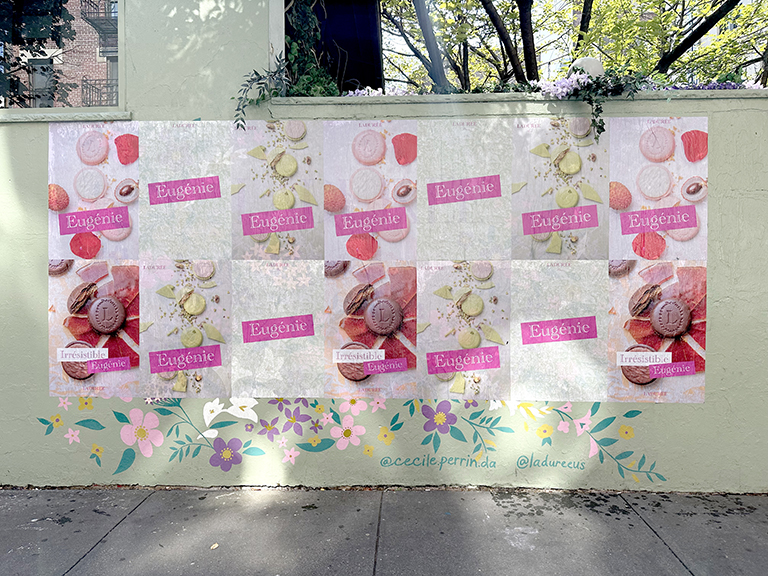
Flyposting for Brand Launches: Street Campaign Strategy That Sticks starts with matching the right streets, surfaces, audience, and campaign timing. A new brand’s biggest challenge isn’t making a great product — it’s making the right people aware that the product exists. In a media environment where everyone is running digital campaigns and ad saturation is at historic highs, making a memorable first impression through paid media alone requires either extraordinary creative or extraordinary spend. Often both.
Flyposting offers a different entry point. A well-executed poster campaign in the right neighborhoods creates physical presence — a brand that exists in the actual streets of the city rather than only in algorithmically served ad slots. For the early-adopter, trend-setting audience that determines what eventually becomes mainstream, that physical presence carries a different kind of credibility than a Facebook ad, a YouTube pre-roll, or even a well-placed Instagram sponsorship.
This guide is for brand teams, founders, and agencies planning a market entry. It covers how to structure a launch flyposting campaign, what the poster needs to communicate (and what it absolutely doesn’t), the geographic strategy that creates genuine neighborhood saturation, and how to coordinate the physical campaign with the digital and PR components of the launch for maximum effect.
Why First Impressions from the Street Are Different
Consider the cognitive experience of encountering a brand for the first time two different ways.
Scenario A: You’re scrolling Instagram on your commute and a sponsored post appears. You glance at it, recognize it as an ad, and return to your feed. You might remember the brand name if it comes up again; you probably won’t. The experience lasted about 1.5 seconds and registered as commercial intrusion.
Scenario B: Walking to a coffee shop in your neighborhood, you pass a flyposted campaign on a hoarding you’ve walked past hundreds of times. The poster is striking — strong image, bold typography, a brand name you don’t recognize. You stop for a second, maybe take a photo. Later that day you search for the brand name. The experience was unexpected, physical, tied to a place you care about. It registered as discovery.
Discovery is a fundamentally different emotional register than advertising. Advertising interrupts; discovery invites. For a new brand trying to establish credibility with an audience that’s skeptical of traditional advertising, discovery is significantly more valuable than interruption — and flyposting in the right neighborhoods creates discovery at scale.
First-impression research in brand building consistently shows that the context in which a brand is first encountered significantly shapes long-term brand perception. Brands first encountered through physical, ambient advertising — out-of-home, street-level formats — are perceived as more established and credible than equivalent brands first encountered through digital ads, even when the actual brand age is identical.
Planning the Launch Campaign
Define the Neighborhood, Not the City
For a brand launch, the geographic question is: where is the specific audience that, if they discover your brand, will become early adopters who influence their social networks? That audience is not in “London” or “New York City” generically — it’s in specific neighborhoods within those cities. Shoreditch, not London. Williamsburg, not New York. Silver Lake, not Los Angeles.
The precision matters because concentration matters. A launch campaign that puts 150 posters in the three-block radius of the target neighborhood’s highest-traffic streets creates the feeling of ubiquity for every person who walks those streets regularly. A campaign that puts 150 posters spread across six neighborhoods creates nothing — each person sees the campaign once, there’s no accumulation, there’s no “I keep seeing this” effect.
Pick the right neighborhood for your brand’s specific audience, then post there with enough density that your target audience encounters the campaign three or four times in the week before launch.
The Teaser-Reveal Structure
For brand launches with a specific launch date — a product available to buy from a certain date, an app going live, a restaurant opening — a two-phase flyposting structure can be highly effective:
Phase 1 (2-3 weeks before launch): Teaser posters featuring only the brand name and perhaps a visual element — no explanation, no product, no call to action. The mystery creates conversation. People in the target neighborhood encounter a name they don’t recognize and are curious about it. Some search for the brand online and find little — which maintains the mystery and builds anticipation. Others mention it to people they know. The campaign creates awareness before it provides information.
Phase 2 (launch week): Full campaign posters replacing the teasers overnight, revealing the product or service and providing the call to action — website URL, launch date, what it is. The reveal lands with the audience already primed by the teaser, which means the information is processed as fulfillment of curiosity rather than as a cold introduction.
The teaser approach requires genuine discipline. You have to resist the temptation to explain. The teaser’s only job is to make people wonder. If the teaser poster explains anything about the product, it’s not a teaser — it’s just an early ad with incomplete information. Name only, strong visual, nothing else.
What the Launch Poster Communicates
A brand launch poster has one job: make the target audience aware of the brand name and curious enough to learn more. Everything else is detail that belongs on the website, the product page, or the follow-up digital campaign.
Brand name, dominant. Single visual that communicates the brand’s personality or product category without requiring lengthy explanation. A URL for those ready to act. That’s the poster.
What kills launch posters:
- Too much text: Attempting to explain the brand, the product, the value proposition, and the call to action on a single street poster. None of it reads at walking pace in real conditions.
- Generic imagery: Stock photography or visuals that could belong to any brand in any category. The image should communicate the brand’s specific personality, not generic product-category associations.
- Multiple messages: “Buy now, use code LAUNCH20 for 20% off, follow us on Instagram @brandname.” One message per poster. The launch poster’s message is the brand name and the curiosity hook.
- Defensive design: Over-explaining, over-qualifying, covering every possible question. Confidence in the brand’s visual identity communicates more than detailed information at street level.
Coordinating with the Broader Launch
Flyposting is most effective as part of a coordinated launch that includes:
- PR and press: If you have media placements lined up for launch week, time the flyposting to be up before the press hits. Someone who reads an article about the new brand on Thursday morning and then sees the poster on Friday is experiencing the brand twice in quick succession — that double exposure compounds the impression.
- Social media: Document the flyposting installation and post it on brand channels. Behind-the-scenes content from the posting night, photos of the campaign in context, and engagement-prompting posts (“Did you spot our posters in [neighborhood]?”) extend the campaign’s reach and create community before launch.
- Influencer and seeding: Send the same image as the flypost to influencers and early brand advocates before the campaign goes up. When they see the poster in the city, they’ll photograph and share it as a confirmation — “I’ve been wearing this brand before it was everywhere.”
- Digital retargeting: In the neighborhoods where flyposting is running, set up geo-targeted digital advertising to reach people who encounter the physical campaign and search for the brand. The flypost creates the interest; the digital campaign captures it.
Budget Allocation for a Brand Launch Campaign
For a single-city brand launch flyposting campaign targeting a specific neighborhood:
- Teaser phase (100-150 locations): $3,000-$6,000 in operator fees, plus $500-$1,000 print
- Reveal phase (100-150 locations, replacing teasers): $2,500-$5,000 in operator fees (slightly less than initial posting as many surfaces are already prepped), plus $500-$1,000 print
- Total two-phase single city launch flyposting: $6,000-$13,000
For a multi-city launch (New York + Los Angeles + London simultaneous), budget $20,000-$45,000 for the combined physical campaign across all three markets, depending on location quantities and operator rates in each city.
The Night Flyposting Crew: How Brand Launch Campaigns Execute
Brand launches that use flyposting are making a specific choice: they want the product or brand to appear suddenly, at scale, in the physical world. That requires overnight posting — a crew working between midnight and dawn so that the campaign is fully live when the target audience begins their morning.
A typical brand launch flyposting session runs two to three crew members working from midnight to 5am. The crew is vehicle-based for most US and UK markets, moving between location clusters with posters pre-bundled in posting sequence. In a dense neighborhood like Shoreditch, Williamsburg, or the Fairfax/Melrose corridor in LA, a two-person crew covers 8-12 locations per hour. Over a full overnight session, that’s 60-80 locations — enough to create genuine saturation in a concentrated target area.
The wheat paste mix used for brand launch campaigns is standard: wheat flour boiled with water to a thick, adhesive consistency, sometimes with a small addition of white glue for extra tack on smooth surfaces. The paste goes on first, the poster follows, and a second coat of paste is applied over the face to seal edges and protect the print against rain and humidity. A properly pasted poster on a good surface holds for two to four weeks in typical UK or US weather.
GPS documentation at every location is standard practice for AGM’s launch campaigns. Each location generates a geotagged photograph at the time of posting — not reconstructed later. The proof-of-posting report, delivered within 24 hours of posting, gives the brand team full verification of execution before the campaign’s public announcement. For brands coordinating a launch across multiple formats — physical flyposting, social media, paid digital, PR — the confirmation that the street campaign is live is often a trigger for the rest of the launch sequence.
We’ve run brand launch campaigns for fashion labels, tech product releases, and consumer brands, and the overnight flyposting format consistently generates more earned media photography and sharing than any daytime alternative. The surprise element of a poster that wasn’t there yesterday is part of the campaign.
What Makes a Great Brand Launch Location
Brand launch flyposting works best when location selection is audience-specific rather than traffic-volume-focused. The right 100 locations outperform the wrong 300 locations — because the conversion from poster impression to brand awareness to purchase behavior is driven by audience alignment, not raw reach.
For fashion and lifestyle brands, the Fairfax/Melrose corridor in Los Angeles and Bedford Avenue in Williamsburg, New York are consistently among the highest-quality launch locations in the US. The audiences on these streets are trend-early, culturally engaged, and socially active — they generate organic content from launch campaign postings that extends reach beyond the paid placements. In London, Curtain Road in Shoreditch and Coldharbour Lane in Brixton serve a similar function for fashion, music, and culture brands.
For consumer products with broader demographic appeal, the posting strategy shifts toward higher-traffic pedestrian areas — Camden High Street, Oxford Street approaches in London; the Union Square and Astor Place area in Manhattan; the Third Street Promenade in Santa Monica for LA. These locations trade audience specificity for volume, which works when the target demographic is wide rather than narrow.
For tech and app launches, the concentration of tech workers in specific neighborhoods — Shoreditch and the Old Street cluster in London, SoMa in San Francisco, Flatiron and the Hudson Yards area in Manhattan — makes neighborhood-specific posting more effective than broad distribution. The tech audience responds to brand credibility signals, and a well-executed physical flyposting campaign in their neighborhood sends a credibility signal that banner ads on tech-adjacent websites don’t.
AGM’s brand launch campaigns include full GPS-tagged proof-of-posting documentation delivered within 24 hours of posting — so marketing teams can verify execution before the broader launch sequence goes live and use posting confirmation as an internal trigger for coordinating digital, PR, and retail launch elements.
Getting the Creative Right for a Street Launch
Brand launch flyposting creative has specific requirements that differ from standard print or digital advertising creative. The street context — moving pedestrians, variable lighting, competing visual environment — demands creative choices that don’t always align with what looks best in a mockup on a computer screen.
High contrast works better than subtle color gradients. A poster that reads in bright midday sun also needs to read under streetlight at 7pm. Black, white, and a single accent color almost always outperform complex multi-color compositions at street level. The brand name needs to be large enough to register from 10-15 meters — significantly larger than most designers’ instinct for print work, where the assumption is that the reader is 30-60cm from the page.
Minimal text is non-negotiable. A street poster has 2-3 seconds of attention from a walking pedestrian. The message hierarchy needs to be: brand name first, single key visual second, URL third. Everything else is reducing the effectiveness of those three elements. The brands that consistently get flyposting right treat the format as an identity statement — “we exist, we look like this, find us here” — rather than a detailed product communication.
What Searchers Really Need from a Brand Launch Flyposting Guide
Pages ranking around brand launch poster campaigns usually win by answering a simple planning question: how do you make a new brand feel established fast? Searchers are not looking for a history lesson. They want launch timing, audience geography, creative priorities, and signs that the campaign will create social proof beyond the wall itself.
For a launch campaign, the street does two jobs at once. It announces the brand and it frames the brand. A poster run in the right neighborhood can make a new label feel like it already belongs in the culture around it. That is why launch campaigns work best when the market, the message, and the visual language are aligned. A beauty brand trying to reach editors and creators needs different streets and different creative than a consumer app targeting college neighborhoods or nightlife districts.
The launch planning sequence that tends to work best
- Week 1: define the launch audience and the one thing the street should communicate: arrival, scarcity, credibility, or momentum.
- Week 2: select neighborhoods based on where the audience actually spends time, not where generic foot traffic looks biggest on paper.
- Week 3: finalize creative built for distance and repetition. One strong image and one strong message outperform a crowded poster every time.
- Launch week: install overnight so the market wakes up to a coordinated presence instead of a slow drip.
- After launch: measure brand search lift, social sharing, store traffic, or event RSVPs depending on the goal.
Common
If the goal is a memorable first impression, do not spread a small launch budget across an entire city. Own the few neighborhoods that matter most, then document them well enough for the launch team to reuse that energy everywhere else.
For launch teams, the fastest way to waste a poster budget is to say yes to broad city coverage before the brand has earned a core neighborhood. Launch intent is usually better served by visible concentration, repeat sightings, and cleaner recap photography than by thin reach everywhere at once. If the posters make the brand feel newly visible in the one part of the city that matters most, the campaign is already doing its job.
Frequently Asked Questions
Why use flyposting for a brand launch instead of digital advertising?
Flyposting creates physical presence in the city that digital advertising can’t replicate. For a new brand, appearing on the streets of the right neighborhoods signals that you’re real, you’re committed, and you belong to the cultural world of your target audience. That first-impression credibility — being “discovered” rather than advertised — is harder to establish through a paid social campaign, however well-targeted.
What should a brand launch flypost communicate?
Brand name dominant. A single strong visual that communicates the brand’s personality. A URL for those ready to act. That’s it for a launch poster. Avoid explaining the brand, listing product features, or including multiple calls to action. The poster’s job is to create curiosity and brand name recognition — not to answer every question a potential customer might have.
How many locations does a brand launch flyposting campaign need?
For a single-city launch targeting a specific neighborhood audience, 75-200 locations concentrated in the right areas creates genuine saturation. The goal is for the target audience to encounter the campaign multiple times — which requires neighborhood density rather than geographic breadth. Fewer locations in the right area outperforms more locations scattered too widely.
Should a brand launch flyposting campaign run before or after digital advertising?
Ideally simultaneously, but if forced to sequence, leading with flyposting and following with digital is often more effective. Physical presence first creates initial awareness and curiosity; digital advertising then captures the qualified interest the physical campaign generated. The flypost plants the seed; digital converts the germination into action.
What makes a brand launch flyposting campaign different from an ongoing campaign?
A launch campaign establishes first recognition — making a brand name known to an audience with no prior association. This requires higher density in the target geography, stronger visual distinctiveness to compete in the visual environment, and coordination with other launch activation to create a single coherent market entry moment rather than a gradual drip of awareness.