
September 7, 2026
Experiential Creative Agency | American Guerrilla Marketing
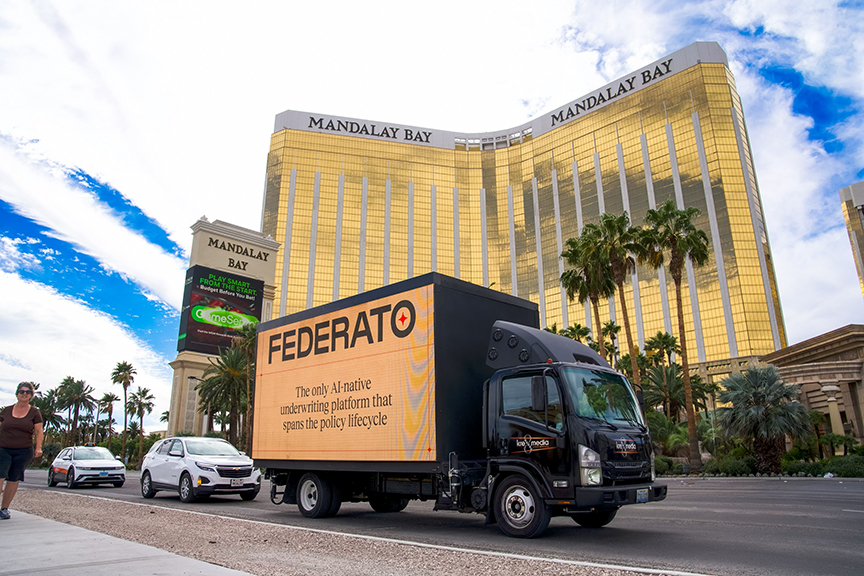
An experiential creative agency does something most ad agencies cannot. It puts your brand in front of real people, in real spaces, at real moments. No algorithm required. No screen to scroll past. Just your brand and a person standing three feet from each other.
We are American Guerrilla Marketing. We have run street-level campaigns across New York, Los Angeles, Chicago, Miami, Austin, and beyond. We know what works on a corner in SoHo and what works outside a stadium in Houston. This guide explains how experiential creative agencies operate, what we actually do, and how to choose the right partner.
What Is an Experiential Creative Agency?
An experiential creative agency designs and executes marketing that people physically encounter. Not an ad they see online. Not a billboard they pass at 60 mph. An experience they walk through, touch, taste, or talk about later.
Experiential marketing goes by a lot of names. Brand activation. Event marketing. Guerrilla marketing. Immersive marketing. The names differ, but the core idea stays the same: create a moment that connects a person to a brand in a way that sticks.
The best experiential creative agencies combine two skills that rarely live in the same shop. First, they produce strong creative concepts. Second, they execute those concepts in the physical world, on budget, on time, and with a real impact on foot traffic and brand metrics.
Most big ad agencies are better at the first part than the second. They think in campaigns and media plans. An experiential-first agency thinks in logistics, geography, crowd behavior, and moments. That is a different muscle entirely.
What Experiential Creative Agencies Actually Do
Here is what day-to-day work looks like at an agency like ours.
We scout locations. We walk the blocks before we pitch the concept. We know the difference between the south end of Union Square and the north end. We know which corner in Williamsburg draws foot traffic on a Saturday morning and which one dies after 11am. Location is not an afterthought for us. It is part of the creative strategy.
We build physical brand environments. Pop-ups, branded installations, mobile activations, product sampling stations, interactive street installations. We design the experience and then we build it. We handle fabrication, logistics, staffing, and on-site management.
We manage brand ambassadors. The people representing your brand on the street matter enormously. We hire, train, and supervise brand ambassadors who understand the brand, the product, and how to talk to strangers in a way that feels genuine.
We track and measure. Every activation we run includes reporting. exposures, samples distributed, social posts generated, foot traffic counts. We give clients real numbers, more than stories about how energetic the crowd was.
Types of Experiential Campaigns We Run
Experiential marketing is not one thing. It is a category that includes dozens of formats. We have run all of them. Here is a breakdown of the most common formats and how they work.
| Format | Best For | Typical Duration | Key Advantage |
|---|---|---|---|
| Pop-Up Experience | Product launches, brand awareness | 1 to 7 days | Creates urgency and exclusivity |
| Street-Level Sampling | CPG, food and beverage, health products | Single day to weeks | Direct trial at zero friction |
| Brand Ambassador Programs | College markets, urban markets, events | Days to months | Human-to-human conversation at scale |
| Mobile Tour | Multi-market campaigns, product demos | Weeks to months | Reaches multiple cities with consistent execution |
| Branded Installation | High-traffic urban locations, festivals | Days to weeks | Photo-shareable and media-worthy |
| Live Event Presence | Concerts, sports, trade shows | Single event to seasonal | Reaches a self-selected audience in the right mindset |
| Sticker and Wheat Paste Campaigns | Street-cred brands, music, entertainment | Days to weeks | Low cost, high visibility in urban areas |
Why Experiential Marketing Works
People trust what they experience over what they see in an ad. That is not a guess. That is documented human psychology. When someone physically holds your product, tries your service, or walks through a space you designed, they form a memory. Memories drive decisions.
Digital advertising exposures are forgotten in seconds. Most display ads never get consciously seen at all. Banner blindness is real. Ad blocking is real. But the person who sampled your energy drink outside Madison Square Garden on a Tuesday afternoon in November still remembers it.
We have run sampling campaigns where brand recognition among sampled consumers jumped 40 points in a single weekend. We have run pop-up activations that generated more organic social content than a month of paid Instagram campaigns. The numbers back up what we have always believed: physical experience beats passive media.
Physical brand experiences generate 3x more word-of-mouth referrals than digital ads. When people experience a brand in the real world, they talk about it. That organic reach compounds over time.
How We Approach Creative Strategy
Good experiential creative does not start with a big idea. It starts with a question: where is this person, what are they doing, and how do we create a moment that genuinely fits that context?
We spend time understanding who we are trying to reach. More than demographic data. Real behavioral patterns. Where does this person go on a Saturday morning in Brooklyn? What does their commute look like? When are they open to discovering something new? When are they rushing and completely closed off?
Then we find the moment. We design the concept around a specific place, time, and context. That is very different from designing a campaign and then trying to figure out where to execute it.
Once we have the concept, we stress-test the logistics. Can we actually do this? What permits or property agreements do we need? How do we staff it? What happens if it rains? What happens if the crowd is bigger than expected? We plan for all of it before we produce anything.
Our creative team works alongside our logistics team from day one. That is how we avoid the problem most agencies have, where the concept looks great on paper but falls apart on the street.
Choosing an Experiential Creative Agency: What to Look For
Not all experiential agencies are equal. Some are better at big events. Some are better at grassroots street work. Some are strong on creative but weak on execution. Here is what we recommend evaluating when you are looking for a partner.
Look at Their Actual Portfolio
Ask to see photos and videos from real activations. Not renderings. Not mood boards. Real executions in real spaces with real people. You want to see what the agency can actually produce, not what their design team can imagine.
Ask About Their Field Team
Who staffs their activations? Do they use their own brand ambassadors or do they rely on third-party staffing agencies? A great concept falls apart if the people executing it on the street do not know what they are doing. Ask how they hire, train, and supervise their field team.
Ask How They Measure Results
Every activation should have metrics attached to it. Foot traffic counts, samples distributed, social mentions, media exposures, lead captures. If an agency cannot tell you how they measure success, that is a warning sign.
Ask About Their Market Knowledge
A good experiential agency knows the geography of your target markets. They know which neighborhoods draw the right demographics. They know which events and venues fit your brand. They do not treat New York like one big blob. They know the difference between the Meatpacking District and Bushwick.
Check Their References
Talk to past clients. Ask specifically about communication during the campaign, how they handled problems, and whether the results matched the promises made during the pitch.
The best experiential agencies do more than pitch ideas. They pitch proven systems. Ask any prospective partner to walk you through exactly how they plan, staff, execute, and report on a campaign. The specificity of their answer tells you everything.
What Makes AGM Different
We have been doing this since 2006. We started in New York City and grew to work in every major market in the country. Our roots are in street-level marketing, and that never changed.
We are not a production company that does marketing on the side. We are not a PR firm that adds experiential to its menu. We are a focused experiential marketing agency. This is all we do. That focus means we are better at it.
We also think differently about scale. We can run a single-day pop-up for a startup with a lean budget. We can run a 30-city mobile tour for a national brand. We size the approach to the goal, not to the budget alone.
Our campaigns have been covered by local press, gone viral on social media, and generated measurable lifts in brand awareness and sales. We bring that track record to every project we take on.
Markets We Serve
We run experiential campaigns in:
- New York City (all five boroughs, including the areas others skip)
- Los Angeles and the broader Southern California market
- Chicago, including Wicker Park, Wrigleyville, and the Loop
- Miami, including Wynwood, South Beach, and Brickell
- Austin, Houston, and Dallas
- Atlanta, Nashville, and Charlotte
- Boston, Philadelphia, and Washington D.C.
- Seattle, Portland, San Francisco, and the Bay Area
- Any other market where your audience lives
We also run nationwide campaigns where we deploy teams to multiple cities at the same time or in sequence. Our logistics infrastructure supports that kind of scale without sacrificing quality of execution.
Budget Realities
Experiential marketing does not have to cost a fortune. But it does require realistic budgets. Cheap execution looks cheap. And a bad activation can do more harm than no activation at all.
For reference, here is how budgets typically break down:
- Single-day street activation: Starts around $5,000 to $15,000 depending on market and complexity.
- Multi-day pop-up: Typically $20,000 to $75,000 depending on build-out, staffing, and location.
- Multi-city mobile tour: Can range from $75,000 to $500,000+ depending on duration and scope.
- Custom branded installation: Highly variable based on fabrication requirements, but plan for $25,000 minimum for anything notable.
We work with clients across all these budget ranges. We are honest about what is achievable at different price points. We do not overpromise to win the business.
Integrating Experiential with Your Broader Marketing Mix
Experiential marketing works best when it is connected to the rest of your marketing strategy. It should not exist in a silo. When we run a street activation for a client, we think about how that activation feeds into their other channels.
A pop-up that generates great video content feeds your social channels. A sampling program that captures email addresses feeds your CRM. A brand ambassador program that drives people to a landing page feeds your retargeting audiences. The physical world and the digital world are not separate. They amplify each other when you plan for it.
We help clients think through these connections before the activation happens, not after. That is how you get the full return on an experiential investment.
The Role of Social in Experiential Marketing
Every activation we design includes a social layer. This means thinking about what makes something worth photographing and sharing. An experience that generates organic social content multiplies its own reach. The people at the activation share it. Their followers see it. The campaign extends well beyond the physical footprint.
We build photo moments into every pop-up we design. We brief brand ambassadors on how to encourage organic sharing without being pushy about it. We make sure the visual elements of the activation are polished enough to make every photo look good.
We have seen activations where organic social content reached ten times more people than were physically present. That kind of multiplier effect is how experiential marketing competes with digital channels on reach, while still delivering the depth of engagement that digital cannot match.
Frequently Asked Questions
What is an experiential creative agency?
An experiential creative agency designs and executes marketing that people physically experience in the real world. This includes pop-up events, street activations, brand ambassador programs, mobile tours, and immersive brand environments. The goal is to create a direct, memorable connection between a brand and a person.
How is experiential marketing different from traditional advertising?
Traditional advertising puts your brand in front of people passively, through screens, billboards, or print. Experiential marketing creates an active engagement. The person is not a passive observer. They are a participant. That creates a fundamentally different and more durable memory.
How do you measure the results of an experiential campaign?
We use a combination of metrics depending on the campaign goals. These include foot traffic counts, samples distributed, social media content generated, earned media coverage, lead captures, and pre/post brand awareness surveys. We report on all of these and give you a clear picture of what the campaign delivered.
How far in advance should I plan an experiential activation?
For a simple street activation, four to six weeks is workable. For a pop-up with custom build-out, plan for eight to twelve weeks. For a multi-city mobile tour, three to six months is ideal. That said, we have executed fast-turnaround campaigns when the situation required it.
Can you run experiential campaigns outside of New York?
Yes. We operate in every major U.S. market and have run campaigns internationally. Our field team network covers nationwide activations, and we manage all local logistics so you do not have to coordinate multiple vendors in multiple cities.
What industries do you work with?
We work across food and beverage, consumer packaged goods, entertainment, technology, fashion, health and wellness, automotive, sports, and more. Experiential marketing works for virtually any brand that wants to reach people in a meaningful way.
Do you handle creative concept development or just execution?
We do both. We develop the creative concept, design the experience, manage fabrication and logistics, staff the activation, and provide post-campaign reporting. We can also execute concepts developed by your internal team or another creative agency. We are flexible about where we plug in.

Ready to Run Your Campaign?
Call us or email us. We’ll tell you exactly what we can do in your market and what it costs.
Related Services
Explore similar advertising solutions offered by American Guerrilla Marketing.
American Guerrilla Marketing — Los Angeles
Street-level campaigns in Los Angeles and nationwide. Wheatpasting, LED trucks, street teams, and more.
(646) 776-2770
Related Articles
-
Street Poster Advertising Ottawa: A Complete Campaign Guide
September 17, 2026
-
Activation Marketing: How Brands Win at Street Level
September 13, 2026
-
Experiential Marketing Firms Chicago | American Guerrilla Marketing
September 12, 2026
-
Pop Up Experiential
September 12, 2026
-
Mobile Pop Up
September 12, 2026