Experiential Branding Agency | American Guerrilla Marketing
Brand identity is not what a company says about itself. Brand identity is what people feel when they encounter it. And the strongest brand identities are built through experiences, more than communications. When someone physically interacts with a brand at a pop-up, a street activation, or an event, they form a memory that shapes how they think about that brand for years. That’s the power of experiential branding: it doesn’t just communicate identity, it creates it.
An experiential branding agency combines the strategic work of brand positioning with the execution capability of live experience marketing. The goal isn’t just to put your logo in front of people. It’s to create moments that embody what the brand stands for so completely that the audience walks away with a visceral understanding of the brand’s character, more than awareness of its name.
At American Guerrilla Marketing, we build brand experiences in physical spaces. We’ve run experiential branding campaigns for consumer brands, entertainment companies, fashion brands, food and beverage companies, and lifestyle businesses in the most competitive urban markets in the country. This guide covers what experiential branding is, how it works, what formats create the strongest brand identity impact, and what to demand from an agency that claims to specialize in it.
Experiential branding sits at the intersection of brand strategy and live marketing execution. It starts with a clear articulation of what the brand stands for: its values, personality, and the emotional territory it wants to own in the audience’s mind. It then translates that articulation into a physical experience that makes the audience feel the brand rather than just think about it.
The distinction between thinking and feeling is critical. Brand recall built through advertising is primarily cognitive. A consumer remembers seeing the ad and can recognize the brand when asked. Brand recall built through experience is primarily emotional. The consumer doesn’t just remember encountering the brand. They have a feeling associated with it that colors every subsequent encounter.
This emotional layer is what drives the long-term brand outcomes that experiential marketing can produce: higher purchase intent, stronger brand preference over competitors, higher willingness to pay a premium, and stronger advocacy and referral behavior. When a brand experience is excellent, people tell others about it. That organic amplification multiplies the original investment in ways that no paid media campaign can achieve.
The Core Formats of Experiential Branding
Format
How It Builds Brand Identity
Best For
Branded Pop-Up Installations
Creates a physical environment that expresses brand values through design, sensory elements, and interaction
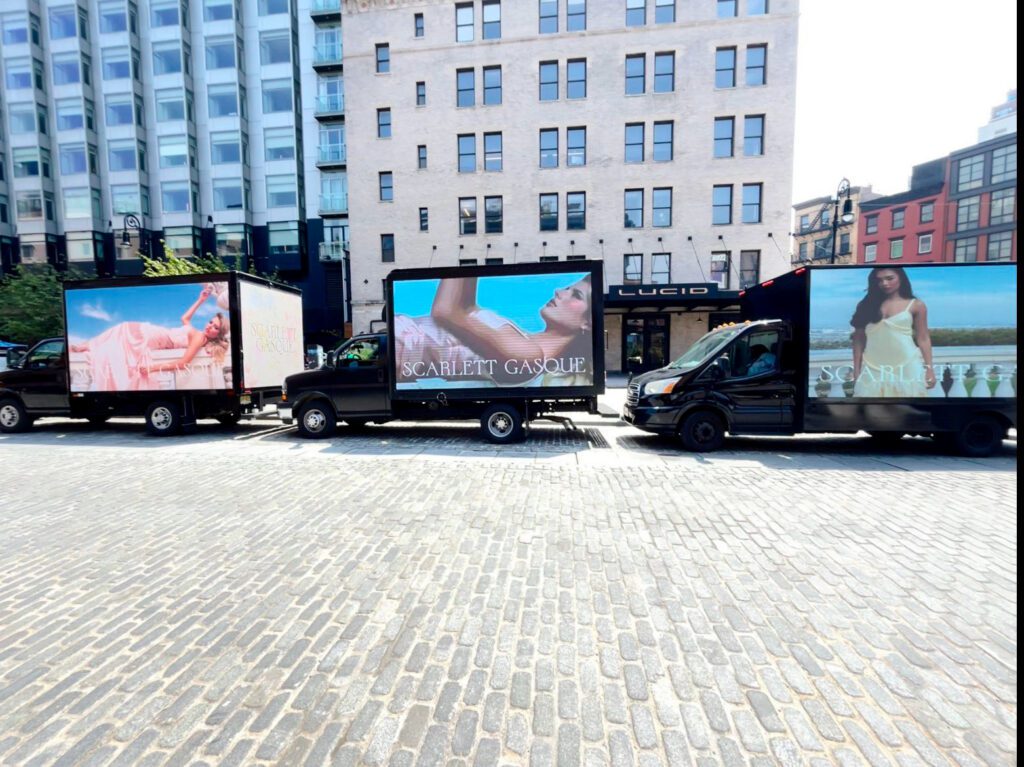
Outdoor visual presence in the neighborhood where the brand’s audience lives signals cultural belonging
Lifestyle brands, music, fashion, food and beverage
Event Activations
Brand presence at events the audience already cares about creates association between brand and valued experience
All consumer categories at relevant cultural events
Sampling and Demo Programs
Direct product trial at scale, with brand ambassador interaction that shapes perception
Food, beverage, beauty, wellness products
Immersive Brand Experiences
Multi-sensory, fully designed environments that put the audience inside the brand’s world
Premium brands, launches with significant budget
How We Approach Experiential Branding
Every experiential branding campaign we build starts with a question: what do we want the audience to feel when they leave? Not what do we want them to know. What do we want them to feel. The answer to that question drives every subsequent decision about format, location, creative, staffing, and duration.
If the brand wants the audience to feel that it’s a genuine part of their neighborhood culture, the campaign needs to be in the neighborhood, at eye level, with creative that earns its place on that block. If the brand wants the audience to feel that it’s a premium experience worth paying more for, the campaign environment needs to communicate quality through every material, every detail, and every interaction. If the brand wants the audience to feel that it’s playful and unexpected, the campaign needs to create genuine surprise in a location where surprise is rare.
These are design briefs, more than marketing briefs. Experiential branding is fundamentally a design challenge with marketing objectives. The agencies that do it best are the ones that can hold both the design quality and the marketing strategy at the same time, without letting either one dominate at the expense of the other.
Experiential branding works when the experience is worth having independently of the brand it’s attached to. If you remove the logo, would people still seek out this moment? If yes, the branding does its work by association. If no, it’s just a branded experience, not an experiential brand.
Experiential Branding in New York City
New York is the most demanding market for experiential branding because the audience is the most sophisticated and the most saturated. New Yorkers have seen every brand try something in public space. They’ve seen pop-ups, installations, street teams, and activations of every kind. Breaking through in New York requires either exceptional creative quality, exceptional location intelligence, or both.
The neighborhoods where experiential branding creates the strongest impact in New York are the ones where the audience is culturally engaged and brand-aware without being entirely jaded. Williamsburg’s North 7th Street corridor, SoHo’s side streets off Spring and Prince, the Lower East Side around Orchard and Stanton, and the Meatpacking District around Gansevoort all deliver audiences that respond to genuine creative quality. These audiences photograph things. They talk about things. They generate earned media that extends the campaign beyond its physical footprint.
In New York, experiential branding campaigns also benefit from the city’s media network. A striking installation in Williamsburg or a compelling pop-up in SoHo has a real chance of being covered by local media, photographed by street photographers with significant followings, and featured in the kind of curated “things to do in New York” content that reaches audiences the brand never directly targeted. That earned media potential is a meaningful component of New York’s ROI for experiential campaigns.
Experiential Branding in Los Angeles
Los Angeles experiential branding operates at the intersection of visual culture and lifestyle identity. The city’s relationship with photography and visual storytelling means that any experiential installation with real visual quality gets documented extensively. A pop-up or outdoor installation in a Fairfax or Arts District corridor that’s genuinely beautiful creates photographs that circulate on Instagram and Pinterest for months after the physical installation has been removed.
The most effective LA experiential branding campaigns we’ve seen share one characteristic: they look as good in a photograph as they do in person. This is not an accident. It requires designing for the secondary experience (the photograph someone shares) alongside the primary experience (the person standing in front of it). In a city where the camera is always present, designing for the photograph is not optional. It’s a core design requirement.
LA experiential branding also benefits from the city’s entertainment industry relationships. A brand that creates something genuinely interesting in a neighborhood where entertainment industry professionals live and work has a real chance of being noticed by the people who make culture: directors, producers, musicians, stylists, and their extended networks. These audiences aren’t just consumers. They’re amplifiers with reach that no paid media budget can manufacture.
The Brand Strategy Foundation of Experiential Marketing
Experiential branding without a clear brand strategy is just a party. It creates memories but not the right ones. Before any activation gets built, the brand needs to be clear on a few foundational questions.
What does this brand stand for? Not what it sells, but what it represents in the audience’s life. A brand that sells running shoes might stand for the identity of someone who doesn’t accept limits. A brand that sells coffee might stand for the ritual of beginning each day with intention. The experiential program needs to bring that positioning to life in a way the audience can feel, more than understand.
Who exactly is the audience? Experiential programs require geographic and demographic precision. “Women 25 to 40” is not precise enough. “Women 25 to 40 who live in Park Slope, run half-marathons, buy food from the co-op, and follow specific wellness accounts on Instagram” is the level of specificity needed to design an experience that feels genuinely relevant to the audience rather than broadly targeted at a demographic category.
What does success look like beyond attendance? Foot traffic and attendance are outputs. Brand recall lift, purchase intent change, social media reach generated, and audience capture are outcomes. The brand strategy determines which outcomes matter most, and the experiential program is designed to produce those specific outcomes.
Experiential branding that doesn’t start from strategy produces experiences that are impressive in the moment but don’t build any lasting brand equity. Strategy first. Experience second. The right order matters.
Measuring Experiential Branding Impact
Measuring the brand impact of experiential marketing has historically been a challenge for the industry. But the measurement toolkit has improved significantly and brands that plan ahead can generate meaningful data from their experiential programs.
Measurement Approach
What It Captures
Pre/post brand perception surveys
Change in brand awareness, favorability, and association attributes
Social listening and UGC tracking
Volume and sentiment of organic social media generated by the activation
Foot traffic and attendance counts
Scale of physical audience reached
Email and community capture rate
Conversion from physical encounter to ongoing relationship
Media coverage tracking
Earned media value generated by the activation
Geographic lift in digital metrics
Change in brand search, social following, and web traffic from the activation geography
The most important measurement principle in experiential branding is setting up the framework before the campaign launches, not after. Pre-campaign baseline data is required for any meaningful measurement of change. Brands that want to demonstrate the impact of experiential investment need to capture that baseline data before the experience happens.
The Role of Brand Ambassadors in Experiential Branding
In any physical experiential branding program, the people who represent the brand on the ground are as important as the creative environment they operate in. A perfectly designed pop-up with poor staff creates a jarring disconnect between what the visual environment promises and what the human interaction delivers. A modest physical setup staffed by genuinely excellent brand representatives often outperforms an elaborate build staffed with people who don’t genuinely connect with the brand’s identity.
We recruit brand ambassadors who are actual members of the communities where campaigns run. For a streetwear brand campaign in Williamsburg, we want ambassadors who genuinely know and love streetwear culture. For a wellness brand campaign near yoga studios in Silver Lake, we want ambassadors who live the wellness lifestyle the brand represents. The authenticity of the human interaction is not separable from the quality of the brand experience.
Training matters as much as recruitment. Even genuinely engaged ambassadors need to know the brand story, understand the product, and have practiced the conversations they’ll have in the field. We train all campaign staff on the brand’s core identity, the key messages for the specific activation, and the specific scenarios and questions they’re likely to encounter. Under-training brand ambassadors is one of the most common and most expensive mistakes brands make in experiential programs.
Why American Guerrilla Marketing Is Your Experiential Branding Partner
We’ve been building physical brand experiences in the streets and neighborhoods of America’s most competitive cities for years. We know how to find the right location, build the right creative, staff the right team, and generate real results that brands can measure and point to as evidence of the investment’s value.
We are not a traditional branding agency. We don’t design logos or create brand standards books. What we do is take the brand identity you’ve defined and build physical expressions of it in the real world, in the specific neighborhoods where your audience lives and spends time. That’s a specific skill set that requires genuine street knowledge, operational discipline, and creative capability that works in physical environments, more than on screen.
If you’re looking for a partner to bring your brand to life in the real world, we want to talk to you about what that looks like in New York, Los Angeles, Chicago, or wherever your audience is concentrated.
Frequently Asked Questions
What is an experiential branding agency?
An experiential branding agency creates real-world experiences that embody and build a brand’s identity. Unlike traditional advertising that communicates about a brand, experiential branding puts the audience inside a moment that makes them feel the brand. The agency combines brand strategy expertise with live experience execution capability to create encounters that build lasting emotional connections.
How does experiential branding differ from standard event marketing?
Standard event marketing creates events. Experiential branding creates events that are designed specifically to reinforce and build a brand’s identity. The difference is strategic intent. An event marketing program asks: what will be at this event? An experiential branding program asks: what will the audience feel about our brand when this event is over? Every creative and operational decision is made with the intended brand experience in mind.
What brands benefit most from experiential branding?
Consumer brands with identity-driven purchase decisions benefit most. Fashion, beauty, food and beverage, entertainment, fitness, wellness, and lifestyle brands all depend on emotional identity connection to drive loyalty and premium pricing. Commodity products and purely functional products may benefit less from experiential branding because their purchase decisions are primarily rational. The key question is whether the brand has an emotional story that can be meaningfully experienced in the real world.
How much should we budget for experiential branding?
Budget range is wide. A focused outdoor branding campaign in a key neighborhood might run $3,000 to $10,000. A pop-up experiential installation typically runs $10,000 to $100,000 depending on scope and duration. A multi-city experiential branding program with consistent creative and staffing across multiple markets scales from $50,000 to $500,000 and beyond. We work across a range of budgets and can recommend an approach based on your objectives, audience, locations, and available resources.
How do you measure whether an experiential branding campaign worked?
Measurement requires planning ahead. We recommend setting up pre-campaign brand perception surveys in the target geographic markets, tracking social media volume and sentiment during the campaign window, counting physical attendance and engagement, capturing email or community sign-ups at the activation, and monitoring geographic lift in digital metrics during and after the campaign. Post-campaign measurement can then compare these results against the initial objectives and establish a clearer view of campaign impact.
Can experiential branding work in secondary markets beyond New York and LA?
Yes. Chicago, Miami, Austin, Portland, Nashville, Denver, and other secondary markets have strong lifestyle audiences that can respond well to experiential branding. Secondary markets may have less saturation with brand activations, which can give a well-executed campaign an opportunity to stand out. For brands targeting specific regional markets, secondary cities can also provide a focused way to build local awareness and community connection.
How long should an experiential branding campaign run?
It depends heavily on format. Outdoor visual campaigns typically run two to four weeks for sustained visibility. Pop-up experiences can run from five to thirty days, providing enough time for word of mouth to build while maintaining a sense of scarcity and urgency. Street team activations are often most effective as multi-day programs rather than single-day hits. Festival and event integrations typically run for the duration of the event or surrounding activation period.