
September 7, 2026
Custom Mobile Agency: Branded Mobile Marketing Units That Move Your Brand | American Guerrilla Marketing
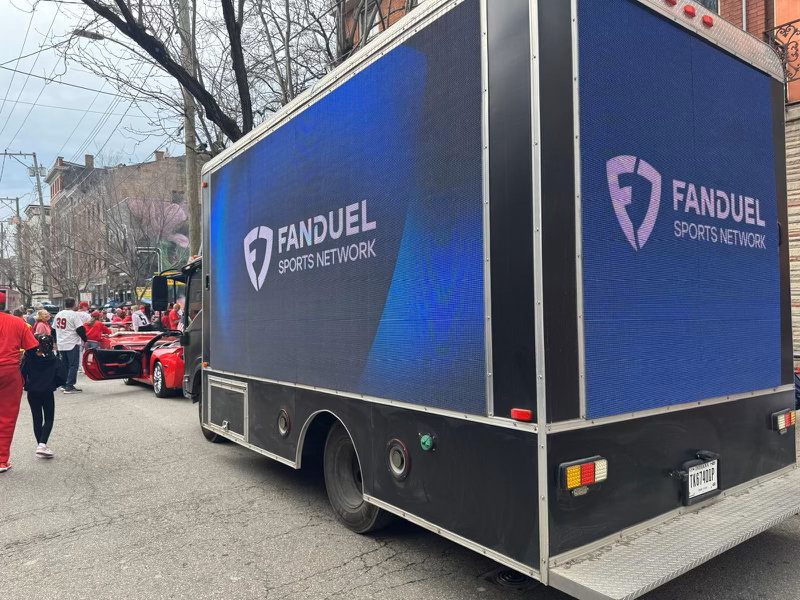
A custom mobile agency builds, deploys, and manages branded mobile marketing units that carry your brand experience from city to city, event to event, and neighborhood to neighborhood. The mobile unit is the campaign infrastructure. The tour is the distribution strategy. Together, they put your brand in direct contact with consumers wherever they are most concentrated and most receptive.
Mobile marketing tours are one of the most effective formats for national brands launching new products, regional brands expanding their geographic footprint, and any brand that wants to reach multiple markets with a consistent, high-quality brand experience in a single coordinated campaign.
We are American Guerrilla Marketing. We have designed, built, and deployed mobile marketing units across dozens of campaigns and hundreds of markets. We understand what makes a mobile tour work, where it fails, and how to get the most out of the format for your brand. This guide covers everything you need to know.
What Is a Custom Mobile Marketing Agency?
A custom mobile marketing agency handles the design, fabrication, staffing, routing, and execution of branded mobile marketing units and tour campaigns. The “mobile” in the name refers to the unit, typically a custom-built vehicle, trailer, or branded vehicle that serves as a self-contained brand experience platform.
These units are more than trucks with logos. They are purpose-built brand environments that can include sampling stations, interactive displays, product demonstrations, digital screens, photo moments, charging stations, and any other brand touchpoint that fits the tour’s objectives.
The agency that builds and runs the tour handles everything: the concept and design of the unit, the fabrication, the market routing strategy, the staffing at each stop, the logistics of moving the unit from market to market, and the measurement of outcomes at every stop.
Why Mobile Tours Work
Mobile marketing tours combine the visual impact of OOH advertising with the depth of experiential engagement. They also solve a problem that stationary activations cannot: geographic reach across multiple markets within a defined timeframe.
A brand that wants to launch a product in ten cities could execute ten separate local activations with ten different local vendors and ten different teams. Or they can design one tour, deploy one unit, and move it across all ten markets with a consistent team, consistent execution, and consistent reporting. The mobile tour is more efficient, more consistent, and generates better aggregate reporting than the patchwork alternative.
Mobile tours are also inherently newsworthy. The arrival of a branded tour vehicle in a city is an event in itself. Local press, social media, and event listings all become channels for free promotion when a mobile tour arrives. The vehicle is the announcement.
A well-executed mobile marketing tour generates local media coverage in the majority of markets it visits. The arrival of a branded unit in a city is a natural story for local press and social media. That earned media extends the campaign’s reach far beyond what the tour budget alone could buy.
Types of Custom Mobile Marketing Units
| Unit Type | Description | Best For | Key Advantage |
|---|---|---|---|
| Sampling Trailer | Custom trailer with side opening for product distribution | CPG, food/beverage, personal care | High throughput product trial |
| Mobile Showroom | Custom interior with product display and demonstration area | Technology, automotive, home goods | Controlled product demo environment |
| Experience Trailer | Immersive branded interior visitors enter | Entertainment, lifestyle, premium brands | Deep brand immersion |
| Branded Vehicle | Custom-wrapped car, van, or truck | Brand awareness, event adjacency, ambassador programs | Low cost, flexible deployment |
| Pop-Up Truck | Food truck-style vehicle with serving window | Food/beverage, lifestyle brands | Culturally familiar format, high foot traffic |
| Double-Decker Unit | Multi-level custom vehicle with upper deck viewing area | Premium brands, product launches, events | Visual spectacle, maximum presence |
Planning a Custom Mobile Marketing Tour
A mobile marketing tour is a complex logistical operation. Here is how we approach the planning process for clients who want to run one.
Define the Objective
What is the tour trying to achieve? Product trial in new markets? Brand awareness in cities where distribution is expanding? Engagement with a specific demographic that concentrates in certain geographic areas? The objective shapes every decision that follows, from the unit design to the market selection to the event schedule.
Map the Markets
Which markets does the tour need to reach? For a national launch, this might be 15 to 30 cities. For a regional campaign, it might be 5 to 10. We select markets based on a combination of the brand’s existing footprint, the target audience concentration, and the distribution or retail context in each market.
Build the Routing
Routing a mobile tour is like planning a very detailed road trip with time constraints and logistical requirements at every stop. We build routes that minimize travel time between markets, maximize the number of high-quality stop days in each market, and sequence the markets in a way that builds campaign momentum as the tour progresses.
Design the Unit
The unit design is the creative and structural core of the tour. It needs to serve the brand’s visual identity, accommodate the functional requirements of the activation, and be practical enough to operate reliably across months and thousands of miles. We work with fabrication partners who specialize in mobile marketing units and have built dozens of custom vehicles.
Staff the Tour
Mobile tour staffing requires a core traveling team supplemented by local staff recruited in each market. The traveling team maintains consistency of brand representation and execution. The local staff provides market-specific knowledge and supplemental capacity at high-traffic stops.
Where Mobile Tours Activate
The best mobile tour stops are chosen based on the concentration of the target audience in accessible, high-foot-traffic locations. Common stop types include:
- Farmers markets and outdoor markets: Dense, engaged crowds in a relaxed, open-to-discovery mindset
- Street festivals and neighborhood events: High foot traffic, community energy, social media sharing
- Sporting events and concert venues: Specific fan demographics in a high-engagement state
- College campuses: Young adult audiences, high social sharing, word-of-mouth reach
- Shopping districts: Consumers already in a purchasing mindset
- Corporate park clusters: For B2B or professional audience brands
- Transit hubs: High volume, diverse demographics
The routing of a mobile tour is a strategic decision, more than a logistics one. The sequence of markets, the timing of each stop, and the specific locations within each market all affect the quality of engagement and the cumulative impact of the campaign. Plan the route with the same care you put into the unit design.
How We Measure Mobile Tour Results
Mobile tours generate rich data because they run across many stops over many days. Here is what we track at every stop and how we aggregate that data across the full tour.
Stop-level metrics: Foot traffic, active engagements, samples or products distributed, social content generated, email or lead captures, local media coverage.
Campaign-level aggregates: Total markets reached, total engagements across all stops, total product trial instances, total social content generated, total earned media value.
Market-level comparisons: We compare results across markets to identify where the concept resonated most strongly, where the audience fit was best, and where performance fell short of expectations. This informs both the current campaign and any future mobile programs.
The Traveling Team: Who Runs the Tour Day to Day
A mobile tour is only as good as the team running it. The traveling team is on the road for the duration of the campaign, setting up and breaking down at each stop, engaging consumers, managing the unit, and maintaining brand standards across markets that may look and feel very different from each other.
We select traveling team members based on their ability to represent brands authentically in demanding field conditions. Long days, varied environments, and the pressure of high-throughput consumer engagement all require people who are both skilled and resilient. We have built networks of experienced mobile tour professionals who know what the job actually demands.
We also build detailed operational playbooks for every tour. Every stop follows the same setup sequence. Every consumer interaction follows the same brand standards. Every piece of documentation follows the same format. Consistency is how you maintain quality across 20 cities over eight weeks.
Technology Integration in Mobile Marketing Units
Modern mobile marketing units increasingly incorporate technology to deepen consumer engagement and extend campaign reach. Here are the most effective technology integrations we have deployed.
Digital displays and screens allow the unit to cycle through video content, brand stories, and promotional messages throughout the day without requiring staff to deliver the same verbal presentation thousands of times. The screen is always on. The message is always fresh.
QR codes and NFC triggers allow consumers to instantly access digital content, enter contests, claim offers, or download apps by simply using their phone near the unit. This bridges the physical experience and the digital campaign in a way that is both seamless and measurable.
Social media sharing moments, whether a branded photo booth, an interactive display, or simply a visually spectacular section of the unit designed for photography, generate organic content at every stop. We track this content in real time as a live measure of the campaign’s social reach.
Data capture systems allow the tour to collect consumer information, email addresses, survey responses, or contest entries at each stop. This data feeds CRM systems and retargeting audiences that extend the campaign beyond the tour itself.
Common Mobile Tour Mistakes to Avoid
Mobile tours sound simple. They are not. Here are the most common mistakes brands and agencies make when running mobile tours.
Routing too many markets in too little time. A tour that races from city to city with one-day stops in every market rarely achieves the same quality of engagement as a tour with three or four days in each market. Depth beats breadth for most objectives.
Underinvesting in the unit. The mobile unit is the brand experience. A cheap or poorly built unit communicates that cheapness to everyone who encounters it. The unit is not a cost center. It is the campaign’s most important asset.
Inconsistent staffing quality. If the traveling team is great but the local staff supplement is not properly selected and trained, the experience varies by market in ways the brand cannot control. We build consistent training programs for local staff that maintain quality across every stop.
No advance promotion at each stop. A mobile tour arrives in a city and nobody knows it is coming. That wastes the earned media opportunity and relies entirely on walk-up traffic. We build local promotion into every stop: local social media, press outreach to relevant local outlets, and coordination with local partners who can drive awareness.
Cost of a Custom Mobile Marketing Tour
Mobile tours require meaningful investment. Here are the major cost categories.
Unit fabrication: Custom-built trailers and vehicles range from $50,000 to $300,000+ depending on complexity, size, and technology integration. For clients who do not want to own the unit, rental options exist for some unit types.
Operational costs per market: Staffing, fuel, lodging for the traveling team, local permits and locations, and local marketing add up to $3,000 to $10,000 per market day depending on market cost and scope.
Campaign management: Routing, logistics coordination, reporting, and central campaign management add 20 to 30% to operational costs.
A 10-city tour running two days per city with a mid-range custom unit typically runs $150,000 to $350,000 all-in. Larger tours with more cities or more complex units scale from there.
How Mobile Tours Build Retail Relationships Market by Market
For brands that sell through retail, a mobile tour can serve a dual function: direct consumer engagement and retail relationship building. As the tour moves through each market, the brand has a physical presence that can be used to drive retailer engagement in addition to consumer engagement.
We have run mobile tours that coordinated stop locations with retail store clusters, driving foot traffic to nearby retail locations. We have also used tour stops to host retailer events: inviting buyers, category managers, and store associates to experience the brand through the mobile unit before or after the public activation hours. This creates a sales enablement tool that works in parallel with the consumer-facing campaign.
For brands in retail launch mode, this dual-purpose approach turns a mobile tour into one of the most efficient marketing investments available. One campaign budget drives consumer awareness, product trial, retailer relationships, and sales force enablement at the same time.
What to Look for When Evaluating a Custom Mobile Agency
Not every agency that calls itself a custom mobile agency has built and operated mobile marketing units at scale. Some manage the creative concept and then subcontract fabrication, routing, staffing, and execution to a chain of vendors they have never actually supervised in the field. That subcontractor chain introduces quality risk at every link, and that risk shows up on activation day in the markets that matter most.
When evaluating a custom mobile agency, ask to see documentation from tours they have actually operated. Not renderings and mood boards. Photographs from actual stops, in actual markets, with actual teams visible. Ask who manages the traveling team and how that team is trained. Ask what happens when the vehicle has a mechanical problem in Market 7 of a 15-city tour and the schedule cannot wait. Ask who makes that call and how the recovery plan works.
Ask about their fabrication relationships. Do they work with a single trusted fabricator who has built vehicles for them before, or do they go to market for every project? Experience with a specific fabricator means known quality standards, predictable timelines, and a working relationship that allows problems to be solved before they become crises. A new fabricator relationship on every project is a risk that compounds with every added requirement the client asks for.
Ask about post-campaign reporting format and content. A custom mobile agency that cannot show you a sample post-campaign report from a comparable tour is an agency that does not take its own measurement seriously. The report is the proof of what actually happened in the field. Any agency that asks you to trust their word without documentation is an agency that does not hold itself accountable to your outcomes.
Frequently Asked Questions
What is a custom mobile marketing agency?
A custom mobile marketing agency designs, builds, and deploys branded mobile marketing units and manages the tour campaigns that deploy them. Services include unit design and fabrication, market routing, staffing, local market promotion, on-site execution, and campaign measurement and reporting.
What are the benefits of a mobile marketing tour versus multiple local activations?
Mobile tours deliver consistent brand experience quality across markets, more efficient logistics and management, better aggregate reporting, and the inherent newsworthiness of a tour that generates local press coverage as it arrives in each city. Multiple local activations with different local vendors rarely achieve the same consistency of execution.
How many markets should a mobile tour visit?
It depends on the budget and objective. National launch tours typically visit 15 to 30 cities. Regional campaigns focus on 5 to 10 markets. We recommend prioritizing depth over breadth: two to four days in fewer markets typically provides more opportunities for meaningful engagement than one-day stops in many markets for most campaign objectives.
How long does it take to build a custom mobile unit?
Custom fabrication typically takes 8 to 16 weeks depending on complexity. This is the primary lead time constraint for mobile tours. If the tour needs to launch in less than that timeframe, we explore rental units, modified stock vehicles, or phased approaches that allow the campaign to begin while fabrication continues.
Do you handle all the logistics of a mobile tour?
Yes. We manage routing, transportation logistics, local market setup, staffing at each stop, local press outreach, documentation, and reporting. You work with one partner for the entire campaign, not a different vendor in every city.
Can a mobile tour work for a smaller brand with a limited budget?
Yes, with scope adjustment. A smaller brand might run a branded vehicle program rather than a custom-built trailer, visit fewer markets, or focus on lower-cost markets where activation costs are manageable. We help clients find the right scope for their budget and goals.
How do you select stop locations within each market?
We select stops based on foot traffic data, audience demographic match, event calendar in each market, and our direct market knowledge. We want stops where the right people are concentrated in large numbers during the windows we can activate. We visit markets in advance and plan stops based on firsthand observation where possible.

Ready to Run Your Campaign?
Call us or email us. We’ll tell you exactly what we can do in your market and what it costs.
Related Services
Explore similar advertising solutions offered by American Guerrilla Marketing.
American Guerrilla Marketing — Los Angeles
Street-level campaigns in Los Angeles and nationwide. Wheatpasting, LED trucks, street teams, and more.
(646) 776-2770
Related Articles
-
Street Poster Advertising Ottawa: A Complete Campaign Guide
September 17, 2026
-
Activation Marketing: How Brands Win at Street Level
September 13, 2026
-
Experiential Marketing Firms Chicago | American Guerrilla Marketing
September 12, 2026
-
Pop Up Experiential
September 12, 2026
-
Mobile Pop Up
September 12, 2026