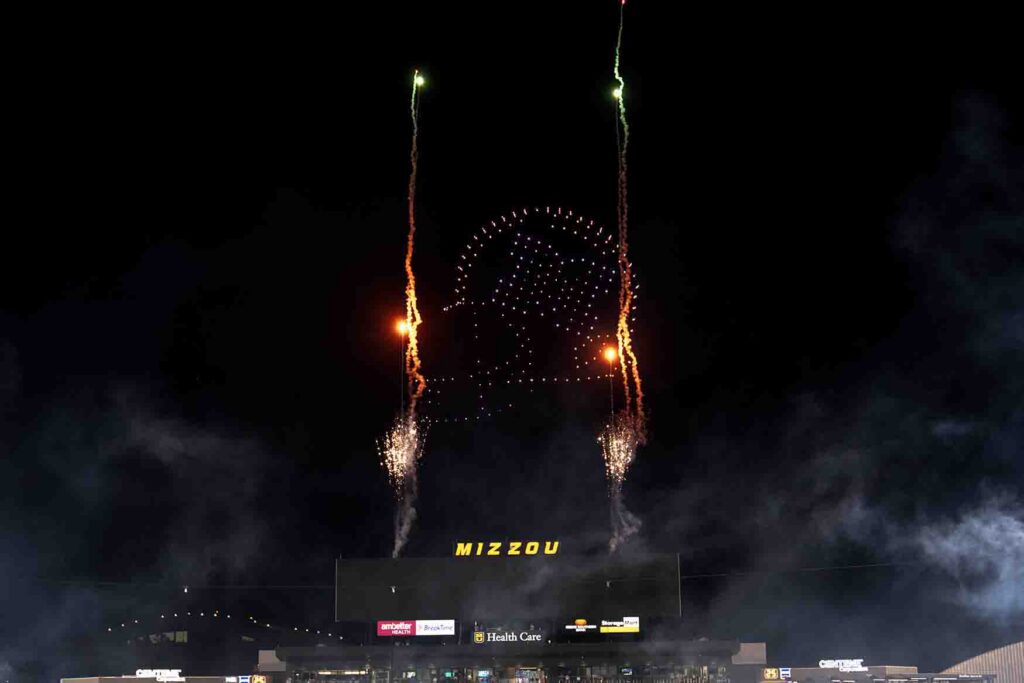
Drone light show marketing has moved from novelty to legitimate brand activation format in the span of five years. The technology has matured to the point where 150 to 500 synchronized drones can render brand logos, animated characters, product silhouettes, and moving text sequences at night — visible for miles, impossible to ignore, and extraordinarily shareable. For brands that need a single activation to generate live audience impact, earned media coverage, and social content simultaneously, drone light shows offer a combination of spectacle and brand relevance that few other formats approach.
We have coordinated drone light show activations for product launches, major brand anniversaries, and event marketing programs. The format is high-impact and high-commitment: the logistics, permitting, and production complexity are real, and the costs are significant. But when the show is executed in the right environment, at the right scale, with the right audience assembled, the return on that investment through earned media, social amplification, and live consumer experience is exceptional.
This guide covers everything brands need to know about planning a drone light show activation: how the technology works, what FAA permitting actually requires, what realistic cost ranges look like by drone count and show complexity, which environments and campaign contexts produce the best results, and how drone shows fit within a broader experiential and guerrilla marketing strategy.
How Drone Light Shows Work
A drone light show uses a swarm of synchronized multirotor drones — each equipped with bright LED lighting rigs — to create aerial formations that trace shapes, logos, text, and animations in the night sky. The choreography is programmed in 3D formation software and uploaded to each drone’s flight computer. During the show, all drones execute the same pre-programmed flight path simultaneously, guided by GPS positioning systems with centimeter-level accuracy.
The Technology Behind the Show
Modern show drones are lightweight — typically under 500 grams — with 15 to 25 minute flight endurance per battery charge. LED systems on each drone are individually addressable, allowing the swarm to create full-color animations. Formation transitions happen at 2 to 8 meters per second, creating smooth motion effects visible from the ground. GPS positioning allows formations as tight as 1 to 2 meters between drones, which is what enables legible logo renderings and text sequences at scale.
Show Structure and Duration
Most brand-oriented drone light shows run 5 to 15 minutes. Shorter shows (5 to 7 minutes) are standard for product launch moments and half-time-style event integrations. Longer shows (10 to 15 minutes) work for brand anniversary celebrations and standalone spectacle events where the show itself is the main attraction. Show design typically includes a narrative arc: an opening sequence, a brand identity reveal, a product or messaging sequence, and a finale that leaves the audience with a strong visual brand impression.
FAA Permitting: What It Actually Requires
FAA permitting is the most underestimated element of drone light show marketing. Brands that start the permitting process late routinely push show dates back by weeks or months. Understanding what is required — and how long it takes — is non-negotiable for any brand evaluating this format.
Part 107 Waivers
Commercial drone operations in the U.S. are governed by FAA Part 107. Standard Part 107 rules restrict operations over moving vehicles, over people who are not part of the operation, and beyond line of sight. Drone light shows require waivers for each of these restrictions. The FAA reviews waiver applications on a case-by-case basis, evaluating operational safety plans, site conditions, and operator credentials. Approval timelines range from 30 days for straightforward rural applications to 90+ days for complex urban environments.
Certificates of Authorization in Controlled Airspace
Shows near airports — within Class B, C, or D airspace — require a Certificate of Authorization (COA) in addition to Part 107 waivers. COA processing through the Air Traffic Organization can add 30 to 60 days. For major urban markets like New York, Los Angeles, and Chicago, virtually every outdoor venue with strong viewership sightlines is within some level of controlled airspace. Starting the COA process as early as possible — ideally 120 days before the target show date — is the single most important planning discipline for urban drone shows.
Site-Specific Coordination
Beyond FAA permits, drone light show operators coordinate with local law enforcement (for crowd management and airspace deconfliction), property managers (for launch site access), and event organizers (for timing integration). In some jurisdictions, city permits for outdoor events are required in addition to FAA authorization. Our team manages this multi-agency permitting process as part of coordinated drone show activations to prevent the show from being grounded on day of by an overlooked local requirement.
Drone Light Show Costs: Realistic Ranges by Scale
Drone light show costs are substantially higher than most outdoor advertising formats, which is appropriate given the operational complexity and spectacle value. Understanding the cost structure by drone count and show complexity prevents sticker shock during planning and helps brands allocate the budget needed to execute a show that meets professional quality standards.
100 to 150 Drones: Entry-Level Brand Shows
Entry-level brand drone shows using 100 to 150 drones cost $50,000 to $90,000 all-in including choreography, equipment, operators, permitting support, and logistics. At this scale, shows can render simple brand logos, basic text sequences, and geometric animations. Image resolution is limited — complex product silhouettes and multi-frame animations are not possible below 150 drones. This scale works for local market launches, private events, and campaigns where the spectacle itself is the primary value rather than specific brand imagery detail.
200 to 300 Drones: Brand-Quality Activations
The 200 to 300 drone range is where brand-quality image rendering becomes reliable. Logos are legible, animated brand mascots are recognizable, and multi-sequence shows with transitions between brand elements are executable. Costs in this range run $100,000 to $200,000 depending on site complexity, market location, and show duration. This is the sweet spot for product launch activations, major event integrations, and campaigns where social video sharing is a primary goal.
400+ Drones: Premium Spectacle
Shows using 400 or more drones deliver the cinematic quality associated with major brand activations and televised halftime shows. At this scale, smooth full-color animations, 3D formation sequences, and complex narrative arcs are achievable. Costs range from $200,000 to $400,000+ depending on custom choreography requirements, site logistics, and multi-night execution. For global brand launches and major sponsorship activations, this investment level is justified by the earned media and live audience scale it generates.
Where Drone Light Shows Deliver Maximum Marketing Value
Site selection is as important as drone count in determining whether a show succeeds as a marketing activation. The environment must support large live audiences, unobstructed sightlines, and favorable airspace conditions simultaneously.
Waterfront Environments
Harbor and waterfront venues offer the ideal combination of unobstructed airspace, large viewer assembly areas on the shore, and dramatic backdrop that makes drone formations visually striking from a distance. New York Harbor, San Francisco Bay, Lake Michigan’s Chicago shoreline, and Miami’s Biscayne Bay are all proven drone show environments with established permitting precedent and large natural audience catchments.
Music Festivals and Outdoor Events
Music festivals with outdoor stages are ideal integration contexts: assembled audiences of 10,000 to 100,000 people, natural social video behavior from attendees, and event structures that accommodate drone show windows during set breaks or finale sequences. Festival drone shows generate social video sharing that extends the live audience experience to millions of remote viewers within 24 hours of the show.
Outdoor Stadiums and Arena Districts
Outdoor stadium shows — timed with pre-game ceremonies, halftime performances, or post-game celebrations — deliver captive audiences of 30,000 to 80,000 people in a single location. Stadium shows also benefit from broadcast camera coverage that extends the visual reach beyond the live audience. Arena district plaza shows outside the venue reach both the live event crowd and the surrounding neighborhood simultaneously.
Earned Media and Social Amplification
The marketing math for drone light shows changes significantly when earned media value is included in the ROI calculation. A well-executed drone show in a prime market consistently generates local TV news coverage, national press pickup, and millions of social video impressions from organic viewer sharing.
Social Video Performance
Drone light show footage shares organically because it is visually spectacular and unfamiliar enough to prompt “what is this?” engagement from viewers who were not at the live event. Our team seeds drone show footage to brand channels and key content creator partners within hours of the show to maximize the sharing window. A strong show can generate 2 to 10 million organic video views within the first 48 hours post-event without any paid amplification.
News Coverage
Local television news in major markets consistently covers drone light show activations as visual news segments — rare events that deliver strong broadcast visuals. National coverage is more selective, but major brand activations at high-profile events receive national press pickup through entertainment and marketing trade publications. Our team prepares press releases, B-roll packages, and media alerts timed to the show window to maximize coverage volume.
Integrating Drone Shows with Ground-Level Campaign Tactics
Drone light shows create aerial spectacle. Street-level tactics create the ground-level presence that extends the campaign beyond the show window. Combining both creates a campaign that operates across multiple scales simultaneously.
Drone Shows Plus Street-Level Guerrilla Activation
For product launches that use a drone show as the centerpiece event, deploying guerrilla marketing activations in the days surrounding the show — wheatpaste poster campaigns, sidewalk stencils, and brand ambassadors — builds street-level visual presence that frames the drone show as the culmination of a broader campaign rather than a standalone event. This layered approach generates more sustained brand presence and more total earned media than the show alone.
Drone Shows Plus LED Billboard Trucks
LED billboard trucks positioned around the drone show viewing area serve as ground-level brand displays that reinforce the aerial visual. As crowds gather for the show, LED trucks carry the brand message to the audience before, during, and after the aerial activation — maximizing the campaign value of every person assembled.
Frequently Asked Questions
How much does a drone light show cost for marketing?
Drone light show costs for marketing activations typically range from $75,000 to $400,000 depending on drone count, show duration, site complexity, and permitting requirements. Entry-level shows with 100 drones start around $50,000 to $75,000. Large-scale activations with 300+ drones in complex urban environments can exceed $300,000 including all logistics and permitting.
What FAA permits are required for a drone light show?
Drone light shows typically require an FAA Part 107 waiver for operations over people and beyond line-of-sight, along with a Certificate of Authorization (COA) if operating in controlled airspace. Lead times for FAA approval range from 60 to 120 days for complex airspace, so early permitting is essential.
How many drones do you need for a brand-quality drone light show?
Brand-quality drone light shows that can render recognizable logos and animations typically require a minimum of 150 to 200 drones. The most visually impressive brand activations use 300 to 500+ drones and can produce smooth animations visible from over a mile away.
Where do drone light shows work best for marketing?
Drone light shows work best over open water, large parks, beach fronts, and outdoor event venues with unobstructed sightlines and minimal airspace conflicts. Events with large assembled audiences — music festivals, sports events, product launches — maximize live viewership and social amplification value.
How far in advance do you need to plan a drone light show?
Plan for at least 90 to 120 days of lead time. FAA permitting is the long pole: complex airspace approvals can take 60 to 90 days. Site scouting, choreography development, creative approvals, and operational logistics all add to the timeline.
What is the earned media value of a drone light show?
Drone light shows consistently generate local TV news segments, social video sharing, and national press pickup for major brand activations. A well-executed show in a prime market can generate millions of earned media impressions that multiply the paid campaign investment many times over.