
November 10, 2026
Digital Billboard Truck Rental: How It Actually Works
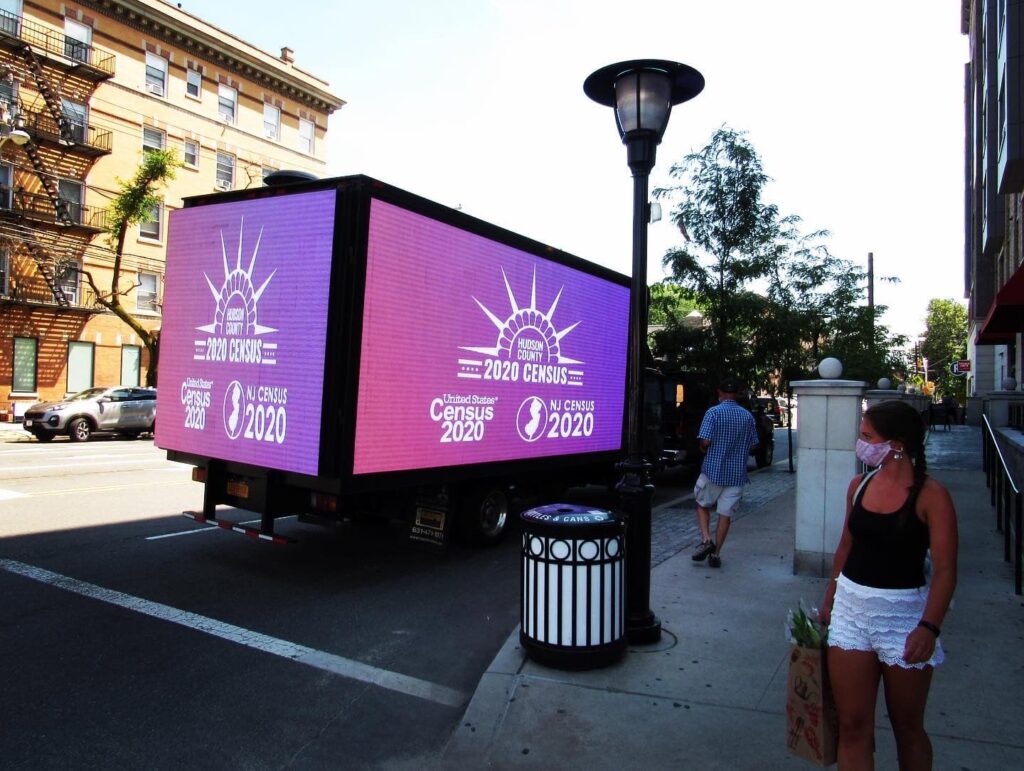
Most people who search for digital billboard truck rental have already pictured the outcome. A bright screen rolling past a stadium, their creative on it, people looking up. What they have not pictured is the operational layer underneath that image, which is where every good and bad campaign is actually decided.
I am Livy Phillips. I run street-level campaigns for American Guerrilla Marketing, including LED truck runs in most major US metros. I have sat in the cab at 6am waiting for a venue to open its service road, and I have told clients to cancel a run because the forecast made it pointless.
This page is the operational version. What the equipment actually is, how a day is structured, what routes work and which ones waste the booking, what weather and city geometry do to the format, where permissions sit, and what we regularly talk clients out of.
There are no figures here because scope varies too much for a number to mean anything honest. What I will give you instead is the list of things that genuinely move scope up or down, which is more useful when you are building a plan.
What a digital billboard truck actually is
The term covers a range of vehicles, and the differences matter more than the brochures suggest.
At the smaller end, a box truck with LED panels mounted on two or three faces. Usually both sides plus a rear panel. These are manoeuvrable, fit in standard lanes, and can get into tight downtown grids and event service areas without drama.
At the larger end, trailer-mounted screens with a bigger display area. More visual impact, considerably less flexible. They need turning room, they struggle in dense historic street layouts, and in some older downtowns they simply cannot complete a loop.
The screens are LED panels rated for outdoor daytime visibility, with brightness that adjusts between day and night operation. The practical consequence is that these trucks work in daylight, unlike projection, which is strictly a night format.
Power comes from an onboard generator in most cases. Generators are the most common source of mid-run failure, which is why a serious operator has a service plan and a backup vehicle protocol rather than a hope.
Content is loaded as static frames or short motion loops. Motion attracts the eye, but there is a limit, because an audience in traffic gets a few seconds. A ten second animation will mostly be seen as a fragment.
The thing most buyers get wrong about routes
The single most expensive mistake in this format is treating a truck as a vehicle that should keep moving.
A truck in motion on a busy arterial is passing drivers who are facing forward and watching traffic. Exposure is real but shallow. A truck parked legally in a dwell position next to a dense pedestrian crowd is being read, photographed and discussed.
We build runs around dwell positions with transit between them, not around mileage. A typical shape is three to five dwell positions per shift, with routed movement between them chosen to pass through high-density corridors rather than to cover distance.
Where dwell works best is predictable. Outside a venue before doors and again at set break. Near a stadium during the gate window and the exit window. Along a festival approach route where people are walking. At a conference centre entrance during registration. In a downtown lunch corridor between noon and two.
Where movement works best is also predictable. Multi-lane arterials with slow average speed. Bridge and tunnel approaches. Anywhere traffic reliably backs up, because stationary traffic is a captive audience and a jammed approach road is the best inventory in this medium.
What does not work is a vague loop of a downtown grid for eight hours with no anchor. That is the booking I try hardest to prevent, because it feels busy and delivers very little.
City by city, the format behaves differently
Los Angeles is the strongest truck market in the country for the obvious reason. The audience is in cars. Runs on Sunset, Hollywood Boulevard, the Fairfax and Melrose corridors, and the approaches to downtown all work. Congestion is an asset here. A truck sitting in slow traffic on a major boulevard at 5pm is doing its job.
New York is the hardest. Narrow streets, aggressive traffic enforcement, constant construction, and loading restrictions that vary block to block. Trucks work in New York, but they work around specific anchors such as arena exit crowds or a Midtown dwell position rather than as a free-roaming loop. A smaller box truck is almost always the right call there.
Chicago works well on the arterial grid and around the stadium and convention anchors. Winter is the constraint. Snow and salt complicate everything, and a run on a day when nobody is walking outdoors is wasted.
Houston, Phoenix, Dallas and Atlanta are good truck markets because they are driving cities with long arterials and heavy commute congestion. Atlanta in particular rewards timing around the afternoon build-up.
Miami works on the beach corridors and in Wynwood, with the caveat that summer afternoon storms are a real scheduling factor.
Austin and Nashville are event-driven. The truck follows the calendar there rather than the map, and in event weeks the approach roads are the whole opportunity.
Weather and visibility truth
Daylight visibility is the format's advantage, but it is not unconditional.
Direct sun hitting the panel at a shallow angle washes out contrast more than most buyers expect. Creative with low contrast or fine detail will not survive midday sun on a west-facing panel. High contrast, few words, large type. That is not a style preference, it is a physics requirement.
Rain reduces impact in two ways. The panel is fine, but pedestrians disappear and drivers watch the road harder. A rainy dwell position outside a venue is a fraction of the value of a dry one.
Heavy wind matters for trailer-mounted units more than box trucks, and there are conditions where an operator should decline to run. Anyone who never declines is not making safety calls.
Snow and ice affect positioning more than the screen. Dwell positions get taken by plows, snow piles and emergency access needs, and a planned spot can simply be unavailable.
Night running is excellent for impact. The screen dominates in low light and the photographs people take look far better. The trade-off is that fewer people are out, so night runs need an anchor such as a venue let-out or a nightlife corridor.
Crew reality on a truck day
A run is one driver and usually one campaign operator, though a solo driver works for simple routed shifts.
The operator matters more than people think. They are the person who decides that the planned dwell position is blocked and finds the next best one forty metres away, who notices the crowd has shifted to a different exit, and who captures the documentation.
A standard shift is a block of hours agreed in advance, and the clock starts when the truck is in the target area rather than when it leaves the depot. That distinction is worth confirming with any operator, because the difference between those two definitions can consume a meaningful part of a booking.
Before the shift there is a content check, a generator check, a panel check and a route brief. During the shift we capture timestamped photography and log actual dwell positions against planned ones. After the shift the client gets the route record and that photography.
Content changes mid-shift are possible and cheap in effort terms, which people rarely exploit. A run that carries event messaging during the gate window and a different frame during the exit window is more effective than one static message for eight hours.
Permissions, ordinances and the grey area
Mobile advertising sits in a grey area that varies more by municipality than almost any other format we run.
Some cities have ordinances aimed specifically at vehicles whose primary purpose is advertising. Others have no provision at all and treat the truck as an ordinary commercial vehicle. Enforcement is inconsistent even within a single city, and the practical outcome often depends on where the vehicle stops rather than that it exists.
Parking and standing rules are the live issue, not the advertising itself. A dwell position has to be a place where a commercial vehicle may legally stand, and that is a question about the kerb, the hour and the signage.
Private property is the cleanest solution and the one we use most. A dwell position in a private lot, a venue's own forecourt, or a partner business's frontage with the owner's permission removes most of the ambiguity. Securing that permission is part of the planning work.
Event sites almost always have their own rules, and in many cases exclusive advertising arrangements. A truck parked on the public approach road rather than inside the event footprint is the usual approach, and the approach road is often better inventory anyway.
I will not tell you that a truck run is legal or illegal in your city. That is not a statement anyone can honestly make as a blanket. What I will tell you is that we plan dwell positions with those constraints in mind, we favour permissioned private positions, we document where the vehicle stood, and a specific regulatory question belongs with local counsel rather than with a vendor.
What drives scope up or down
Without touching numbers, here is what actually changes the size of a booking.
Shift length and how many shifts. A single evening around one event is a different project from a two week presence.
Number of vehicles. Two trucks working opposite approaches to a stadium is a different plan from one truck alternating.
Market. Some cities require the vehicle to be brought in rather than sourced locally, and repositioning time is real time.
Dwell permissioning. Positions that need an owner agreement take planning work ahead of the run.
Screen size and vehicle class. Larger trailer units cost more to operate and restrict where they can go.
Event windows. Running during a major event week in a constrained market is the highest-demand scenario there is, and it needs to be booked well ahead.
Documentation depth. A simple route log is lighter than a full photographic and video capture package.
Designing creative that survives a windscreen
Most truck creative arrives as a resized version of something built for a screen someone was holding. It does not survive the transfer.
The viewing conditions are specific. A driver gets two to four seconds at an angle, through glass, often with sun on the panel. A pedestrian at a dwell position gets longer, maybe ten or fifteen seconds, but is usually in a moving crowd.
So we build for the worst case and let the best case benefit. One idea per frame. A single dominant image. Type large enough that it reads across three lanes of traffic. Strong contrast between the type and whatever sits behind it, because mid-tone type on a mid-tone photograph disappears entirely on an LED panel in daylight.
Colour behaves differently on these screens than on a monitor. Saturated colour holds up. Subtle gradients and pale tints do not, and anything approaching white tends to bloom at full brightness. We ask for a daylight version and a night version of the key frames where the campaign allows it, because the brightness difference is significant enough to change which palette works.
The test I use is simple. Shrink the frame to the size of a postage stamp on screen. If you can still tell what it says and what it is for, it will work on a truck. If you cannot, no amount of panel brightness will rescue it.
Measuring a run without inventing numbers
Truck campaigns attract impression estimates with impressive-looking decimal places, and I would treat most of them with suspicion.
What can be reported accurately is what the vehicle actually did. The route driven, the dwell positions held and for how long, timestamped photography at each position, the content schedule, and the conditions on the day. That is a factual record and it is what we deliver.
From there you can build a reasoned exposure estimate using traffic and crowd context for those specific positions at those specific hours. Call it an estimate, state the method, and it is defensible. Present it as a measured figure and it is not.
The signals clients actually find useful tend to be comparative. Did the targeted geography move relative to an untargeted one during the campaign window. Did the event sell differently. Did the imagery get picked up and shared, which happens more with trucks than any other format we run because a lit screen photographs well at night.
What we talk clients out of
Eight hour aimless loops. If there is no anchor, there is no campaign. I would rather sell a shorter, anchored shift than a long directionless one.
Text-heavy creative. You have a few seconds and often a moving viewer. Six words is generous. Phone numbers and URLs with any length to them are not readable at speed.
QR codes on a moving vehicle. They do not get scanned. On a stationary dwell position at a pedestrian crowd they occasionally work, and that is the only case where I would include one.
Running a truck in a dense walking city when the goal is reach. If the audience is on foot in a tight grid, posters and Street Teams do more per hour than a vehicle fighting traffic.
Booking around a competitor's event without checking the exclusivity situation. It usually ends with the vehicle being moved, and a moved vehicle during the only window that mattered is a lost day.
Rain days with no reschedule clause. We push for a flexible date whenever the campaign allows it.
And occasionally the whole format. If a brand needs sustained presence in a neighbourhood over weeks rather than impact over hours, a truck is the wrong instrument and a poster campaign is the right one.
Where trucks and posters work together
The pairing I recommend most often is an LED truck run alongside Wheatpasting & Poster Campaigns.
They solve opposite problems. Posters give you duration. They sit on a wall for weeks, building familiarity in a corridor through repetition. They are silent and patient and they cannot be moved on.
A truck gives you a moment. It is loud, large, animated, and it is over when the shift ends. It can be placed exactly where a crowd will be at exactly the hour they will be there.
Running posters in a corridor for two weeks and then bringing a truck to the same area on the key night is the combination that works. By the time the truck arrives, the audience has already seen the artwork a dozen times on walls, and the truck turns that accumulated recognition into an event.
Frequently asked questions
Can a digital billboard truck run during the day?
Yes. The panels are rated for outdoor daytime visibility and brightness adjusts between day and night. Daylight operation is one of the format’s main advantages over projection. Direct sun at a shallow angle does reduce contrast, so creative needs large type, few words and strong colour separation to hold up in midday conditions.
How long should a truck run last?
Length matters less than anchoring. A shorter shift timed to a venue let-out or a stadium gate window usually outperforms a long aimless loop of a downtown grid. We plan three to five dwell positions per shift with routed movement between them, and we build the timing around when the target crowd is actually there.
Are LED advertising trucks allowed in every city?
It is a grey area. Some municipalities have ordinances aimed at vehicles whose primary purpose is advertising, others have none, and enforcement is inconsistent. The live issue is usually parking and standing rules at dwell positions rather than the vehicle itself. We favour permissioned private positions and document where the truck stood.
What happens if it rains on the booked day?
The screen is unaffected, but pedestrian audiences thin out and drivers pay less attention, so impact drops. We push clients to keep a flexible reschedule date whenever the campaign allows it. For event-locked runs where the date cannot move, we shift emphasis toward vehicle-facing dwell positions and congested approach roads.
How much content can one run carry?
More than most clients use. Changing frames mid-shift is easy, so a run can carry gate-window messaging, a different frame during the event, and exit-window messaging on the same day. What does not work is long animation. A viewer in traffic gets a few seconds, so keep each frame readable on its own.
Should I use a truck or a poster campaign?
Different jobs. Posters give duration and repetition in a corridor over weeks. A truck gives concentrated impact in one place for a few hours. If your goal is sustained neighbourhood presence, posters. If it is a launch night, an event or a specific crowd at a specific hour, a truck. Many campaigns use both.
Build the route around the crowd
If you are considering a truck run, the most useful thing you can bring us is not a city, it is a moment. An event, a date, a crowd that will be somewhere at a known hour. We will build the dwell positions and the route around that and tell you honestly whether the format fits.
Request a campaign quote with your market, your dates and what you are trying to be in front of.

Ready to Run Your Campaign?
Call us or email us. We’ll tell you exactly what we can do in your market and what it costs.
Related Services
Explore similar advertising solutions offered by American Guerrilla Marketing.
American Guerrilla Marketing — Los Angeles
Street-level campaigns in Los Angeles and nationwide. Wheatpasting, LED trucks, street teams, and more.
(646) 776-2770
Related Articles
-
Planning LED Trucks & Mobile Billboards in Jacksonville
November 11, 2026
-
Mobile Billboard Route Planning, Start to Finish
November 11, 2026
-
Planning LED Trucks & Mobile Billboards in Spokane
November 11, 2026
-
Planning LED Trucks & Mobile Billboards in Atlantic City
November 11, 2026
-
How Brand Ambassador Staffing Agencies Actually Deploy a
November 11, 2026