Searching for creative marketing agencies near me is a reasonable starting point. Local knowledge matters in marketing. An agency that knows your city, your neighborhood, and your local audience builds better campaigns than one that treats your market as interchangeable with every other city on their client list. But “near me” geography doesn’t tell you everything. A brilliant agency in another city that knows your target market deeply is worth more than a mediocre agency on your block.
The question isn’t where the agency is. The question is whether the agency knows where your audience is. And whether they have the creative capability and operational experience to build campaigns that reach that audience in the real world, more than on a screen.
At American Guerrilla Marketing, we are based in New York City. We run campaigns in New York, Los Angeles, Chicago, Miami, Austin, and markets across the country. We are not in every city. But we know the neighborhoods, the foot traffic patterns, and the cultural dynamics of the markets we serve well enough that distance from your office matters far less than you might expect. This guide covers what to look for in a creative marketing agency for physical and outdoor campaigns, how to evaluate agencies near you and otherwise, and what kinds of campaign formats create real results in the markets we know best.
What Makes a Creative Marketing Agency Worth Finding
The word “creative” in marketing covers a wide range. In advertising, creative typically refers to the conceptual and visual development of campaign materials: the idea behind the ad, the copy that expresses it, and the design that visualizes it. In the context of outdoor and physical marketing, creative also encompasses the physical execution strategy: where the campaign runs, what format it takes, and how it’s built to work in a specific real-world environment.
A truly creative marketing agency for outdoor and street campaigns brings both kinds of creativity. They think conceptually about what the campaign needs to say and feel. And they think operationally about how to make that concept work in the specific physical environments where it will run. Conceptual creativity without operational knowledge produces beautiful proposals that fail in the field. Operational knowledge without conceptual creativity produces competent but forgettable campaigns. The combination is rare and worth finding.
What to Look for in a Creative Marketing Agency
Quality
Why It Matters
How to Evaluate
Portfolio of real campaign work
Shows that creative ideas have been successfully executed, more than proposed
Ask for photos from completed campaigns, more than renders
Market-specific knowledge
Local knowledge improves location selection, audience targeting, and cultural fit
Ask specific questions about the neighborhoods where your campaign needs to run
Operational infrastructure
Indicates whether they can actually execute what they propose, more than pitch it
Ask about their field management process and how they handle problems
Clear reporting and measurement
Proves they take accountability seriously and will document what they did
Ask for a sample report from a previous campaign
Honest communication
Agencies that tell you what’s not possible are more valuable than those who promise everything
See how they respond when you ask about limitations or past failures
Creative Marketing for Outdoor and Physical Campaigns
Physical marketing campaigns require different creative thinking than digital campaigns. The constraints are different: no targeting algorithm, no personalization at scale, no ability to iterate in real time based on click-through data. But the opportunities are also different: no ad blocking, no algorithm suppression, no competition for the same digital real estate, and the possibility of creating something genuinely surprising in a physical space.
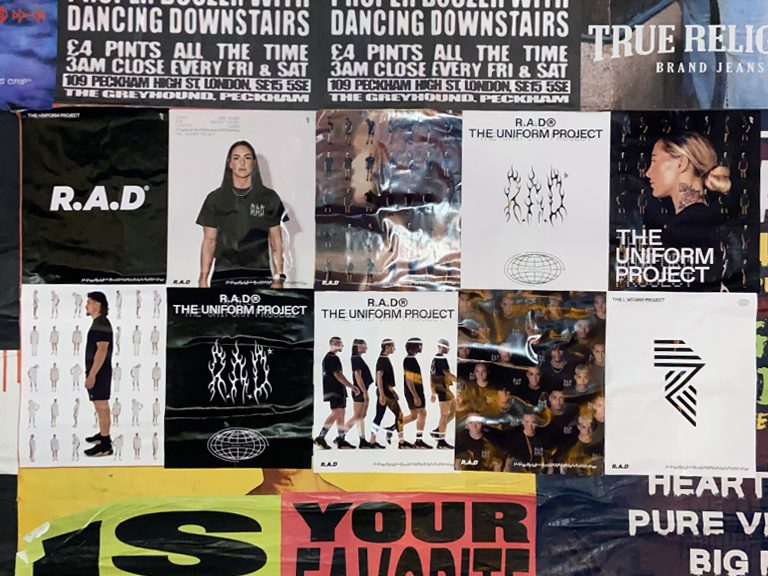
Creative for outdoor campaigns needs to work at multiple scales at the same time. It needs to catch the eye from thirty feet away on a busy street. It needs to deliver its message in three seconds or less of attention. It needs to be legible in variable light conditions and weather. And ideally it needs to create a photo moment that makes a passing pedestrian want to stop and photograph it. These requirements produce different creative solutions than designing for a phone screen.
The best outdoor creative is simple. Not because complex ideas don’t deserve to be made, but because complex execution in a physical environment almost always fails to communicate in the three seconds of attention it gets from a passerby. A single strong visual idea, expressed clearly and boldly, outperforms a nuanced multi-layered campaign message almost every time in outdoor contexts.
Outdoor creative has to stop a moving person in three seconds. If you need to read the fine print to understand what the brand is doing, the design isn’t working for the outdoor context. Simplicity isn’t a limitation. It’s the discipline.
What Creative Marketing Agencies Do That You Can’t Do In-House
Many brands try to run physical marketing campaigns in-house, particularly when they’re budget-constrained. Here’s where in-house programs consistently fall short and what a strong creative marketing agency adds.
Location intelligence. Knowing where to deploy is a skill that takes years of market experience to develop. An in-house marketing team might pick locations that look good on a map but have low actual pedestrian traffic, poor visibility, or cultural mismatch with the brand. An experienced agency has run campaigns in dozens of locations in each market and knows from experience which ones work and which ones don’t.
Staffing and training infrastructure. Finding, vetting, training, and managing brand ambassadors is a full-time operational function. An experienced agency has built that infrastructure over years of running field campaigns. An in-house team building it for the first time makes expensive mistakes: wrong hires, inadequate training, poor supervision, inconsistent execution.
Creative built for physical environments. Designers who primarily work on digital assets often produce outdoor creative that doesn’t work at scale or in variable lighting conditions. Physical marketing creative requires specific knowledge of how large-format printing works, how materials weather in outdoor conditions, and how visual design translates from a computer screen to a wall, a bus shelter, or a standing banner.
Vendor relationships. Printing, installation, vehicle access, and other physical marketing components require vendor relationships that take time to build. An running agency has existing relationships that deliver faster turnaround and better pricing than a brand building those relationships for the first time on a single campaign.
Creative Marketing in New York City
New York has the deepest concentration of creative marketing agencies in the country. But deep doesn’t mean uniform. The New York agency environment spans global holding company networks, mid-size independent creative shops, digital boutiques, PR firms, experiential agencies, and street marketing specialists like us. Each type of agency excels in different campaign formats and for different types of brands.
For brands that need street-level outdoor creative and physical campaign execution in New York, we know the market from the ground up. We know which corridors in which neighborhoods deliver the right audience for which brand categories. We know how foot traffic patterns change by time of day and day of week across Manhattan, Brooklyn, and the other boroughs. We know which locations generate the most organic social media sharing because we’ve watched it happen repeatedly across dozens of campaigns.
New York-specific neighborhoods where creative marketing campaigns have the highest impact: SoHo’s Prince and Spring Streets for premium consumer and fashion brands, Bedford Avenue in Williamsburg for music, lifestyle, and independent brand audiences, the Meatpacking District’s Gansevoort Street corridor for entertainment and premium lifestyle brands, 125th Street in Harlem for broad New York consumer brands with authentic community commitment, and the Arts District in DUMBO for creative-professional audiences.
Creative Marketing in Los Angeles
Los Angeles requires a different creative marketing approach than New York because the city is physically fragmented. You can’t carpet-bomb LA the way you can carpet-bomb a single New York neighborhood. You have to choose your zones strategically and build campaigns that work within each zone’s specific culture and pedestrian behavior.
The Fairfax and Melrose corridor in the Fairfax District is LA’s most concentrated zone for streetwear, youth culture, and music brand campaigns. Abbot Kinney in Venice is the premium lifestyle and wellness corridor. Sunset Boulevard through Silver Lake gives access to the independent music and food culture audience. The Arts District along Traction Avenue and 4th Street reaches creative professionals and design audiences.
Creative for LA campaigns often needs to be bolder than creative for New York because the viewing distance is longer and the pedestrian attention context is different. LA’s camera culture also means that outdoor creative with strong visual quality gets photographed and shared in ways that amplify the campaign’s reach beyond its physical footprint.
Creative Marketing in Chicago
Chicago creative marketing campaigns concentrate in the commercial neighborhood corridors that give access to the city’s distinct community clusters. Milwaukee Avenue through Wicker Park is the highest-value corridor for creative brands targeting Chicago’s independent culture audience. 18th Street through Pilsen gives access to Chicago’s vibrant Latino arts community. Andersonville’s Clark Street gives access to one of the city’s most cohesive independent neighborhood communities.
Chicago campaigns benefit from seasonal concentration. The city’s outdoor marketing season runs May through October, and the festival calendar during that window creates concentrated audience moments that smart campaign planning can exploit. A campaign timed to Lollapalooza or Pitchfork reaches a highly concentrated target audience through both event presence and the outdoor creative running in the surrounding neighborhoods during the event week.
“Near me” matters less than “knows my market.” The right creative marketing agency for a street campaign in Williamsburg knows Williamsburg better than a local agency that’s never run a campaign there. Depth of market knowledge beats proximity every time.
How to Evaluate Creative Marketing Agencies Near You
When you’re searching for creative marketing agencies and evaluating options, here’s the process we recommend.
Start with your specific campaign type. Different agencies specialize in different formats. Be clear about whether you need digital creative, outdoor creative, event production, street team management, or some combination. Match the agency type to the campaign type before you evaluate individual firms.
Request case studies for your specific format. General creative portfolio reviews are less useful than seeing actual examples of the exact campaign type you need. Ask for photos, data, and narrative case studies from campaigns that match your format, market, and brand category as closely as possible.
Ask about their process for the specific campaign you need. How do they scout locations? How do they train ambassadors? How do they handle permits and logistics? How do they document results? Process questions reveal operational maturity that portfolio reviews can’t always show.
Call references from brands in similar categories. Ask past clients about execution quality, more than creative quality. A campaign that looks beautiful in a case study can still underperform if the operational execution was weak. References tell you the full picture.
Meet the people who will actually run your campaign. Many agencies pitch with senior leadership and execute with junior staff. Meet the actual team that will manage your campaign day-to-day before you sign a contract. If you can’t meet them before the engagement starts, ask why.
Red Flags When Evaluating Creative Marketing Agencies
Knowing what to avoid is as important as knowing what to look for. These are warning signs we’ve seen repeatedly in the agency environment that should give you pause before signing a contract.
They can’t show you photos from completed campaigns. Every legitimate marketing agency has a portfolio of documented past work. If an agency shows only renders, mockups, or concept decks without actual implementation photos, they either haven’t executed the work they’re proposing or they executed it poorly. Press for real evidence of real campaigns.
They promise results they can’t guarantee. Physical marketing campaigns have variable outcomes based on weather, foot traffic, audience receptivity, and many factors outside any agency’s control. An agency that guarantees specific engagement numbers or conversion rates for a street campaign is either naive about how physical marketing works or deliberately misleading you. Honest agencies set realistic expectations and define success with you before the campaign launches.
They don’t ask questions about your audience. A creative marketing agency that’s ready to propose a campaign without understanding your audience profile, your geographic targets, and your specific objectives is proposing based on what they know how to sell, not what you actually need. The right agency asks hard questions before they propose anything.
Their references are evasive or unavailable. Ask for references and call them. If an agency can’t provide references from past clients who are willing to speak to their experience, something is wrong. Legitimate agencies maintain relationships with past clients. They encourage reference calls because their past work speaks for itself.
Frequently Asked Questions
What is a creative marketing agency?
A creative marketing agency develops and executes marketing campaigns that combine strategic thinking with strong visual and experiential creative. In the context of physical and outdoor marketing, this means agencies that can conceive campaign ideas, produce creative materials that work in real-world environments, execute in specific geographic locations, and measure results. The best creative ma
Does it matter if the marketing agency is local to my city?
Local knowledge is genuinely valuable but it’s not the only thing that matters. An agency that knows your specific neighborhoods, foot traffic patterns, and local audience dynamics has an advantage over one that doesn’t. But proximity alone doesn’t create expertise. An agency based in another city that has run dozens of campaigns in your target neighborhoods knows those neighborhoods better than a
What types of creative marketing work best for physical campaigns?
Outdoor visual campaigns need bold, simple creative that works at distance and in variable conditions. Street team campaigns need clear, conversational messaging and brand ambassadors who can communicate the brand authentically. Pop-up experiences need creative that works both in person and in photographs. Mobile campaigns need creative that reads at car speed. Each physical format has specific cr
How much do creative marketing agencies charge?
Pricing varies widely by agency size, campaign complexity, and geographic market. Small boutique agencies might charge $50 to $150 per hour for creative work. Mid-size agencies might work on project fees ranging from $5,000 to $100,000. Large agencies command significantly higher fees. For physical campaign execution including production and field management, expect separate line items for creativ
How do I know if a creative marketing agency will actually deliver?
Ask for evidence of past delivery: photos from completed campaigns, client references, and sample reports. A legitimate agency will have documented proof of execution from past campaigns. Ask specifically how they handled a campaign that encountered problems: weather, location issues, or staff challenges. How an agency responds to adversity reveals operational quality better than any portfolio rev
What’s the minimum budget for a meaningful creative marketing campaign?
Depends entirely on format and market. A focused street team deployment in a single neighborhood might be achievable for $2,000 to $5,000. An outdoor poster campaign in a major city might run $3,000 to $10,000. A multi-channel campaign with outdoor creative, street teams, and a pop-up component typically starts at $15,000 to $20,000 in a single market. Underfunded campaigns usually underperform be
Should I hire a local agency or a national agency for my campaign?
For campaigns that need deep local market expertise in a specific city, an agency with genuine knowledge of that city is essential. For multi-city campaigns, a national agency with local operational capability in each target market is typically more efficient than coordinating multiple local agencies. The question isn’t local vs. national. It’s which type of agency has the specific combination of