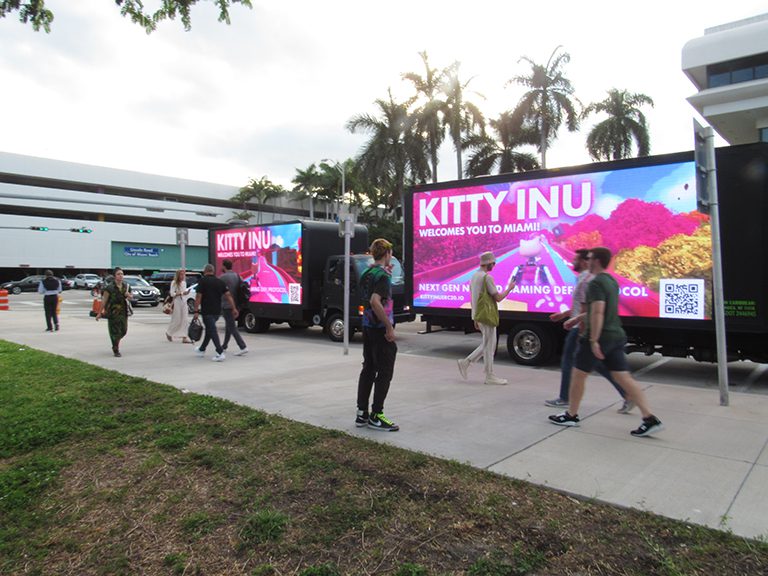
The word “experiential” gets applied to nearly everything in marketing now. Brands call a sponsored table at a conference experiential. They call a branded tent at a festival experiential. They call a digital pop-up quiz experiential. Most of it is not. Real experiential marketing creates a moment that puts a person inside a brand idea rather than broadcasting the brand idea at that person.
A creative experiential agency is one that knows the difference. It brings creative vision to the design of the experience, operational discipline to the execution of it, and analytical rigor to the measurement of what it delivered. That combination is rarer than it should be. Most agencies are strong in one of those dimensions and weak in one or both of the others.
At American Guerrilla Marketing, we build experiential campaigns from the creative concept through the final measurement report. We design experiences that are genuinely surprising, execute them in the real world with the operational precision they require, and document the results with specificity that lets brands understand what they actually got for their investment. We work in New York, Los Angeles, Chicago, Miami, Austin, and markets across the country.
What Creative Experiential Marketing Actually Means
Experiential marketing creates a situation where the consumer is an active participant rather than a passive receiver. The brand builds an environment, an event, or an encounter that the consumer enters and interacts with. The interaction creates a memory. That memory carries brand association in a way that no passive advertisement can replicate.
The creative dimension of experiential marketing is what determines whether the experience is worth having. An experience without a strong creative concept is just logistics. A branded tent in a park with some giveaways is not experiential marketing. It’s a tent. The creative concept is what transforms a physical space or a moment into something that people engage with, photograph, and remember.
Creative in experiential marketing operates across multiple dimensions at the same time. Visual design creates the first impression and the photographic moment. Interaction design creates the specific ways people can engage with the experience. Narrative design creates the story arc of the experience from first encounter to exit. Sensory design considers how the experience uses sound, smell, texture, and taste as well as sight to create a full-spectrum brand impression.
Each of these dimensions requires its own expertise. The agency that does this well has creative leadership with genuine experiential design experience, more than traditional advertising background. A campaign concept that works perfectly as a thirty-second video may be completely wrong as a physical experience. The creative team has to understand three-dimensional space, real human behavior in crowded environments, the difference between what looks good in a render and what works when actual people move through it.
Creative Concepting: Where the Work Actually Starts
The best experiential campaigns begin with a genuine creative question: what would make someone stop, engage, and share? Not what the brand wants to say, but what would make a person in the target audience choose to have this experience rather than walk past it.
We start every experiential engagement with a discovery process that covers the brand’s goals, its consumer’s actual life and behavior, the competitive environment of experiential marketing the consumer already encounters, and the specific market context where the campaign will run. Different neighborhoods, different cities, and different cultural moments create different creative opportunities. What works as a creative concept in SoHo in September works differently in Austin in March.
From discovery, we generate multiple distinct creative directions. Not variations on a single concept, but genuinely different ways to approach the experience design challenge. We present these with enough specificity that the brand team can react to real ideas rather than abstract descriptions. Each direction includes the key experience moment, the visual environment, the interaction design, and the connection to the brand’s goals.
Once a direction is selected, we develop it fully: the physical design of the space or activation setup, the interaction design for how people move through or engage with the experience, the staff briefing that brings the concept to life through the people running it, and the content capture plan that documents the experience and extends its reach through social and earned media.
The creative brief for an experiential campaign has to answer one question before anything else: what will make someone who was not planning to engage with a brand choose to stop, interact, and share? Everything else follows from the honest answer to that question.
Experiential Marketing in New York City
New York is at the same time the most competitive and the most rewarding market for experiential marketing. The city has the highest density of sophisticated consumers who have seen every kind of brand activation. They are also the most likely to share, photograph, and generate press coverage for experiences that genuinely surprise them.
SoHo between Houston and Broome along Wooster and Greene Streets is one of the world’s most scrutinized brand environments. An experiential installation in SoHo gets evaluated by people who have seen everything from every brand. The creative bar is high. The payoff for clearing it is enormous: press coverage, social sharing, and word-of-mouth from consumers who are themselves culturally influential.
Brooklyn offers a different kind of experiential environment. Williamsburg’s Bedford Avenue and North 7th Street area has a community of consumers who are extremely brand-aware and extremely skeptical of inauthentic brand behavior. An experiential campaign that feels genuine and community-appropriate generates strong local word-of-mouth. One that feels like a corporate intrusion generates backlash. The distinction is almost entirely in the creative approach.
The High Line creates a unique experiential environment where a captive audience moves through a defined path at a deliberate pace. Installations or activations along the High Line benefit from extended dwell time and an audience that is already in a discovery and observation mindset. We’ve created experiential moments on and near the High Line that generated significant press coverage and organic social content because the location creates ideal conditions for the kind of surprise and discovery that drives sharing behavior.
Experiential Marketing in Los Angeles
Los Angeles experiential marketing requires thinking about the city’s distinct geography. Without the transit hub density of New York, foot traffic concentrates in specific neighborhoods and destinations rather than flowing through the entire city. Choosing the right location is even more critical in LA than in walkable cities.
Venice Beach’s boardwalk creates one of the highest foot traffic environments in the western United States for street-level experiential activations. The Fairfax Avenue corridor between Beverly Boulevard and Melrose delivers concentrated access to the streetwear, music, and pop culture communities that define influencer-adjacent consumer culture in LA. The Arts District on Traction Avenue has the combination of walkability, creative industry adjacency, and photographic visual quality that makes it ideal for high-design experiential installations.
Experiential Marketing in Chicago
Chicago’s experiential marketing environment is defined by the city’s extraordinary festival culture in the summer months. Lollapalooza in Grant Park, the Chicago Blues Festival, the Chicago Jazz Festival, and dozens of neighborhood festivals create a concentrated season of high-audience-density experiential opportunities from June through September. A brand that shows up with genuinely interesting activation at one of these events reaches an audience that is explicitly in a discovery and engagement mindset.
The city’s walkable neighborhoods also offer strong experiential environments year-round. Wicker Park’s Milwaukee Avenue, the River North gallery district, and the West Loop’s Fulton Market corridor all generate consistent foot traffic from demographics that respond well to brand experiences that reflect genuine creative quality.
Chicago’s summer festival season is one of the most concentrated experiential marketing opportunities in the country. A brand with the right creative approach and the operational discipline to execute it has access to millions of engaged consumers across a twelve-week window.
Measuring Experiential Marketing Results
One of the persistent criticisms of experiential marketing is that it’s hard to measure. That criticism is sometimes valid and sometimes an excuse for agencies that don’t want to be accountable. The truth is that experiential marketing is very measurable when you build measurement into the campaign from the beginning rather than trying to reconstruct it afterward.
The metrics that matter most depend on the campaign’s goals. For brand awareness campaigns, the primary metrics are reach (how many people physically encountered the experience plus how many people were reached by organic social content generated from it), brand recall lift in the market where the campaign ran, and press coverage generated. For campaigns with a direct trial or sales component, we also track samples distributed, product sold at or connected to the experience, and retail sales lift in the surrounding area during and after the activation period.
We build data collection into every campaign we run. Brand ambassadors count engagements. Content capture teams document photos and videos. Staff collect email addresses or social follows where the experience includes a digital component. We pull organic social content metrics from the hashtags and location tags associated with the activation. We compile all of this into a post-campaign report that gives the brand a complete picture of what the campaign delivered.
Integrating Experiential with Broader Campaign Strategy
Experiential marketing delivers its best results when it’s integrated with the brand’s broader campaign strategy rather than treated as a standalone tactic. An experiential activation that runs in isolation generates a spike of attention that dissipates quickly. An experiential activation that is synchronized with digital media, OOH advertising, retail presence, and influencer outreach becomes an anchor for a much larger campaign.
The integration works in both directions. Other campaign elements drive consumers to the experiential activation: digital advertising builds anticipation, OOH advertising in the surrounding neighborhood creates awareness of the experience’s location and timing, influencer outreach brings relevant audiences to the activation who then generate content that amplifies the brand message further. The activation then feeds back into the broader campaign with organic social content, press coverage, and the earned media that physical experiences generate at a rate no other format can match.
We build integration planning into every experiential engagement from the beginning. The experiential activation should be the most memorable moment in a campaign that surrounds it with supporting touchpoints. The combination of the physical moment and the surrounding media context creates a brand impression that is significantly stronger than either format alone.
For brands launching a new product, the ideal sequence is: paid digital and OOH advertising builds awareness in the target market two to three weeks before the experiential activation. The activation creates the biggest brand moment of the campaign window and generates organic social content and press coverage. Retail placement and additional digital advertising sustain momentum through the weeks following the activation. This sequence uses each format’s strengths and creates a cumulative effect that none of the formats could generate independently.
Experiential marketing fails at the creative level more often than at the operational level. A concept that isn’t genuinely interesting to the target consumer will not generate engagement regardless of how well it’s executed. You can have the best-trained staff, the most premium build, and the most prominent location in the city. If the experience itself doesn’t give people a reason to engage, they won’t.
This is why the creative brief for an experiential campaign has to be rigorous. It can’t be satisfied by a visual treatment and a tagline. It has to answer specific questions: What does someone experience when they first encounter this activation? What makes them choose to engage rather than walk past? What happens during the engagement that creates a memory? What is the specific moment that makes them want to take a photo? What story do they tell about this when they describe it to someone else?
We answer those questions before we design anything. And we push back on creative directions that can’t answer them clearly. A direction that requires extensive explanation to understand what the experience will feel like is not yet a direction. It’s a concept draft. The fully developed direction should make the experience so clear and compelling that everyone on the team is excited to build it and confident that the target consumer will respond to it.
Frequently Asked Questions
What is a creative experiential agency?
A creative experiential agency designs and executes brand experiences that put consumers inside a brand idea rather than broadcasting that idea at them. The creative dimension means the agency brings genuine design and concept development to the experience, more than operational logistics. The best creative experiential agencies are strong at both the creative vision and the real-world execution t
How is experiential marketing different from event marketing?
Event marketing typically involves a brand sponsoring or hosting an event where people gather. Experiential marketing creates an environment or encounter where the consumer actively participates in the brand experience. The distinction is in the level of engagement: an event puts people in the same space as a brand; an experiential activation puts people inside the brand’s world and invites them t
What makes an experiential campaign generate social media content?
Social media sharing from experiential campaigns requires a specific visual and emotional trigger. The experience has to create a moment that feels genuinely worth sharing: visually distinctive, emotionally resonant, or surprising enough that the person wants to show it to someone else. We design photo opportunities into every experiential campaign, not as an afterthought but as a primary design r
What’s a realistic budget for a creative experiential campaign?
Budget ranges widely based on format, scale, and market. A street-level activation with a branded setup and a small team can run $5,000 to $20,000. A fully produced pop-up experience in a premium neighborhood can run $30,000 to $150,000. A large-scale immersive installation with significant build components can exceed $250,000. We always start with goals and work backward to the right format and b
How long does it take to plan and execute an experiential campaign?
Street-level activations can be planned and executed in three to four weeks. Pop-up experiences need six to ten weeks for location scouting, design, build, staffing, and traffic generation. Large-scale immersive experiences can require three to six months of production time. The general rule is that the more complex the build, the more lead time you need. Starting early almost always improves the
What markets does American Guerrilla Marketing run experiential campaigns in?
We run campaigns in New York City, Los Angeles, Chicago, Miami, Austin, San Francisco, Washington DC, Boston, Philadelphia, and other major markets. We also execute campaigns in secondary markets for national campaigns. Contact us with your target geography and we’ll confirm capability and market-specific recommendations.
How do you measure the ROI of an experiential marketing campaign?
We build measurement into campaigns before they launch, not after. Metrics depend on goals: for awareness campaigns we measure reach, brand recall lift, and earned media. For trial-focused campaigns we measure samples distributed, retail lift, and conversion rates. For social content campaigns we measure organic posts generated, follower growth, and content reach. Experiential ROI is measurable wh