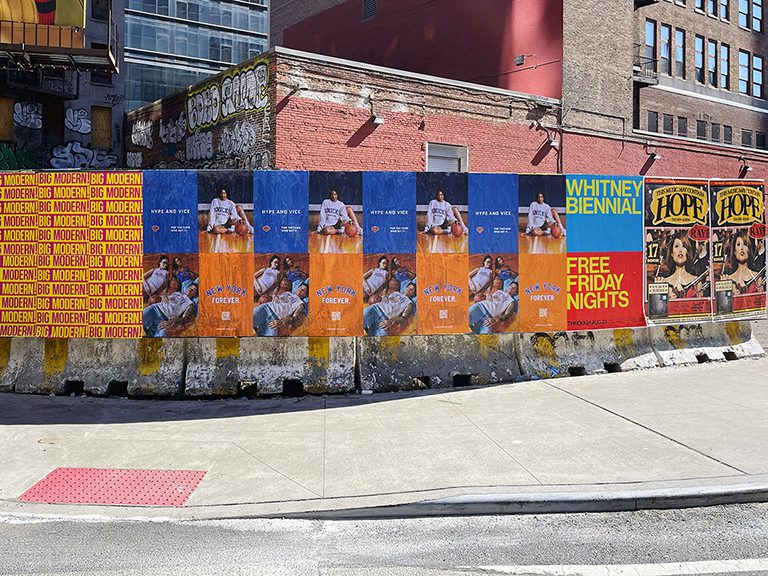
Cultural marketing is not a strategy you can fake. Brands that try to speak to communities they don’t understand get called out publicly and quickly. The ones that do it right build loyalty that lasts well past a single campaign cycle. The difference between those two outcomes is almost always the agency behind the work.
A cultural marketing agency doesn’t just translate your message into a different language or swap out the faces in your stock photography. It understands the actual texture of a community. Its rituals, its values, its humor, its history, its skepticism toward brands. That understanding shapes everything from the format of the campaign to where it runs to who delivers it.
At American Guerrilla Marketing, cultural marketing is central to everything we build. We work in New York, Los Angeles, Chicago, Miami, Houston, and markets across the country. Each of those cities contains dozens of distinct cultural communities with their own rules and their own expectations. We know how to move in those spaces without stepping wrong.
Most brand marketing is designed to reach an audience. Cultural marketing is designed to belong to one. That’s a significant difference in orientation. An audience receives a message. A community gets something that feels like it came from inside, or at least from someone who understands what being inside feels like.
A cultural marketing agency starts with the community rather than the brief. Before any creative gets made, the agency has to understand who the target community is, what they care about, what they’re skeptical of, what voices they trust, and how they consume information. The answers to those questions determine every creative decision that follows.
Execution for cultural marketing often happens in physical spaces rather than just digital ones. Cultural communities often have geographic anchors. In New York, the Dominican community in Washington Heights has Washington Heights. The Haitian community in Brooklyn has Flatbush Avenue. The West African community in the Bronx has Jerome Avenue. Black culture in Chicago has Bronzeville. Latino culture in LA has East LA and Boyle Heights. Cultural marketing that shows up in those specific places carries a different weight than brand presence in a generic commercial corridor.
The agency also has to think carefully about who delivers the message. A brand ambassador who is genuinely part of the community creates a different conversation than one who looks like they drove in from the suburbs for the day. Community trust is earned at the individual level before it extends to the brand level. The person standing in front of the brand is the first filter.
The Communities We Work With
Cultural marketing for us means deep engagement with the specific communities where our clients’ consumers live. We don’t have a single cultural marketing playbook that we apply to everyone. Each community requires its own approach.
Community
Key Markets
Effective Formats
Black American communities
New York, Chicago, Atlanta, Houston, LA
Street-level sampling, community event integration, OOH in culturally relevant corridors
Latino communities
New York, Los Angeles, Miami, Chicago, Houston
Neighborhood events, radio and in-person sampling, family-oriented activations
South Asian communities
New York, New Jersey, Chicago, Houston
Cultural festivals, community gathering sponsorships, targeted OOH
AAPI communities
New York, Los Angeles, San Francisco, Houston
Event integration, targeted neighborhood sampling, community partnerships
Authentic brand partnerships, community space activations, limited-distribution product
Why Cultural Marketing Fails When Brands Get It Wrong
Cultural marketing done wrong is worse than no cultural marketing at all. A brand that attempts to speak to a community without understanding it signals one of two things: carelessness or cynicism. Neither one builds loyalty. Both erode it.
The most common failure mode is visual tokenism. This is when a brand swaps out their standard campaign imagery to include more diverse faces without changing anything substantive about the campaign’s message, format, or distribution. Communities see through this immediately. It communicates that the brand wanted to appear culturally aware without doing the actual work of cultural engagement.
A second common failure is associating with cultural moments or symbols without earning the right to use them. Music, art, sports, language, and visual references that belong to a community are not open assets for any brand that wants to appear relevant. When brands borrow without relationship, they extract cultural capital from a community without giving anything back. The community notices and reacts.
A third failure is inconsistency. A brand that shows up heavily in a community during Black History Month and then disappears for the rest of the year has not made a genuine cultural commitment. It has made a seasonal one. Communities are more sophisticated than that and they expect brands to understand the difference.
Cultural marketing only works when the brand has something real to offer the community. Presence, product relevance, economic participation, or genuine relationship. Without something real, cultural marketing is just appropriation at scale.
Street-Level Cultural Marketing in New York City
New York is the most culturally complex city in the country. The five boroughs contain hundreds of distinct communities, each with their own geography, their own institutions, and their own relationship to brands and marketing. Getting cultural marketing right in New York requires block-by-block knowledge that no outsider can manufacture.
In Washington Heights, the Dominican community’s commercial life centers on 181st Street and upper Broadway. A brand that wants to build credibility there doesn’t do it through a generic street team. It does it through relationships with local businesses, presence at community events like block parties and cultural festivals, and creative that reflects the neighborhood’s visual language rather than importing a corporate look that signals outsider status.
In Crown Heights, Brooklyn, the Caribbean community’s cultural anchors include the West Indian American Day Parade, local churches, and Caribbean-owned restaurants and shops along Eastern Parkway and Utica Avenue. Brand presence in Crown Heights means showing up to those community touchpoints with something that genuinely fits rather than something that interrupts.
We’ve built campaigns in both of these communities and dozens of others across the city. Each one required a different approach. Each one was more effective because we knew the neighborhood before we showed up with a brand.
Cultural Marketing in Los Angeles
Los Angeles cultural marketing operates across multiple distinct geographies. East LA’s Boyle Heights is one of the most historically Latino communities in the country. The cultural marketing that works there is different from the cultural marketing that works on Crenshaw Boulevard in South LA’s Black community or on Vermont Avenue in Koreatown or on Sawtelle Boulevard in Little Osaka or on Fairfax Avenue where street culture and Jewish community life overlap in unexpected ways.
We’ve built campaigns across these communities. The consistent finding is that physical presence in the neighborhood, executed by people who understand the neighborhood, outperforms any media spend targeting those same communities from the outside. You can buy digital exposures in front of a demographic. You can’t buy the credibility of actually being there.
Cultural Marketing in Chicago
Chicago’s cultural geography is sharply defined by neighborhood. The South Side’s Bronzeville carries a century of Black American cultural history and has been a center of Black arts, music, and community life since the Great Migration. Pilsen’s 18th Street is the anchor of Chicago’s Mexican-American community, with murals, markets, and cultural institutions that have made it one of the city’s most distinctive neighborhoods. Chinatown on Wentworth Avenue and Argyle Street’s Vietnamese community in Uptown represent the city’s significant Asian communities.
Cultural marketing in Chicago works best when it shows up in these neighborhoods on the community’s terms. That means participating in existing community events rather than creating parallel branded events. It means working with neighborhood institutions rather than around them. It means spending money in the community as well as marketing to it.
How We Approach Cultural Marketing Campaigns
Every cultural marketing engagement we take starts with a listening process. We talk to community members, local business owners, cultural institutions, and people embedded in the community’s day-to-day life. We learn the context before we build anything. This process takes time and cannot be shortcut.
We then build a campaign architecture that matches the community’s communication patterns. In some communities, that means heavy reliance on word-of-mouth and personal relationship networks rather than broadcast media. In others, it means engagement with specific social media platforms or content formats that are dominant in the community. In most cases, it means physical presence in specific locations rather than digital-only presence.
We source and vet brand ambassadors from within the communities we’re targeting. A brand ambassador from the community is worth five from outside it. They know the right places, the right people, and the right way to have a conversation that doesn’t feel like a sales pitch. We build briefing materials specific to each community context so the people representing the brand understand why they’re there and what they’re building.
We document the work and measure it against meaningful metrics rather than vanity metrics. Community engagement is not measured in exposures. It’s measured in conversations, in product trial, in sales lift, and in the qualitative signals that a brand is being talked about in the right way in the right places.
The test of cultural marketing is what a community says about a brand when no one from the brand is in the room. That conversation is shaped by everything the brand has done in that community over time, not by a single campaign.
Cultural Marketing in Miami and Houston
Miami’s cultural environment is anchored by its Cuban, Haitian, Colombian, and Jamaican communities, each with distinct geographic and institutional anchors. Little Havana’s Calle Ocho is one of the most culturally specific commercial corridors in the country. Cultural marketing here means understanding the particular character of Cuban-American culture in Miami, which is different from Cuban culture in New York or Los Angeles. The generational layers matter. The relationship to Miami’s music scene, its food culture, and its visual identity all shape how brands should show up.
Haitian culture in Miami is centered in Little Haiti, along NE 2nd Avenue, with cultural institutions and community gathering points that give structure to the community’s civic life. Brands that want to reach this community need to understand its distinct relationship to Haitian identity, its pride in Haitian heritage, and its particular skepticism toward brands that engage only during crisis moments rather than as consistent community partners.
Houston’s cultural diversity is among the most complex in the country. The city has one of the largest Vietnamese-American communities in the US, centered in the Midtown area. It has a massive and diverse Latino community across multiple neighborhoods. It has significant West African, Indian, and South Asian communities. It has one of the most prominent Black American communities in the South. Each of these communities has its own geography, its own institutions, and its own expectations for how brands should engage.
We’ve built campaigns in both Miami and Houston that required community-specific approaches rather than generic multicultural campaigns. The results confirm what we’ve seen in every market: the more precisely a campaign is calibrated to a specific community, the better it performs within that community.
The Role of Physical Space in Cultural Marketing
Cultural marketing works best when it shows up in the physical spaces that a community considers its own. This is one of the reasons street-level activation is so central to effective cultural marketing. Digital advertising can reach a demographic. Physical presence in a community’s neighborhood is something different entirely.
When a brand sets up in front of a well-regarded community business on a Friday evening in Pilsen, it’s participating in the neighborhood’s social life. When a brand shows up at a Caribbean festival in Crown Heights, it’s being present at a moment of genuine community celebration. When a brand sponsors a youth sports event in Harlem’s Marcus Garvey Park, it’s investing in something the community already cares about. Each of these formats creates a different kind of engagement than any digital touchpoint can.
The location selection process for cultural street-level marketing is one of our most rigorous internal practices. We map the geographic anchors of the target community, identify the highest-value moments in the community calendar, and select locations where the brand’s presence will be welcomed rather than intrusive. Getting this right requires knowledge that you can only build through experience in the specific neighborhoods, not from demographic data alone.
We also pay attention to the economic dimension of physical presence. A brand that operates in a community’s spaces but doesn’t spend money within that community is extracting value without contributing to it. We encourage clients to hire locally, purchase materials from local vendors where possible, and consider how the campaign can put money into the neighborhood rather than just taking attention out of it. Communities notice which brands understand this reciprocity and which ones don’t.
Choosing the Right Cultural Marketing Agency
The criteria for choosing a cultural marketing agency are specific. Generic marketing experience is not enough. You need an agency that has genuine relationships in the communities you want to reach, that has built and executed campaigns in those communities before, and that can produce evidence of results.
Ask the agency to describe a campaign they ran in a specific cultural community in a specific city. Ask them who the brand ambassadors were and how they were selected. Ask them what the community response was. Ask them what they got wrong and how they corrected it. An agency with real cultural marketing experience will have honest, detailed answers to all of these questions. An agency without that experience will give you generic answers about diversity and inclusion without specific operational evidence.
Also ask about the agency’s internal composition. A team that is itself culturally diverse is better positioned to build culturally authentic campaigns than a team that is demographically homogeneous. This isn’t about optics. It’s about knowledge. The understanding of a community that comes from being part of it is not transferable through briefing documents alone.
Frequently Asked Questions
What is a cultural marketing agency?
A cultural marketing agency specializes in building brand campaigns that are genuinely relevant to specific cultural communities rather than applying generic marketing approaches to diverse audiences. The work requires deep knowledge of community values, communication patterns, geographic anchors, trusted voices, and the appropriate formats for each community. It’s different from multicultural mar
How is cultural marketing different from multicultural marketing?
Multicultural marketing typically refers to reaching audiences across racial, ethnic, and cultural groups through targeted media and representation. Cultural marketing goes deeper. It involves understanding the specific values, rituals, language, and expectations of a particular community and building campaigns that feel like they belong to that community rather than just featuring it. Cultural ma
Why do brands need a specialized cultural marketing agency?
Because general marketing experience doesn’t transfer automatically to cultural contexts. Communities have specific expectations about how brands should engage with them. Getting it wrong is worse than not engaging at all. An agency with genuine experience in specific cultural communities brings the knowledge, the relationships, and the operational capabilities that successful cultural marketing r
What markets does American Guerrilla Marketing work in for cultural campaigns?
We work in New York, Los Angeles, Chicago, Miami, Houston, Atlanta, Washington DC, Philadelphia, San Francisco, and other major US markets. Each city has its own distinct cultural communities with their own geographies. We bring market-specific knowledge to every campaign rather than applying a national template to local contexts.
How do you find and vet brand ambassadors for cultural campaigns?
We source brand ambassadors from within the communities we’re targeting. We look for people who are genuinely embedded in the community’s social fabric, who understand the brand’s product and message, and who can have authentic conversations rather than scripted pitches. Sourcing from within the community is non-negotiable for credible cultural marketing.
What does a cultural marketing campaign typically cost?
Campaign budgets depend on the scale of the activation, the number of markets involved, and the formats employed. Street-level cultural activations in a single market can run from $5,000 to $30,000 for a well-executed deployment. Multi-market campaigns with event integration and OOH components scale significantly from there. Contact us with your specific goals and we’ll give you an honest budget r
How do you measure the success of a cultural marketing campaign?
We measure cultural marketing campaigns against metrics that actually reflect community engagement: conversations initiated, samples distributed, sales lift in targeted neighborhoods, community event participation, organic social content generated by community members, and qualitative feedback from community decision-makers. Impression counts are less meaningful for cultural marketing than indicat