
September 7, 2026
Brand Mascot Agency | American Guerrilla Marketing
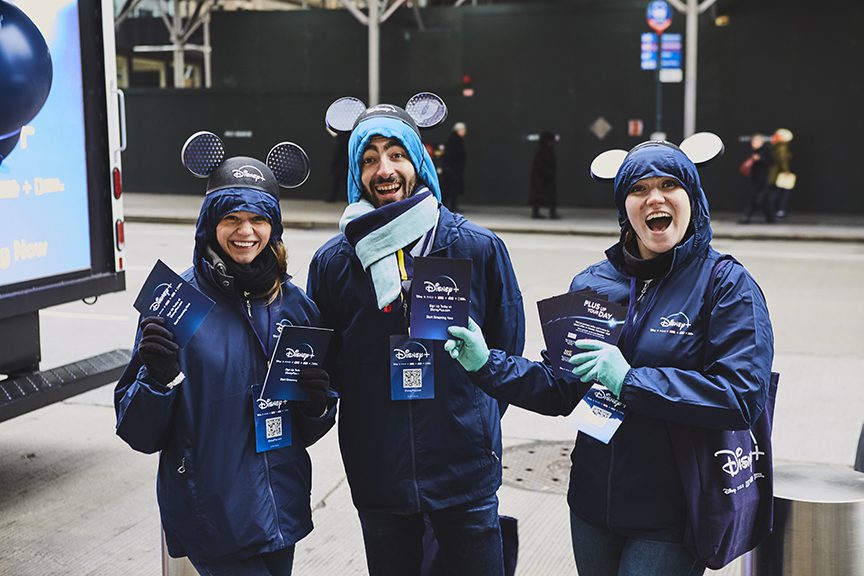
Brand mascots are one of the oldest and most effective tools in marketing. Tony the Tiger. The GEICO Gecko. The Michelin Man. Mr. Clean. These characters have driven brand recognition across generations in ways that standard advertising rarely achieves. A well-designed mascot becomes instantly associated with the brand it represents, and that association builds over time rather than decaying the way campaign-specific messaging does.
But a mascot that only lives on packaging or in digital ads is leaving most of its potential unrealized. A brand mascot that shows up in the real world, at events, on streets, at retail, creates interactions that are genuinely memorable. It creates photo opportunities. It generates earned media. It gives consumers a reason to stop, engage, and share. A great mascot in costume in the right environment does more for brand awareness in a single afternoon than a significant paid media investment.
At American Guerrilla Marketing, we work with brands to bring mascots to life in the real world. We help design mascot concepts, manage costume production, train the people inside the costumes, and deploy mascot characters across markets in ways that generate real brand impact. This guide covers everything you need to know about working with a brand mascot agency.
What Makes a Brand Mascot Work
Not every mascot succeeds. The ones that fail usually share one of a few common problems. They’re visually generic: a character that could belong to any brand in any category. They’re emotionally flat: they don’t have a personality that comes through in interactions. They’re executed inconsistently: the character looks different across different applications, or the people performing the character bring different energies that create a fragmented impression.
The mascots that build real brand equity share a different set of characteristics. They have a distinct visual identity that is immediately recognizable and unique. They have a consistent personality that comes through whether the character is in a digital ad, on a package, or walking around Times Square. They’re deployed in contexts where they create genuine surprise and delight rather than just appearing in expected places. And they’re performed by people who understand the character deeply and bring it to life with consistency.
The visual design comes first. A mascot character has to be visually communicative: at a glance, the character should tell you something about the brand’s personality and category. A mascot for a children’s food brand should feel warm, approachable, and fun. A mascot for a performance sports brand should feel energetic and driven. A mascot for a natural products brand should feel clean, honest, and connected to nature. The visual design is doing brand communication even before anyone interacts with the character.
Mascot Deployment Formats That Generate Real Impact
| Deployment Format | Best For | Key Considerations |
|---|---|---|
| Street-level character appearance | Brand awareness, organic social content generation | High-traffic location selection, character performer quality, branded handler |
| Retail event appearance | Product launches, seasonal promotions, retail partnerships | Retailer coordination, product connection in the interaction, photo opportunity setup |
| Festival and event integration | Audience-aligned events, seasonal campaigns | Event organizer coordination, crowd management, character rest rotation |
| School and community event appearance | Child-oriented brands, family products, community-position brands | Age-appropriate interaction design, adult supervision coordination, soft character requirements |
| Sports venue and stadium presence | Sports-adjacent brands, high-volume visibility | Venue authorization, branded giveaway coordination, crowd volume management |
| Multi-city mascot tour | National campaigns, product launches across markets | Logistics across markets, consistent performer briefing, documentation standards |
The Design and Development Process
Creating a new brand mascot character starts with brand positioning work. Before any sketches get made, we need to understand what the brand stands for, who its primary consumer is, what emotional space the brand wants to occupy, and what role the mascot will play in the overall marketing strategy. A mascot that’s primarily for children’s retail has different design requirements than one that primarily appears in street-level campaigns targeting young adults.
The concept design phase generates multiple distinct character directions. More than different versions of the same basic idea, but genuinely different approaches to how the mascot concept could be expressed visually. We present these with rationale explaining how each direction serves the brand’s communication goals. The brand team selects and refines the direction that fits best.
From approved concept, we move to full character development: the character’s design across multiple views, the defined color palette that will be consistent across all applications, the character’s personality and voice guidelines, and the costume specifications for the physical manifestation of the character. The costume brief goes to a specialty costume fabricator with experience in performance-quality character suits.
Costume quality matters enormously. A cheaply made costume communicates cheaply made brand. The character’s physical reality in the world is the brand’s physical reality in the world. A mascot costume that looks credible, moves well, holds up through a full day of use in varying weather conditions, and photographs well from all angles is a significant investment. It’s also a much smaller investment than the brand damage a low-quality costume creates.
A brand mascot is not decoration. It is a brand ambassador in the most literal sense. The character’s every interaction, every photograph, every encounter builds or erodes brand perception. Invest in quality at the costume level and the performer level. Both matter more than most brands expect.
Training Mascot Performers
The person inside the mascot costume is the most important variable in the mascot’s impact. A great costume performed by a flat, disengaged performer creates a brand interaction that is uncomfortable rather than engaging. A good costume performed by someone with genuine physical expressiveness, timing, and warmth creates brand moments that people remember and photograph and tell their friends about.
Mascot performance is a specific skill. It requires physical coordination in a restricted environment, the ability to communicate expression and personality through body language and movement alone (most mascot costumes don’t allow facial expression), awareness of the character’s personality and the brand values behind it, crowd awareness and management skills, and stamina for working in a hot, enclosing costume for extended periods.
We train mascot performers before every deployment. That training covers the character’s personality and backstory, brand values and key messages, interaction techniques for different audience types (children versus adults, individual encounters versus crowds), safety protocols, and the physical demands of the suit. We also require costume rotation and rest breaks to maintain performance quality and performer wellbeing throughout a full deployment day.
Deploying Mascots in New York, Los Angeles, and Chicago
Mascot deployment in major cities requires specific operational knowledge. In New York, high-impact mascot deployment locations include Times Square, where tourist volume creates extraordinary photo opportunity density, but also high-traffic neighborhood locations that create more authentic brand moments for local consumers. Union Square, the High Line, and the area around Bryant Park are all strong deployment zones depending on the brand’s target consumer.
In Los Angeles, the Venice Beach Boardwalk is one of the country’s highest foot traffic destinations for pedestrian street activation. Hollywood Boulevard, the Santa Monica Promenade, and the Grove shopping complex all deliver high volumes of the tourist and local traffic mix that makes mascot appearances generate organic social content efficiently.
In Chicago, Navy Pier, the Millennium Park area around the Bean, and the Riverwalk during summer months all deliver excellent foot traffic for mascot appearances. Grant Park during festival season creates an extraordinary deployment environment where a brand mascot can encounter tens of thousands of people in a single day.
The best mascot moments are the ones that feel genuinely spontaneous even when they’re carefully planned. A character who shows up exactly where a target audience is, at exactly the right moment, with exactly the right energy, creates the kind of brand memory that media advertising simply cannot replicate.
Measuring Mascot Campaign Impact
Mascot campaigns generate measurable impact across several dimensions. The most immediate metrics are direct: how many people interacted with the character, how many photos were taken and shared, how many branded giveaways were distributed in connection with the appearance, and what geographic reach the organic social content generated.
We also track earned media coverage from mascot appearances. A well-executed mascot deployment in a high-profile location often generates press coverage from local publications, blogs, and social accounts with significant following. This earned media amplifies the campaign’s reach beyond the physical footprint of the deployment itself.
For mascot campaigns connected to retail or product launches, we track sales lift in markets where mascot appearances ran versus control markets. The brand recall that a character interaction creates translates to purchase behavior at measurably higher rates than passive advertising does. That connection is traceable when the retail data is analyzed correctly.
Mascot Characters in Social Media and Digital Contexts
A brand mascot that only appears in real-world deployments is missing a significant amplification opportunity. The best mascot programs use real-world appearances to generate digital content that extends the character’s reach far beyond the people physically present during the deployment.
Every mascot deployment we run includes a content strategy. This means identifying the moments during the deployment that will generate the most compelling social content, positioning a photographer or videographer to capture those moments, and developing a distribution plan for the resulting content across the brand’s social channels. A single mascot deployment that generates fifty organic social posts from passersby, ten high-quality content pieces for the brand’s own channels, and two or three press photos for earned media outreach has multiplied its impact many times over the physical footprint of the appearance.
Short-form video is the highest-performing mascot content format in 2025. A mascot character interacting with real people on a real street, capturing the genuine surprise and delight of those encounters, performs extraordinarily well on platforms like TikTok and Instagram Reels. The authenticity of those interactions is exactly what the algorithm rewards. A mascot character staging posed interactions for social content generates far less engagement than one that’s captured doing something genuine that you couldn’t have scripted in advance.
We brief our mascot performers on content awareness: understanding where the content capture team is positioned, knowing how to create interactions that are both genuinely engaging and visually strong from the camera’s perspective, and sustaining performance energy consistently regardless of whether the camera is pointed at the character at any given moment. This awareness doesn’t make the interactions less authentic. It makes the authentic moments more reliably captured.
Building a Long-Term Mascot Strategy
The brands that get the most out of mascot investment are the ones that commit to consistent deployment over time rather than treating it as a one-time campaign element. A mascot that appears once at a product launch generates a moment. A mascot that appears quarterly in key markets across a two-year period builds the kind of character familiarity that starts to function like a brand asset rather than a campaign tactic.
Long-term mascot strategy requires thinking about the character’s development over time. What does the character do in year two that it didn’t do in year one? How does the character show up across different seasonal contexts? How does the character’s personality develop through repeated exposure without losing the consistency that makes it recognizable? These are creative questions that benefit from a partner who has built the character’s foundation and understands its dimensions.
We work with brands on mascot calendars that plan character appearances across the year around peak marketing moments, product launch windows, seasonal campaigns, and events where the target audience gathers. This planning approach ensures the character maintains a consistent presence in the market rather than disappearing between campaigns and losing the recognition it built during previous deployments.
How to Choose a Brand Mascot Agency
When evaluating brand mascot agencies, look for demonstrated experience across both the design and deployment dimensions of mascot work. Some agencies are strong at character design but have no operational experience managing costume performers in the field. Others have staffing infrastructure for character appearances but can’t help with the character design and development process. You want an agency that has genuine capability in both areas.
Ask to see examples of character design work and deployed costume work from previous campaigns. The design work should demonstrate a range of visual approaches, more than one style applied to different briefs. The deployment work should show professional costume quality, clearly trained performers, and evidence of real audience engagement rather than posed promotional photos.
Ask about performer sourcing and training protocols. How does the agency find and evaluate mascot performers? What does the pre-deployment training process look like? How does the agency handle situations where a performer isn’t meeting quality standards during a deployment? These operational details reveal whether the agency treats mascot deployment as a serious discipline or as a staffing commodity.
Frequently Asked Questions
What does a brand mascot agency do?
A brand mascot agency handles the design, production, and deployment of brand mascot characters. On the creative side, this means developing the character concept, visual identity, personality guidelines, and costume specifications. On the operational side, it means sourcing and training mascot performers, managing costume logistics, selecting deployment locations, coordinating appearances, and delivering campaign reporting.
How much does a brand mascot costume cost to produce?
Professional mascot costume production costs range from $3,000 to $20,000 depending on the character complexity, materials, and features. Basic foam-and-fabric characters are at the lower end. Full-body suits with moving features, ventilation systems, and multiple costume copies for tour formats are at the higher end. The costume is a long-term investment: a well-made costume can last for years of regular use when properly maintained and stored.
How do you find and train mascot performers?
We recruit mascot performers from the performance arts community, including dancers, physical comedians, and street performers who have the physical expressiveness and stamina that mascot work requires. We also look for performers who fit the specific demographic and energy profile of the character. Training covers character personality, brand values, interaction techniques, safety protocols, and performance consistency.
How long does it take to develop a new brand mascot?
From initial brief to first deployment, mascot development typically takes six to twelve weeks. The timeline includes concept development (two to three weeks), client review and revision (one to two weeks), costume specification and production (four to six weeks), and performer sourcing and training (one to two weeks). Complex characters with multiple costume copies or special features require more time.
Can brand mascots work for adult-oriented brands, more than children’s products?
Absolutely. Brand mascots work across a wide range of brand categories and consumer demographics. The character design and personality simply need to match the brand’s positioning and its target consumer. A mascot for a premium spirits brand looks and behaves completely differently from a mascot for a children’s cereal brand. The fundamental effectiveness of character-based brand identification applies across different audiences when the character is developed appropriately.
What are the best locations for mascot appearances?
The best locations combine high foot traffic with audience alignment with the brand’s target consumer. Times Square, major transit hubs, shopping districts, parks during peak weekend hours, and events where the target audience gathers are all strong deployment environments. We select locations based on the specific brand’s consumer profile and campaign goals rather than applying a generic “high traffic” approach.
Do mascot appearances work better at events or on the street?
For more on this, explore our experiential marketing.
For more on this, explore our street team activations.
Both formats work well in different ways. Event appearances concentrate the audience and create a captive environment where extended engagement is natural. Street appearances create surprise moments that can generate organic social sharing because people did not expect to encounter the character. Many effective mascot campaigns combine both formats: street appearances to build organic discovery and event appearances to create deeper engagement.

Ready to Run Your Campaign?
Call us or email us. We’ll tell you exactly what we can do in your market and what it costs.
Related Services
Explore similar advertising solutions offered by American Guerrilla Marketing.
American Guerrilla Marketing — Los Angeles
Street-level campaigns in Los Angeles and nationwide. Wheatpasting, LED trucks, street teams, and more.
(646) 776-2770
Related Articles
-
Street Poster Advertising Ottawa: A Complete Campaign Guide
September 17, 2026
-
Activation Marketing: How Brands Win at Street Level
September 13, 2026
-
Experiential Marketing Firms Chicago | American Guerrilla Marketing
September 12, 2026
-
Pop Up Experiential
September 12, 2026
-
Mobile Pop Up
September 12, 2026