College promotions are among the most rewarding and most misunderstood categories in marketing. The demographic opportunity is enormous: tens of millions of young adults concentrated in accessible geographic areas, forming their first independent brand relationships, embedded in dense social networks that amplify positive brand experiences rapidly. The execution challenge is equally significant: these same students have developed highly sophisticated defenses against the kind of marketing that reaches most other demographics.
At American Guerrilla Marketing, based at Industry City in Brooklyn, our team has built college promotions for brands across categories that understood the ground-level reality of reaching this audience. Not digital campaigns dressed up as college marketing, but physical, peer-driven, real-world promotions in the spaces where students actually live and the peer networks through which they actually make brand decisions.
This article covers the tactics that work in college promotions and the principles that separate campaigns that earn genuine student loyalty from those that simply spend budget without building relationships.
The Core Principle of Effective College Promotions
Every effective college promotion operates on the same core principle: meet students where they are, with something genuine, through people they trust. This principle sounds simple but its execution requires specific knowledge of where students physically gather, what they genuinely value, and who in the campus social network they actually trust.
Where students are: not in their email inbox, not in a social media feed they are passively scrolling, but in physical spaces. The pedestrian corridor from their dorm to class. The dining hall at noon. The coffee shop where they write papers. The tailgate parking lot before the football game. The bar around the corner on Thursday night. These are the physical locations where college promotions earn real attention.
What they genuinely value: not branded pens and keychains, but products they will actually use, experiences worth attending, offers with real economic value, and encounters that make them feel seen as the specific people they are rather than as a demographic target. When a promotion delivers genuine value, students share it immediately. When it delivers generic swag, they take it to be polite and forget it within minutes.
Who they trust: primarily their peers. Other students with real opinions and genuine product experience. Student ambassadors who belong to the campus community and represent the brand not as a job but as a genuine endorsement. The closer a promotion gets to simulating genuine peer recommendation, the more effective it is.
The College Promotion Toolkit
Our team deploys several core tactics in college promotions:
Student Ambassador Programs: The most important infrastructure for sustained college presence. Actual students representing the brand to their peers. Our ambassador service includes recruitment, training, management, and reporting. We find students who already use the product, have strong campus social networks, and can represent the brand naturally rather than promotionally.
Product Sampling Events: Structured sampling at the specific campus locations and times when student traffic is highest. Our team handles location scouting, timing optimization, ambassador staffing, supply logistics, opt-in collection, and reporting. Sampling events are the fastest way to create mass student product trial.
Guerrilla Marketing in Campus Neighborhoods: Wheatpasted art in residential corridors, sidewalk stencils at key pedestrian locations, and LED truck routes on campus-adjacent streets create ambient brand presence in the physical environment students move through daily.
Event Presence: Strategic presence at the campus events with the highest student engagement density. Our team identifies the right events, secures access or designs adjacent activations, and deploys sampling, ambassador, and OOH elements that maximize brand impact during the event period.
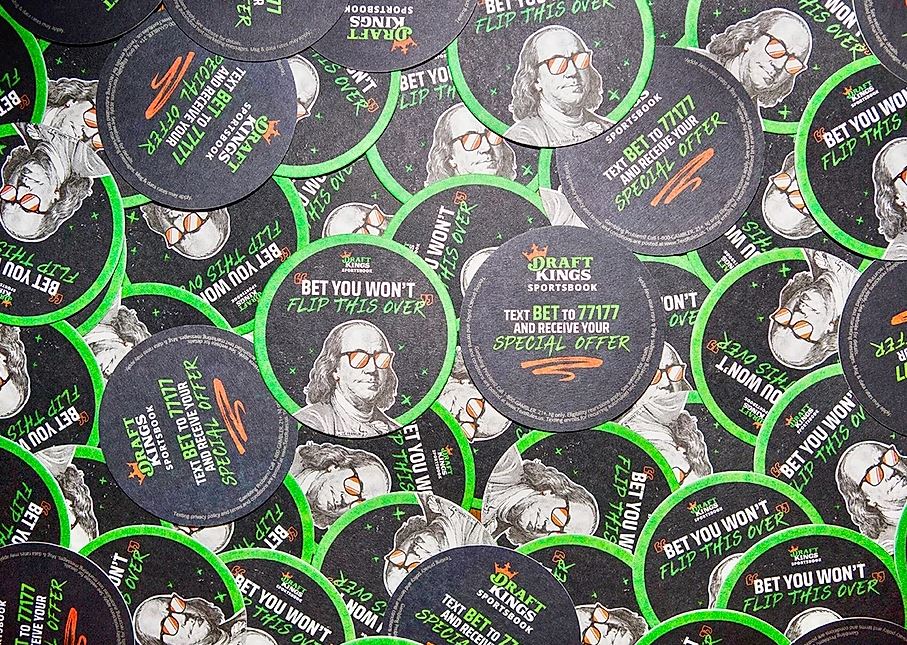
Distribution Campaigns: Branded item distributions that put the brand directly into student hands with items of genuine value and daily use. The items that work best are those students actually want and will keep, not generic promotional merchandise that goes immediately in the trash.
Academic Calendar Timing for College Promotions
The academic calendar creates dramatic variation in student receptivity throughout the year. Our team maps the following windows for campus promotions:
Back to School (Late August to September): The highest-value window. Maximum student receptivity. New students forming first-time brand habits. Returning students resetting routines. High social energy. This is when the highest-priority promotions should be concentrated.
Early Semester (October, February): Students settled into routines but still socially active and brand-receptive. Good secondary window for sampling and ambassador programs.
Spring Season (March to April): Warming weather brings students outdoors. Spring event calendars concentrate student social activity. Good window for outdoor experiential promotions.
Avoid: Midterm and finals periods (mid-October, November/December, and April/May) when student stress levels are high and receptivity to brand encounters is at a seasonal low.
Multi-Campus College Promotion Strategy
For brands with national student market ambitions, multi-campus promotion programs offer the most efficient path to scale. Our team manages simultaneous promotions across many campuses from centralized coordination. Ambassador recruitment and management, material production and distribution, event scheduling, OOH deployment, and reporting all flow through our team. Clients get a national college promotion program without building internal campus marketing infrastructure.
We work with clients to identify the optimal campus selection based on demographic alignment, geographic priorities, competitive environment, and access conditions. For a typical national brand seeking to reach the college demographic, we recommend starting with five to ten priority campuses in the first year to build program learnings, then scaling to broader campus coverage in subsequent years based on what the initial cohort demonstrates.
What are college promotions in a marketing context?
College promotions are marketing activities specifically designed to reach and engage college students. This includes product sampling, campus ambassador programs, guerrilla marketing in campus neighborhoods, event marketing at campus gatherings, branded giveaway campaigns, and street team activations. The goal is to build brand awareness, drive product trial, and establish brand loyalty with the 18-to-24 student demographic.
Why do college promotions need to be different from general consumer marketing?
College students are one of the most ad-resistant consumer segments in existence. They have grown up entirely inside digital advertising systems and have developed sophisticated filtering behaviors. Effective college promotions work by operating outside these filters, through peer recommendation, physical real-world encounters, and genuine brand experiences in the spaces students actually inhabit.
What is the most effective college promotion tactic for driving product trial?
Product sampling executed by student ambassadors who genuinely use and like the product is consistently the most effective driver of product trial with the college demographic. The combination of physical product encounter and peer recommendation from a fellow student creates trial conversion rates that no other college promotion format can match.
How do college promotions differ between large and small universities?
Large universities offer higher volume but also higher competition for student attention. Small universities often have more intimate campus communities where a well-executed promotion can reach a significant portion of the entire student body through word-of-mouth alone. We calibrate our approach, team size, and distribution volumes to the specific scale and community dynamics of each target school.
Can college promotions drive app downloads or digital sign-ups, not just product trial?
Yes. Ambassador programs that offer compelling incentives for app downloads or account sign-ups, sampling events that include QR codes for digital registration, and campus installations that drive traffic to digital experiences all translate physical college promotions into measurable digital outcomes.
How do we make college promotions feel genuine rather than corporate?
Student-staffed promotions, real products and offers (not just branded swag), physical presence in campus spaces rather than digital-only outreach, and creative that reflects actual student culture rather than a corporate approximation of it. The degree to which a promotion feels like a peer recommendation rather than a marketing campaign determines its effectiveness with the college demographic.
What should college promotions avoid?
Avoid generic giveaways that students immediately discard. Avoid external staff who clearly do not belong in the campus environment. Avoid creative that feels out of touch with student culture. Avoid activating only during exam periods when students are stressed and unreceptive. And avoid digital-only approaches that assume students are reachable through the same channels they use for everything else.
Campaign Architect – American Guerrilla Marketing
Frequently Asked Questions
What are college promotions in a marketing context?
College promotions are marketing activities specifically designed to reach and engage college students. This includes product sampling, campus ambassador programs, guerrilla marketing in campus neighborhoods, event marketing at campus gatherings, branded giveaway campaigns, and street team activations. The goal is to build brand awareness, drive product trial, and establish brand loyalty with the 18-to-24 student demographic.
Why do college promotions need to be different from general consumer marketing?
College students are one of the most ad-resistant consumer segments in existence. They have grown up entirely inside digital advertising systems and have developed sophisticated filtering behaviors. Effective college promotions work by operating outside these filters, through peer recommendation, physical real-world encounters, and genuine brand experiences in the spaces students actually inhabit.
What is the most effective college promotion tactic for driving product trial?
Product sampling executed by student ambassadors who genuinely use and like the product is consistently the most effective driver of product trial with the college demographic. The combination of physical product encounter and peer recommendation from a fellow student creates trial conversion rates that no other college promotion format can match.
How do college promotions differ between large and small universities?
Large universities offer higher volume but also higher competition for student attention. Small universities often have more intimate campus communities where a well-executed promotion can reach a significant portion of the entire student body through word-of-mouth alone. We calibrate our approach, team size, and distribution volumes to the specific scale and community dynamics of each target school.
Can college promotions drive app downloads or digital sign-ups, not just product trial?
Yes. Ambassador programs that offer compelling incentives for app downloads or account sign-ups, sampling events that include QR codes for digital registration, and campus installations that drive traffic to digital experiences all translate physical college promotions into measurable digital outcomes.
How do we make college promotions feel genuine rather than corporate?
Student-staffed promotions, real products and offers (not just branded swag), physical presence in campus spaces rather than digital-only outreach, and creative that reflects actual student culture rather than a corporate approximation of it. The degree to which a promotion feels like a peer recommendation rather than a marketing campaign determines its effectiveness with the college demographic.
What should college promotions avoid?
Avoid generic giveaways that students immediately discard. Avoid external staff who clearly do not belong in the campus environment. Avoid creative that feels out of touch with student culture. Avoid activating only during exam periods when students are stressed and unreceptive. And avoid digital-only approaches that assume students are reachable through the same channels they use for everything else.
How early should a brand start planning?
For most campaigns, the smart move is to start planning at least two to four weeks before the launch window so production, routing, staffing, and reporting are all lined up.
What makes one market perform better than another?
Market fit depends on audience density, neighborhood behavior, route efficiency, and whether the creative belongs in that setting. The busiest city is not always the best city.
Can AGM bundle this with other services?
Yes. AGM often combines this work with supporting formats so the campaign has stronger repetition and cleaner reporting across the whole run.
How does AGM quote pages like this?
We quote from official rate cards where they apply, then scope the remaining production, staffing, and routing details to the actual job.