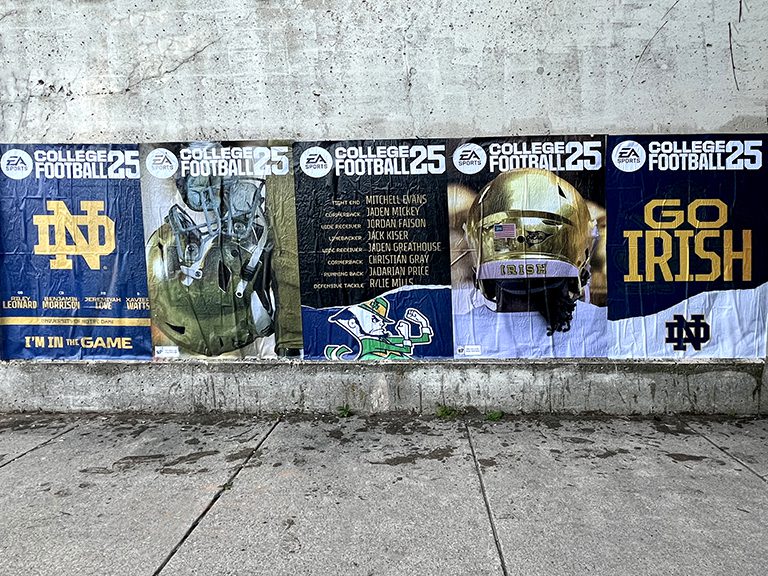
Choosing a college marketing agency is one of the more consequential marketing decisions a brand targeting young adults can make. The college demographic is simultaneously one of the most commercially valuable and one of the hardest to reach. Students are forming lifetime brand habits. They are concentrated in accessible geographic areas. They are highly social and likely to share positive brand experiences widely. But they are also the most digitally sophisticated, advertising-resistant audience alive, and they can tell immediately when a brand’s campus marketing effort is authentic rather than performative.
At American Guerrilla Marketing, based at Industry City in Brooklyn, our team specializes in the physical, ground-level college marketing that actually breaks through with this demographic. We build student ambassador programs staffed with actual students who believe in the brands they represent. We run product sampling campaigns at the specific campus locations and times that generate maximum student encounter volume. We place wheatpasted art in campus neighborhoods and operate LED trucks on campus-adjacent streets. And we coordinate all of this across multiple campuses simultaneously from a single management point.
This article explains what to look for in a college marketing agency, what we bring to this specific category, and how to evaluate whether a campus marketing program is actually working.
What Makes College Marketing Different From General Marketing
College marketing operates under a set of rules that differ fundamentally from general consumer marketing. Agencies that do not understand these rules consistently produce campaigns that miss the mark, waste budget, and fail to build the student relationships that drive long-term brand value.
The academic calendar is everything: Marketing to students in late August and early September hits them in their most receptive, brand-forming moment of the year. Marketing to them in late October when midterms are in full swing hits them in their least receptive, most stressed and inward-focused moment. General agencies rarely have the calendar intelligence to optimize timing this precisely.
Peer credibility is the currency: Students do not trust advertising. They trust other students. Every element of effective college marketing is designed to create or simulate the peer recommendation dynamic that is the single most powerful driver of student brand decisions. External promotional staff executing generic campaigns cannot replicate this dynamic. Student ambassadors who genuinely believe in the product can.
Physical presence matters more than digital: Students are the demographic most resistant to digital advertising and most responsive to real-world encounters with brands. A wheatpaste installation in their neighborhood that they walk past every day builds brand familiarity that a digital impression cannot match. A sampling interaction with a fellow student creates a brand memory that no ad unit can replicate.
Social amplification is the multiplier: When college students have genuinely positive brand experiences, they share them immediately and widely. The dense social networks of campus life create amplification dynamics that make a strong campus activation generate social reach far beyond its direct footprint.
The College Marketing Agency Capability Stack
A complete college marketing agency needs operational depth across several capability areas:
Student Ambassador Networks: Maintained relationships with student talent at major universities across the country. Not just a database of names but a cultivated network of vetted, enthusiastic potential ambassadors in the right campus communities. Building this from scratch for each client is slow, expensive, and produces lower-quality results than a maintained network.
Campus Knowledge: Specific knowledge of the pedestrian geography, traffic patterns, event calendars, access policies, and student culture at target campuses. This knowledge determines where sampling works, where OOH generates the most exposures, when events are worth activating, and how to navigate campus access in ways that maximize reach without triggering site-rule alignment issues.
OOH Execution Capacity: The ability to actually place wheatpaste art in campus neighborhoods, operate LED trucks on campus-adjacent streets, and deploy sidewalk stencils at key locations. This requires operational infrastructure, site approval management capacity, and creative production capabilities that many agencies claim but few actually have.
Multi-Campus Coordination: The management infrastructure to run ambassador programs, sampling events, and OOH campaigns across many campuses simultaneously from a single coordination point. This is the operational foundation that separates agencies that can scale from those that can only work one or two campuses at a time.
Measurement Discipline: The discipline to agree on specific metrics before campaigns launch and report against them honestly after completion. Campus marketing results should be measured and accountable, not explained away with impressionistic qualitative claims.
Campus Selection Strategy
Choosing the right campuses for a college marketing campaign is one of the most important early decisions in the process. Our team helps clients evaluate campuses based on:
Demographic alignment: Which schools have student populations that most closely match the brand’s target demographic? School size alone is not a dependable proxy. A mid-size school with a student body that perfectly matches a brand’s target profile will outperform a large school where the target demographic is a minority of the total population.
Geographic priorities: For regional brands, schools in the distribution territory are natural priorities. For national brands, schools in the cities and regions where building student-age consumer bases has the highest strategic value should be prioritized.
Competitive saturation: Some campuses are heavily activated by multiple brands in a given category simultaneously. Others have very low competitive presence where a brand can own significant share of student attention. This competitive environment analysis informs which schools offer the best opportunity per investment dollar.
Access conditions: Different campuses offer different levels of access for commercial marketing. Urban commuter schools often have minimal access barriers. Residential campuses in suburban or rural settings may have more restrictive access policies. We map access conditions in advance so activation designs match what is actually achievable at each school.
How We Measure College Marketing Campaign Performance
All college marketing programs we run are measured against specific, agreed-upon metrics established before launch. Standard metrics include:
Direct engagement volume: ambassador interactions, samples distributed, opt-ins collected, branded materials distributed. Social amplification: organic sharing of campaign elements by students. Brand awareness shifts: pre- and post-campaign survey comparisons where applicable. Purchase behavior correlations: for brands with trackable student purchase data, analysis of whether campus activation correlates with student segment purchase activity.
Post-campaign reports compile all metrics with qualitative observations from ambassador teams and recommendations for future campaign optimization. Clients who run recurring campus programs through our team build a growing data set that informs increasingly effective program design over time.
What services does a college marketing agency provide?
A college marketing agency provides the full range of services needed to reach the 18-to-24 student demographic: campus ambassador program design and management, product sampling campaign logistics, guerrilla marketing near campus, event marketing at campus events, OOH advertising in campus neighborhoods, creative development for student audiences, multi-campus campaign coordination, and performance reporting.
How is a college marketing agency different from a general marketing agency?
College marketing agencies have specialized knowledge of the campus environment, student culture, the academic calendar’s effect on student receptivity, how to recruit and manage student ambassadors, which campus locations drive the highest student engagement, and how to design creative that resonates with a highly sophisticated young adult audience. General agencies attempting college marketing frequently miss on all of these dimensions.
What results should we expect from a college marketing agency?
Realistic results depend on campaign format and scale. Product sampling campaigns can deliver thousands to tens of thousands of student product trials. Ambassador programs build ongoing peer-level brand presence across campus social networks. OOH near campus builds sustained visual brand familiarity. Well-designed opt-in collection programs build first-party student data assets.
How many campuses can a college marketing agency activate at once?
Our team manages campaigns across dozens to hundreds of campuses simultaneously. We have ambassador networks and operational infrastructure across major university markets in the United States and can activate new markets with lead time for local recruitment and logistics setup.
What categories of brands benefit most from college marketing agencies?
Any brand targeting the 18-to-24 demographic benefits from college marketing specialization. Consumer packaged goods brands building student brand habits. Technology and app companies driving student user acquisition. Financial services brands establishing student banking and insurance relationships. Healthcare and wellness brands reaching students in a formative health habit phase.
Does AGM handle all production and logistics for college campaigns?
Yes. Our team manages creative production, print and material production, ambassador recruitment and training, event logistics, shipping and supply chain, site approval applications, real-time field management, and post-campaign reporting. Clients can focus on strategy and brand direction while our operations team handles execution from start to finish.
How do we start working with AGM as our college marketing agency?
Campaign Architect – American Guerrilla Marketing
Frequently Asked Questions
What services does a college marketing agency provide?
A college marketing agency provides the full range of services needed to reach the 18-to-24 student demographic: campus ambassador program design and management, product sampling campaign logistics, guerrilla marketing near campus, event marketing at campus events, OOH advertising in campus neighborhoods, creative development for student audiences, multi-campus campaign coordination, and performance reporting.
How is a college marketing agency different from a general marketing agency?
College marketing agencies have specialized knowledge of the campus environment, student culture, the academic calendar’s effect on student receptivity, how to recruit and manage student ambassadors, which campus locations drive the highest student engagement, and how to design creative that resonates with a highly sophisticated young adult audience. General agencies attempting college marketing frequently miss on all of these dimensions.
What results should we expect from a college marketing agency?
Realistic results depend on campaign format and scale. Product sampling campaigns can deliver thousands to tens of thousands of student product trials. Ambassador programs build ongoing peer-level brand presence across campus social networks. OOH near campus builds sustained visual brand familiarity. Well-designed opt-in collection programs build first-party student data assets.
How many campuses can a college marketing agency activate at once?
Our team manages campaigns across dozens to hundreds of campuses simultaneously. We have ambassador networks and operational infrastructure across major university markets in the United States and can activate new markets with lead time for local recruitment and logistics setup.
What categories of brands benefit most from college marketing agencies?
Any brand targeting the 18-to-24 demographic benefits from college marketing specialization. Consumer packaged goods brands building student brand habits. Technology and app companies driving student user acquisition. Financial services brands establishing student banking and insurance relationships. Healthcare and wellness brands reaching students in a formative health habit phase.
Does AGM handle all production and logistics for college campaigns?
Yes. Our team manages creative production, print and material production, ambassador recruitment and training, event logistics, shipping and supply chain, site approval applications, real-time field management, and post-campaign reporting. Clients can focus on strategy and brand direction while our operations team handles execution from start to finish.
How do we start working with AGM as our college marketing agency?
Contact our team at [email protected] or (646) 776-2770. We’ll discuss your brand, your target student demographic, the schools most relevant to your goals, and what you want the campaign to achieve. From there we’ll develop a customized campaign proposal with recommended tactics, timeline, and budget. Most campaigns can launch within four to eight weeks.
How early should a brand start planning?
For most campaigns, the smart move is to start planning at least two to four weeks before the launch window so production, routing, staffing, and reporting are all lined up.
What makes one market perform better than another?
Market fit depends on audience density, neighborhood behavior, route efficiency, and whether the creative belongs in that setting. The busiest city is not always the best city.
Can AGM bundle this with other services?
Yes. AGM often combines this work with supporting formats so the campaign has stronger repetition and cleaner reporting across the whole run.
How does AGM quote pages like this?
We quote from official rate cards where they apply, then scope the remaining production, staffing, and routing details to the actual job.