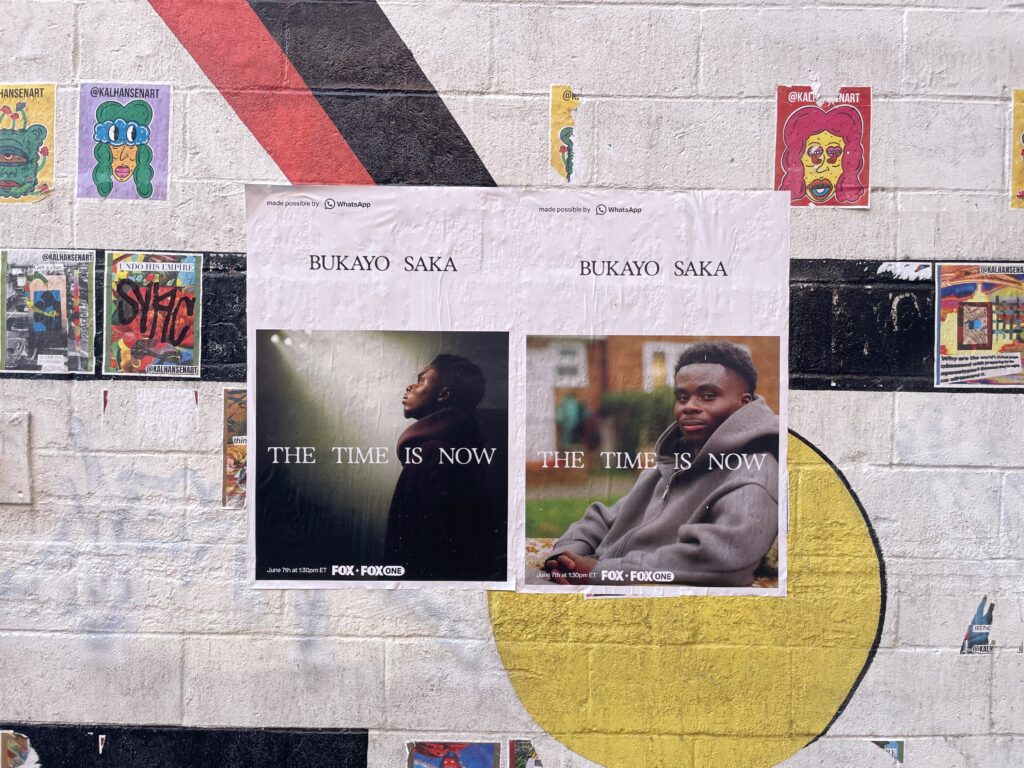
Chicago Paid Social: How to Pair Digital Spend With Street-Level Marketing
Paid social in Chicago is fighting a crowded feed. Street presence gives your brand something real to advertise — and gives the audience something they have already seen.
Every major brand running in Chicago is buying paid social. They are all targeting the same audiences, the same zip codes, the same interest graphs. The result is a feed that is saturated with paid content competing for the same fractional second of attention. Cutting through that environment requires something most paid social campaigns lack: a reason to stop scrolling.
The most durable way to create that reason is to give your paid social something real to show — a physical presence in Chicago that the audience can recognize, verify, or encounter in person. When someone scrolls past a paid social ad and sees a location they walk past every day, the reaction is different. There is recognition. There is credibility. There is the implicit proof that the brand has invested beyond the digital channel.
AGM is primarily a physical advertising agency. We run poster campaigns, wheat paste campaigns, guerrilla activations, and brand experiences across Chicago. But we consistently see our physical campaigns amplify the performance of our clients’ paid social buys. This article covers why that relationship exists and how to structure a Chicago campaign that takes advantage of it.
Paid social in Chicago is expensive relative to most mid-sized U.S. markets, and the competition is high. Chicago is home to a significant concentration of major brands, regional businesses, and venture-backed startups all competing for the same digital audience. The cost per engagement in Chicago CPG, fashion, and hospitality categories is consistently above the national average.
More fundamentally, paid social advertising in every market faces the same structural problem: the audience knows they are being advertised to. Paid social is identified as an ad, placed within a feed the user is scrolling through while doing something else, and competing with organic content from accounts the user has chosen to follow. The attention environment is genuinely hostile to the kind of extended brand consideration that advertising is supposed to create.
Brands respond to this by spending more on creative production, more on audience targeting, and more on optimization. All of that helps at the margins, but it does not solve the underlying problem: the audience has no prior relationship with the brand when the paid ad appears. The ad is cold. Cold ads require significantly more frequency and more creative impact to produce results.
Why Physical Presence Changes the Social Equation
When a brand runs a street-level campaign in Chicago before or during a paid social push, the dynamic changes. The audience who sees the paid social ad in their feed may have already encountered the brand physically — on their walk to the L, on the wall near their coffee shop, on the sidewalk outside their gym. The ad is no longer introducing an unknown brand. It is a follow-up to something they have already noticed.
This is not a theoretical effect. Brands that run physical campaigns alongside paid social consistently observe higher engagement rates and lower cost-per-click than brands running paid social alone. The physical presence does the hard work of initial brand introduction. The social ad deepens or converts that initial awareness into action.
There is also a content effect. Physical campaigns in Chicago generate authentic documentary content. Installation photos taken on a Milwaukee Avenue corner in Wicker Park, or against a wall in Pilsen, or adjacent to an L station have a specificity and realness that studio-produced creative rarely matches. That content, used as paid social creative, outperforms generic brand imagery because it signals actual presence in a place the audience knows.
AGM’s photo documentation from physical campaigns routinely becomes the strongest creative in a client’s paid social rotation. A shot of a six-foot wheat paste installation on a Pilsen wall with the neighborhood in the background outperforms a stock photo every time. Real Chicago creative performs for Chicago audiences.
Structuring a Combined Chicago Physical and Paid Social Campaign
A well-structured combined campaign has a clear sequence and a clear relationship between the physical and digital elements. Here is how AGM approaches the planning process.
Phase One: Physical Campaign Planning and Execution
The physical campaign comes first, both in planning and in execution. The location strategy drives everything else. AGM identifies the Chicago neighborhoods and specific corridors where the target audience is physically present. We secure the locations, handle the permits and property-owner agreements, print the materials, and execute the installation.
During installation, we capture photo documentation at every location. This documentation serves two purposes: it is the campaign delivery record, and it is the creative asset for the paid social campaign that follows.
Phase Two: Social Creative Development
Once the physical campaign is installed and documented, the documentation assets go into social creative development. This is where authentic location shots become ads. The documentation photos are cropped, formatted for each platform’s specifications, and combined with copy that connects the physical presence to the brand’s message.
For some campaigns, the creative team also captures video walkthroughs of the installation — showing the artwork in context, in the neighborhood, as pedestrians pass. This type of content performs particularly well on Instagram Reels and TikTok, where the environment and energy of Chicago’s streets give the brand a genuine sense of place.
Phase Three: Paid Social Deployment
The paid social buy is targeted to the same Chicago geographies covered by the physical campaign. If the outdoor placements are concentrated in Logan Square and Wicker Park, the paid social targeting prioritizes users in those neighborhoods. This creates a double exposure: the audience has potentially seen the physical installation, and now they are seeing the brand again in their feed.
The geographic targeting in Meta’s ad platform can be precise enough to focus on individual Chicago ZIP codes or even mile-radius circles around specific locations. Aligning the paid social targeting to the physical campaign geography maximizes the frequency among the most relevant audience segment.
Phase Four: Performance Review
After the campaign runs, both the physical and social elements are reviewed. The photo documentation package covers the physical campaign. The paid social platform analytics cover the digital side. Together, these reports give the brand a complete picture of the campaign’s reach and engagement across both channels.
Chicago Neighborhoods and Paid Social Audience Profiles
Different Chicago neighborhoods have distinct audience profiles that affect both physical campaign placement and paid social targeting. Understanding the overlap between where people physically spend time and where they engage with social media is the foundation of a well-integrated Chicago campaign.
Wicker Park and Bucktown
Wicker Park is one of the most socially active neighborhoods in Chicago. The resident demographic — young professionals, creative workers, musicians, designers — has a high social media engagement rate. Organic posts about Wicker Park regularly generate significant engagement on Instagram and TikTok. Physical campaigns in this neighborhood generate substantial organic documentation from residents who share what they see. A brand that runs a compelling installation in Wicker Park and then targets Wicker Park users on paid social is catching an audience that is already primed to engage.
Logan Square
Logan Square’s audience trends slightly older than Wicker Park — 28 to 38, with higher household incomes and a strong preference for independent and local brands. Paid social campaigns targeting Logan Square work well for food and beverage brands, fitness brands, and lifestyle products that fit the neighborhood’s aesthetic. Physical placements along Milwaukee Avenue in Logan Square generate organic sharing from an audience that is genuinely invested in the neighborhood’s visual environment.
The Loop and West Loop
The Loop audience is primarily working professionals, with the West Loop adding a restaurant and food media dimension. Paid social targeting in this corridor works well for B2B and professional service brands, particularly on LinkedIn. Physical campaigns in the Loop and West Loop reach a high-income, high-education audience that is also active on professional social networks.
Pilsen
Pilsen has one of the strongest visual cultures of any Chicago neighborhood, and the audience is active on platforms that reward visual content — Instagram in particular. Physical campaigns in Pilsen, particularly wheat paste and large-format wall installations, generate organic social content at a rate that exceeds most other Chicago neighborhoods. The combination of a strong visual installation and a tight-knit socially active community creates amplification that extends well beyond the physical footprint of the campaign.
Hyde Park and Bronzeville
The South Side’s academic and professional community is underserved by most Chicago advertising campaigns. Brands willing to invest in South Side physical presence and then target those audiences on paid social reach a demographic with high education levels, high household incomes, and significant purchasing power. The lower competition in this area means both lower cost-per-click on social and higher physical visibility on the street.
Neighborhood
Core Demographic
Best Physical Format
Top Social Platform
Organic Share Rate
Wicker Park
25-35, creative professionals
Wheat paste, poster panels
Instagram, TikTok
Very high
Logan Square
28-40, independent-brand loyalists
Poster panels, guerrilla ground
Instagram
High
The Loop
25-55, corporate professionals
Transit adjacency, construction fence
LinkedIn, Instagram
Moderate
Pilsen
20-45, arts community
Large-format wall, wheat paste
Instagram
Very high
Hyde Park
22-50, academic/professional
Poster panels, transit adjacency
Instagram, LinkedIn
Moderate
The Organic Social Effect of Physical Chicago Campaigns
One of the underappreciated returns from physical campaigns in Chicago is the organic social content they generate. When AGM installs a compelling installation in a neighborhood with an active social media culture, residents photograph it. They post it. Their followers see it. Some of those followers visit the installation themselves. The cycle runs without any additional spend from the brand.
This organic effect is not guaranteed, and it is not uniform across neighborhoods or formats. It depends on the creative quality of the installation, the social culture of the neighborhood, and the degree to which the brand message is interesting enough to share.
But for brands that invest in creative quality and choose their Chicago neighborhoods strategically, the organic social amplification from a physical campaign can represent as much additional reach as the paid social buy itself. It is earned media generated by the paid physical campaign.
The most cost-efficient Chicago campaign AGM has seen combined a moderately sized poster campaign in Wicker Park with a strong paid social buy targeting the same geography. The organic social documentation from the poster campaign — shot by residents and shared with no prompting — added roughly 40% additional reach at zero additional cost. The paid social then converted that expanded audience.
What Paid Social Cannot Do Alone in Chicago
Paid social in Chicago is a useful tool. It is not a complete brand-building strategy. There are things it genuinely cannot do that physical advertising can.
Paid social cannot create a sense of scale. A brand that plasters 30 locations across Chicago’s North Side neighborhoods with a consistent visual message creates a perception of presence that paid social cannot replicate. When people see the same brand across multiple touchpoints in their physical environment, they conclude that the brand is significant, established, and worth paying attention to. You cannot create that effect with a digital ad spend alone.
Paid social cannot generate the kind of surprise and discovery that physical advertising can. A clever installation in an unexpected location creates a moment — a genuine reaction that people share and talk about. That kind of moment is rarely created by a perfectly targeted paid social ad.
And paid social cannot provide the third-party credibility of being in a place. When a brand’s advertisement appears in someone’s feed, the audience knows the brand paid to be there. When a brand’s advertisement is on the wall of a building in Wicker Park, the audience’s reaction is different. The physical presence implies a relationship with the neighborhood, an investment, a real-world commitment that the brand chose to make.
Practical Advice for Chicago Brands Planning Paid Social Campaigns
If you are planning a paid social campaign in Chicago, here is practical guidance on how to make it more effective.
Start with Your Physical Presence
Before you finalize your paid social creative, plan your physical campaign. The physical campaign will generate authentic content assets, create local awareness, and establish a narrative of real presence in Chicago. Build your social creative from that foundation rather than from stock images or studio shots.
Target Social to Match Physical
Use your paid social targeting to reinforce your physical campaign geography. If your outdoor placements are in Lakeview, Wicker Park, and Logan Square, your social targeting should prioritize those neighborhoods. The audience overlap between physical and digital exposure is where the most effective frequency lives.
Sequence the Campaign
Launch the physical campaign first, run it for one to two weeks, and then layer in the paid social buy. This sequence ensures that some portion of the paid social audience has already seen the brand on the street before they see the ad in their feed. That prior exposure changes the nature of the social interaction.
Use Location-Specific Content
The strongest paid social creative for a Chicago campaign references Chicago specifically — not generically. An ad that shows a real installation on a real Chicago wall in a recognizable neighborhood performs better than an ad that could have been produced anywhere. Chicago audiences respond to content that demonstrates genuine local knowledge.
Capture the Reaction
When a physical installation generates organic social content — people photographing it, sharing it, reacting to it — capture that content and use it. Testimonial social content from real Chicago residents who encountered the brand organically is among the most credible social advertising available. You do not need to manufacture it if you have run a compelling physical campaign.
Working with AGM on a Chicago Campaign
AGM handles the physical side of Chicago campaigns. We plan locations, secure permissions, print materials, install, and document. The paid social execution can be handled by AGM’s recommended digital partners or by your in-house team. What we provide is the physical foundation that makes the social campaign more credible and more effective.
If you are coming to AGM because you have a paid social campaign planned and you want a physical component to support it, we can work backward from your digital timeline. We need three to four weeks from initial contact to installation for a standard poster campaign. If you have an event or launch date driving your timing, share that date first and we will build the physical campaign plan around it.
Campaign Execution Standards and Documentation
Professional outdoor advertising campaigns are built on execution standards that protect the brand’s investment and provide a clear record of what was delivered. Here is what professional execution looks like across the key phases of a campaign.
Site Survey and Location Confirmation
Every location in a campaign should be site-surveyed before being confirmed. The site survey assesses the physical condition of the surface, the sightlines from the street, the ambient visual competition from surrounding signage, and any access or installation issues that might affect execution. Locations that pass the site survey get confirmed. Locations with issues get flagged and either resolved or replaced before production begins.
This step adds time to the planning process — typically three to five business days for a standard campaign location list. But it eliminates the expensive problems that arise when production is complete and installation reveals a location that was never suitable for the campaign. The cost of a site survey is far lower than the cost of reprinting materials for replacement locations, or the cost of a campaign that delivers fewer locations than planned because of last-minute issues.
Authorization Documentation
Authorization for outdoor advertising surfaces must be documented before production begins. For installations on privately owned surfaces, this means a signed agreement from the property owner that specifies the dates, the surface, and the format of the installation. For installations on permitted public spaces, this means the applicable city permit on file before the installation date.
Documented authorization protects the brand from having installations removed before the campaign is complete. It also provides the legal basis for the campaign’s documentation — unauthorized installations cannot be legally documented for press, social media, or client reporting purposes. The authorization documentation is part of the campaign file and is available to the client on request.
Installation Photo Standards
Professional installation documentation photographs are taken from a consistent distance and angle that shows the creative in context and confirms the installation is complete. They are taken in adequate light — daylight hours or with adequate artificial lighting. They show enough of the surrounding environment to confirm the location. And they are taken at the time of installation, not days later when conditions may have changed.
The documentation photographs are the evidentiary record of the campaign. They should be organized by location, labeled with the location information, and compiled into a deliverable package for the client. A campaign that does not produce organized, labeled installation documentation has not fully delivered its obligation to the client.
The Long-Term Value of Physical Advertising Campaigns
Physical outdoor advertising campaigns have both immediate and long-term value that brands who approach them as one-time spends consistently underestimate. The immediate value is the awareness and engagement generated during the campaign period. The long-term value is the documentation, the relationships, and the brand narrative that accumulate across multiple campaigns.
Documentation as a Brand Asset
Every physical advertising campaign generates documentation photography that can be used across a wide range of brand communications long after the campaign itself has concluded. Installation photographs from a Chicago poster campaign become social media content, website content, press materials, and internal brand presentations. A single campaign’s documentation can serve brand communications for 12 to 18 months after the campaign concludes.
Brands that treat campaign documentation as a pure compliance deliverable — something they need to have on file, not something they use — are leaving significant value on the table. The authentic, location-specific content that comes from outdoor campaign documentation is among the most useful brand content available. It demonstrates real-world presence. It has geographic and cultural specificity. And it costs nothing additional to create because it is produced as part of the campaign execution.
Building on Campaign History
Brands that run repeated campaigns in the same markets accumulate something more valuable than individual campaign documentation: a campaign history that demonstrates sustained commitment to specific communities and audiences. A brand that has run outdoor campaigns in Wicker Park every summer for three years has built something real — local recognition, neighborhood-level credibility, and a track record that differentiates it from brands that appear once and never return.
This kind of sustained presence is what separates brands that are genuinely part of a city’s cultural fabric from brands that are merely advertising in it. The investment required to build this kind of presence over multiple campaign cycles is larger than a single campaign investment. But the return — in audience loyalty, in earned media, in community credibility — compounds in ways that single-campaign investments cannot replicate.
Frequently Asked Questions
Does AGM run paid social campaigns in Chicago?
AGM’s core expertise is physical outdoor and experiential advertising in Chicago. We advise clients on how to structure paid social buys that amplify physical campaigns, and we can recommend digital partners for the social execution side.
How does a physical Chicago campaign generate paid social content?
Street-level installations — poster campaigns, wheat paste, guerrilla activations — generate photo and video documentation that becomes the creative foundation for paid social ads. Authentic location-specific content outperforms studio-produced social creative in most tests.
Which Chicago neighborhoods produce the best organic social content from campaigns?
Wicker Park, Logan Square, and Pilsen consistently generate the highest organic social documentation from physical campaigns. Residents in these neighborhoods actively photograph and share interesting outdoor installations.
What does a combined outdoor and paid social campaign in Chicago look like?
A combined campaign typically runs poster or wheat paste placements across target neighborhoods for two to four weeks. Documentation from the physical installations fuels paid social ads targeted geographically to the same Chicago audiences, creating a second touchpoint.
How far in advance should a Chicago combined campaign be planned?
Plan three to six weeks out. The physical campaign requires location scouting, permits, print production, and installation. Having that timeline settled before the social creative is finalized ensures both campaigns launch together.
What social platforms work best for Chicago-targeted paid social?
Instagram and TikTok deliver the strongest engagement for Chicago lifestyle and consumer brands. Meta’s geographic targeting allows neighborhood-level precision that mirrors the outdoor placement strategy. LinkedIn performs for B2B audiences concentrated in the Loop and River North.