B2B trade shows are expensive. The booth, the travel, the staff, the collateral, the sponsorship fees if you went that route, the hotel rooms, the dinners, and the floor space all add up before a single conversation happens. What determines whether that investment produces a return comes down almost entirely to how seriously you treat the marketing work around the show itself. At American Guerrilla Marketing, based out of Industry City in Brooklyn, we’ve planned and executed B2B trade show marketing campaigns for clients across technology, healthcare, consumer goods, and professional services. The brands that get the most out of their show spend are the ones who treat the convention as a campaign, not just a booth rental.
Why Most B2B Trade Show Marketing Falls Short
The standard approach goes like this: rent the booth space, build or update the exhibit, ship the collateral, fly the team out, stand in the booth for three days, scan badges, fly home, and start the email follow-up. This approach treats the show as a passive opportunity, a waiting game where foot traffic is assumed to flow in based on booth location and booth quality alone.
It doesn’t work that way. Major shows have hundreds of exhibitors competing for the same attendee attention. Attendees arrive with pre-set meeting schedules that they planned weeks in advance. If your brand isn’t already in their awareness before the show opens, you’re fighting for the unscheduled walk-by traffic that makes up a small fraction of total show attendance. Our job is to change that math before the show even starts and extend your brand reach well beyond the booth footprint during show days.
The Pre-Show Outreach Window
Attendee List Targeting
Most major trade shows publish attendee lists or sell them. Registration-based shows give exhibitors access to registered buyer data. This data is your first campaign asset. We build targeted outreach sequences using that list, starting 6 to 8 weeks before the show, with email, LinkedIn, and in some cases direct mail that ties to what attendees will find at your booth. The goal is to get meetings booked before the show opens, because a filled meeting schedule means your team spends show days in productive conversations rather than pitching walk-by traffic.
Social and Content Warm-Up
Publishing content about the show, your booth experience, and your presence in the weeks leading up to the event builds social proof and creates a reason for attendees to seek you out. We coordinate content calendars that create pre-show momentum without giving away the show-floor experience prematurely. Teaser posts, behind-the-scenes content, and personal invites from your team build anticipation in the right audiences.
Hotel and Shuttle Zone Coverage
The zone around a major convention, including attendee hotels, shuttle stops, and registration day pedestrian routes, is one of the highest-density concentrations of your target buyers you’ll ever find. We deploy brand ambassadors to work these areas during registration day and early morning show hours. A well-briefed ambassador with a clear message, a branded item worth carrying, and a QR code to book a meeting can generate more qualified conversations in two hours of hotel lobby work than a day of passive booth standing.
Outside-the-Booth Tactics That Work at B2B Shows
LED Billboard Trucks
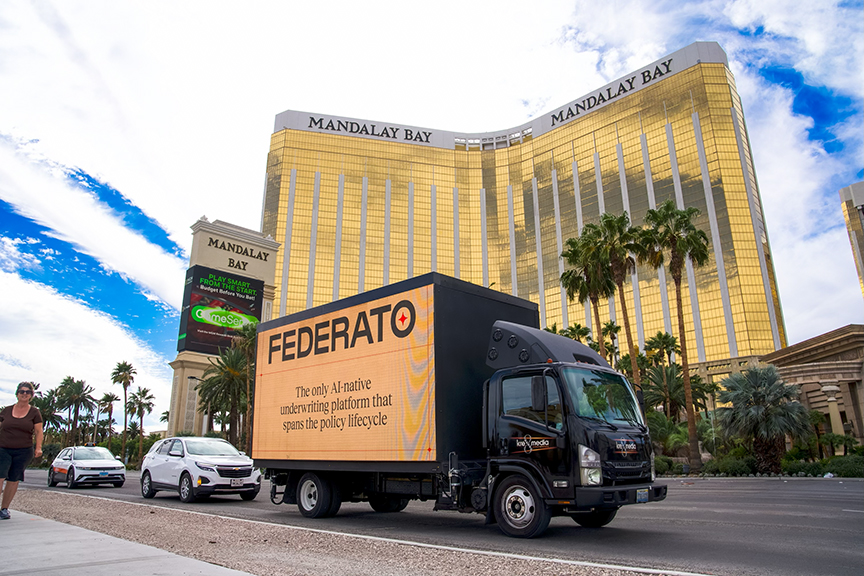
LED billboard trucks parked or circulating in the convention center neighborhood are hard to miss. During peak arrival windows, morning conference sessions, and afternoon breaks when attendees spill outside, a moving billboard carrying your brand message and booth number reaches buyers in a context where they’re not already overwhelmed by floor noise. We’ve run LED truck campaigns outside major convention centers in New York, Las Vegas, Chicago, and San Francisco that generated measurable increases in booth traffic attributable to the outdoor push.
Wheatpasted Poster Campaigns
In cities where approved, wheatpasting poster campaigns in the neighborhoods surrounding convention venues saturate the local visual environment with your brand. Attendees walking to the venue, to dinner, or through the surrounding blocks see your creative multiple times per day. Frequency matters in brand recall, and for a B2B buyer comparing half a dozen vendors, the one that appeared everywhere before and during the show carries a presence advantage that’s difficult to manufacture inside a booth alone.
Sidewalk Stencils Near Entrances
Sidewalk stencils placed at high-traffic entry points, crosswalks, and registration queues are a cost-efficient way to own the ground-level visual environment right where attendees are walking. We’ve used stencils to direct foot traffic toward specific entrances near a client’s booth position, to announce a show-floor event or keynote presence, and to simply maximize brand exposures in the highest-traffic moments of the show day.
Guerrilla Activations in Surrounding Blocks
Our guerrilla marketing approach to B2B trade shows starts with mapping the attendee footprint beyond the convention center itself. Where are they staying? Where are they eating? What routes do they walk between venue and hotel? We then design activations that intersect those routes with brand moments that feel organic rather than intrusive. A branded coffee cart outside an attendee hotel at 7 AM reaches buyers in a generous moment when they’re caffeinating before a long show day. A branded dessert pop-up near the conference dinner strip catches them in a social moment. These intercepts generate genuine conversations, not badge scans.
Booth Marketing as the Center of the Campaign
Everything outside the booth should drive traffic toward it. That means the booth itself needs to deliver on the promise created by the outside campaign. We work with clients on booth experience strategy, not just exhibit design. How do you greet someone who saw your LED truck outside and came specifically to find you? How do you convert a hot intro from a hotel lobby ambassador into a booked meeting at the booth? The booth is where the outside campaign lands, and the flow from door to conversation needs to be designed deliberately.
Specifically, we think about entry points, conversation zones, demo areas, and quiet spaces for detailed product conversations. The worst booth experiences funnel every visitor into the same linear flow regardless of where they are in the buying process. Qualified buyers who are 90 days from a purchase decision don’t need the same experience as a first-contact who just walked in from curiosity. Your booth design should accommodate both without making either feel like they’re in the wrong place.
Staffing the Booth Correctly
Who Should Be On the Floor
The mix of sales, marketing, and product people on a B2B trade show floor matters. Sellers need to be there for qualification and relationship-building conversations. Product people need to be available for technical depth. Marketing should be monitoring what’s working and coordinating the outside-the-booth activities in real time. Don’t send a booth crew that’s entirely junior or entirely senior, and make sure everyone on the floor is briefed on the show-specific message and objectives.
Energy Management Across Multi-Day Shows
A three-day show with 8-hour floor days is physically and mentally demanding. We build crew rotation schedules that prevent burnout while maintaining consistent energy at the booth. The worst thing that can happen at a B2B show is a promising buyer approaching at 3 PM on day two and being greeted by a visibly exhausted team. Rotation planning, off-floor recovery time, and clear shift structures prevent that.
Supplemental Brand Ambassadors
For clients who want consistent high-energy engagement throughout long show days, we staff supplemental brand ambassadors alongside the client team. These ambassadors handle first contact, qualify interest level, and route engaged visitors to the right client team member. They can also staff the outdoor activations while the client team focuses on booth conversations. Our ambassador network is experienced in B2B environments and can be briefed on technical products and specific talking points.
Post-Show Marketing: Where B2B Pipeline Actually Closes
Speed of Follow-Up
The brands that win the most business from trade shows are the ones who follow up fastest. Leads captured on day one of a three-day show should receive personalized outreach on day two, not a week after everyone’s back in the office. We help clients build follow-up sequences that launch in real time during the show, personalizing based on the conversation notes captured at badge scan or in CRM.
Retargeting Based on Show Attendance
Digital retargeting against show attendee lists, combined with content that references the show and the client’s presence there, extends the show’s influence into the weeks that follow. Buyers who visited the booth but didn’t book a meeting see content that re-opens the conversation. Buyers who were at the show but never made it to the booth encounter the brand in their feed during the post-show week when the show is still top of mind.
Show Debrief and Next Campaign Planning
We conduct post-show reviews with every client to assess what worked, what didn’t, and what the data says about how to approach the next show differently. This includes reviewing lead quality, conversation notes, outdoor activation performance, and any tracking data from digital retargeting. The insights from one show inform the strategy for the next one, building a cumulative advantage over brands that approach each show as an isolated event.
B2B Trade Show Marketing by Show Type
Technology and SaaS Shows
Shows like Dreamforce, AWS re:Invent, and industry-specific SaaS conferences draw decision-makers who are actively evaluating multiple vendors. The competition for attention is intense and the buying cycles are long. Our strategy at these shows emphasizes relationship building over volume: fewer, deeper conversations with the right people rather than scanning every badge that passes. Outdoor campaigns in the surrounding neighborhoods create brand saturation for the entire week, not just the show floor hours.
Healthcare and Life Sciences Conferences
Medical conferences come with strict promotion site rules and a professional audience that responds to credibility signals over entertainment. Our B2B approach at healthcare shows focuses on clear, evidence-based messaging, strong pre-show meeting scheduling, and relationship-building in the surrounding environment during conference social hours. site-rule alignment review is part of every healthcare campaign we run.
Manufacturing and Industrial Trade Shows
IMTS, FABTECH, and similar industrial shows attract buyers who make large capital equipment purchases. Dwell time matters enormously here because the product demos are the conversion mechanism. We help clients create booth environments that support extended product conversations, coordinate outside-the-booth activities to draw in qualified buyers, and staff the floor with ambassadors who can qualify and route effectively without being aggressive.
What is B2B trade show marketing?
B2B trade show marketing refers to the strategies and tactics a business uses to generate leads, build relationships, and advance sales conversations at industry trade shows and conferences. It includes booth design, staffing, outside-the-booth activations, and pre- and post-show follow-up.
How do you generate leads at a B2B trade show?
Effective B2B lead generation at trade shows combines booth engagement tactics with outside-the-booth outreach. Street teams working hotel lobbies and shuttle routes, targeted sampling, and brand ambassador programs all generate conversations with qualified buyers before they even reach the show floor.
What makes B2B trade show marketing different from consumer marketing?
B2B trade show audiences come with specific business problems they need solved. The marketing has to connect quickly to business value, credibility, and trust. Tactics that work at consumer shows need to be calibrated for a buyer who is evaluating vendors, not seeking entertainment.
How far in advance should you plan a B2B trade show campaign?
Serious campaigns should start planning 10 to 16 weeks out. Creative development, staffing, site-approval planning for any outdoor activations, and pre-show outreach all require lead time. Last-minute bookings are possible but constrain your options significantly.
Do street teams work for B2B trade show marketing?
Yes. Street teams deployed around convention centers, at attendee hotels, and along shuttle routes reach B2B buyers in a lower-pressure setting than the show floor. A well-briefed team with the right message and a reason to stop can generate qualified conversations that turn into booth visits.
What outdoor advertising tactics work near trade show venues?
LED billboard trucks, wheatpasted poster campaigns, sidewalk stencils, and brand ambassador teams all perform well in the blocks surrounding major convention centers. The goal is maximum brand frequency in the zone where your target buyers are moving.
How do you measure the ROI of B2B trade show marketing?
Track leads captured, meetings booked, opportunities created, and pipeline value generated within 90 days of the show. Layer in brand awareness metrics like social exposures and media mentions from any outdoor activations. Tie back to cost per lead and compare against your other demand generation channels.
Campaign Architect , American Guerrilla Marketing
Frequently Asked Questions
What is B2B trade show marketing?
B2B trade show marketing refers to the strategies and tactics a business uses to generate leads, build relationships, and advance sales conversations at industry trade shows and conferences. It includes booth design, staffing, outside-the-booth activations, and pre- and post-show follow-up.
How do you generate leads at a B2B trade show?
Effective B2B lead generation at trade shows combines booth engagement tactics with outside-the-booth outreach. Street teams working hotel lobbies and shuttle routes, targeted sampling, and brand ambassador programs all generate conversations with qualified buyers before they even reach the show floor.
What makes B2B trade show marketing different from consumer marketing?
B2B trade show audiences come with specific business problems they need solved. The marketing has to connect quickly to business value, credibility, and trust. Tactics that work at consumer shows , high energy, entertainment-first , need to be calibrated for a buyer who is evaluating vendors, not seeking entertainment.
How far in advance should you plan a B2B trade show campaign?
Serious campaigns should start planning 10 to 16 weeks out. Creative development, staffing, site-approval planning for any outdoor activations, and pre-show outreach all require lead time. Last-minute bookings are possible but constrain your options significantly.
Do street teams work for B2B trade show marketing?
Yes. Street teams deployed around convention centers, at attendee hotels, and along shuttle routes reach B2B buyers in a lower-pressure setting than the show floor. A well-briefed team with the right message and a reason to stop can generate qualified conversations that turn into booth visits.
What outdoor advertising tactics work near trade show venues?
LED billboard trucks, wheatpasted poster campaigns, sidewalk stencils, and brand ambassador teams all perform well in the blocks surrounding major convention centers. The goal is maximum brand frequency in the zone where your target buyers are moving.
How do you measure the ROI of B2B trade show marketing?
Track leads captured, meetings booked, opportunities created, and pipeline value generated within 90 days of the show. Layer in brand awareness metrics like social exposures and media mentions from any outdoor activations. Tie back to cost per lead and compare against your other demand generation channels.