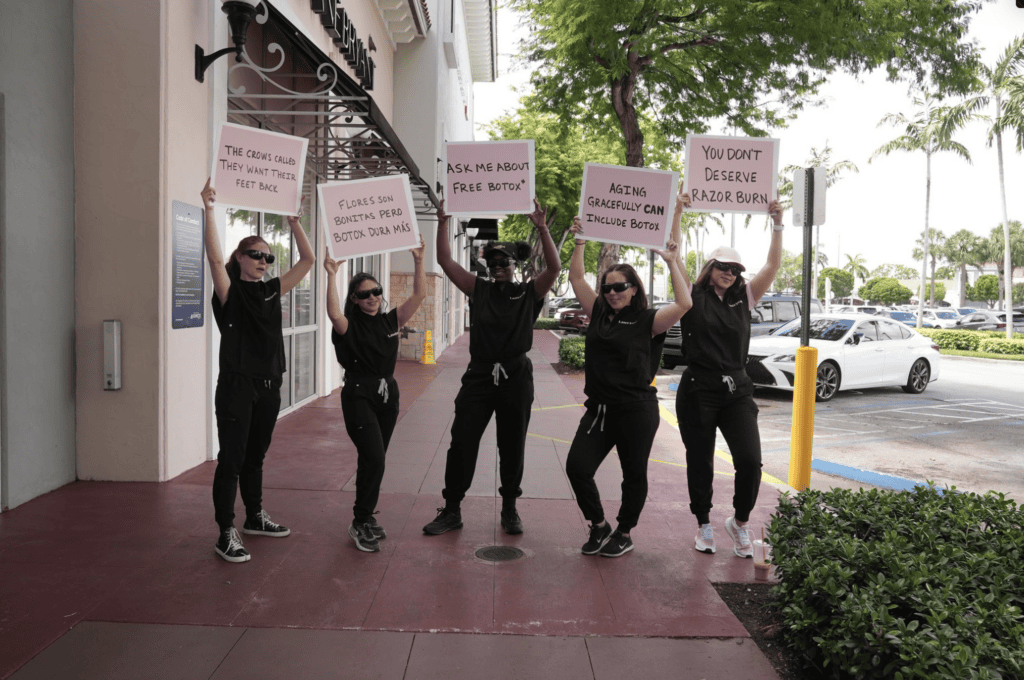
The assumption that guerrilla marketing only works for sneaker brands and music festivals is wrong. It is a limitation imposed by conventional marketing thinking, not by the mechanics of how guerrilla tactics actually function. Guerrilla marketing works because it puts your brand in front of your target audience in physical space, at the moment they are moving through their real lives. That dynamic does not disappear because your product is industrial equipment or your service is commercial insurance.
The reason “boring” industries hesitate is usually one of two things: either they assume guerrilla marketing requires a consumer brand identity, or they cannot picture what a campaign would look like for their category. Both problems are solvable with the right strategy. We have built campaigns for clients in financial services, healthcare, B2B software, logistics, and other sectors that most marketing lists would call dull. The results were not dull.
Here is a clear-eyed guide to how guerrilla marketing works for industries that do not think it applies to them.
The Core Logic That Makes Guerrilla Marketing Industry-Agnostic
Guerrilla marketing, at its core, is about placing your brand in the physical environment where your target audience already is, and doing it in a way that earns attention. Those two requirements — knowing where your audience is and earning their attention — apply equally to every industry that exists.
Attention Is Attention Regardless of Category
A CFO walking through a business district notices a striking, problem-aware poster in exactly the same way a sneaker buyer notices creative wall art in a retail district. The mechanism of attention is universal. What changes is the message, the location strategy, and the execution context. A guerrilla campaign for a B2B audience requires more precision in location selection and a sharper, more direct message — but the attention mechanism itself is identical.
Your Audience Has a Physical Life Too
The mistake boring-industry brands make is thinking of their customers as job titles instead of people. A supply chain director is also a commuter who walks through a transit hub every day. A hospital administrator attends conferences in convention centers. A commercial real estate executive has a regular lunch route in their business district. These physical routines are accessible for guerrilla campaign targeting just like any consumer audience’s neighborhood or entertainment corridor.
How B2B Companies Use Guerrilla Marketing
B2B guerrilla marketing is a real discipline with proven tactics. The key is shifting location strategy from consumer zones to the professional environments where decision-makers concentrate.
Conference and Trade Show Environments
Trade shows and industry conferences create one of the best guerrilla marketing opportunities in any industry. Decision-makers travel from across the country or globally to concentrate in a single venue for two to four days. The surrounding hotel corridors, convention center entrance zones, business district walkways, and airport departure areas are all accessible for campaign placement.
A poster campaign placed on authorized surfaces within one block of a major industry conference can generate thousands of relevant impressions over an event weekend — from exactly the right audience, with no wasted reach on irrelevant demographics. Guerrilla marketing services for trade show environments are one of our most requested B2B campaign formats.
Business District Poster and Stencil Campaigns
For B2B brands targeting executives and decision-makers in specific metro areas, business district poster campaigns put your message directly in the commute corridors where your audience moves daily. Financial district blocks in Manhattan, the Loop in Chicago, or the downtown business cores in Houston or Dallas concentrate target decision-makers in defined walkable zones.
Wheatpasting and poster campaigns in business district corridors can achieve strong frequency with a defined professional audience at a fraction of the cost of digital targeting in overcrowded B2B channels. When your target audience sees your brand message every morning on their walk from the train, awareness builds without a single click required.
Ambassador Programs at Professional Events
Brand ambassador programs deployed at industry events, professional happy hours, and conference side events create direct one-on-one brand contact with decision-makers. Ambassadors who understand your product category can have informed conversations, distribute relevant materials, and capture qualified contact information in a natural, non-invasive way.
Financial Services and Insurance Guerrilla Campaigns
Financial services brands often assume their regulatory environment makes guerrilla marketing impossible. It does not. It just requires more careful compliance planning, which we handle as a standard part of campaign execution.
FINRA and Insurance Compliance Are Manageable
The compliance requirements for financial services advertising govern the content of messaging, not the physical medium. A compliant campaign meets the same standards whether it runs on a digital banner or a printed poster. We work with brand legal teams to ensure all creative meets applicable regulatory requirements before any materials are produced or placed.
Wealth Management and Financial Planning Audiences
Targeting affluent consumers for wealth management services is a classic guerrilla marketing challenge. High-net-worth individuals do not uniformly consume the same digital channels, and many are tuned out of standard advertising formats. Physical placements in the neighborhoods, cultural institutions, golf clubs, and retail corridors where this audience concentrates can achieve brand impressions that digital campaigns cannot access.
Fintech Brand Launches
Fintech companies launching new products often have modern brand identities that translate well to street-level creative. Launching a fintech product in a business district or financial neighborhood with a coordinated poster campaign, stencil work, and ambassador activation creates strong awareness among the early-adopter professional audience that fintech products typically target first.
Healthcare and Medical Industry Applications
Healthcare is often considered too serious or regulated for guerrilla marketing. The reality is that healthcare organizations run street-level campaigns successfully with proper planning and compliance.
Hospital and Clinic Brand Awareness
Healthcare systems competing in local markets for patient preference run awareness campaigns that benefit from physical placement in neighborhood corridors, transit environments, and community spaces. A hospital system launching a new specialty service can use poster campaigns in the neighborhoods it serves to build awareness before patients ever have a need for the service.
Healthcare Staffing and Recruitment Campaigns
Healthcare staffing firms compete intensely for nursing, physician, and allied health talent. Recruitment guerrilla campaigns targeted at hospital district neighborhoods — the coffee shops, transit stops, and residential areas near medical centers — reach clinical workers in their physical environment rather than competing in digital job boards where every staffing firm is present.
Pharmaceutical and Biotech Conference Activations
Pharma and biotech conference events like BIO or JPMorgan Healthcare Conference concentrate industry decision-makers in specific cities for specific dates. Conference-adjacent guerrilla activations — posters, ambient installations, ambassador programs — reach this concentrated audience at the moment they are most professionally engaged and receptive to brand messaging.
Industrial and Manufacturing Sector Tactics
Industrial brands selling to procurement professionals, plant managers, and operations leaders can reach these audiences effectively through strategic physical placements.
Industrial Park and Business Corridor Placements
Industrial parks, logistics hubs, and manufacturing corridors are physical environments where target audience professionals are concentrated. Poster placements in the commercial areas adjacent to these districts — lunch spots, convenience stops, transit routes — reach industrial buyers in their physical environment.
Trade Publication and Event Convergence
Industrial trade shows create the same conference-adjacent campaign opportunity as any professional event. IMTS, MODEX, and similar events bring industrial procurement decision-makers to specific venues. Surrounding-area activations during these events generate brand impressions from exactly the right audience at the moment they are most engaged in category evaluation.
Message Strategy for Boring Industry Guerrilla Campaigns
Message strategy is where boring industry campaigns either earn attention or disappear. Dry, jargon-heavy creative that simply states what a company does will not generate the engagement that justifies street-level placement investment. Here is what works.
Lead with the Problem, Not the Product
The most effective guerrilla creative for B2B and complex-category brands leads with a problem that is acutely felt by the target audience. A statement like “Still manually reconciling invoices?” placed where finance professionals commute will stop the right people in a way that “Accounts payable automation solutions” never will. Problem-first messaging earns attention by being relevant before asking for anything.
Be Provocative About the Industry Norm
Many boring industries have widely recognized pain points that no one advertises about directly. The legacy software that no one wants to use but everyone is stuck on. The insurance claim process that always feels adversarial. The consultant that arrives and leaves without changing anything. Naming these frustrations in guerrilla creative creates instant resonance with the target audience and immediate brand differentiation.
Keep Creative Visual and Text-Light
Street-level creative is viewed from a distance, often in motion, by audiences with limited attention. The impulse to explain complex B2B or industrial products in poster copy kills campaigns before they start. Effective guerrilla creative for any industry uses minimal text, strong visual hierarchy, and a single clear message or question. Save the explanation for the landing page the poster directs people toward.
Measuring Guerrilla Marketing Results in Boring Industries
Measurement for boring industry campaigns uses the same framework as consumer campaigns, adapted for the longer sales cycles and different attribution models that B2B and regulated industries typically use.
GPS Documentation and Placement Verification
Every campaign placement is GPS-tagged and photographed at installation. This documentation provides a verified record of where your brand appeared, for how long, and in what condition — the baseline for any campaign performance evaluation.
Digital Pairing for Attribution
Geo-targeted digital campaigns running in the same areas as physical placements allow for digital attribution that supplements physical awareness. B2B campaigns frequently pair conference-area poster placements with LinkedIn account-based marketing targeting attendees from the same event. When the same brand appears physically in the conference zone and digitally in the audience’s LinkedIn feed, recall and response rates increase significantly.
Campaign-Specific Contact Paths
Dedicated landing pages, vanity URLs, or QR codes on campaign materials capture direct response attribution from physical placements. Even modest direct response rates provide measurable proof of campaign reach in the specific geography and time window of the placement run.
Frequently Asked Questions: Guerrilla Marketing for Boring Industries
What industries benefit most from guerrilla marketing?
Consumer brands get the most press for guerrilla marketing, but B2B companies, financial services firms, healthcare providers, insurance companies, and industrial brands all see strong results from street-level campaigns. The key is matching the tactic to the context where decision-makers or target customers are physically present.
How does guerrilla marketing work for B2B companies?
B2B guerrilla marketing focuses on the physical environments where business decision-makers concentrate — conference centers, trade show venues, business districts, and airport corridors. Tactics like targeted poster placements, ambient activations near conference hotels, and ambassador programs at industry events create brand impressions with the right professional audience.
Is guerrilla marketing too risky for regulated industries like financial services?
Risk in guerrilla marketing comes from non-compliant execution, not from the tactic category itself. Financial services, healthcare, and other regulated industries can run fully compliant street-level campaigns with proper permitting, property authorization, and creative that meets applicable advertising standards.
What is a realistic example of guerrilla marketing for a boring industry?
An accounting software company targeting CFOs could place provocative, problem-aware posters in business district corridors where finance executives commute. A healthcare staffing firm could run ambassador campaigns at hospital district coffee shops. An industrial equipment brand could activate at trade show venues with experiential demonstrations.
How much does a B2B guerrilla marketing campaign cost?
B2B guerrilla campaigns are scoped to the specific tactic, market, and geography. A targeted poster campaign in a single business district market can run from a few thousand dollars. Multi-city campaigns or experiential activations scale accordingly. Contact our team for a custom scope based on your industry, target audience, and campaign objectives.
How do you measure guerrilla marketing results for boring industries?
Measurement uses GPS-documented placement reports, tracked landing pages or QR codes, digital campaign pairing in the same geographies for attribution, and direct lead tracking from campaign-specific contact paths.
Frequently Asked Questions
What is can guerrilla marketing work for boring industries?
American Guerrilla Marketing provides can guerrilla marketing work for boring industries services across 50+ U.S. markets. Every campaign is planned, scouted, executed, and GPS-documented by our field teams. We work with regional brands and Fortune 500 companies on campaigns that require real street-level execution and documented proof of performance.
How does AGM approach boring industries?
Our process starts with a market consultation to understand your goals, target audience, and budget. We then scout locations, handle any required permissions or permits, coordinate production and installation with our local crews, and provide a full GPS-tagged photo report after the campaign runs.
What markets does American Guerrilla Marketing cover for boring industries?
We operate in 50+ U.S. markets including New York, Los Angeles, Chicago, Miami, Houston, Atlanta, Seattle, Denver, Boston, and dozens of secondary markets. Contact us to confirm availability and pricing for your specific market.
How much does a boring industries campaign cost?
Campaign pricing depends on market, format, quantity, and duration. We work with budgets ranging from targeted single-market runs to national rollouts across multiple cities. Use our RFP Builder or contact us directly for a custom quote based on your specific campaign requirements.
How do I get started with boring industries through AGM?
The fastest way to get started is to submit your campaign details through our RFP Builder at americanguerrillamarketing.com, or contact us directly at [email protected] or (646) 776-2770. Our team typically responds within one business day with availability and initial pricing.