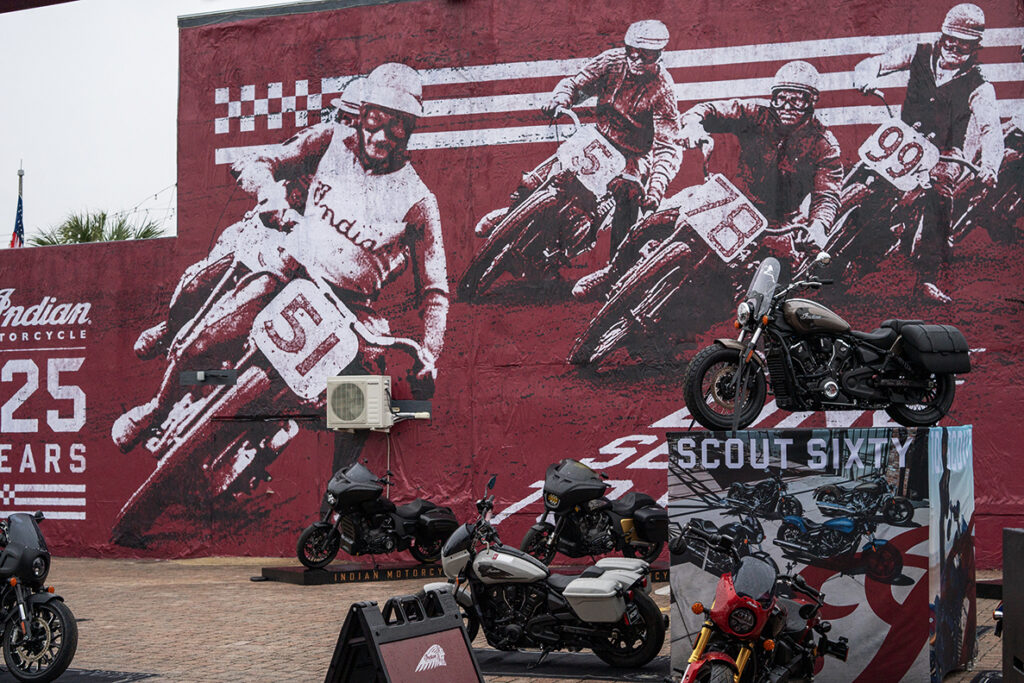
An advertising mural turns the side of a building into a brand landmark that a neighborhood walks past every single day for years. No rotating panel. No contract end date. Just paint, wall, and sustained street-level presence that no other outdoor format can replicate.
Advertising murals are one of the oldest and most durable forms of outdoor brand communication. A brick wall painted with your brand becomes a city landmark. People photograph it. They use it as a meeting point. They remember it years after a campaign ends. No digital ad, no billboard rotation, no transit shelter achieves that level of staying power in the communities where it is placed.
At American Guerrilla Marketing, we execute advertising mural campaigns for brands that want to make a genuine physical mark on the cities where their customers live. We have been doing this since 2010. We have painted walls in New York City, Los Angeles, Chicago, Miami, Nashville, Austin, and dozens of other markets. We know what makes an advertising mural work and what makes it fail.
This guide covers advertising murals from start to finish: what makes the format effective, how different production formats compare, what the production process looks like, how to select a location, and what metrics matter for evaluating a campaign. Whether you are approaching mural advertising for the first time or have run campaigns before, this covers the terrain in full.
What Makes Advertising Murals a Distinct Category of Outdoor Advertising
Advertising murals are not just bigger versions of other outdoor formats. They are structurally different in ways that produce different outcomes for the brands that use them.
Multi-Year Physical Permanence
Every standard outdoor advertising format in the United States is time-limited. Billboard panels rotate to the next advertiser at the end of the contract period. Transit shelter posters are replaced. Digital screen content cycles. An advertising mural on a wall is there every day for as long as the paint holds and the access agreement runs, which is typically one to several years. That sustained physical presence in a specific neighborhood creates something no time-limited format can: a genuine neighborhood landmark that the local community incorporates into its mental map of the area.
Non-Skippable Street-Level Reality
People skip digital ads. They walk past posters without registering them. They scroll past social content without stopping. A mural painted on the side of a building on their daily commute route is simply there, visible, physically unavoidable in the way that only a large physical installation in the environment can be. The passive exposure created by a mural on a high-foot-traffic block is a fundamentally different quality of presence from time-shared media placement on standardized formats.
Community Credibility That Cannot Be Purchased
A brand that commissions a quality advertising mural in a neighborhood is doing something qualitatively different from buying space in an advertising network. It is investing in the visual environment of a community. People in that community notice that investment, particularly when the work is genuinely excellent. The community credibility signal generated by a well-executed mural is not available at any price through any purchased media format.
Organic Social Content Generation
A visually compelling advertising mural in the right neighborhood becomes a social media content machine. People photograph it. They post it. They tag the location. They use it as a backdrop for portraits. Every photo shared extends the mural’s reach beyond the immediate pedestrian audience of the wall’s block to the social networks of everyone who photographs it. This organic amplification is ongoing and cumulative throughout the mural’s lifespan, with no additional media investment required.
The History of Advertising Murals and Why the Format Has Accelerated
Advertising murals predate billboards, television, and radio. In the late 1800s and early 1900s, American cities were covered in painted wall advertisements. The faded ghost signs visible today in older urban neighborhoods across New York, Philadelphia, Baltimore, and Chicago are the remnants of a commercial visual culture that treated building walls as standard advertising real estate. These painted advertisements sold tobacco, patent medicines, hardware, and dry goods to people who walked past them daily.
The format declined as billboard structures became standardized, as urban zoning developed restrictions on signage, and as the media environment fragmented toward broadcast and print. But it never completely disappeared. By the 1990s and 2000s, street art and graffiti culture began rehabilitating the painted wall as a legitimate creative canvas. Artists created large-scale commissioned works in urban neighborhoods that established a new aesthetic vocabulary for exterior wall-scale imagery.
The social media era accelerated the format’s revival with extraordinary force. When Instagram emerged as a primary social communication platform, murals became content machines. The combination of visual scale, physical permanence, and photographability made them uniquely suited to a media environment organized around sharing compelling visual experiences. Brands rapidly recognized that a single well-placed mural could generate organic social media documentation worth multiples of the production cost. The advertising mural entered its most sophisticated phase.
In 2026, the format is well-established as a serious brand media channel. Brands approach mural campaigns with the same strategic rigor they bring to any significant media investment. Location selection, creative quality, social amplification strategy, and measurement are all standard parts of how sophisticated brands execute mural advertising today.
What Makes an Advertising Mural Effective
Not every mural generates results. We have been producing mural campaigns for fifteen years and have seen clearly what separates the ones that work from the ones that do not.
Location Is the Strategic Foundation
A mural on a wall nobody passes is just paint. Location drives everything. We look for walls with high pedestrian foot traffic, good sightlines from the sidewalk or street, and presence in neighborhoods where the target audience actually spends time. A mural in the wrong neighborhood, no matter how beautifully executed, will not deliver what a brand needs. We evaluate every prospective wall against a set of operational criteria: daily pedestrian count on the block, distance at which the wall becomes visible on approach, orientation relative to primary foot traffic direction, proximity to transit stops or commercial anchors, and the demographic character of the surrounding neighborhood.
Scale Commands the Block
The size advantage of a mural is its defining characteristic. A mural that fills the entire side of a building cannot be ignored. It is physically impossible to walk past without noticing it. We always recommend filling the available wall space rather than placing a smaller design in the center of a large wall. A small design centered on a massive wall looks tentative and wastes the scale advantage. A mural that claims the entire surface commands the block.
Creative Quality Drives Social Documentation
People photograph things that are visually striking, unusual, or emotionally resonant. They do not photograph ordinary advertising. The creative quality of an advertising mural directly determines how much organic social media content it generates. A mediocre design gets photographed occasionally by curious passersby. An exceptional design becomes a destination that people travel to specifically to photograph and share. We work with artists whose work consistently generates that kind of documentation.
Brand Integration That Feels Natural
A mural needs to carry the brand clearly without becoming a giant static logo. The best advertising murals weave brand identity into a design that people want to engage with independent of the commercial message. The brand is present and unmistakable but the design works as a visual experience first. When the design succeeds this way, organic social media documentation of the mural carries the brand naturally without looking like paid promotion.
The Social Photo Is Part of the Design
Where will people stand to photograph this mural? What will they include in the frame? We approach mural design with the social photo as an explicit design constraint from the first sketch. The optimal photographic composition is built into the design so that the photos people naturally take look excellent and serve the brand effectively. This is a functional design consideration, not an afterthought.
AGM Field Note: On a Bushwick mural campaign we ran for a beverage brand, we positioned the logo at eye level in the right third of the composition so that when someone stood at the standard Instagram portrait distance, the brand appeared naturally in the frame behind them rather than looming at the top of the composition. The result was hundreds of organic user photos where the brand was visible without the photo looking like a staged advertisement. That outcome was designed into the mural from the first sketch. It did not happen by accident.
Advertising Mural Formats
Not every advertising mural is the same. Different goals, timelines, and wall surfaces call for different production approaches.
Hand-Painted Murals
Professional muralists paint the design directly onto the wall using exterior paint, brushes, rollers, and spray equipment. Hand-painted murals have physical texture and organic quality that printed formats cannot replicate. The paint follows the wall’s surface contours, the brushwork is visible at close range, and the work integrates with the physical environment rather than sitting on top of it. Hand-painted murals consistently generate more organic social media documentation than equivalent-scale printed murals in the same neighborhoods. We recommend this format when creative quality and social amplification are primary campaign objectives.
Printed Vinyl Murals
Large-format vinyl panels are digitally printed and applied to the wall surface. This approach allows photographic accuracy, precise brand color matching, and significantly shorter production timelines than hand-painting. Vinyl is a practical choice when the design requires photographic imagery, when brand color standards demand Pantone precision, or when the campaign timeline is compressed. The trade-offs are authenticity, community reception in neighborhoods with high aesthetic standards, and longevity relative to hand-painted work.
Hybrid Murals
Hybrid production combines printed elements with hand-painted work. A common configuration: print a large-format photographic background at scale and have muralists hand-paint lettering, illustration, or additional elements over it. This captures the photographic precision of digital printing and the authentic craft of hand-painted work in the same installation. For designs that need both photographic imagery and genuine painted quality, hybrids are often the best-fit format.
3D Optical Illusion Murals
Perspective-based murals designed to produce an apparent three-dimensional effect when photographed from a specific marked angle. The design appears to have depth or to project from the wall in a photograph taken from the designated position, creating an experience specifically engineered for social media sharing. These murals give people an active participatory reason to stop, position themselves, photograph, and post. For product launches and campaigns where social reach is the primary objective, optical illusion murals are one of the most consistently effective formats we produce.
Advertising Murals vs. Traditional Out-of-Home Formats
The format comparison clarifies when murals are the right tool and when other formats might serve better.
Format
Duration
Social Potential
Audience Targeting
Production Lead Time
Hand-Painted Mural
3–8 years
Very High
Neighborhood block-level
4–8 weeks
Vinyl Wall Graphic
2–4 years
Moderate
Neighborhood block-level
2–4 weeks
Rotating Billboard
4 weeks (then rotates)
Low
Traffic corridor
1–2 weeks
Transit Shelter Poster
4 weeks
Low
Transit route
1–2 weeks
Digital OOH Screen
Campaign window
Low
Traffic corridor
Days
The core structural advantage of advertising murals is duration. A mural lives on the wall for years. A billboard rotates to another advertiser at the end of the contract period. When you divide the total cost of a mural by the years it remains visible, the cost-per-day of sustained street-level presence is typically lower than any other permanent outdoor format available in the same high-foot-traffic neighborhood. This is the economic logic that makes mural advertising compelling when evaluated over its actual lifespan rather than compared against a single campaign window.
Location Selection: How We Find and Evaluate Walls
Wall selection is the most important strategic decision in any mural campaign. We have a systematic process for evaluating walls that considers multiple factors simultaneously.
Foot Traffic Assessment
We begin with pedestrian traffic data for prospective streets. In markets where pedestrian analytics data is available, we use third-party foot traffic measurement from mobile device data aggregation to understand baseline daily pedestrian counts on target streets. We supplement this with physical site visits at different times of day to assess actual activity levels and the nature of pedestrian activity. A street with high commuter foot traffic has a different audience profile than a street with high leisure shopping traffic, and both differ from a street that draws evening dining and nightlife activity. The nature of the traffic matters as much as the volume.
Sightline Analysis
How far away can you see the wall? In which direction does it face relative to primary foot traffic? Are there obstructions from parked vehicles, street furniture, or adjacent buildings? A wall only visible for the final 20 feet of approach delivers less time for brand registration than a wall that becomes visible 100 feet away as you turn a corner. We evaluate sightline quality from multiple approach angles before committing to a wall.
Neighborhood Demographic Fit
Every neighborhood has a demographic character that determines whether it is the right fit for a specific brand. We map target audience demographics against neighborhood data to identify the streets and blocks with the highest concentration of the relevant target audience. This mapping determines which neighborhoods are worth pursuing for wall sourcing.
Wall Surface Condition
Not every wall can accept paint or vinyl installation. We evaluate surface type (brick, stucco, concrete, wood, metal), existing paint condition, moisture issues, structural integrity, and any architectural features that would interfere with the design. Walls in poor condition require more extensive preparation, which adds time and cost. We factor surface condition into wall evaluations and present clients with options that are genuinely suitable for quality production.
The Advertising Mural Production Process
Understanding the production process sets realistic expectations for timeline, creative involvement, and what to expect during each phase.
Phase 1: Brief and Strategy
We begin with a detailed brief covering campaign objectives, target audience, geographic priorities, timeline, and budget. This brief drives every subsequent decision. We use it to determine which neighborhoods to prioritize for wall sourcing, what creative direction to brief to artists, and what production method best serves the campaign goals.
Phase 2: Wall Sourcing and Negotiation
Armed with the brief, we identify prospective walls in target neighborhoods and begin outreach to building owners. Wall negotiations cover the rental period, production access, surface restoration requirements, and any design approvals the building owner requires. These negotiations typically take one to three weeks. We manage all of this on behalf of our clients.
Phase 3: Design Development
With a wall confirmed, we develop the mural design. This involves coordinating between the client’s brand standards, the agreed creative direction, and the specific dimensions and orientation of the wall. Mural design at scale requires expertise specific to the format: color relationships at viewing distance, social photography composition, and physical integration with the wall surface are factors that do not apply to screen or print design. We work with artists who understand mural design as a distinct discipline.
Phase 4: Production and Installation
Production begins with wall preparation: cleaning, patching, priming as needed. The design is transferred to the wall at scale using grid methods or projection. Painting proceeds systematically from large background areas to fine detail work. A 30 by 40 foot hand-painted mural typically takes two to five days to complete with a two to four person team. We manage all equipment, materials, and crew logistics. The client is involved for approvals but does not need to manage the on-site production.
Phase 5: Documentation and Reporting
After installation, we produce professional photography and video documentation of the completed mural. We deliver a variety of shots: wide establishing frames, close-up detail views, street-level human-scale perspectives, and lifestyle photography with people in front of the mural. We set up social media monitoring to track organic documentation of the mural. We deliver a campaign report covering installation documentation, traffic data, social monitoring results, and earned media coverage.
What Advertising Murals Cost
Mural campaign costs vary based on wall size, city, production method, artist, and design complexity. The following ranges reflect our current rate card and are for planning purposes. All projects are quoted individually after brief review and wall scouting.
Small mural project, approximately 10 feet: $24,300 to $36,100
Mid-size mural project, 20 to 30 feet: $37,300 to $75,100
Large premium mural project, 40 feet or larger: $102,000 to $176,000 or more
Wall location fees are incorporated in these estimates. City-permitted premium walls run $18,000 to $38,000 per four-week cycle. Private walls negotiated directly with building owners run $1,800 to $3,600 per month. Design tier affects cost: simple designs run $18,000 to $24,000; mid-level designs run $28,000 to $55,000; premium 3D or photorealistic designs run $72,000 to $110,000 or more. Labor costs include lead muralist at $3,600 to $6,000, assistant muralists at $1,200 to $2,200 each, and project manager at $1,500 to $2,000.
Optional add-ons available on mural projects: AR layer integration ($5,000 and up), drone footage ($1,500 to $4,500), influencer or press event support ($2,000 to $6,500), 3D lettering ($3,000 to $9,500), lighting package ($1,000 to $3,500), monthly maintenance ($1,200 to $3,000), restoration and refresh (starting at $5,000). All pricing is estimated and subject to confirmation after wall scouting, measurement, design finalization, and equipment assessment.
AGM Field Note: The most important reframe for brands evaluating mural advertising cost is the annualized calculation. A mural campaign that costs $40,000 in total and remains on a high-foot-traffic wall for four years costs $10,000 per year of continuous physical street-level presence. That annualized number looks fundamentally different from the upfront cost. Compared to what sustained outdoor advertising in the same neighborhood costs at rotating rates over the same four-year period, the mural’s annualized cost is typically lower while delivering a qualitatively different category of presence. Brands that evaluate the format this way find the investment calculus compelling. Brands that compare it against a single four-week billboard window miss the point entirely.
Advertising Murals and Earned Media
A well-executed advertising mural in a high-profile location generates press coverage. Marketing trade publications cover notable brand mural campaigns as case studies in effective non-digital brand activation. Lifestyle and culture publications cover visually distinctive murals as urban design content. Local media covers notable neighborhood visual additions as community interest stories. Each coverage instance extends the mural’s effective reach far beyond the street where it lives.
We position mural campaigns for earned media from the brief stage. Wall selection that prioritizes neighborhoods with active press coverage of street art and cultural activity, creative development that produces work genuinely worth editorial attention, and proactive outreach to relevant publications after installation all contribute to earned media outcomes. This earned coverage is additive value on top of the direct street presence the mural delivers.
Markets Where We Execute Advertising Murals
We execute advertising mural campaigns across North America. Our primary markets include New York City (all five boroughs, with particular depth in Brooklyn and Manhattan), Los Angeles (city-wide), Chicago (Wicker Park, Logan Square, River North, and adjacent neighborhoods), Miami (Wynwood and surrounding areas), Nashville, Austin, Atlanta, Seattle, Boston, and Washington DC.
National multi-city campaigns are a particular strength. We have coordinated simultaneous mural installations in four and five cities within single campaign windows, managing production teams, equipment, materials, and artist coordination across multiple markets simultaneously. Brands that need national reach with a unified mural campaign creative and execution standard can achieve both through our production infrastructure.
Frequently Asked Questions
What is an advertising mural?
An advertising mural is a large-scale painted or printed brand message applied to the exterior wall of a building as a form of outdoor advertising. It can be hand-painted by a muralist, produced as a printed vinyl graphic, or a combination of both. Unlike rotating billboard panels, a mural is typically negotiated directly with the building owner and remains on the wall for one to several years.
How long does an advertising mural last?
A properly produced hand-painted mural using quality exterior paints and UV-protective sealants typically lasts three to eight years depending on wall orientation, climate, and surface preparation quality. Printed vinyl murals generally last two to four years before replacement is needed.
How much does an advertising mural cost?
All-in project estimates range from $24,300 to $36,100 for small murals around 10 feet, $37,300 to $75,100 for mid-size projects at 20 to 30 feet, and $102,000 to $176,000 or more for large premium installations at 40 feet or larger. Contact AGM for a project-specific quote.
What cities does AGM execute advertising murals in?
American Guerrilla Marketing executes advertising mural campaigns in New York City, Los Angeles, Chicago, Miami, Nashville, Austin, Atlanta, Seattle, Washington DC, Boston, and other major North American markets.
How do you find walls for advertising murals?
We source walls through ongoing relationships with building owners in key neighborhoods, direct outreach on target streets, and our local production partner networks in each market. We evaluate walls for foot traffic volume, sightline quality, surface condition, and audience demographic match before presenting options to clients.
What is the difference between a hand-painted mural and a vinyl mural?
Hand-painted murals are created directly on the wall by skilled muralists using exterior paint. They have authentic texture, integrate with the wall surface, and consistently generate more organic social media documentation. Vinyl murals are digitally printed and applied to the wall, allowing photographic accuracy and faster installation. We offer both formats depending on campaign goals.
How is an advertising mural campaign measured?
We measure mural campaigns through pedestrian foot traffic counts, professional photo documentation, social media monitoring for organic posts featuring the mural, and earned media tracking for press coverage. We provide a post-campaign report covering these data points for every project.
Do advertising murals generate social media coverage?
Yes. Well-executed murals in high-foot-traffic neighborhoods are regularly photographed and shared on Instagram, TikTok, and other platforms by people who encounter them organically. A visually compelling mural in the right location becomes a social destination that generates ongoing organic documentation throughout its lifespan on the wall.
Can advertising murals be placed in any neighborhood?
Advertising murals can be placed in virtually any neighborhood where a suitable wall and cooperative building owner exist. The value depends heavily on foot traffic volume, neighborhood demographic character, and sightline quality. We advise on neighborhood selection as part of campaign planning.
How long does it take to produce an advertising mural?
From initial brief to completed installation, a typical advertising mural campaign takes four to eight weeks. Wall sourcing and negotiation takes one to three weeks. Design development and approval takes one to two weeks. Installation of a hand-painted mural takes two to five days on site depending on size and complexity.