American Guerrilla Marketing
Nationwide Service
Media planning, media buying, billboard advertising, & guerrilla marketing
Guerrilla Projections in Portland, OR
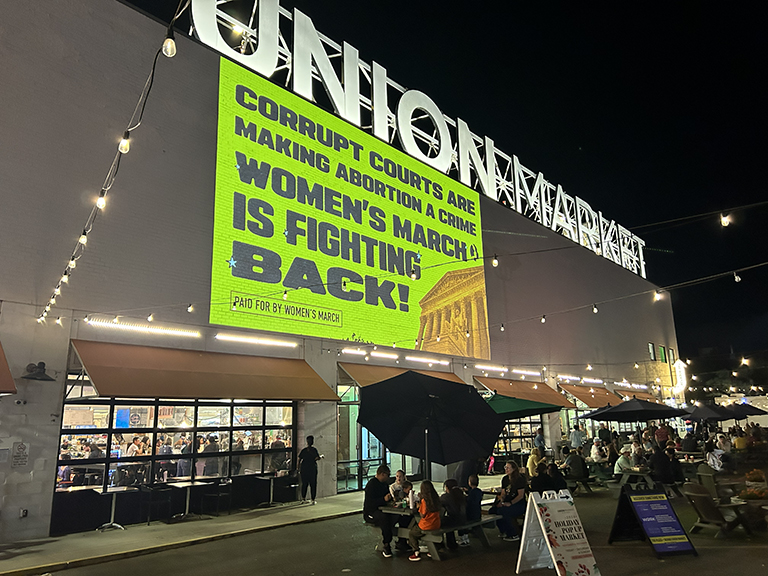
Portland holds the finest inventory of guerrilla projection walls in the American West. Pearl District warehouse facades. Central Eastside industrial giants. Alberta Arts District gallery buildings. Mississippi Avenue corridor faces. AGM runs 20,000-lumen building facade campaigns across Portland’s six most powerful projection neighborhoods.
There is no city west of Chicago with a projection advertising infrastructure comparable to what Portland offers. The Pearl District’s converted late-19th and early-20th century warehouse blocks give AGM building faces that span four, five, six, and eight stories of continuous flat painted concrete — the kind of canvas that makes a 20,000-lumen projection system look like it was purpose-built for this specific city. Cross the Willamette and you hit the Central Eastside Industrial District, where former manufacturing and warehouse buildings cover entire city blocks with blank exterior walls of the same scale. Then there’s the Alberta Arts District, the Mississippi Avenue corridor, Hawthorne, and Buckman — six distinct neighborhoods, six different audience types, six different creative contexts, all within a compact, walkable, bicycle-navigable city where people actually stop and look at what’s on the wall.
AGM’s projection client roster includes Netflix, Disney, Coca-Cola, FanDuel, Live Nation, iHeartRadio, and the US Marine Corps. A confirmed case study: the US Marine Corps × CMA Fest Nashville — multi-night projections onto architectural surfaces throughout the festival footprint, reaching 80,000+ attendees across the campaign window. Projection advertising scales across every brand category; what our campaigns share is scale, precision, and a physical presence digital cannot replicate.
That last part is not incidental. Portland’s street-level culture — the decades-long investment in urban walkability, the arts district economy, the cycling infrastructure, the neighborhood-by-neighborhood identity — has produced a city of pedestrians who engage with their physical environment in ways that suburban and car-dependent markets simply don’t. Portland audiences notice what’s on the wall. They document it. They share it. A building projection in the Pearl District at 9:30 PM on a First Thursday gallery walk night is not ambient signage — it is an event that people stop for, talk about, and post immediately. The earned media dynamics that make guerrilla projection advertising disproportionately efficient in certain cities are maximally present in Portland.
For advocacy organizations, Portland’s political culture makes building projection advertising particularly high-return. Portland has one of the most politically engaged street-level civic cultures in the United States — a city where public messaging on building walls has a documented history of generating civic response, earned media pickup, and community conversation. Advocacy campaigns that deploy projection in Portland are deploying into an environment primed to amplify their message organically.
For brands in outdoor lifestyle, technology, food and beverage, apparel, and entertainment, Portland’s arts-district pedestrian audiences represent some of the country’s most carefully curated consumer demographics. These are not passive audiences absorbing advertising at highway speed — they are engaged, educated, and consuming deliberately in a physical environment they’ve chosen to spend their evening in. Building projection advertising that lands in that environment is advertising that lands with genuine attention from its audience.
Launch Your Portland Projection Campaign
Pearl District warehouse facades. Central Eastside industrial giants. Alberta Arts District gallery buildings. Mississippi Avenue. Hawthorne. Buckman. Portland's projection wall inventory is the finest on the West Coast — and AGM's 20,000-lumen system is the team that knows how to use it.
How The Advocacy Playbook From Austin Translates To Portland
The WakeUp Coalition’s building projection campaign in Austin, Texas — deployed across bar-corridor building facades in the entertainment district during a major political mobilization — generated substantial earned media by reaching thousands of evening pedestrians and photographable visual content that spread organically across social platforms. The campaign’s effectiveness came from a structural alignment between projection advertising and the specific evening environment it operated in: high pedestrian density, engaged audience, flat building faces, and an organic documentation culture.
Portland replicates and amplifies every one of those conditions. Portland’s street-level activism culture runs deeper than Austin’s entertainment district — it is embedded in the city’s neighborhood-by-neighborhood identity and has decades of earned media precedent for visual public advocacy. The Pearl District’s gallery walk nights, Alberta’s Gallery Walk events, and Mississippi Avenue’s Thursday-through-Saturday pedestrian density create multiple distinct windows per week where advocacy projections can reach thousands of engaged pedestrians across different neighborhood demographics in the same city. The WakeUp Coalition’s Austin experience is not a template to be copied in Portland — it is a proof of concept that the Portland environment exceeds in nearly every operational dimension.
Portland's Six Guerrilla Projection Neighborhoods
Portland’s projection landscape is organized by neighborhood character as much as by physical wall quality. Each of the city’s major projection environments draws a distinct audience, presents a distinct creative context, and requires distinct operational logistics. Choosing the right neighborhood for a Portland campaign is as important as choosing the right wall — the two decisions compound each other to determine final campaign impact.
AGM’s national scouting team has physically walked and assessed Portland’s projection environments across all six major deployment zones. The assessments below reflect ground-truth surface quality, ambient light conditions, equipment access logistics, and pedestrian density patterns across each neighborhood.
Pearl District — The Premier Projection Environment on the West Coast
The Pearl District is the reason Portland is the West Coast projection capital. Converted late-19th and early-20th century warehouse buildings define this northwest Portland neighborhood, and their exterior walls are — without qualification — among the finest projection surfaces in the entire United States. These are not modest walls. They are enormous flat building faces spanning the full height of four-to-eight-story warehouse structures, built from brick and concrete and later clad or painted in light tones that maximize reflective luminosity. The Pearl’s blocks are dense with these structures, and the pedestrian activity between upscale galleries, restaurants, boutiques, and loft residences ensures that a projection on a Pearl warehouse wall is visible to hundreds of people simultaneously across multiple city blocks. First Thursday gallery walk nights concentrate this pedestrian density to levels that rival major event evenings — thousands of gallery-hoppers moving through the district on foot, smartphones in hand, documenting everything interesting they encounter. No city block in the American West provides a better combination of wall quality and audience quality than a Pearl District campaign properly sited.
Alberta Arts District — Gallery Walk Energy and Northeast Portland Authenticity
NE Alberta Street is Portland’s beloved northeast arts corridor, and its Gallery Walk nights pack the street with an audience that is deeply invested in the visual and creative environment around them. Converted commercial storefronts and mid-rise residential and mixed-use buildings along Alberta have flat painted faces that perform consistently for projection advertising. The Alberta audience skews creative, educated, community-engaged, and strongly oriented toward social documentation — a crowd that actively shares what it finds visually interesting on its way between galleries and restaurants. Alberta projection campaigns land in a neighborhood context where the audience is already in a mode of aesthetic attention that makes them more receptive to and more likely to document a 20,000-lumen building projection than almost any other Portland neighborhood crowd. For brands in design, arts, food and beverage, lifestyle, and advocacy, Alberta Arts District campaigns reach the creative community audience that drives organic amplification in Portland’s cultural conversation.
Mississippi Avenue Arts Corridor — North Portland Nightlife Spine
N Mississippi Avenue runs through one of Portland’s most active independent dining and nightlife zones — a corridor that draws consistent foot traffic Thursday through Sunday evenings and supports a diverse commercial mix of bars, restaurants, boutiques, and music venues. Commercial building faces along Mississippi have the flat facades and manageable scale that make projection advertising effective in a neighborhood context: buildings typically run two to four stories, with primary street-facing walls that are frequently light-painted or neutral-toned masonry. Mississippi’s crowd is younger, arts-adjacent, and community-rooted in North Portland’s distinct neighborhood identity. For brands targeting the 23–40 demographic with creative, outdoor, food, or cultural brand positioning, Mississippi Avenue provides an evening audience that overlaps partially with Alberta and the Pearl but carries a distinctly North Portland character that adds geographic breadth to a multi-neighborhood Portland campaign.
Central Eastside Industrial District — Portland’s Most Impressive Raw Projection Infrastructure
The Central Eastside Industrial District is Portland’s other projection gold standard — and in terms of raw wall scale, it may be the finest projection environment in the American West. Former industrial and manufacturing warehouse buildings east of the Willamette River cover entire city blocks with exterior facades that sometimes run uninterrupted for 150 to 200 feet of flat wall, from ground level to a roofline four to six stories up. These are not building faces — they are building-scale canvases, and a 20,000-lumen projection on a Central Eastside warehouse wall fills that canvas with an image that can be read from a full block away with full color saturation and sharpness. The Central Eastside’s growing restaurant, brewery, and creative office presence means evening pedestrian audiences have arrived to supplement what was historically a purely industrial zone. Equipment access in the Central Eastside is excellent — wide streets, loading zones, and vehicle access for the projector’s mobility unit that inner-city Pearl District blocks don’t always provide. For campaigns requiring maximum image scale, the Central Eastside is Portland’s definitive deployment environment.
Hawthorne Entertainment Corridor — SE Portland’s High-Traffic Pedestrian Street
SE Hawthorne Boulevard is one of Portland’s densest independent retail and entertainment corridors — a pedestrian-priority street with consistent afternoon and evening foot traffic anchored by restaurants, bars, bookshops, vintage stores, and community gathering spaces. Commercial building faces along Hawthorne are a mix of flat painted masonry and older commercial construction, with the lower-scale two-to-three-story buildings that characterize Portland’s inner southeast residential commercial zones. Hawthorne’s audience is diverse across age ranges and skews toward Portland’s locally-minded, independent-brand-supporting residential community — a consumer demographic with strong loyalty to brands they discover in their neighborhood environment. Projection campaigns on Hawthorne reach an audience that is in its own neighborhood, moving at pedestrian speed, and highly receptive to the kind of unexpected visual event that a building-scale projection creates in a familiar corridor.
Buckman Neighborhood Arts Zone — Inner Southeast Arts Community
The Buckman neighborhood in inner southeast Portland is an arts community anchored by artist studios, galleries, and maker spaces occupying converted industrial buildings adjacent to the Central Eastside. Blank warehouse walls are available throughout the Buckman zone — building faces from former light industrial and manufacturing use that haven’t been converted to the restaurant and brewery tenants now filling the Central Eastside, and which therefore still carry the minimal-fenestration, large-flat-face profile that makes industrial buildings ideal projection surfaces. Buckman’s arts-engaged community audience, while smaller in evening pedestrian volume than the Pearl District or Alberta, is arguably Portland’s most photographically active street-level arts crowd — gallery openings, studio events, and maker community gatherings create evenings of concentrated arts-audience presence that generates earned media documentation at rates that larger but less engaged neighborhood crowds cannot match.
Plan Your Guerrilla Projection Campaign in Portland, OR
Tell us about your campaign goals, target audience, and preferred locations. Our team will help you plan a high-impact guerrilla projection campaign tailored to your needs.
Award Winning Personalized Service
You will get thoughtful, devoted, and individualized attention from our experienced, qualified, and professional personnel. Being one of the most illustrious agencies in Brooklyn, New York, American Guerrilla Marketing has been awarded the Best of Brooklyn title.
Nationwide
Industry City, Brooklyn, New York 11232
American Guerrilla Marketing
Hours
Mon - Fri: 9 AM - 5 PM
Sat & Sun: Closed
Automate your campaign with AGM’s Request for Proposal Builder.
Automate your campaign with AGM’s Request for Proposal Builder. Simply answer a few quick questions about your campaign goals, markets, and timeline, and the system will generate a tailored presentation with recommended strategies, quantities, and pricing. Click the RFP Builder to instantly receive your customized proposal.
The Physics of Portland's Best Projection Walls
Portland’s warehouse districts hold some of the most technically ideal projection surfaces anywhere in the country, but surface quality still varies considerably across the city — and knowing the difference between a wall that delivers a stunning result and one that delivers a mediocre one is essential knowledge that separates a projection advertising specialist from a projector-for-hire service.
Portland’s Pearl District and Central Eastside warehouse buildings were constructed in an era when exterior finishes were plaster-coated brick, poured concrete, or CMU block — all materials that, when painted in light tones, create a smooth, flat, high-reflectivity projection surface. These finishes have, over decades of occupancy and building conversions, been repainted multiple times. The cumulative layering of light-colored paint on already-smooth structural surfaces produces a projection plane that delivers extraordinary color fidelity from a 20,000-lumen system: whites that are truly white, saturated primaries, fine edge detail, and readable typography at distances of 75 to 200 feet.
Contrast this with Portland’s historic brick commercial buildings, which are plentiful in the Broadway Corridor, along parts of NW 23rd, and in some sections of Hawthorne’s older commercial blocks. Exposed brick — particularly Portland’s characteristic dark red brick from the late 19th century — is a light-scatter surface. The mortar lines and individual brick texture create micro-shadows across the wall face that the projection light cannot fully penetrate. Image sharpness drops noticeably, fine detail blurs, and contrast between light and dark image elements softens. For campaigns with bold, simple visual compositions — large-scale brand marks, high-contrast single-color overlays — exposed brick is workable. For campaigns with fine typographic detail or complex imagery, brick is a material trade-off that should be understood before creative is finalized.
Window interruption is the third surface variable that AGM’s scouting team maps for every Portland candidate wall. The Pearl District’s warehouse conversions are particularly important to assess here: some buildings have had their lower floors converted to retail with large plate-glass storefronts, while the upper warehouse floors remain solid. A wall that looks blank at the roofline may have a significant window band at floors two through four that interrupts the primary image field with transparent dark patches. AGM’s scouting process physically maps window placement on every candidate wall and calculates the usable solid projection field before any location is recommended.
What Portland Campaigns Carry On Their Walls
Advocacy & Civic Campaigns
Portland’s political culture makes advocacy projection campaigns uniquely powerful. A building-scale image in the Pearl District or Alberta Arts District during a civic mobilization reaches an audience primed to respond, document, and amplify. National and state advocacy organizations consistently identify Portland as their highest-ROI West Coast projection market for earned media generation.
Brand Launches & Product Reveals
Consumer brand launches in Portland’s arts districts reach the creative-class audiences who drive early-adoption and word-of-mouth. A Pearl District or Central Eastside warehouse wall projection for a product launch generates street-level awareness that no digital buy in these markets can replicate — because the physical environment is where Portland’s creative-class consumer actually spends their evenings.
Entertainment Release Campaigns
Music, film, streaming, and entertainment release campaigns use Portland’s warehouse walls as high-impact launch surfaces. The visual scale available in the Pearl District and Central Eastside — four to eight stories of image surface — gives entertainment creative the physical canvas it requires to land with genuine drama on the evening audience.
Tech & Innovation Brand Presence
Portland’s technology and creative economy — Intel, Nike, Adidas, a dense startup ecosystem, and a nationally recognized design community — generates sustained demand for advertising that stands apart from the digital channels these audiences saturate professionally. Building projection in Portland’s innovation-adjacent arts districts reaches this demographic where they actually live and socialize.
Gallery Walk & Event Night Tie-Ins
Pearl District First Thursday and Alberta Arts District Gallery Walk events create precisely timed audience concentration that projection campaigns can structure around. The thousands of gallery-hoppers moving through these districts on event nights provide a projection audience that is simultaneously larger, more engaged, and more likely to document than any typical evening crowd in these neighborhoods.
Multi-Neighborhood Portland Campaign Tours
A Portland neighborhood tour — Central Eastside one night, Pearl the next, Alberta on Gallery Walk, Mississippi on a Friday — gives a campaign presence across the full range of Portland’s projection environments and demographic segments. AGM’s mobile system moves between neighborhoods in a single coordinated campaign with one crew and one equipment package across all nights.
How Portland Projection Campaigns Come Together
A Portland building projection campaign begins with detailed advance scouting that treats each neighborhood as its own distinct environment. Walking the Pearl District’s blocks is a different exercise than walking the Central Eastside’s warehouse corridors — different building scales, different pedestrian flow patterns, different ambient light sources, different equipment access logistics. AGM’s national scouting team covers all candidate neighborhoods through both digital research and physical on-the-ground visits, conducting dusk walkthroughs that document the real visual conditions a projection will operate in, not the idealized version of a daytime assessment.
Location selection drives creative calibration. The vast scale of a Central Eastside warehouse wall — potentially 150 feet wide and 60 feet tall — supports fundamentally different creative compositions than a Pearl District building face that is 40 feet wide but beautifully positioned at a busy pedestrian intersection. AGM advises on aspect ratio selection, primary image zone placement relative to architectural features, text hierarchy and minimum legible type size at projected scale, and the motion-versus-static creative decision for each specific wall. Clients who engage AGM’s creative direction before locking their campaign artwork consistently achieve stronger on-wall results than those who adapt existing creative to a surface it wasn’t built for.
On execution night, two-person AGM crews arrive at the selected location before dusk. Setup runs 45–60 minutes depending on equipment positioning requirements. Projection opens at dusk and runs four to six hours continuously with crew monitoring throughout. No subcontractors at any stage — the technicians who execute your Portland campaign are AGM’s own people who have run this equipment in multiple markets under varying ambient and surface conditions. Breakdown is complete before the crew leaves the location. Post-campaign, GPS-documented location data and photography are delivered to the client for earned media, social, and internal reporting use.
Guerrilla Projection Pricing In Portland
Portland campaigns are priced at contact us for a quote. . Every deployment includes the 20,000-lumen commercial projector, generator and complete power solution, electronics bundle, mobility unit, and AGM’s two-person technical crew covering setup, full-night operation, and breakdown. Multi-night runs across Portland’s neighborhoods — Pearl District one night, Central Eastside the next — are available and provide the broadest audience reach across the city’s distinct demographic segments.
Advance location scouting in Portland runs approximately contact us for a quote. and covers physical on-the-ground assessment of candidate walls across multiple neighborhoods, dusk ambient light documentation, GPS surface analysis, equipment access evaluation, and a formal location recommendation report. For campaigns requiring permitted or private-property access to specific Pearl District, Central Eastside, or Alberta Arts District buildings, property agreements typically add Contact us for a custom quote. per night depending on the building owner and the specific arrangement required.
AGM serves Portland from its West Coast office and deploys technical crews throughout the city:
- Los Angeles, CA: 611 Wilshire Blvd, Suite 900, Los Angeles, CA 90017 | (213) 328-4480
- New York / Brooklyn: Industry City, Unit 28, Brooklyn, NY 11232 | (646) 776-2770
Why Organizations Choose AGM for Portland Projection Campaigns
- Best of Brooklyn award winner — creative and technical excellence recognized across national outdoor projection markets
- National scouting team — digital and physical on-the-ground scouting across all six Portland projection neighborhoods
- Direct technical crew — AGM’s own technicians on every Portland deployment; zero subcontracting at any point in the process
- 20,000-lumen commercial projection system — calibrated for Portland’s enormous warehouse walls and equally precise on smaller neighborhood building faces
- GPS-documented location analysis and post-campaign reporting with client-ready photography from every Portland deployment
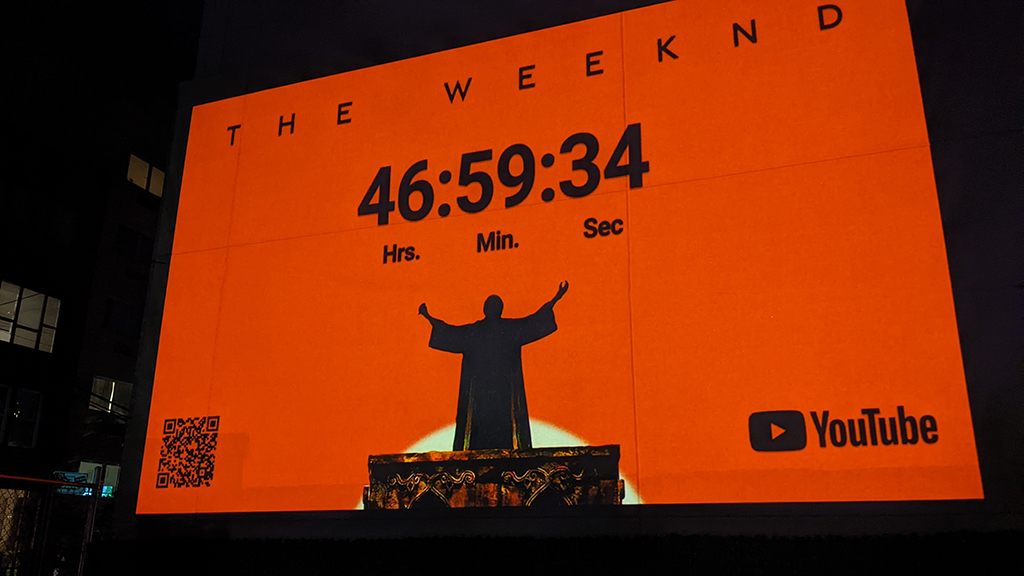
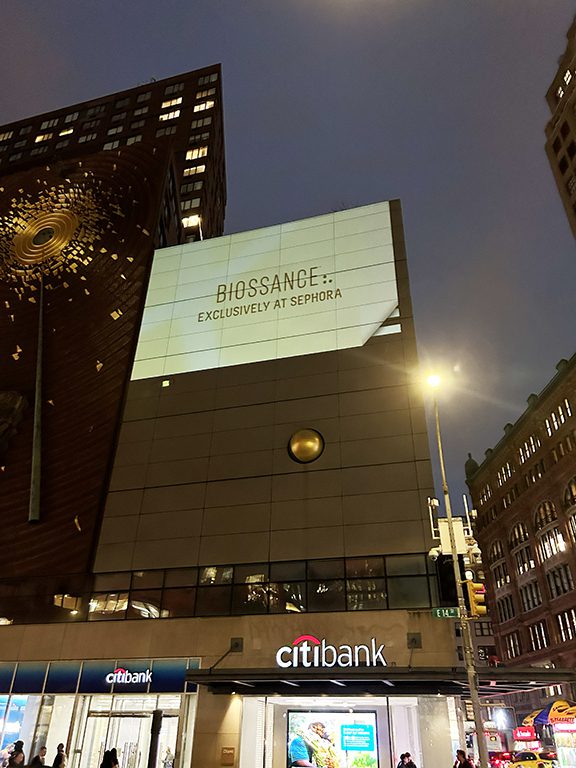
- Clients include: Biossance, The Weeknd, US Marine Corps, Women’s March, Reproductive Freedom for All, YouTube
Coverage & Estimated Impressions
| Zone / Area | Peak Hours | Foot Traffic | Est. Nightly Impressions | Best For |
|---|---|---|---|---|
| Pearl District | 9PM–2AM | Very High | 25,000–120,000 | Product Launch |
| Alberta Arts District | 9PM–2AM | Very High | 25,000–120,000 | Event Promotion |
| Mississippi Avenue Arts Corridor | 9PM–2AM | Very High | 25,000–120,000 | Brand Awareness |
| Central Eastside Industrial District | 9PM–2AM | Very High | 25,000–120,000 | Political |
| Hawthorne Entertainment Corridor | 9PM–2AM | Very High | 25,000–120,000 | Sports |
| Buckman Neighborhood Arts Zone | 9PM–2AM | Very High | 25,000–120,000 | Concert/Festival |
Frequently Asked Questions
First Thursday is one of Portland’s highest-value projection windows of the entire month. The Pearl District fills with thousands of gallery-hoppers, restaurant patrons, and arts community members moving through the district on foot, smartphones active, in an explicitly aesthetic mindset that makes them more receptive to and more likely to document a 20,000-lumen building projection than virtually any other Portland audience configuration. Campaigns timed to First Thursday in the Pearl should confirm location access and projector positioning in advance, as pedestrian density and vehicle activity both increase significantly on these nights. AGM’s scouting process identifies projector positions that operate within the crowd rather than being blocked by it.
The Central Eastside Industrial District holds Portland’s largest projection surfaces in absolute terms. Former manufacturing and warehouse buildings in the Central Eastside frequently offer wall faces running 100 to 200 feet in width and four to six stories in height — dimensions that dwarf many Pearl District building faces. The trade-off is audience density: Pearl District evenings concentrate more pedestrian traffic per square block than the Central Eastside’s still-developing residential and dining scene. For campaigns where maximum image scale is the primary objective, the Central Eastside wins. For campaigns where audience density and social documentation are the primary objectives, the Pearl District is the stronger environment. Multi-night campaigns covering both zones optimize for both variables simultaneously.
Alberta’s Gallery Walk nights are among the most viable advocacy projection windows in all of Portland. The Alberta Arts District’s gallery walk draws an audience that is politically engaged, community-rooted, and actively documenting the cultural and visual environment around it — characteristics that make it the highest-earned-media-generation crowd in any Portland neighborhood projection scenario. For advocacy organizations whose campaigns target Portland’s northeast progressive civic community specifically, Alberta Gallery Walk nights deliver an audience quality that the Pearl District’s more tourist-and-tourist-adjacent crowd doesn’t fully replicate. AGM has extensive experience timing advocacy campaigns to Gallery Walk windows across Portland’s arts districts.
Hawthorne is specifically effective for brands whose target consumer is the inner southeast Portland residential demographic — locally-minded, independent brand-oriented, and physically present in their neighborhood rather than commuting through it. SE Hawthorne’s consistent pedestrian economy creates a steady evening audience that moves slowly through the corridor and is highly familiar with its visual environment, which means a projection that appears as an unexpected visual event generates genuine stop-and-look engagement rather than the habituated tuning-out that saturated advertising environments produce. The building scale on Hawthorne is lower than the Pearl or Central Eastside, but for neighborhood-scale campaigns the intimacy of the environment is an advantage rather than a limitation.
A Portland multi-neighborhood campaign structured across consecutive nights — Pearl District Monday, Central Eastside Tuesday, Alberta on Gallery Walk Thursday — is one of the most efficient audience-coverage strategies available in any American city. AGM plans and scouts all neighborhood locations simultaneously, the same crew and equipment move between deployments, and the campaign generates documentation assets from multiple distinct Portland environments that, combined, represent a full-spectrum coverage of the city’s arts-district and nightlife audiences. Most Portland multi-night clients find that the diversity of earned media content — different walls, different neighborhoods, different crowd contexts — outperforms a single-location extended run in social amplification and press pickup.
Portland’s October-through-April precipitation window requires contingency planning for any outdoor execution, including projection. AGM’s equipment is rated for outdoor operation and handles light rain without performance degradation. Sustained heavy precipitation creates setup and staging challenges, particularly in the Pearl District where projector positioning is typically tighter relative to nearby pedestrian and vehicle activity. Every Oregon campaign scheduled during the wet season includes alternate date windows and weather monitoring starting five days before the planned execution night. Portland’s warehouse districts also offer covered loading dock areas and building overhangs that provide limited equipment shelter during light rain — a practical consideration that AGM’s scouting team maps for each candidate location.
Buckman’s value is audience quality rather than audience quantity. The inner southeast arts community around Buckman — artists, photographers, designers, gallery operators, and maker community members — is Portland’s most photographically active street-level arts crowd. A projection in Buckman during a gallery opening or studio event reaches a smaller total audience than a Pearl District First Thursday night, but that audience is highly motivated to document and share visual experiences they find compelling, and their social networks are concentrated in Portland’s creative and arts media ecosystem. Earned media from a Buckman projection tends to travel through exactly the channels — arts publications, design community social, creative industry networks — that make it most valuable for brands with creative-class positioning.
Portland’s identity as a global athletic brand headquarters — home to Nike’s Beaverton campus and Adidas North America’s Portland headquarters — makes corporate brand activation projection campaigns in the city carry a home-market authenticity that is uniquely available here. Campaigns that project athletic brand creative on Pearl District or Central Eastside warehouse walls land in a city that has a decades-long relationship with the outdoor and athletic brand industry, where residents understand and respect the industry’s presence in their community. AGM works with brand teams and their agency partners to plan Portland activations that align with product launch calendars, athlete event schedules, and brand campaign rollout timelines.
Pearl District permitted wall arrangements — formal agreements with building owners for guaranteed access to specific high-value warehouse facades — are negotiated by AGM on behalf of the client. The process involves identifying the building owner or property management entity, presenting the campaign concept and timeline, and reaching a per-location agreement that covers the specific nights and creative presentation. Permitted agreements in the Pearl District are available for the buildings that deliver the market’s most prized projection surfaces, and they provide complete creative control and advance location certainty that organic public-access campaigns cannot guarantee. AGM manages this entire process; clients provide the campaign brief and timeline.
AGM deploys its own two-person technical crew on every Portland campaign — the same people who have set up and operated this exact equipment in multiple markets, who know its performance envelope on varying surface types, and who can make real-time adjustments to focus, positioning, and output calibration as evening conditions change. Subcontracted projection services in Portland typically involve operators who are familiar with a piece of rental equipment but who have no institutional knowledge of the campaign, the surface, or the ambient conditions documented in the advance scouting process. The difference in execution quality — particularly on challenging surfaces like partially-glazed Pearl District building faces or large Central Eastside walls with irregular surface features — is material and consistently visible in the final photography documentation.
Post-campaign GPS documentation from a Portland deployment captures the exact projector position, the wall GPS coordinates, the confirmed projection distance and angle, and the ambient light conditions at the time of deployment. This data becomes a campaign-ready location specification for future runs — eliminating the need to re-scout a confirmed location and allowing repeat clients to launch subsequent campaigns from an already-validated site. For brands that project in Portland annually or seasonally, this location documentation builds a proprietary Portland wall library that accelerates future campaign planning and reduces advance scouting costs on confirmed repeat locations.
More AGM Outdoor Advertising Services
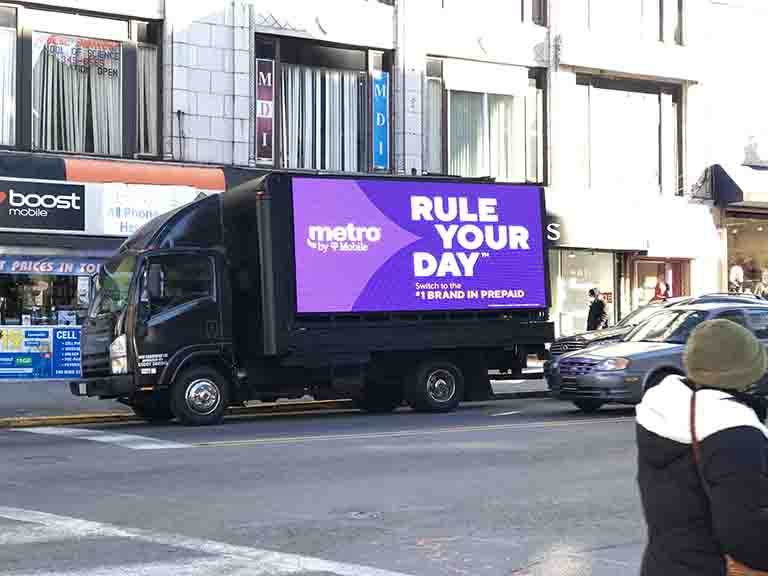
Led Billboard Trucks
Mobile LED displays that bring your brand to any location, any event.
Fly Posting
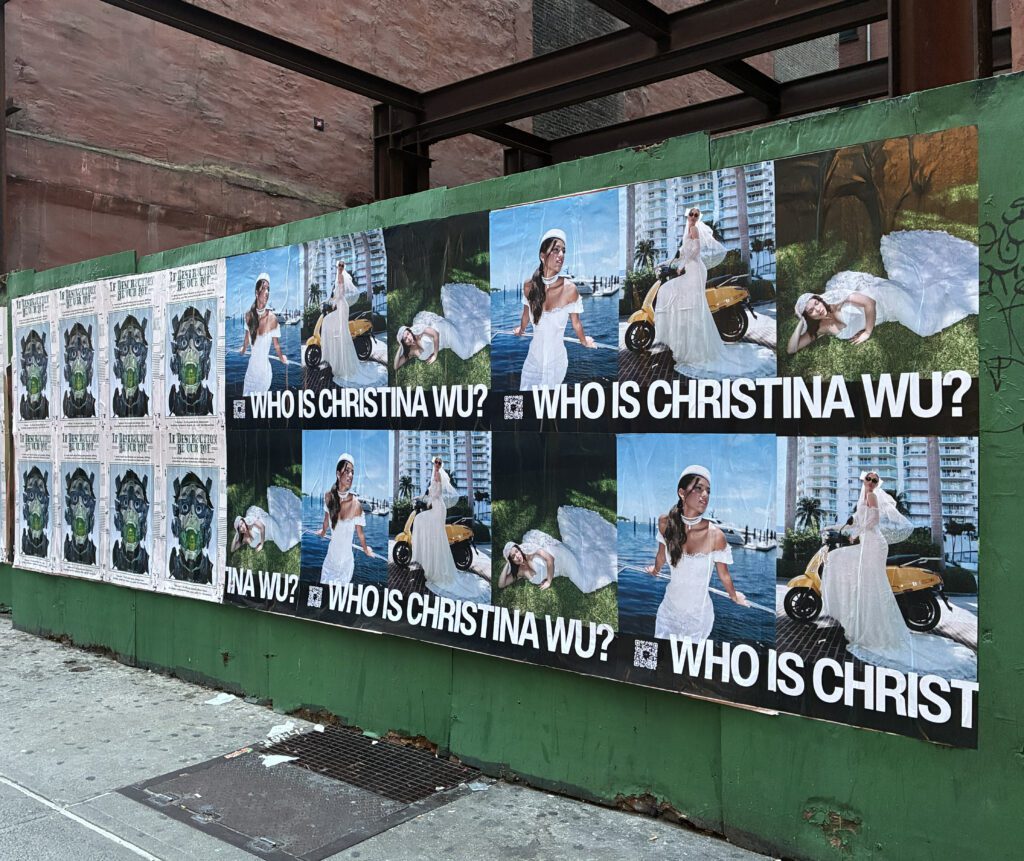
Street-level poster saturation across walls, construction sites, and corridors.

Sidewalk Decals
Ground-level branded decals at pedestrian hotspots and event entrances.

Sidewalk Stencils
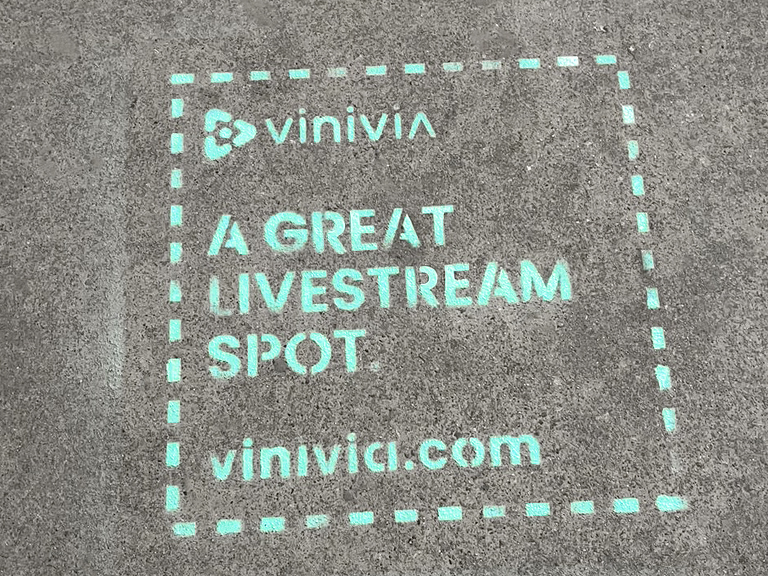
Creative stencil campaigns that put your brand in the path of pedestrians.