
November 11, 2026
Snipe Advertising for Seattle Brands
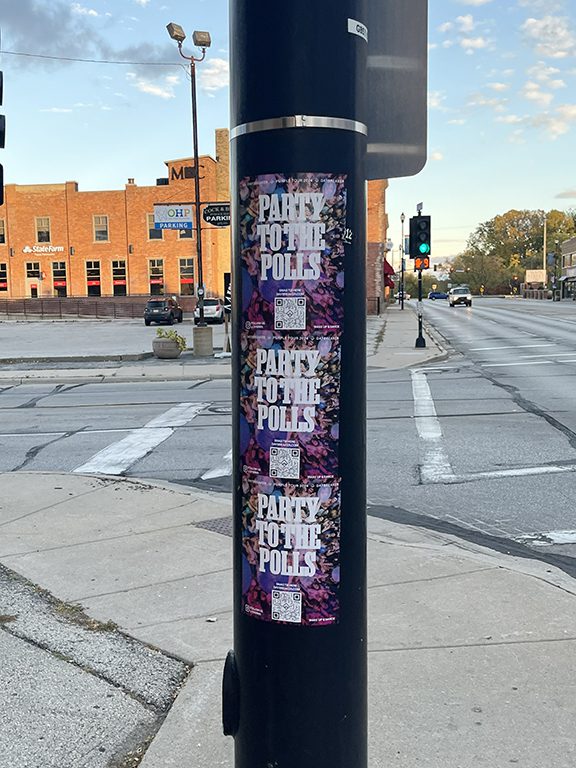
Seattle is one of the few cities in the country where I do not open a snipe conversation by managing expectations downward.
In most markets the pole is a closed category. Street furniture is enumerated, enforcement is unpredictable, and an operator who wants to work honestly ends up steering the client onto private walls and hoarding before the first site visit.
Seattle is different, and the difference is written into the municipal code rather than inferred from how often anyone gets a knock on the door.
Chapter 15.48 of the Seattle Municipal Code, under Miscellaneous Acts, contains a provision stating that handbills, signs and posters may be affixed to City-owned utility poles, lamp poles and traffic control devices under the control of the Seattle Department of Transportation, excepting freestanding stop signs and yield signs and their posts, in accordance with rules promulgated by the Director.
That is a permissive framework. The city has contemplated the activity and provided for it, subject to SDOT’s rules.
Which means the interesting question in Seattle is not whether snipes have a place. It is whether you understand the conditions, the weather and the neighbourhoods well enough to make them land.
This is a grey area and nothing here is legal advice. A framework that exists only to the extent its conditions are met places more weight on compliance, not less.
The SDOT Director’s Rule is the actual job, and you have to read it
The code provision points at rules promulgated by the Director. Those rules are set out in an SDOT Director’s Rule on posting of temporary signs on City-owned utility poles, published in SDOT’s Director’s Rules document library.
Any operator working Seattle has to obtain the current version of that rule and comply with it precisely. I am not going to summarise its contents here. The specific requirements it imposes, covering things like material, fixing method, size, duration and removal obligations, were not extracted when we researched this market, so I will not paraphrase them from memory and risk getting a detail wrong that a crew then acts on.
What I will say is how we treat it operationally.
Separately, the Seattle Department of Construction and Inspections enforces the Sign Code, which SDCI describes as regulating most permanent signs in the city, and Chapter 23.55 of the Municipal Code covers signs within the land use code. Permanent signage on private property is a permitted activity with defined area limits, and it is a different regulatory track from temporary posting on poles. Work out which track an installation sits on before proceeding, because the answer changes who you talk to.
On private walls, hoarding and scaffolding, control sits with the owner or whoever is in charge of the site, and written consent is the baseline regardless of what the pole rules allow.
Actual enforcement culture, including how SDOT handles non-compliant posting in practice and how fast it responds, is something I have not verified and will not characterise.
Capitol Hill and the Pike/Pine corridor
If a Seattle snipe campaign has a centre of gravity, this is it.
Lonely Planet describes the Pike/Pine stretch as aging brick warehouses and former car dealerships made over into Seattle’s nightlife central, with LGBTQI+ bars, music venues, coffeehouses, record stores and fashionable restaurants. Local nightlife coverage positions Pike/Pine as younger, queerer, louder and more neighbourhood-based than Belltown, more late-night than Ballard, and more current than Pioneer Square. The rainbow crosswalks are a recognised marker of the corridor.
For an outdoor operator the phrase “aging brick warehouses and former car dealerships” is the most useful sentence anyone has written about this city. That building stock means large flat masonry flanks, low-rise frontage, roll-up doors, and raw wall surface that simply does not exist in a glass-tower district. The pole runs sit in front of that stock rather than in front of corporate plazas, which changes how posted material reads.
Combined with the record stores and music venues, Capitol Hill is where a snipe reads as part of the neighbourhood rather than as an intrusion. That is not a small thing. The same poster on the same pole lands completely differently depending on whether the street around it already has visual culture.
Pike/Pine is also a continuous linear run. A crew works it on foot from one parking position, which is unusually efficient. The constraint is the hill itself, and I will come back to that.
The audience here is the one most Seattle briefs are actually chasing: music, nightlife, independent retail, late hours, high density of people on foot rather than in cars.
Belltown, Ballard, Fremont and the rest of the map
Belltown is described as compact and rich with contemporary street art on alley walls and building facades, with both small pieces and larger murals near nightlife and dining, and easy to cover in a short walking route. The established alley-wall art culture matters as a signal. It tells you what the neighbourhood tolerates and that some owners there are already comfortable with visual use of their surfaces. That makes the private-surface conversation shorter than it would be elsewhere. Prior art on a wall is not consent for the next piece, but it is a much better starting position than a blank conversation.
Belltown’s alleys are also the quietest usable surfaces in the central city, which matters for crew access.
Ballard has live music and a brewery-and-restaurant character, described as more relaxed than Capitol Hill and less purely late-night. The Tractor Tavern comes up consistently in local discussion of the area’s venues. Ballard rewards campaigns aimed at a slightly broader and slightly earlier audience, and it quietens down earlier, which changes the crew window.
Fremont has its own distinct identity, an eccentric character and its own bar scene. It pairs naturally with Ballard on a single shift because of where it sits.
Pioneer Square is the historic district and is positioned as less current than Pike/Pine. Heritage building stock and conservation oversight make private-wall work harder there and owners more constrained. I would not build a campaign around it unless the brief specifically wanted that audience.
The University District serves the University of Washington. We have not established corridor-level detail there and I am not going to invent any. What I can say with confidence is that the UW academic calendar governs that area’s audience completely, and a campaign timed against it rather than against the general city calendar will do better.
The practical planning point is that Seattle’s valuable areas are distinct neighbourhood centres rather than one continuous core. A campaign planned as “Seattle” will scatter. A campaign planned as Capitol Hill plus one or two others will concentrate.
What Seattle weather does to posted material
Seattle is temperate, classified by Köppen as Csb, the warm-summer rather than hot-summer subtype, with some sources placing it in the oceanic zone instead. Cool wet winters, warm dry summers. Temperatures typically vary from 37F to 79F and are rarely below 28F or above 88F. The city averages 39.34 inches of precipitation a year, with the vast majority falling as rain rather than snow, measured officially at Sea-Tac. January is the most humid month, with average relative humidity around 85 percent.
Those numbers describe a very specific set of material problems, and they are not the ones most people expect.
The dry summer window is real, and it should drive the entire schedule. Seattle genuinely has a dry season, which many American cities do not. July and August give reliable application conditions and long hold. The sensible plan is to concentrate campaign weight into roughly June through September and treat October to May as refresh and maintenance rather than pretending the material will behave the same way.
Drizzle is worse than rain for an operator. Persistent light drizzle is Seattle’s winter signature, and it does not stop. There is no clean post-storm dry window to work in, and surfaces stay continuously damp. A pole or a wall in Capitol Hill that looks dry at one in the morning in November is generally not dry under the surface. Crews who have worked hard-rain cities arrive expecting to wait out a shower and discover there is nothing to wait out.
Humidity kills poster life through the winter. Average relative humidity around 85 percent in January means paper never hardens. Expect soft sheets, lifting edges and significantly shortened life on anything applied between November and March. That is a scheduling fact, not a material fault, and we scope around shorter run expectations in those months rather than overpromising.
Freeze-thaw is mild here. Temperature is rarely below 28F, so Seattle does not drive the aggressive repeated freezing that tears up masonry and lifts bonds in hard-winter cities. Cold snaps happen but are not an annual planning factor. One consequence is that the Capitol Hill brick warehouse stock is in better condition as substrate than brick of similar age in a hard-winter market. Specific annual freeze-thaw cycle counts are not something I have verified.
Salt air is genuine. Seattle sits on Puget Sound, which is saltwater. For snipe work this is the detail that gets missed, because snipes rely on fixings. Exposed metal fixings on waterfront-facing and Belltown-adjacent locations should be specified for a corrosive marine environment rather than an inland one. The degree of salt deposition further inland, in Capitol Hill and Fremont, is not something we quantified, so we specify conservatively rather than guessing.
Road salt is close to a non-issue. Snow is rare enough that de-icing is not a routine annual load on street-level surfaces. That is a meaningful advantage over eastern markets, where winter grit abrades everything at ground level.
UV load is low. Mostly cloudy winters, only partly cloudy summers, high latitude. Seattle has one of the lightest cumulative UV burdens of any major US market, so ink fade is a slow secondary failure mode. Moisture is what kills material here, not sun. That changes the spec. Heavy UV protection is not where the effort should go. Moisture resistance, edge treatment and fixing corrosion are.
Crew logistics: hills, bridges and the two-neighbourhood night
Seattle is a strong walking-crew city at the neighbourhood level and a difficult one between neighbourhoods. Both halves of that need planning for.
Within a neighbourhood, this is easy work. Belltown is compact and covers in a short walking route. Pike/Pine is a dense continuous linear run from one parking position. Ballard and Fremont are each compact centres.
Between neighbourhoods, Seattle is harder than its reputation. The city is built on hills and divided by water. Capitol Hill sits physically elevated above downtown. Ballard and Fremont are separated from the centre by the Ship Canal and its bridges, and a bridge is a single point of failure on a schedule.
We plan two neighbourhoods per night at most. Capitol Hill and Belltown pair reasonably. Ballard and Fremont pair with each other. A crew asked to do more than that spends the difference in transit.
The hills are a real physical constraint that flat-city scheduling consistently underestimates. Carrying material and a ladder up grade on Capitol Hill slows a crew materially, and we build that into time estimates rather than discovering it at three in the morning.
Night windows vary by neighbourhood, which is worth getting right:
Parking is difficult in Capitol Hill and Belltown. Dense residential and commercial occupancy, limited loading access, and no realistic prospect of parking next to every site. Ballard and Fremont are easier. Specific parking regulations, loading zones and overnight restrictions by neighbourhood are things to confirm before routing rather than assume.
Through the wet season the dominant logistical fact is that there is no clean dry window to wait for between October and May, only less-wet nights. We build campaign weight into the dry summer and plan winter work around sheltered substrate: recessed frontage, covered walkways, hoarding under an overhang.
Timing against the Seattle calendar
Seattle’s public life concentrates hard into June through September, which is exactly when application conditions are best. That alignment is unusual and you should use it.
Capitol Hill Block Party is the signature event for the Pike/Pine corridor, listed by Visit Seattle among the city’s recurring cultural celebrations, and it happens in the heart of the most valuable district for this kind of work.
Seafair runs June to August as a multi-event summer institution, including a Seafair Weekend Festival with waterborne events.
Seattle Art Fair runs every July, turning Lumen Field Event Center into a large contemporary and modern art gallery with installations, events and performances. The audience profile there is directly relevant for a brand that wants to be read as culturally literate. Worth noting that Lumen Field also hosts major sport, so the same location carries two very different audiences depending on the week.
Bumbershoot is positioned as the way to end the Seattle summer.
West Seattle Summerfest happens in July in the West Seattle Junction, with live music, food vendors, arts and crafts and a beer garden. Bite of Seattle sits in the broader roster of street fairs and parades.
Northwest Folklife Festival, Earshot Jazz Festival and Freakout are all named by Visit Seattle among the city’s year-round celebrations. Earshot and Freakout matter disproportionately for planning, because they put a music audience on the street outside the dry summer window, which gives you a reason to run in a harder season with a known payoff.
University of Washington terms govern the University District audience. Dates vary and should be checked against the university calendar rather than assumed.
I have not verified Seahawks, Mariners, Kraken and Sounders season rhythms for this market, so I am not going to build advice on them.
What goes wrong, and what we talk clients out of
Treating a permissive code as a free pass. This is the Seattle-specific mistake and it is the one I care most about. A client reads that posting on City-owned poles is provided for and concludes the city does not mind. The framework exists only to the extent its conditions are met, and a documented framework gives the city a clear basis to act against anything outside it. We follow the Director’s Rule exactly, and we turn down briefs that want to push past it.
Winter launches with summer expectations. A client who wants a six-week run starting in late November is asking for something Seattle’s January humidity will not deliver on paper. We either move the dates, reduce the expectation, or shift the weight onto sheltered substrate. We do not quietly take the booking and let the material fail.
Spreading too thin. A brief that wants Capitol Hill, Ballard, Fremont, Belltown, Pioneer Square and the U District in one run across a city split by hills and a ship canal is a brief that will deliver thin coverage everywhere and presence nowhere. Two neighbourhoods, done properly, beats six done lightly. I say this on nearly every Seattle call.
Pioneer Square for a youth brief. Beautiful district, wrong audience for most of what gets briefed to us, and harder to work because of heritage oversight. If the brief is music or nightlife, Pike/Pine is the answer.
Inland hardware on a marine-exposed site. Standard fixings on a waterfront-facing pole will show corrosion faster than anyone expects. Specify for the environment.
Ignoring the hill. Clients plan Capitol Hill as if it is a flat grid. It is not, and the grade costs crew time on every carry.
One more that is less a mistake than a mismatch. If the real goal is a large, bold brand statement that holds a corridor for weeks, snipes alone will not carry it. Pole-mounted work is a repetition format. It earns its keep through frequency along a route, not through single-site impact. On the Pike/Pine corridor specifically, where those aging brick warehouse flanks are sitting right there, the campaign that tends to work is snipes carrying the repetition along the pole run plus Wheatpasting and Poster Campaigns on permissioned private walls carrying the scale. Running both against the same route doubles the effect of each.
Frequently asked questions
Is snipe advertising allowed on poles in Seattle?
Seattle Municipal Code Chapter 15.48 contains a provision contemplating handbills, signs and posters affixed to City-owned utility poles, lamp poles and traffic control devices under SDOT control, excepting freestanding stop and yield signs and their posts, in accordance with the Director’s rules. This is a grey area and not legal advice. Obtain and follow the current SDOT Director’s Rule.
When should a Seattle campaign run?
Concentrate weight into roughly June through September. Seattle has a genuine dry season, and July and August give reliable application conditions and long hold. January humidity averages around 85 percent, which means paper never hardens and run lengths shorten considerably. October to May works better as refresh, maintenance and sheltered-substrate work.
Which Seattle neighbourhoods work best for this?
Capitol Hill and the Pike/Pine corridor first, for nightlife density, music venues, independent retail and aging brick warehouse building stock. Belltown is compact with an established alley art culture. Ballard and Fremont suit slightly broader, earlier audiences and pair together on one shift. Pioneer Square is harder because of heritage oversight and a different audience.
How does Seattle weather affect poster lifespan?
Moisture is the failure mode here, not sun. UV load is among the lightest of any major US market, so fade is slow. Persistent winter drizzle keeps surfaces continuously damp with no clean dry window between October and May. Freeze-thaw is mild. Salt air from Puget Sound attacks exposed metal fixings on waterfront-facing sites.
How many neighbourhoods can a crew cover in one night?
Two at most. Seattle is built on hills and divided by water, with Capitol Hill elevated above downtown and Ballard and Fremont behind the Ship Canal bridges. Capitol Hill pairs with Belltown, Ballard pairs with Fremont. Grade on Capitol Hill slows every carry, and parking there and in Belltown is genuinely difficult.
Do you handle removal in Seattle?
Yes, and here it matters more than in most markets. Where a framework permits an activity subject to conditions, meeting those conditions is the whole basis of working cleanly. Removal is scheduled into every run rather than treated as optional, and we document sites before and after so the record exists if anyone asks.
Request a campaign quote
If you are planning snipe work in Seattle, the first useful conversation is about which neighbourhoods you actually need, what season you are working in, and what the campaign has to achieve. Seattle gives you a workable framework and a genuine dry window, and those two things reward planning more than they reward speed.
Tell us the corridors, the dates and the outcome. Request a campaign quote and we will come back with a route plan built around how this city actually works rather than a generic poster count.

Ready to Run Your Campaign?
Call us or email us. We’ll tell you exactly what we can do in your market and what it costs.
Related Service
Explore similar advertising solutions offered by American Guerrilla Marketing.
American Guerrilla Marketing — Los Angeles
Street-level campaigns in Los Angeles and nationwide. Wheatpasting, LED trucks, street teams, and more.
(646) 776-2770
Related Articles
-
Snipe Advertising for Oklahoma City Brands
November 12, 2026
-
Snipe Advertising for Richmond Brands
November 12, 2026
-
Snipe Advertising for Virginia Beach Brands
November 11, 2026
-
Snipe Advertising for Albany Brands
November 10, 2026
-
Snipe Advertising for Milwaukee Brands
November 10, 2026