American Guerrilla Marketing
Nationwide Service
Media planning, media buying, billboard advertising, & guerrilla marketing
New Haven’s Yale academic ecosystem, Chapel Street independent retail corridor, and Westville arts district create one of the most intellectually engaged fly posting audiences in the entire Northeast — a market where creative brand messaging lands with unusual depth and carries further.
New Haven’s distinction as a fly posting market has almost nothing to do with population size and almost everything to do with intellectual density. Yale University is not simply a large employer or an economic anchor — it is a machine that continuously produces and sustains a concentrated population of young adults who are professionally trained in visual communication, deeply engaged with cultural production, and accustomed to encountering creative work in their daily environment. The art school graduates, architecture students, design MFA candidates, and humanities PhD students who move through Chapel Street and Whalley Avenue and the Westville arts district on daily schedules are not passive consumers of advertising. They are people who have spent years developing the perceptual sophistication to distinguish creative work that has something to say from brand messaging that is merely decorative. When they encounter a well-executed fly posting campaign on their morning coffee run or their walk between studios, they register it in a way that general market audiences often don’t — with the attentiveness, the aesthetic judgment, and the social-sharing impulse of people who are themselves makers of visual work.
That quality of audience engagement — what makes New Haven genuinely exceptional rather than merely good — extends beyond Yale’s own enrollment to the broader community that forms around a world-class research university. Graduate students, faculty, visiting scholars, local artists who have settled in New Haven because of the cultural infrastructure Yale provides, independent business owners on Chapel Street and Whalley Avenue who serve the university community, and the young professionals who stay in New Haven after graduation because of its combination of affordability and cultural richness — all of these demographics share the intellectual and aesthetic orientation that makes fly posting in New Haven, CT hit differently than equivalent placements in markets without this kind of institutional foundation. The audience is smaller than Boston or New York, but its engagement quality per impression is among the highest available anywhere in the Northeast corridor at any price point.
Chapel Street from College Street to Orange Street is the physical expression of everything that makes the Yale demographic valuable for fly posting campaigns. The corridor hosts independent boutiques, coffee shops, bookstores, record stores, and restaurants that cater specifically to the aesthetically conscious, culturally engaged young adult who defines New Haven’s core consumer demographic. It is one of the most walkable commercial stretches in all of Connecticut, with consistent daily foot traffic from students, faculty, and local residents who patronize its independent businesses on habitual schedules. A fly posting campaign with placements along Chapel Street is not catching a distracted audience in a drive-by — it is meeting a pedestrian audience moving on foot through a corridor they know well, encountering your brand in the visual environment they navigate every day, where novelty and quality register clearly against the familiar backdrop of the street they walk regularly.
Whalley Avenue and the Westville arts district extend New Haven’s fly posting geography beyond the immediate Yale campus footprint and into the broader creative community that has grown up around the university’s cultural influence. Whalley runs from downtown through Edgewood and into Westville, carrying a diverse corridor of independent restaurants, service businesses, community organizations, and residential blocks that together represent New Haven’s non-Yale cultural layer — the artists, musicians, community members, and long-term residents who define the city’s identity beyond the academic calendar. The Westville district itself, centered on Blake Street and Fountain Street near Whalley, is the most purely arts-engaged neighborhood in New Haven: galleries, artist studios, independent coffee shops, and the city’s Thursday evening gallery walks that draw a committed arts-going crowd rather than casual pedestrian traffic. Whitney Avenue running north from campus toward East Rock provides another fly posting corridor, serving graduate student residential density, Yale medical campus commuters, and the hiking and athletic population that uses East Rock Park as a regular destination.
AGM handles in-house printing, direct crew installation across Chapel Street, Whalley Avenue, Westville, and Whitney Avenue, and GPS-documented reporting on every placement. New Haven's academic and arts audience is one of the most engaged fly posting markets in the Northeast. Let's put your brand in front of them.
Select a city to explore Fly Posting Advertising opportunities.
Chapel Street between College and Orange is the axis around which New Haven’s walkable pedestrian culture rotates, and it is the single most valuable fly posting corridor in the city for brands targeting the Yale-adjacent creative and academic demographic. The street anchors its eastern end at the Yale School of Architecture and the Old Campus, and runs west through a sequence of independent businesses that define New Haven’s commercial identity at street level: Atticus Bookstore and Café, the independent boutiques concentrated around the Chapel/College intersection, record stores and vintage shops, and the restaurant strip that carries the lunch and dinner pedestrian flow of students, faculty, and local residents through the afternoon and evening hours. The demographics are extraordinarily consistent — a 20–34 corridor dominated by Yale students, graduate students, young faculty, and the local creative professionals and independent retail patrons who orient their commercial lives around this stretch. The walkability of Chapel Street means a fly posting campaign with well-chosen placement positions covers the primary pedestrian routes of this entire demographic within a zone compact enough to build genuine impression frequency, not merely passing exposure. For brands whose core customer is the educated, aesthetically conscious young adult in the 20–34 range, there is no more efficient fly posting corridor in the state of Connecticut than Chapel Street in New Haven.
Whalley Avenue is New Haven’s longest and most demographically diverse commercial corridor, running from the edge of downtown through the Edgewood neighborhood and into Westville, and providing a continuous stretch of fly posting surface positions that can reach community-anchored residential demographics, the LGBTQ+ community hub concentrated in the Edgewood zone near Whalley and Ellsworth, and the arts and independent business community of the Westville section. The diversity of Whalley — in demographic terms, in community character, and in the range of businesses and organizations it supports — makes it the right corridor for brands whose New Haven audience extends beyond the Yale campus zone into the broader community of people who live and move through the city. Independent restaurants including Zinc and Claire’s Corner Copia, the Edgewood Park green space that draws families and outdoor-oriented residents to the neighborhood, the Arts Council of Greater New Haven offices, and the multiple independent businesses serving Westville’s residential base all create foot traffic contexts that differ substantively from Chapel Street’s academic concentration. A fly posting campaign that extends from Chapel Street into Whalley Avenue adds community depth to a Yale-zone build without geographic contradiction, since the demographics of Whalley’s most active blocks — particularly the Edgewood and Westville sections — are complementary to the Chapel Street audience in age range and aesthetic orientation even as they differ in institutional affiliation and community background.
The Westville arts district is where New Haven’s commitment to visual art is most concentrated and most visible outside the Yale campus itself. Blake Street and Fountain Street, in the blocks just off Whalley near the Westville Village center, host galleries, artist studios, independent coffee shops, and the commercial infrastructure of a genuine arts neighborhood — not a neighborhood gentrifying toward arts, but one that has been arts-defined long enough for the community to have established its own institutions and programming calendar. The Thursday evening gallery walks that are a regular feature of the Westville arts calendar are the most direct expression of this: an audience that actively seeks out visual creative work, moves through the neighborhood’s gallery circuit on foot, and engages with art in the participatory way that makes street poster advertising in this corridor a natural extension of the gallery-going experience rather than an interruption of it. Street poster advertising in Westville reaches the most committed arts audience in all of New Haven — the people for whom encountering a wheat paste campaign on Blake Street is not a commercial intrusion but a part of the visual landscape of their arts district, to be evaluated on its creative merits alongside the gallery work they’re walking past. For brands whose identity is genuinely rooted in creative culture, Westville is where that identity is most rigorously tested and most powerfully rewarded by the quality of audience it reaches.
Whitney Avenue runs north from downtown Yale’s campus edge through the East Rock neighborhood, a residential corridor where graduate student housing density and Yale medical campus commuter traffic combine to create consistent weekday foot traffic on a route that also serves the athletic population using East Rock Park as a regular destination. The corridor’s independent businesses — coffee shops, casual restaurants, and neighborhood service establishments — cater to the graduate student and young professional population that defines East Rock’s resident demographic, and the combination of academic and athletic lifestyle identities makes this a distinct posting zone from the Chapel Street retail corridor while serving an audience that overlaps substantially in age range and cultural orientation with the Chapel Street demographic. Graduate students in particular are a high-value fly posting audience: they are intellectually engaged, culturally aware, and at a life stage where brand discovery through street-level media happens at higher rates than in later career phases when routine and media habit have solidified. Fly posting on Whitney Avenue adds geographic range to a New Haven campaign’s reach, extending the brand’s presence from the downtown-campus zone north toward one of New Haven’s most residentially dense and culturally active neighborhoods.
AGM’s wheatpasting campaign for The Onion in Manhattan and Washington DC identified two specific audience environments where the publication’s brand — built on wit, cultural intelligence, and the assumption of an informed, media-literate reader — could achieve maximum engagement through street-level advertising. K Street and Dupont Circle in Washington are corridors defined by media professionals, policy workers, think-tank employees, and the educated young adults who choose these neighborhoods precisely because they value the intellectual density that comes from living within walking distance of Washington’s cultural and policy institutions. The Onion’s wheat paste campaign worked in these corridors because the audience’s relationship to wit and cultural referencing is active rather than passive — these are people who seek out sophisticated media rather than consuming it incidentally.
New Haven’s Chapel Street and Whalley Avenue ecosystems create the same kind of audience relationship to creative brand messaging, assembled through a different institutional mechanism. Yale’s art school, its graduate programs across the humanities, its professional schools in law and medicine and architecture, and its undergraduate liberal arts education all produce — and constantly replenish — a population of young adults who approach the visual and media environment around them with the same active, evaluative intelligence that made The Onion’s DC campaign land so effectively with its target audience. These are not people who consume advertising; they are people who read it, critique it, share it when it earns their respect, and remember the brands that demonstrated the creative ambition to do something worth noticing at street level. Fly posting in New Haven, CT for brands with strong creative identity and media-literate target audiences is the direct Connecticut equivalent of what The Onion achieved on K Street — reaching an audience that responds to intelligence and craft with the brand loyalty and social amplification that more broadly targeted campaigns rarely generate.
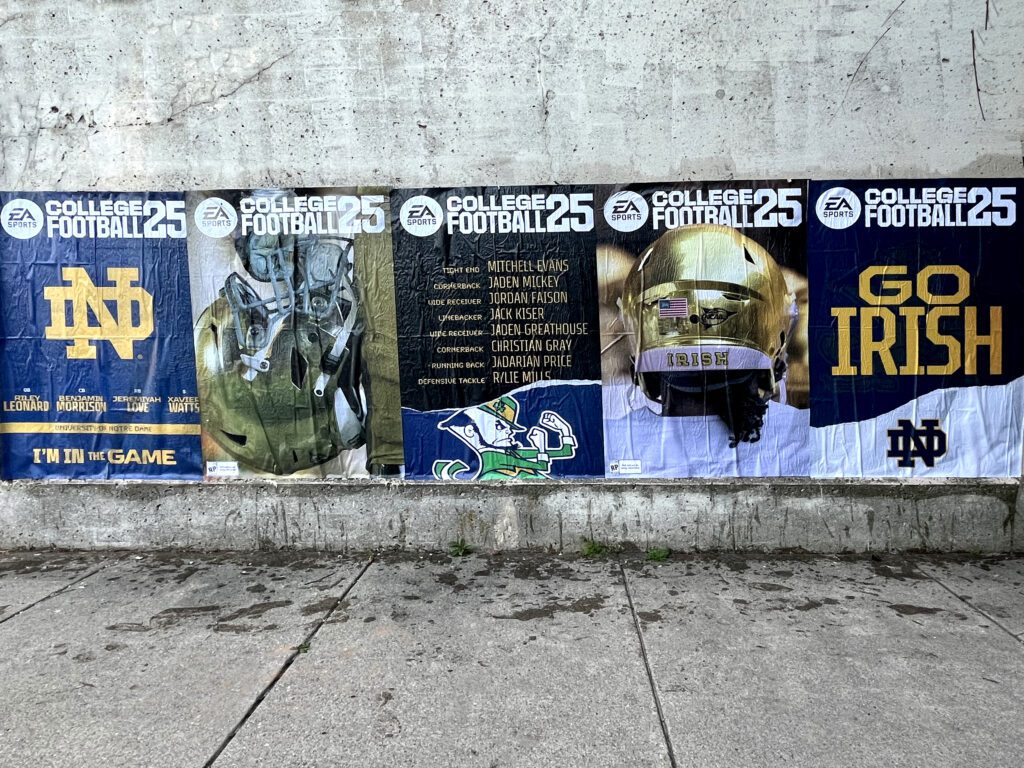
EA Sports, another AGM client with fly posting campaigns across multiple markets, demonstrates the complementary dimension of the New Haven market: the connection between sports and gaming culture and the young male demographic concentrated in the 18–28 age range that is highly active across Yale’s undergraduate enrollment and New Haven’s broader young adult population. For entertainment, gaming, and sports brands, the Chapel Street and Whitney Avenue corridors provide access to the specific demographic that drives early adoption, competitive gaming engagement, and the social network amplification that makes street-level brand activations for entertainment products compound beyond their immediate geographic reach.
Award Winning Personalized Service
You will get thoughtful, devoted, and individualized attention from our experienced, qualified, and professional personnel. Being one of the most illustrious agencies in Brooklyn, New York, American Guerrilla Marketing has been awarded the Best of Brooklyn title.
Nationwide
Industry City, Brooklyn, New York 11232
American Guerrilla Marketing
Hours
Mon - Fri: 9 AM - 5 PM
Sat & Sun: Closed
Automate your campaign with AGM’s Request for Proposal Builder. Simply answer a few quick questions about your campaign goals, markets, and timeline, and the system will generate a tailored presentation with recommended strategies, quantities, and pricing. Click the RFP Builder to instantly receive your customized proposal.
New Haven’s walkability is one of its most significant advantages for fly posting campaigns, and it directly informs the format strategy that makes campaigns in this market most effective. Because the city’s primary fly posting corridors — Chapel Street, Whalley Avenue, Westville, and Whitney Avenue — are all pedestrian-scale and navigated primarily on foot by their core audiences, the 24″×36″ standard format delivers disproportionate impression frequency relative to its cost. In a car-dominated suburban corridor, a poster needs to register quickly at distance; on Chapel Street, the same poster is read by someone standing at normal pedestrian distance, with enough time to absorb the full creative execution and brand message. That quality of engagement — a pedestrian reading a poster on foot at three to six feet, with two to five seconds of attentive focus — is what makes 24″×36″ fly posting particularly powerful in New Haven relative to larger markets where the same pedestrian density is harder to achieve along well-targeted demographic corridors.
The 48″×72″ large format is the right choice for specific New Haven anchor positions where surface size and location prominence justify the additional production investment — a prominent blank wall on Chapel Street facing a high-foot-traffic intersection, a large surface near the Yale School of Art on Chapel or York Street, or a warehouse-scale exterior on Whalley in the Edgewood zone. Large-format placements in these positions create landmark visual moments that photograph well and generate the kind of earned media from social sharing that multiplies the reach of the original installation beyond its physical impression geography. For brands launching in New Haven or establishing a strong first impression with the Yale academic community, a 48″×72″ anchor placement on Chapel Street combined with 24″×36″ coverage throughout Whalley Avenue and the Westville district gives the campaign both the landmark visibility of a dominant placement and the neighborhood penetration that makes the brand feel genuinely present across the city’s creative geography.
New Haven fly posting campaigns begin with a neighborhood targeting review that maps the campaign’s audience profile against the specific pedestrian patterns and surface inventory of each posting zone. Chapel Street, Whalley Avenue, Westville, and Whitney Avenue have distinct audience compositions and movement patterns that call for different placement logic — a campaign targeting Yale art students and the Westville gallery community routes through different specific positions than a campaign targeting East Rock graduate students or the Whalley Avenue LGBTQ+ and community audience. AGM’s targeting process identifies the exact streets, intersections, and surface positions within each corridor that deliver the highest combination of foot traffic, demographic alignment, and surface quality for the campaign’s format size and creative execution.
In-house printing at AGM’s own production facilities ensures quality control and timeline reliability without third-party print vendor variability. Wheat-based adhesive is standard for all New Haven installations — biodegradable, environmentally responsible, and removable with pressure washing, making installations non-destructive and cleanup straightforward. All installation in New Haven is executed by direct AGM crews, not subcontracted teams, maintaining the consistent quality and positioning precision that pedestrian-scale markets like Chapel Street demand. When you’re placing a poster in a walkable corridor where the audience reads it at close range, the installation quality — the flatness of the adhesion, the positioning relative to adjacent surfaces and sightlines — matters to the campaign’s impression quality in ways it doesn’t in large-format roadside contexts.
Post-campaign reporting delivers GPS-documented photography for every New Haven installation position, with time-stamped photos and geographic location data confirming placement positions across all corridors in the build. For brands running New Haven as part of a broader Connecticut campaign, the New Haven documentation integrates into the consolidated statewide reporting package without requiring separate handling. AGM’s reporting gives brands the proof-of-install documentation needed to evaluate neighborhood coverage distribution, confirm that placements landed in the specific corridors outlined in the campaign strategy, and assess the quality of surface positions across the Chapel Street, Whalley, Westville, and Whitney Avenue posting zones.
The Yale academic and arts community that defines New Haven’s fly posting market supports a specific and well-defined range of brand categories that consistently perform well through street poster advertising in this city. Media brands — publishers, digital publications, podcasts, cultural magazines, and the kind of intellectually oriented media products that The Onion represents at its best — find in New Haven the precise audience demographic that responds most actively to sophisticated brand messaging: educated, media-literate, critical, and deeply connected to the cultural conversations that define their professional and social world. A media brand that executes a well-crafted fly posting campaign on Chapel Street is speaking directly to the people most likely to become loyal readers, subscribers, and advocates — and doing so in the visual medium they most actively engage with in their daily environment.
Arts and cultural institutions — museums, galleries, performing arts organizations, film festivals, book publishers, and arts nonprofits — are natural users of New Haven fly posting precisely because the Westville gallery walk audience, the Chapel Street arts-retail community, and the Yale MFA student body are the core constituencies these organizations most need to reach. The New Haven arts community attends openings, supports independent institutions, and participates in the cultural programming that defines a city’s arts identity — and they discover that programming through the street-level media of fly posting in their neighborhood corridors as reliably as through any digital channel. Fly posting in New Haven is effective arts-audience outreach because it uses the visual medium that arts audiences engage with on a daily basis as part of their professional and cultural practice.
Fashion and lifestyle brands targeting the 20–34 educated young adult demographic find New Haven’s Chapel Street and Whalley Avenue corridors productive environments for fly posting because the independent retail culture of these streets aligns precisely with the consumer behavior of the target demographic — people who shop at independent boutiques, support small businesses over chain retail, and make purchasing decisions based on brand values and aesthetic alignment as much as product functionality. The same quality of audience engagement that makes The Onion’s brand resonate with educated media consumers makes a well-executed fashion or lifestyle fly posting campaign resonate with New Haven’s Chapel Street shoppers, who approach their brand choices with the same evaluative intelligence they apply to everything else in their cultural environment.
Entertainment and gaming brands targeting the 18–28 male demographic — the core audience for EA Sports and similar entertainment clients — find New Haven’s Yale undergraduate enrollment a significant concentration of exactly this demographic within an unusually walkable and poster-accessible campus-adjacent geography. Release campaigns, product launches, and competitive gaming events all benefit from the Chapel Street and Whitney Avenue poster corridors’ access to the young male student population that is the primary audience for this category. For entertainment brands whose target audience skews toward academically engaged young men in the 18–28 bracket, New Haven is one of the most concentrated and efficiently reachable markets of this size in the Northeast.
100 posters: contact us for pricing
200 posters: contact us for pricing
Extra creative: contact us for pricing
The recommended format for New Haven coverage campaigns across Chapel Street, Whalley Avenue, the Westville arts district, and Whitney Avenue. Pedestrian-scale corridors make 24″×36″ particularly effective — audiences read posters at close range with full attentive focus rather than in quick drive-by passes. 72-hour rush production available up to 500 qty.
100 posters: contact us for pricing
200 posters: contact us for pricing
Extra creative: contact us for pricing
Best for anchor placements at prominent Chapel Street intersections facing peak foot traffic, landmark positions on Whalley Avenue near Westville, or high-visibility surfaces near the Yale School of Art. Creates landmark visual statements that photograph well and generate social amplification beyond their physical location.
New Haven fly posting campaigns typically run one to two weeks from installation. The pedestrian-scale corridors of Chapel Street and Whalley Avenue produce the highest impression frequency per placement position of any Connecticut market — the same audience member walks past the same posting position multiple times over a campaign’s run because these are the daily routes of their habitual pedestrian patterns. Multiple creative executions can be deployed across a New Haven campaign, allowing brands to run different messaging for the Yale arts community at Chapel Street and Westville versus the broader community audience on Whalley Avenue without separate campaign timelines for each creative version.
Yale University’s presence shapes the New Haven fly posting market in several direct and measurable ways. The art school, MFA programs, and undergraduate enrollment create a permanent population of young adults with advanced visual literacy — people who read creative work carefully, share work they find genuinely compelling, and carry brand impressions into their social and professional networks with more active endorsement than general consumer audiences typically provide. The academic calendar also creates a reliable and predictable foot traffic pattern on Chapel Street and Whalley Avenue — the student population returns in late August, peaks through the fall semester, and maintains elevated density through spring commencement, giving brands a consistent and foreseeable high-engagement window to plan around. Beyond enrollment, the permanent community of faculty, arts professionals, and creative workers who have settled in New Haven because of Yale’s cultural influence maintains the market’s above-average cultural engagement year-round.
Chapel Street from College to Orange is New Haven’s most walkable, most consistently foot-trafficked commercial corridor, serving the primary pedestrian routes of the Yale student, faculty, and adjacent-community demographic on their daily movement between campus, coffee shops, boutiques, restaurants, and residential blocks. The street’s independent retail character — bookstores, record shops, boutiques, cafés, galleries — selects specifically for the aesthetically conscious, culturally engaged young adult demographic that fly posting campaigns targeting this audience are designed to reach. The walkability of Chapel Street means that poster impressions here are close-range, attentive, and repeated — not glancing drive-by exposures but genuine one-to-three minute visual interactions from pedestrians who know the street well and notice when something new has appeared on a posting surface they walk past regularly.
Westville is the most committed arts community environment in New Haven outside the Yale campus, and it is one of the highest-engagement fly posting locations in all of Connecticut for brands targeting the arts-going audience specifically. The gallery walk programming that draws a regular and committed crowd to Blake Street and Fountain Street on Thursday evenings creates a specific and predictable peak impression window for fly posting placements in the district, with an audience that is actively seeking out creative work and therefore predisposed to engage with street-level visual advertising at a higher rate than general pedestrian audiences. Brands in arts and culture, creative lifestyle, fashion, and independent media will find the Westville fly posting audience significantly more engaged per impression than the same demographic in a more general commercial corridor.
Chapel Street and Whalley Avenue serve related but distinct audiences and fill different strategic roles in a comprehensive New Haven fly posting campaign. Chapel Street is the tighter, more concentrated, more Yale-proximate corridor — the highest pedestrian density along the shortest length, with the deepest penetration into the academic and arts-retail community that orbits the university. Whalley Avenue provides geographic range and demographic diversity — a longer corridor that reaches community residents, the LGBTQ+ community concentration near Edgewood, independent business customers, and the Westville arts district at its western terminus. Brands that need depth in the Yale zone prioritize Chapel Street; brands that need breadth across New Haven’s community demographics use Whalley. Full-city campaigns run both, using the two corridors as complementary reach layers rather than interchangeable alternatives.
Brands whose core customer is the educated, media-literate, aesthetically conscious young adult — roughly 20–34, college-educated or in graduate education, engaged with cultural production in some professional or personal capacity — find New Haven’s market exceptionally productive relative to its population size. Media brands (publications, digital media, podcasts, streaming platforms with cultural programming), arts and cultural institutions, fashion and lifestyle brands targeting independent retail consumers, entertainment and gaming brands targeting younger male demographics, and any brand whose identity is built around creative quality and cultural intelligence will find New Haven’s Chapel Street and Whalley Avenue corridors concentrating their ideal customer demographic more efficiently than almost any comparably sized market in the Northeast.
Yes — New Haven has a regular events calendar that creates identifiable peaks in the pedestrian density and cultural engagement of its primary fly posting corridors. The Westville gallery walks held Thursday evenings are the most direct amplifier for fly posting in the Westville district, concentrating an arts-going audience in the neighborhood during the peak engagement period for street-level creative work. Yale Arts Area events, gallery openings at the Yale University Art Gallery and the Yale Center for British Art on Chapel Street, and the broader New Haven arts programming calendar create similar peaks on Chapel Street and at adjacent cultural venues. Film screenings at the Criterion Cinema on College Street, music events at venues throughout the city, and the regular programming of New Haven cultural institutions all create audience concentration windows that AGM’s campaign timing strategy can account for when planning installation around maximum engagement.
September through November is the highest-engagement opening window for fly posting in New Haven — the fall semester brings the returning student population back to Chapel Street and Whalley Avenue at full enrollment, the arts programming calendar ramps up for the fall season, and the combination of academic energy, independent retail activity, and gallery programming creates the kind of concentrated pedestrian density that makes street poster campaigns most effective. Late January through April (spring semester) is the secondary peak window, offering strong foot traffic without the fall semester’s first-impression novelty. Summer brings lower student population density but maintains the local arts community, faculty, and young professional resident foot traffic that makes Westville and Whalley Avenue productive year-round posting zones. November through December offers a useful pre-holiday window with the full enrollment still in residence through mid-December.
The primary strategic difference between New Haven and a major metro like Boston is the concentration-to-geography ratio — New Haven’s target demographic is packed into a significantly smaller and more walkable geographic footprint than Boston’s comparable audiences, which allows a campaign with fewer total placements to achieve higher impression frequency per audience member. In Boston, reaching the same demographic density requires covering a substantially larger geographic area with proportionally higher poster counts. In New Haven, the compactness of Chapel Street and Whalley Avenue as primary corridors means that a 100-poster campaign can achieve the impression frequency of a 200-poster build in a geographically dispersed market. The trade-off is absolute reach volume — New Haven’s total addressable audience is smaller than Boston’s — but the engagement quality and cost efficiency per relevant impression strongly favor the New Haven market for brands targeting the specific demographic that the Yale ecosystem concentrates here.
New Haven’s academic environment produces a population of young adults with active, critical engagement with media — people who consume entertainment, publications, and cultural products with the kind of evaluative attention that distinguishes early adopters from passive consumers. Brands in media and entertainment that earn the attention and respect of New Haven’s Yale-educated demographic through a well-executed fly posting campaign are reaching the kind of audience members who become advocates rather than merely customers — who recommend the publication, the show, the album, the platform to their peers in social networks that extend far beyond New Haven’s geographic boundaries. The Onion’s wheatpasting in Washington’s media professional corridors worked on the same principle: reach the audience that shapes cultural conversation, and the campaign’s impact extends through their social influence beyond any physical impression count. New Haven concentrates that kind of audience at a price that no major metro can match.
Whitney Avenue running north from downtown Yale’s campus toward East Rock adds geographic extension and demographic depth to a New Haven campaign centered on Chapel Street. The corridor’s graduate student residential density — PhD students, professional school students, and postdoctoral researchers who live along Whitney and the surrounding East Rock residential streets — represents the older and more settled academic demographic that Chapel Street’s undergraduate-weighted foot traffic doesn’t fully cover. The independent coffee shops, casual restaurants, and neighborhood businesses along Whitney serve this population on their daily routes between home, Yale’s science and medical campuses, and East Rock Park, creating consistent weekday foot traffic that complements the retail-and-arts character of Chapel Street with a residential-commuter audience profile. For brands targeting graduate students and early-career researchers specifically, Whitney Avenue is a necessary component of a comprehensive New Haven market build.
The concentration of LGBTQ+ community spaces, businesses, and social infrastructure near the Whalley and Edgewood intersection makes this section of Whalley Avenue a specific and intentional posting zone for brands whose audience includes or prioritizes the LGBTQ+ community in New Haven. This community is well-represented in the arts, academic, and independent business ecosystems that define New Haven’s broader cultural character, and the Whalley/Edgewood zone is where community-specific businesses, bars, and social organizations are most concentrated. For brands doing Pride activations, lifestyle and wellness campaigns targeting LGBTQ+ audiences, or entertainment and media brands with strong queer community appeal, this zone of Whalley Avenue is the most targeted and community-specific fly posting location available in New Haven — and one of the more underutilized in the state’s broader fly posting market.
A comprehensive New Haven fly posting campaign covers four primary corridors: Chapel Street from College to Orange (the primary academic and retail artery), Whalley Avenue from downtown through Edgewood into Westville (community and arts corridor), the Westville arts district on Blake and Fountain streets (gallery walk neighborhood), and Whitney Avenue from campus toward East Rock (graduate residential and medical campus corridor). This footprint reaches the full range of New Haven’s demographically relevant fly posting audience — Yale students and faculty, local arts community, LGBTQ+ community, independent retail consumers, and the graduate student residential population — across the city’s four most walkable and most foot-traffic-dense posting zones. A 200-poster 24″×36″ campaign distributed across all four corridors provides the volume to build meaningful placement density in each zone while maintaining presence city-wide.