Making an advertising campaign – a real one, not just a set of ads – requires more than creative development. It requires strategic thinking, channel planning, operational execution, and measurement systems. Most brands that struggle with advertising either skip the strategic foundation or lack the operational rigor to execute what they planned. This guide covers both.
American Guerrilla Marketing has been building and executing advertising campaigns since 2006, with particular depth in street-level, experiential, and guerrilla formats across 50+ U.S. markets. We’ve worked with CPG brands, entertainment companies, fashion labels, tech products, and nonprofits – campaigns ranging from targeted neighborhood activations to multi-city national programs. The process we describe here is the one we actually use.
Whether you’re building your first campaign or looking to improve a process that isn’t producing the results you need, this guide will help you think more clearly about what a campaign actually is and how to build one that works.
Step 1: Define a Specific, Measurable Objective
The single most important decision in campaign planning happens before any creative is developed, before any channels are selected, before any budget is discussed: defining what the campaign is for. Not a vague aspiration – a specific, measurable objective.
“Increase brand awareness” is not an objective. It’s a direction. A real objective is: “Increase aided brand awareness among adults 25-44 in the New York metro market from 23% to 35% within 90 days.” The difference matters because every subsequent decision – channel selection, creative approach, budget allocation, measurement plan – depends on what you’re actually trying to accomplish.
Objective Categories
Common advertising campaign objectives fall into a few categories: awareness (growing the percentage of a target audience who knows a brand exists), consideration (building positive associations that put a brand in the purchase consideration set), trial (getting a product into consumers’ hands for first use), conversion (driving a specific purchase or sign-up action), and advocacy (turning satisfied consumers into active recommenders). Each objective calls for different channels, different creative approaches, and different success metrics.
One Primary Objective
The best campaigns have one primary objective. Multi-objective campaigns that try to drive awareness, trial, and purchase simultaneously usually succeed weakly at all three rather than strongly at one. Identify the most important objective for the current campaign period, build toward it, and set the others as secondary outcomes to monitor but not to optimize for.
Step 2: Define Your Target Audience with Precision
Once you have a specific objective, you need a specific audience definition. “Adults 25-54” is a media buying demographic, not a strategic audience definition. A useful audience definition includes geographic concentration, behavioral characteristics, cultural context, and the community spaces where they actually gather.
Geographic Precision Matters
For most brands, consumer concentration is not uniform across a metro area. The people most likely to buy a new natural food product in New York City are not equally distributed across all five boroughs. They’re concentrated in specific neighborhoods – and those neighborhoods have specific physical gathering places, specific community events, and specific cultural dynamics that a well-targeted campaign should address. Geographic precision converts “New York campaign” into specific location deployment that produces real engagement rather than average reach.
Behavioral and Contextual Definition
Beyond demographics and geography: what does this consumer do? Where do they shop? What events do they attend? What media do they consume? What community spaces do they inhabit? These behavioral and contextual characteristics are more actionable than demographic descriptors for planning street-level or channel-specific campaigns.
Step 3: Select Channels Based on Audience and Objective
Channel selection is the decision that most directly determines campaign cost and reach. The right channels are the ones where your specific target audience concentrates, in contexts where your specific campaign objective can be addressed effectively. The wrong channels are everything else, regardless of how cheap or familiar they are.
Street-Level and Experiential Channels
For objectives that require direct consumer engagement – trial, sampling, community relationship building – street-level and experiential marketing channels are often the highest-ROI option. A guerrilla marketing campaign in the right neighborhoods, staffed with trained brand ambassadors, produces direct consumer encounters that no media channel can replicate at equivalent cost-per-engagement.
Outdoor Advertising
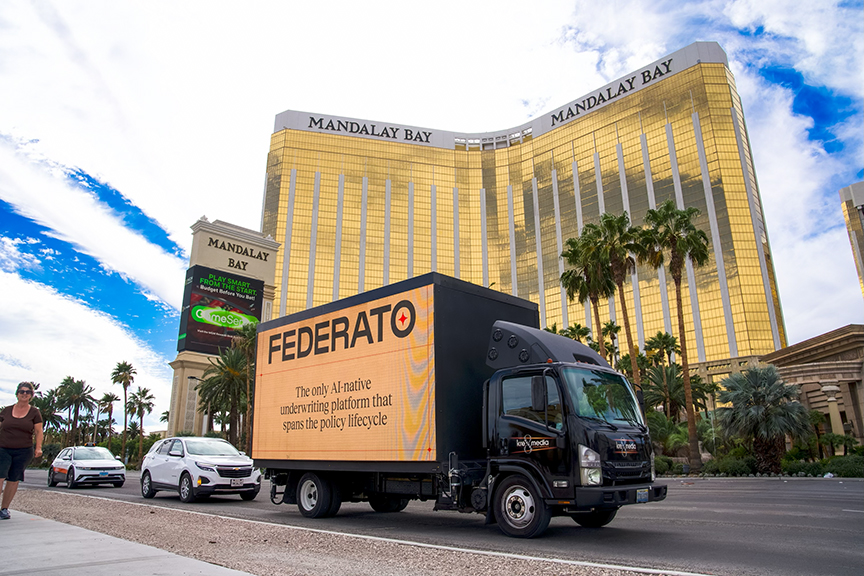
Outdoor formats – billboards, transit advertising, wheatpasting, sidewalk stencils – excel at building visual presence and frequency in specific geographic areas. They’re particularly effective for awareness and consideration objectives when placed in locations with high concentrations of the target audience. LED billboard trucks offer the additional advantage of mobility – they can reposition to capture multiple audience concentrations in a single day.
Digital Channels
Digital advertising excels at reach, targeting, retargeting, and conversion tracking. It’s best deployed for awareness at scale, retargeting consumers who have already engaged with the brand, and driving direct digital conversions. Its weakness is that it’s inherently passive – consumers are exposed to digital ads rather than choosing to engage with them, which limits the trust and trial outcomes it can produce.
Integrated Channel Strategy
The most effective campaigns use channels in combination, with each channel assigned to the objective it addresses best. A product launch campaign might use outdoor advertising for awareness, a street-level sampling program for trial, and digital retargeting to drive purchase among consumers who have been sampling-activated. Each channel does what it does best, and the combination produces outcomes none could achieve independently.
Step 4: Develop Creative That Works in Each Channel
Creative is often what brands think about first in campaign planning, but it’s more effective as a fourth step – after objective, audience, and channel are defined – because creative requirements vary significantly by channel and objective.
Channel-Native Creative
Outdoor creative needs to work at 60 mph or in a 3-second pedestrian glance. Digital creative needs to stop a scroll and communicate value in 1-2 seconds before a viewer moves on. Street-level sampling creative needs to work as conversation starters and leave-behinds that communicate the product story without a brand representative present. Adapting a single creative concept for multiple channels is the goal; resizing a digital ad for a billboard is not channel adaptation.
Message Clarity Above All
The most common creative failure in advertising campaigns is insufficient clarity about the core message. What is the single most important thing a consumer should understand or feel after encountering this campaign? If that answer isn’t obvious from the creative, the creative needs work. Complexity is the enemy of communication in advertising – every element of visual and copy complexity you can remove brings the core message closer to the surface.
Step 5: Build a Realistic Budget
Campaign budgets should be built from objective requirements, not from arbitrary constraints. Start with the objective – what will it actually take to achieve it? – and work backward to the budget required. Then compare that number to what’s available, and make explicit decisions about scope reduction rather than hoping underbudgeted campaigns will somehow produce full-budget results.
Budget Allocation Framework
A simple allocation framework: roughly 60-70% of campaign budget to execution (media, staffing, production, permits), 20-25% to creative development and materials, and 10-15% to measurement, documentation, and reporting. Brands that underinvest in documentation frequently have trouble demonstrating the value of campaigns that actually worked, which makes future budget approvals harder.
Cost-Per-Engagement Benchmarking
Street-level and experiential campaigns should be evaluated on cost-per-direct-engagement, not just total impressions. A $25,000 sampling campaign that produces 8,000 direct product trials in a target market is often more valuable than a $25,000 digital campaign producing equivalent reach, because the quality of engagement is categorically different. Build cost-per-engagement benchmarks into your planning to make cross-channel comparisons meaningful.
Step 6: Plan Execution Logistics
Campaigns that look excellent on paper fail in execution when logistics aren’t planned with the same rigor as strategy and creative. This is where campaigns most often underperform.
Permitting and Location
Street-level and outdoor campaigns require permits in virtually every major market. Permit costs, lead times, and restrictions vary significantly by city, borough, and specific location. New York City, Los Angeles, Chicago, and other major markets each have distinct permitting requirements that must be navigated before campaign launch. AGM manages permitting as a core service – we’ve secured permits in 50+ markets and know which locations are worth the investment and which create more problems than they solve.
Staffing Quality Control
For any campaign format that requires human brand representatives, staffing quality determines outcomes. Recruiting for genuine product enthusiasm, training thoroughly on brand story and product knowledge, briefing on community conduct standards, and supervising in the field – these are operational requirements that many brands underinvest in and then wonder why their ambassador programs underperform. AGM’s brand ambassador programs include all of these components.
Timeline Management
Build production and permitting lead times into campaign planning, not as footnotes but as schedule constraints that determine launch dates. A campaign that rushes permitting risks execution gaps. A campaign that rushes creative production typically produces weaker creative. Building a realistic timeline at the planning stage is cheaper than managing crises during execution.
Step 7: Execute with Documentation Standards
Campaign execution is where plans meet reality. The two requirements for good execution are consistency with the planned approach and thorough documentation that proves the campaign ran as intended.
GPS-Tagged Documentation
For street-level and outdoor campaigns, GPS-tagged photos and timestamped video are the proof-of-performance standard. They confirm that campaign elements were deployed at the planned locations and times, document the quantity and quality of execution, and produce the client-facing evidence that justifies spend and informs future planning. AGM delivers GPS-tagged documentation for every campaign we execute.
Engagement Tracking
Street teams and sampling activations should log engagement counts in real time: contacts made, samples distributed, materials handed out, conversations completed. These logs are the raw data for cost-per-engagement calculations and geographic performance comparisons.
Step 8: Measure Against the Original Objective
Measurement always goes back to the objective defined in Step 1. Whatever that objective was, the measurement plan should be designed to detect whether it was achieved – before the campaign launches, not after it ends.
Common measurement approaches by objective type: for awareness objectives, survey-based aided and unaided recall tracking in campaign vs. control markets. For trial objectives, product sample counts and post-activation purchase surveys. For conversion objectives, direct attribution through digital tracking or coupon redemption codes. For sales velocity objectives, retail scanner data comparisons across campaign and non-campaign markets.
Common Advertising Campaign Mistakes and How to Avoid Them
After executing hundreds of campaigns across two decades, the mistakes that waste advertising budgets are predictable. Here are the ones worth specifically guarding against.
Mistaking Activity for Results
The most expensive advertising campaign mistake is confusing the execution of campaign activities with the achievement of campaign objectives. An advertising campaign that placed posters in 200 locations, deployed a street team for three weekends, and distributed 50,000 pieces of collateral produced a lot of activity. Whether it achieved the business objective depends on whether the right consumers in the right markets encountered the campaign at the right moments in the right ways – and that requires measurement, not just execution reporting. Build measurement into the campaign before it launches.
Channel Familiarity as a Decision Driver
Brands and their agencies frequently over-invest in the channels they know best and under-invest in channels that would serve campaign objectives better but require different expertise. A digital-first agency will design a digital-heavy campaign even when the objective is best served by street-level and experiential tactics. A traditional outdoor agency will recommend outdoor even when the objective is trial-driving. Channel selection should be driven by objective and audience, not agency capability or client comfort. Be willing to use channels that are less familiar when they’re the right fit.
Creative Development Without Channel Context
Creative developed in isolation from channel and execution context often fails to perform because it wasn’t designed for the specific conditions where it will appear. A poster designed as a digital graphic may not work at pedestrian scale on a wall. A video designed for pre-roll may not translate to an outdoor LED format. An ambassador interaction script designed for a trade show may be too formal for a farmers market context. Creative should be developed with execution context as a constraint, not as an afterthought that gets adapted later.
Advertising Campaign Formats for Different Business Stages
The right advertising campaign format depends in part on where a brand is in its business lifecycle. Early-stage brands, growth-stage brands, and mature brands have different advertising campaign needs that should shape format selection.
Early-Stage Brands: Lead with Trial and Community
Early-stage brands don’t yet have the brand recognition that justifies broad awareness advertising. Their advertising investment produces the best returns when focused on direct consumer trial and community relationship building – formats that convert small budgets into genuine consumer advocates rather than spreading thin awareness across large audiences. Street-level sampling programs, guerrilla visual presence in target neighborhoods, and community event participation build the foundation that future advertising campaigns can scale on. AGM works with many early-stage brands on exactly this kind of focused community entry program.
Growth-Stage Brands: Coordinate Trial and Awareness
Growth-stage brands with established product-market fit and initial community presence are ready to coordinate trial-driving street-level programs with awareness-building at scale. This is the stage where the integration of outdoor advertising, digital reach, and experiential marketing produces compound effects – street-level programs activate consumers who are simultaneously being reached by broader awareness campaigns. The coordination of these layers is what converts growth potential into actual market share gains.
Mature Brands: Defend Share and Build Loyalty
Mature brands with established market positions use advertising campaigns primarily for competitive defense and loyalty reinforcement. Community engagement programs that reconnect the brand with its core consumers, sampling activations that remind existing consumers why they chose the brand in the first place, and guerrilla marketing in the brand’s core neighborhoods that signals continued investment – these formats serve mature brand objectives better than broad awareness campaigns targeted at consumers the brand already has. Advertising that speaks to existing consumers and defends their loyalty is often the highest-ROI investment a mature brand can make.
What are the steps to making an advertising campaign?
The core steps are: define a specific objective, identify your target audience with geographic and behavioral precision, select the channels that reach them efficiently, develop creative that works in each channel, set a budget with channel allocations, plan execution logistics including permitting and staffing, execute with documentation standards, and measure results against the original objective.
How long does it take to make an advertising campaign?
Timeline depends on scale and format. A focused street-level campaign can launch in two to three weeks. A multi-channel campaign with custom creative, permits, and multi-market logistics typically requires six to twelve weeks. Campaigns with custom fabrication, complex media buys, or community board approvals in major markets may require longer lead times.
What is the most important part of an advertising campaign?
The objective is the most important element – everything else flows from it. An advertising campaign without a specific, measurable objective will produce activity but not accountable results. Defining what success looks like before spending a dollar is the single biggest predictor of whether a campaign achieves useful outcomes or just consumes budget.
How much does it cost to run an advertising campaign?
Budgets vary enormously. A focused single-market street campaign runs $10,000-$30,000. A multi-channel, multi-market campaign runs $75,000-$500,000. National integrated campaigns run into millions. Budget should be determined by the objective and channel requirements, then compared to available resources, with explicit scope decisions made when the gap requires it.
What channels should an advertising campaign use?
Channel selection should be driven by where your specific target audience concentrates, what behavior you’re trying to drive, and what budget you have. Street-level and experiential channels excel at trial and community engagement. Digital excels at reach and retargeting. Outdoor excels at frequency and visual brand presence. The best campaigns often combine channels with each assigned to the objective it addresses best.
How do you measure an advertising campaign’s success?
Measure against your original objective. If the goal was product trial, measure units sampled and trial conversion rates. If it was brand awareness, measure aided and unaided recall in target markets vs. control markets. If it was sales, measure velocity changes in targeted distribution channels. Always define success metrics before the campaign launches – post-hoc metric selection is a warning sign that campaign objectives weren’t clear enough.
Can AGM build and execute a full advertising campaign?
Campaign Architect — American Guerrilla Marketing
Frequently Asked Questions
What are the steps to making an advertising campaign?
The core steps are: define a specific objective, identify your target audience with geographic and behavioral precision, select the channels that reach them efficiently, develop creative that works in each channel, set a budget with channel allocations, execute with proper logistics and documentation, and measure results against the original objective.
How long does it take to make an advertising campaign?
Timeline depends on scale and format. A focused street-level campaign can launch in two to three weeks. A multi-channel campaign with custom creative, permits, and multi-market logistics typically requires six to twelve weeks. Campaigns with custom fabrication or complex media buys may require longer lead times.
What is the most important part of an advertising campaign?
The objective is the most important element – everything else flows from it. An advertising campaign without a specific, measurable objective will produce activity but not accountable results. Defining what success looks like before spending a dollar is the difference between a campaign and an expense.
How much does it cost to run an advertising campaign?
Budgets vary enormously. A focused single-market street campaign runs $10,000-$30,000. A multi-channel, multi-market campaign runs $75,000-$500,000. National integrated campaigns run into millions. Budget should be determined by objective and channel requirements, not the other way around.
What channels should an advertising campaign use?
Channel selection should be driven by where your specific target audience concentrates, what behavior you’re trying to drive, and what budget you have. Street-level and experiential channels excel at trial and community engagement. Digital excels at reach and retargeting. Outdoor excels at frequency and visual brand presence. The best campaigns often use a combination.
How do you measure an advertising campaign’s success?
Measure against your original objective. If the goal was product trial, measure units sampled and trial conversion rates. If it was brand awareness, measure aided and unaided recall in target markets vs. control markets. If it was sales, measure velocity changes in targeted distribution channels. Always define success metrics before the campaign launches.
Can AGM build and execute a full advertising campaign?
Yes. AGM handles street-level and experiential campaign execution across 50+ U.S. markets – strategy, location scouting, permitting, creative production, staffing, and GPS-tracked documentation. Contact us at [email protected] or (646) 776-2770.