Advertising Los Angeles: Street-Level Campaigns That Get Noticed | AGM 2026
Los Angeles is not one market. It is fifteen distinct neighborhood markets with different consumers, different cultures, and different advertising environments that reward brands who understand the difference.
Advertising in Los Angeles is fundamentally different from advertising in any other major US city. The geography alone changes everything: Los Angeles spans over 500 square miles, and the different neighborhoods within that geography are not just different zip codes, they are different cultural worlds with different consumer populations, different media behaviors, and different advertising environments. A campaign designed for Beverly Hills has nothing to do with a campaign designed for Boyle Heights, and vice versa.
The other defining characteristic of the LA advertising market is the entertainment and creator economy. Los Angeles has more working actors, musicians, filmmakers, photographers, and content creators than any other city in the country, and many of them are also consumers with enormous social media reach. A brand that earns the attention of the LA creative community gets something more valuable than advertising in any conventional channel: organic endorsement from people whose followers already trust their taste.
We are American Guerrilla Marketing. We have run campaigns across Los Angeles in every major neighborhood and understand the specific dynamics of this market from field experience. This guide covers how advertising in LA actually works, which neighborhoods matter for which consumers, how guerrilla marketing fits in the strategy, and what to do and what to avoid in this uniquely complex market.
The Los Angeles DMA is the second-largest advertising market in the United States, reaching approximately 18 million consumers across Los Angeles, Orange, Ventura, Riverside, and San Bernardino counties. Total media spending in the LA market runs into the billions of dollars annually, second only to New York.
The LA consumer is sophisticated about advertising in a specific way: they have grown up in the entertainment capital of the world, surrounded by professional-quality visual culture, and their threshold for what constitutes genuinely compelling creative is correspondingly high. Generic advertising in Los Angeles, the kind that performs adequately in secondary markets, tends to disappear into the background noise of a city that produces more creative content per capita than anywhere else in the country.
Los Angeles is also unique in its concentration of tastemakers and cultural influencers. The entertainment industry, the music industry, the fashion industry, and the emerging creator economy all have their centers of gravity in LA. Brands that successfully reach and engage these communities generate cultural credibility that extends far beyond the LA market itself.
The LA Advertising Channel environment
Outdoor Billboards and Murals
Los Angeles has one of the richest outdoor advertising environments in the United States. The Sunset Strip billboard corridor in West Hollywood is the most famous outdoor advertising location in the country, with large-format displays that command extraordinary visibility and premium prices. The corridor’s proximity to the music and entertainment industries has made it the definitive location for album release and entertainment launch advertising, but consumer brands have increasingly competed for Sunset Strip presence because of the earned media value generated by appearing on the Strip.
Beyond Sunset Strip, LA’s freeway system creates extensive highway billboard inventory. The 101, 405, 10, and 110 freeways carry millions of daily drivers who spend substantial time in their cars due to LA’s notorious traffic. Freeway billboard placements reach these commuters in moments of unavoidable exposure. The 405 through the Sepulveda Pass and the 101 through the Hollywood Hills are particularly visible corridors.
The Arts District in downtown LA and the Melrose Avenue corridor in West Hollywood have established traditions of building mural and large-format graphic work that makes them natural environments for large-scale brand creative. Brands that commission genuine murals in these neighborhoods, rather than pasting generic advertising, are received very differently by the local community and generate significantly more organic documentation.
LA Metro and Transit
The LA Metro rail system has expanded significantly over the past decade and now covers routes through downtown, Koreatown, Hollywood, Santa Monica, Culver City, and Inglewood. Metro rail advertising reaches a transit-using audience that is more concentrated in certain demographics than the driving population, generally younger, lower-income, and more likely to live in the walkable urban neighborhoods near stations. For brands targeting urban millennials and Gen Z consumers, Metro advertising reaches this audience efficiently.
Digital Advertising
Digital advertising in LA is particularly effective because the LA consumer’s entertainment-industry orientation makes them heavy media consumers. Streaming, social media, podcast consumption, and digital editorial all run at high rates in this market. LA-specific geographic targeting in digital campaigns can be extremely precise given the neighborhood distinctions that characterize this city. A Meta campaign targeting Silver Lake zip codes reaches a fundamentally different consumer than one targeting Brentwood zip codes, even though both are within the LA city limits.
Guerrilla and Street-Level Advertising
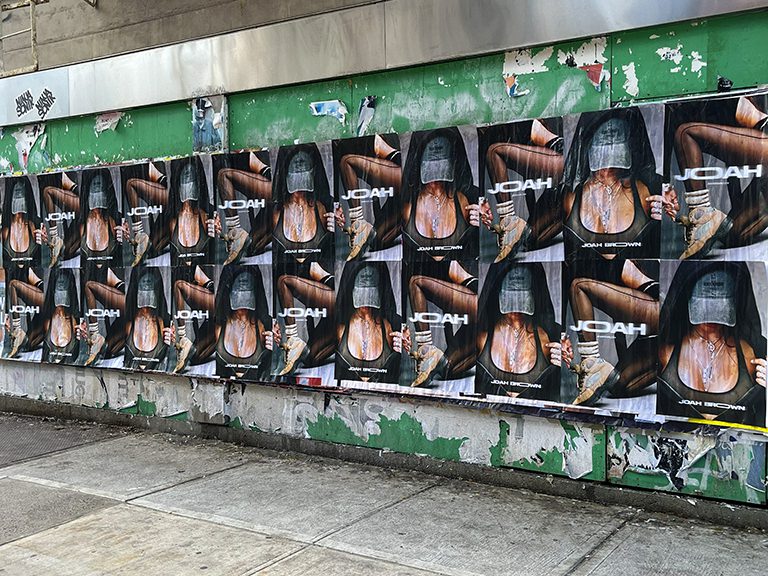
Despite LA’s reputation as a car city, the walkable pockets of Los Angeles have enough foot traffic to make street-level guerrilla advertising effective in specific locations. The key is committing to the neighborhoods that have genuine pedestrian culture rather than trying to run street-level campaigns across the sprawling geography of the broader city.
AGM Field Note: The walkable neighborhoods of LA, Silver Lake, Echo Park, Venice, Fairfax, West Hollywood, and the Arts District, have pedestrian densities that rival many East Coast neighborhoods during peak hours. These locations support street-level campaigns. The sprawling suburban neighborhoods of the San Fernando Valley or South Bay do not. Matching the format to the neighborhood is the most important planning decision in LA guerrilla advertising.
Los Angeles Neighborhoods: The Advertising Map
Silver Lake and Echo Park
Silver Lake is the cultural epicenter of LA’s independent creative scene. The neighborhood’s Sunset Junction area and the commercial strips along Sunset Boulevard and Hyperion Avenue are dense with independent coffee shops, record stores, bookstores, restaurants, and bars that attract a concentrated creative audience. The Silver Lake consumer is creative-professional, late 20s to early 40s, highly educated, active on social media, and influential in setting cultural trends that travel from LA to national audiences.
For guerrilla advertising, Silver Lake is one of LA’s strongest neighborhoods because the audience here is exactly the kind of culturally engaged, documentation-active consumer who drives social amplification. Campaigns in Silver Lake that feel genuinely specific to the neighborhood’s culture rather than generic to the brand generate significantly more organic sharing than campaigns that feel imported.
Echo Park, adjacent to Silver Lake, has a similar creative character with slightly more economic diversity and a stronger Latino cultural presence. The Echo Park Lake area and the Sunset Boulevard strip serve a mixed audience of long-term Latino residents, newer creative-class arrivals, and the spillover audience from nearby Silver Lake.
Fairfax and West Hollywood
Fairfax Avenue between Melrose and Beverly is one of the most documented street advertising environments on the West Coast. The Fairfax corridor has a concentration of streetwear boutiques, sneaker shops, and youth culture businesses that attract a heavily brand-aware, social-media-active audience. Supreme’s LA store, multiple streetwear boutiques, and Canter’s Deli create a cultural density on this strip that is unique in the city.
The Fairfax consumer skews young, heavily influenced by streetwear and hip-hop culture, and extremely active in social documentation. A brand execution on or near Fairfax that fits the visual language of streetwear culture will be photographed, shared, and discussed by an audience with enormous collective social reach.
West Hollywood’s Santa Monica Boulevard and Melrose Avenue attract a more fashion-forward, entertainment-industry-adjacent consumer. The concentration of premium boutiques, salons, and restaurants creates a high-income audience with strong brand awareness and documentation behavior.
Venice Beach
Venice Beach is one of LA’s most photographed locations and draws millions of visitors annually. The Boardwalk creates an outdoor advertising environment with unmatched pedestrian density during spring and summer months, and the neighborhood’s street art and mural culture creates a visual context where brand creative at large scale is expected and welcomed. Brands targeting outdoor, lifestyle, health, and wellness consumers find Venice an essential LA location.
Abbot Kinney Boulevard, one block from the beach, is one of the most curated retail streets in the country: independent boutiques, premium food and beverage, and design-focused retail attract a consumer who is upscale, aesthetic-oriented, and highly documentative. Weekend foot traffic on Abbot Kinney rivals many NYC shopping streets.
Downtown LA and the Arts District
Downtown Los Angeles has undergone dramatic transformation over the past 15 years and now has a genuine residential and commercial population centered on the Arts District, Little Tokyo, and the South Park neighborhood. The Arts District specifically has become one of the strongest guerrilla advertising environments in the city: the neighborhood’s existing mural and street art infrastructure creates a visual environment where large-scale brand creative is native rather than intrusive.
The Arts District audience is younger and more mixed than the Silver Lake creative professional, with a stronger blue-collar, artist, and recent graduate presence. Brands that target creative, arts-adjacent, and young professional consumers should include the Arts District in their LA strategy.
Neighborhood
Primary Consumer
Best Format
Documentation Potential
Silver Lake
Creative professional, 28-42
Poster campaigns, ambient
Very high
Fairfax
Streetwear, youth, influencer
All formats
Extremely high
Venice / Abbot Kinney
Lifestyle, wellness, premium
Murals, installations
Very high
Arts District DTLA
Creative, artist, young professional
Large format, mural-adjacent
High
West Hollywood
Fashion, entertainment industry
Poster campaigns, ambient
High
Melrose
Fashion, premium, entertainment
Poster campaigns, stunts
Very high
The Creator Economy and LA Advertising
Los Angeles has a larger concentration of professional content creators, influencers, and social media personalities than any other city in the world. This concentration fundamentally changes the calculus of guerrilla advertising in LA because the probability that a well-executed street campaign will be photographed by someone with a large following is significantly higher here than anywhere else.
Brands that understand this dynamic build their LA campaigns specifically to be creator-friendly. This means: creating executions that photograph well in natural light (which LA has in abundance), placing campaigns in locations that LA creators already frequent, and making the creative visually interesting enough that a creator would be proud to post it rather than treating it as just another ad in their feed.
The creator-friendly campaign does not need to be designed to look like non-advertising. Creators in LA post advertising content all the time; their audiences expect it. What makes a creator choose to post campaign documentation organically rather than treating it as a paid placement obligation is whether the creative is genuinely interesting and whether the location gives them a compelling photograph. Both are entirely within the control of the campaign team.
Some brands take the creator integration further by inviting specific creators to participate in the campaign installation or first-reveal documentation. When the right creator is present at installation and posts their documentation before the campaign is formally launched, the organic reach generated by that early documentation can seed the campaign’s social presence in a way that feels entirely native rather than bought.
AGM Field Note: In Los Angeles more than anywhere else, the quality of the campaign photography determines whether the campaign’s social amplification succeeds or fails. LA’s visual culture sets an extremely high standard for photography. Campaign documentation that is poorly lit, poorly framed, or technically amateurish will not be shared by the LA creator community, regardless of how strong the underlying creative is.
Executing Guerrilla Advertising in LA: Practical Considerations
Los Angeles’s geography creates specific logistical considerations for campaign execution. Crew deployment across multiple neighborhoods requires transportation planning that accounts for LA’s traffic patterns. Morning installations require earlier start times than in more compact cities because the crew may need to travel significant distances between locations. A campaign that covers Silver Lake, Venice, and the Arts District in a single day requires careful routing and timing to avoid rush-hour delays that can compress the installation window.
Material durability in LA requires a different specification than in rainy Pacific Northwest markets. The primary environmental challenge in LA is sun fading rather than moisture damage. Printed materials exposed to LA’s intense direct sunlight will fade significantly over a campaign run of several weeks. UV-resistant inks and substrates are required for campaigns running in direct sun exposure, particularly on south- and west-facing surfaces.
The Los Angeles press network is valuable for guerrilla campaigns but requires a different pitch approach than New York. LA media responds to visual storytelling more than to text-based press releases. A pitch to LA Weekly, Time Out LA, or the Arts District’s local press outlets should lead with strong photographs rather than with a text narrative. The visual quality of the campaign documentation is effectively the pitch.
Building an LA Advertising Strategy That Works
A well-structured LA advertising strategy recognizes the city’s dispersed geography and concentrates effort and budget in the specific neighborhoods where the target consumer actually lives and spends time. Trying to cover all of LA is a mistake unless the budget is sufficient to do each part of the city justice. Most brands are better served by concentrating fully in two or three neighborhoods than by spreading thinly across five or six.
The outdoor and digital layers of an LA campaign should be planned together. Sunset Strip billboard presence generates earned media and photography that can be repurposed across digital channels. Street-level guerrilla work in Silver Lake or the Arts District generates the social documentation that feeds organic social content. The combination creates a campaign that lives in multiple environments simultaneously and reinforces itself across channels.
Timing LA campaigns around culturally relevant moments, art fair season, music festival season, award season, or major entertainment releases, can significantly amplify the attention the campaign generates. LA’s cultural calendar creates specific windows when the city’s media and creator community is collectively paying attention to visual culture in a way that makes well-timed brand executions more visible than they would be at other times of year.
Specific Execution Challenges in Los Angeles
Los Angeles presents specific execution challenges for guerrilla advertising that differ from other major markets. The city’s geography means that crew transportation between neighborhoods takes significantly longer than in New York or Chicago. A crew moving from Silver Lake to Venice during morning traffic can take 45 minutes to an hour, which compresses the installation window and requires precise routing and timing that accounts for LA traffic patterns. Campaigns that require crews to cover multiple neighborhoods in a single day need logistics planning that would be unnecessarily complex in more compact cities.
Material durability in LA presents a different challenge than in rainy markets. The primary environmental threat to outdoor materials in Los Angeles is UV degradation from intense direct sunlight rather than moisture. South- and west-facing surfaces in LA receive direct sun exposure that can fade poorly specified printed materials within weeks. UV-resistant inks and substrates are required for campaigns running in direct sun, particularly for executions planned to run for two weeks or more. East-facing surfaces in the morning and north-facing surfaces in general receive less direct sun and are more forgiving of standard print specifications.
The surface environment in LA is different from New York in that construction scaffolding, a major posting environment in New York, is less prevalent as a continuous citywide opportunity in Los Angeles. The city’s primary posting environments in walkable neighborhoods are utility poles (where posting is technically restricted in most of the city), construction site hoardings around major development projects, and commercial wall space that can be negotiated directly with property owners. Each of these requires a different approach to identification and use than the more standardized posting environment of a denser East Coast city.
Sunset Strip and the Premium LA Billboard Environment
The Sunset Strip billboard corridor in West Hollywood is the most famous outdoor advertising location in the United States and one of the most photographed. A single Sunset Strip billboard can generate thousands of photographs from passing drivers, passengers, and pedestrians who document the Strip’s advertising environment as a form of cultural observation. Brands that appear on the Strip are photographed not just by those documenting the specific brand but by everyone documenting the Strip generally, which produces organic distribution that exceeds the direct audience of the placement.
The Strip’s connection to the music industry makes it a specific advertising environment for entertainment and music-adjacent brands. An album release billboard on the Strip is a cultural statement that extends to the record-buying and streaming audience far beyond West Hollywood. Consumer brands that appear on the Strip borrow some of that cultural positioning, which is valuable for brands trying to establish cultural credibility in the entertainment capital.
The cost of Sunset Strip placements is commensurate with this value. Strip billboards command premium prices, and for brands without entertainment industry positioning, the premium is harder to justify purely on audience reach grounds. The decision to invest in the Strip should be driven by the earned media and cultural positioning value rather than by cost-per-thousand calculations that will not capture it adequately.
Building Long-Term Presence in the Los Angeles Market
Brands that make sustained advertising investments in Los Angeles over multiple years consistently outperform brands that make one-time campaign investments. The LA market rewards consistency: the consumer who has seen your brand in Silver Lake multiple times over multiple seasons has a categorically different relationship with your brand than the consumer who saw one campaign in one neighborhood one time.
Building long-term LA presence does not require spending at the same level as the launch campaign every year. It requires maintaining some level of physical presence in the key neighborhoods where the target audience lives, refreshing the creative often enough that it does not become invisible through familiarity, and sustaining the documentation and earned media practice that extends physical presence into digital channels. A sustained guerrilla presence in Silver Lake and Venice across four or five campaigns over two years builds brand recognition in those communities that a single large campaign cannot achieve regardless of its scale.
The relationship between brands and the LA neighborhoods they advertise in is also worth investing in beyond the advertising itself. Brands that sponsor local events, partner with neighborhood institutions, or support local artists and creators in the neighborhoods they advertise in build goodwill that makes their advertising more welcome and more effective than the brand that only shows up to place posters. This is not about corporate social responsibility programs; it is about genuine community engagement that earns the brand a place in the neighborhood’s cultural life rather than just its advertising environment.
Specific Execution Challenges in Los Angeles
Los Angeles presents specific execution challenges for guerrilla advertising that differ from other major markets. The city’s geography means that crew transportation between neighborhoods takes significantly longer than in New York or Chicago. A crew moving from Silver Lake to Venice during morning traffic can take 45 minutes to an hour, which compresses the installation window and requires precise routing and timing that accounts for LA traffic patterns. Campaigns that require crews to cover multiple neighborhoods in a single day need logistics planning that would be unnecessarily complex in more compact cities.
Material durability in LA presents a different challenge than in rainy markets. The primary environmental threat to outdoor materials in Los Angeles is UV degradation from intense direct sunlight rather than moisture. South- and west-facing surfaces in LA receive direct sun exposure that can fade poorly specified printed materials within weeks. UV-resistant inks and substrates are required for campaigns running in direct sun, particularly for executions planned to run for two weeks or more. East-facing surfaces in the morning and north-facing surfaces in general receive less direct sun and are more forgiving of standard print specifications.
The surface environment in LA is different from New York in that construction scaffolding, a major posting environment in New York, is less prevalent as a continuous citywide opportunity in Los Angeles. The city’s primary posting environments in walkable neighborhoods are utility poles (where posting is technically restricted in most of the city), construction site hoardings around major development projects, and commercial wall space that can be negotiated directly with property owners. Each of these requires a different approach to identification and use than the more standardized posting environment of a denser East Coast city.
Sunset Strip and the Premium LA Billboard Environment
The Sunset Strip billboard corridor in West Hollywood is the most famous outdoor advertising location in the United States and one of the most photographed. A single Sunset Strip billboard can generate thousands of photographs from passing drivers, passengers, and pedestrians who document the Strip’s advertising environment as a form of cultural observation. Brands that appear on the Strip are photographed not just by those documenting the specific brand but by everyone documenting the Strip generally, which produces organic distribution that exceeds the direct audience of the placement.
The Strip’s connection to the music industry makes it a specific advertising environment for entertainment and music-adjacent brands. An album release billboard on the Strip is a cultural statement that extends to the record-buying and streaming audience far beyond West Hollywood. Consumer brands that appear on the Strip borrow some of that cultural positioning, which is valuable for brands trying to establish cultural credibility in the entertainment capital.
The cost of Sunset Strip placements is commensurate with this value. Strip billboards command premium prices, and for brands without entertainment industry positioning, the premium is harder to justify purely on audience reach grounds. The decision to invest in the Strip should be driven by the earned media and cultural positioning value rather than by cost-per-thousand calculations that will not capture it adequately.
Building Long-Term Presence in the Los Angeles Market
Brands that make sustained advertising investments in Los Angeles over multiple years consistently outperform brands that make one-time campaign investments. The LA market rewards consistency: the consumer who has seen your brand in Silver Lake multiple times over multiple seasons has a categorically different relationship with your brand than the consumer who saw one campaign in one neighborhood one time.
Building long-term LA presence does not require spending at the same level as the launch campaign every year. It requires maintaining some level of physical presence in the key neighborhoods where the target audience lives, refreshing the creative often enough that it does not become invisible through familiarity, and sustaining the documentation and earned media practice that extends physical presence into digital channels. A sustained guerrilla presence in Silver Lake and Venice across four or five campaigns over two years builds brand recognition in those communities that a single large campaign cannot achieve regardless of its scale.
The relationship between brands and the LA neighborhoods they advertise in is also worth investing in beyond the advertising itself. Brands that sponsor local events, partner with neighborhood institutions, or support local artists and creators in the neighborhoods they advertise in build goodwill that makes their advertising more welcome and more effective than the brand that only shows up to place posters. This is not about corporate social responsibility programs; it is about genuine community engagement that earns the brand a place in the neighborhood’s cultural life rather than just its advertising environment.
Campaign Architect — American Guerrilla Marketing
Frequently Asked Questions
What are the best neighborhoods for guerrilla advertising in Los Angeles?
Silver Lake, Echo Park, Venice, Fairfax, and West Hollywood are the strongest neighborhoods for guerrilla advertising in Los Angeles. Each has concentrated foot traffic, culturally engaged audiences, and high documentation behavior.
How does LA’s car culture affect advertising strategy?
LA’s car culture means most residents experience the city from their cars, which makes highway billboard advertising important. However, the walkable pockets of LA like Silver Lake, Venice, and Fairfax have foot traffic dense enough for effective street-level campaigns.
Does AGM run campaigns in Los Angeles?
Yes. AGM has an active presence in Los Angeles and has run campaigns across Silver Lake, Echo Park, Venice, Fairfax, West Hollywood, DTLA, and other neighborhoods throughout the city and county.
Which LA neighborhood is best for reaching the creator and influencer community?
Fairfax and West Hollywood have the highest concentration of influencers and creators who regularly document street-level brand activity. Silver Lake and Echo Park are strong for the indie creative community. Venice attracts outdoor and lifestyle-focused content creators.