
November 23, 2026
Planning LED Trucks & Mobile Billboards in Savannah, Georgia
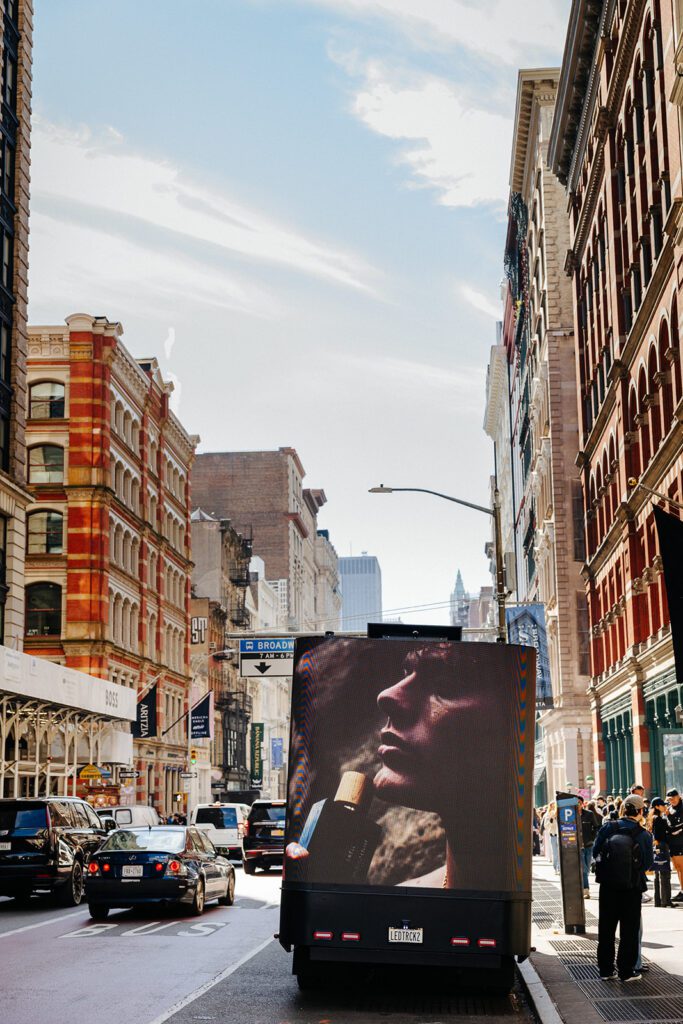
Most cities, planning an LED truck campaign is a routing exercise. You pick the corridors your audience uses, you work out a loop, you decide how many passes a day you want and you run it.
Savannah breaks that method, and the reason is the thing that makes the city famous. Downtown Savannah is laid out around its squares. Those squares sit in the middle of the street grid, and traffic goes around them rather than through them. For a pedestrian that is delightful. For a large vehicle carrying a screen it means there is no straight line through the historic core, and a loop that looks tight on a map takes far longer and far more turning than anyone expects.
Add a second physical problem. Savannah's downtown streets carry heavy mature tree canopy. A tall vehicle has clearance considerations on blocks where a car has none, and a route that works for a van does not automatically work for a box truck with a screen on it.
Then add the designation layer. The Historic District has boundaries written into the zoning code and a dedicated sign district over the same footprint, with further designated districts immediately south. A mobile advertising vehicle grinding around those blocks is conspicuous in a way that invites exactly the attention nobody wants.
None of that means LED Trucks do not work in Savannah. They do. It means the productive route is almost never the one the client first asks for, and the planning work happens before anyone turns a key.
The routing problem the squares create
Take an ordinary request: run a loop that covers downtown Savannah and keeps the screen in front of pedestrians.
What actually happens is this. The grid is interrupted by squares at regular intervals, so a north to south run through the core involves repeatedly diverting around them. Each diversion is a turn, each turn in a narrow historic street with parked vehicles on both sides is slow, and the streets themselves were not laid out for the turning radius of a modern box truck. A loop that reads as fifteen minutes on a map can take three times that in practice.
Worse, all that turning puts the vehicle at the same low speed for long stretches in a residential and hospitality environment. An LED screen moving at walking pace past a row of houses and hotel windows is not a subtle presence. In a city with this much designation and this much attention on its streetscape, that is a reputational exposure for the brand on the screen.
So the routes that actually work use the district edges and the through streets rather than the interior grid. The Savannah River forms the northern boundary and Bay Street runs along that top edge, carrying the traffic that is moving through rather than browsing. West Boundary Street, East Broad Street and Gwinnett Street are the other three edges of the historic footprint and function as proper movement corridors. A perimeter route built on those four edges gets the screen past the district repeatedly, at normal driving speed, without putting a truck into the squares.
That is the Savannah downtown answer: run the edges, not the middle. Pedestrians in the core cross those edge streets constantly, so the audience is still reached, and the vehicle stays on roads built for vehicles.
River Street deserves a specific note. It sits at the waterfront level below Bay Street and its paving is historic stone rather than modern road surface. It is a pedestrian and festival corridor. It is not a route for a heavy vehicle carrying a screen, and I say no to it every time it comes up.
Canopy, clearance and the streets a truck can actually use
The tree canopy over Savannah's downtown streets is one of the city's defining features and it is a genuine operational constraint for this format.
A truck with an LED screen is taller than a passenger vehicle and wider across the body. Overhanging limbs that a car passes under without a thought become a planning variable. This is not a reason to avoid the city. It is a reason to drive the route before the campaign, in the actual vehicle, in daylight, and confirm it rather than trusting a mapping app that knows nothing about branches.
We do that as standard in Savannah. A physical route survey before the first paid day. It also catches the other things a map misses: which turns are too tight, where loading activity blocks a lane at predictable times, where the surface changes, where a lane narrows past a construction site.
The arterials outside the district are straightforward by comparison. Abercorn Street runs south from the core and carries Savannah traffic through the midtown commercial stretches toward the southside. Victory Drive is the long east west counterpart. These are conventional multi lane roads with normal clearance, normal speeds and real daily repetition, and for most campaigns aimed at Savannah residents rather than visitors, that is where the hours should go.
The campus geography is useful here too. The Savannah College of Art and Design is woven through downtown buildings rather than occupying a separate campus, so its audience is reached on the district edge streets rather than on a campus loop. Savannah State University and the Armstrong campus of Georgia Southern sit away from the core, so the roads serving them behave like ordinary commuter corridors and respond to ordinary commuter timing.
The practical split for most Savannah LED truck campaigns is roughly this: edge perimeter runs around the historic footprint during the hours when the core is full of people, arterial runs on Abercorn and Victory during commuting hours, and nothing in the interior grid.
Heat, salt and humidity against a screen on a truck
Coastal Georgia is a hard environment for this equipment and anyone who tells you otherwise has not run a truck here in August.
Heat is the first issue. An LED screen generates heat, it absorbs more from direct sun, and it depends on cooling to stay within its operating range. Savannah summers are long and hot, and a truck sitting in still traffic in full afternoon sun with the screen at high brightness is working its cooling hard. We plan summer routes to keep the vehicle moving where possible, because airflow across the body helps, and we are honest with clients that midday summer hours are the least efficient time to run.
Brightness is the related problem. Strong direct sun washes out an LED screen regardless of specification. Savannah's summer sun is intense and the sky is often bright even when it is not clear. Early morning, late afternoon and evening deliver far better image performance than the middle of the day. Creative with high contrast and bold simple shapes survives bright conditions. Detailed artwork with fine type does not.
Salt air is the slow one. The river and the Atlantic put a daily film on metal and painted surfaces and accelerate corrosion on hardware. On a vehicle that lives outdoors in this market, that shows up in fixings, mounting hardware and panel edges over time. It is a maintenance reality rather than a campaign risk, but it is a reason we check mounting and seals more frequently on Savannah work than on inland work.
Humidity brings condensation. Equipment moving between a cool interior and warm damp outside air fogs, and moisture is the enemy of anything electronic that lives on the outside of a truck. Sealing discipline matters more here.
Then the season. Atlantic hurricane season runs June 1 to November 30, peaking around September 10, with most activity from mid August to mid October. Savannah is low lying and coastal. A truck is mobile, which is an advantage over installed formats, but a campaign booked rigidly into that window will lose days to weather, and flooding on low lying streets closes routes rather than merely slowing them. We build flexibility into autumn schedules rather than pretending the risk is not there.
Winter is the best driving and viewing season here. Cooler, better screen performance, earlier darkness which lengthens the evening window, with occasional freeze nights that affect crew comfort more than equipment.
The Savannah calendar and when a truck should run
The St Patrick's Day Parade on March 17 dominates the Savannah year. It is among the largest in the United States, draws tens of thousands into the Historic District, carries hundreds of parade entries and spreads its celebration across the preceding weekend.
Every year a client asks about running a truck through that. The answer is no for the parade itself and the immediate surrounding area, for reasons that are entirely practical. Downtown access is constrained, streets close, parking disappears and the vehicle would not move. A screen that cannot move is not a mobile billboard, it is a very expensive stationary one in a place you did not choose.
What does work that week is the approach. The arterials feeding into Savannah carry heavy unusual traffic in the days around the parade, and a truck working Abercorn Street and Victory Drive, or the district edge streets at the right hours, reaches an enormous number of people who are heading toward or away from the event. That is the version of St Patrick's week we will plan.
April is the strongest general window. The Savannah Music Festival runs performances across the city for roughly two weeks immediately after St Patrick's. The crowds are large but distributed rather than concentrated into a single closed area, which is exactly the condition a mobile format wants. Weather is workable and the heat has not arrived.
Spring overall is peak tourist season, building from March. The Garden Club of Savannah's North of Gaston Street hidden gardens tour adds to the spring draw, and May is preservation month with organisations citywide promoting Savannah's historic character, which is a month to keep a mobile screen on the arterials and off the designated blocks.
SCAD art festivals and River Street events punctuate the rest of the year. River Street events are a reason to work Bay Street rather than the waterfront itself, since the waterfront is pedestrian and the traffic is above it.
The window with the most schedule risk is mid August to mid October, for the storm reasons above, compounded by the heat and brightness problems of late summer.
Crew, hours and staging in a city with no spare parking
An LED truck campaign in Savannah runs with a driver and usually an operator. The driver's job here is harder than in most markets because of the turning, the clearance and the route discipline. The operator manages content, screen brightness against conditions, and documentation of where the vehicle actually went.
Hours follow the audience rather than the night. In the historic core, foot traffic is high through the day and well into the evening, because Broughton Street and River Street carry late hospitality activity past the point most downtowns empty out. Evening runs along the district edges catch that. On the arterials, commuting hours are the obvious target, with the morning and evening peaks delivering the repetition that makes this format work.
Staging is the problem nobody plans for. Downtown parking in Savannah is metered, garage based and genuinely scarce in season, and a box truck with a screen does not fit the normal options. Most garages are out on height alone. We do not plan Savannah campaigns around finding somewhere to put the vehicle between runs. We arrange staging outside the district in advance, on ground where a commercial vehicle belongs, and we build the route to start and end there.
Fuel and break planning follows the same logic. A route that requires the vehicle to stop inside the historic footprint for anything is a route with a problem in it.
Documentation matters on this format more than clients expect. Where the vehicle ran, which hours, which content, what conditions. Without that record, a mobile campaign is unverifiable, and an unverifiable campaign is one nobody can improve on the next time.
What we talk Savannah clients out of
The first one, every time, is the downtown interior loop. Clients want the screen moving past the squares with the canopy and the architecture behind it. I explain the turning, the clearance, the speed, and the fact that a slow moving screen in a designated residential and hospitality environment generates the wrong kind of attention. We move the route to the district edges, which reaches the same pedestrians without putting a truck where it does not belong.
Second, River Street. It is the waterfront corridor with the highest visitor concentration in the city, which makes it the most requested and the least appropriate. Historic stone paving, pedestrian environment, below the Bay Street level. Bay Street is the answer.
Third, parade day routing. We will plan around St Patrick's, on the approaches and the arterials, but not into the closed core.
Fourth, midday summer runs. A client paying for hours wants those hours spread evenly across the day. In Savannah's summer the middle of the day is the worst combination of screen wash from direct sun and heat load on the equipment. We concentrate hours into morning and evening and tell clients why.
Fifth, and this is the one that saves the most money, we talk clients out of chasing tourists. River Street and the waterfront carry enormous numbers of people who are in Savannah for three days. If the brand needs Savannah residents, those hours are wasted. The residents are on Abercorn and Victory during commuting hours and on the district edges in the evening. Chasing visitor volume feels productive and usually is not.
Sixth, we decline detailed creative. Bright coastal sun and a moving vehicle both work against fine type. Bold, short, high contrast, legible in under two seconds.
Permission, routing and the grey area
Mobile advertising sits in a different part of the grey area than posting does, because the vehicle is on a public road rather than attached to someone's property. That does not make it settled. It varies by municipality, enforcement is inconsistent, and some cities treat vehicle mounted advertising differently from other outdoor formats. I will not tell you where any line sits in Savannah, and nobody honest will.
What is worth knowing is that Savannah has an unusually developed written culture around its streetscape. A formally bounded Historic District with its own board review process, a dedicated historic sign district over the same downtown footprint, and the Victorian and Streetcar districts designated to the south, which the city's own development standards group with downtown as the areas of greatest tourist impact. That is a city that pays attention.
Our approach is to reduce exposure through routing rather than through argument. Keep the vehicle on proper movement corridors. Stay out of the interior historic grid and out of designated residential districts. Avoid stationary display inside the protected footprint, because a parked screen is a very different proposition from a moving vehicle and it is the version most likely to prompt a conversation. Arrange staging on private ground with the owner's agreement.
Where a client wants a stationary activation, we do it on permissioned private property with the owner's written agreement, which turns a routing question into a straightforward property question.
Everything is documented: route, hours, content, staging arrangements. In a market this attentive, being able to show exactly what you did and where is worth more than any argument after the fact.
For campaigns that want the screen to do more than drive past, pairing the truck with our Street Teams & Experiential line works well in Savannah specifically, because the historic core is small, flat and extremely walkable. The truck holds the edge corridors while people work the pedestrian interior on foot, which puts your brand inside the district without putting a vehicle there.
Frequently asked questions
Can an LED truck drive through downtown Savannah?
It can, but it should not. The historic grid is interrupted by squares that traffic must go around, so an interior loop means constant slow turning in narrow streets, plus clearance considerations from heavy mature tree canopy. We run the district edge streets instead, including Bay Street along the river side, which reaches the same pedestrians at normal driving speed.
Why do you refuse River Street?
River Street sits at the waterfront level below Bay Street, its paving is historic stone rather than modern road surface, and it functions as a pedestrian and festival corridor. It is not ground for a heavy vehicle carrying a screen. Bay Street runs directly above it and carries the through traffic, which gives the exposure without the problem.
How does the climate affect screen performance here?
Strong coastal sun washes out an LED screen regardless of specification, and Savannah summers are long and bright, so midday hours perform worst. Heat load on cooling is highest when the vehicle is stationary in traffic. Salt air accelerates corrosion on mounting hardware, and humidity brings condensation, so sealing and fixings get checked more often than on inland work.
What about St Patrick’s Day week?
We will not route into the closed core. Streets close, access is constrained and a vehicle that cannot move is not a mobile billboard. We plan that week on the approach routes and arterials instead, where enormous numbers of people are travelling toward and away from the parade, which delivers the audience without the gridlock.
When is the best window for a Savannah truck campaign?
April is strongest. The Savannah Music Festival spreads performances across the city for roughly two weeks after St Patrick’s, so crowds are large but distributed, which suits a mobile format. Winter gives the best screen performance and earlier darkness. Mid August to mid October carries the most schedule risk, falling inside Atlantic hurricane season in a low lying coastal city.
Where does the truck park between runs?
On arranged private staging ground outside the Historic District, agreed before the campaign starts. Downtown parking here is metered, garage based and scarce in season, and most garages are ruled out by vehicle height alone. We build routes that begin and end at the staging position so the vehicle never needs to stop inside the protected footprint.
Request a campaign quote
Tell us who you need to reach in Savannah and when, and we will build a route that works for a real vehicle on real streets. We will survey it in person before the first paid day, tell you which hours actually perform in coastal sun, and tell you honestly when the audience you want is on the arterials rather than downtown.
Request a campaign quote and we will scope it against route hours, days on road, crew, creative requirements and staging arrangements.

Ready to Run Your Campaign?
Call us or email us. We’ll tell you exactly what we can do in your market and what it costs.
Related Services
Explore similar advertising solutions offered by American Guerrilla Marketing.
American Guerrilla Marketing — Los Angeles
Street-level campaigns in Los Angeles and nationwide. Wheatpasting, LED trucks, street teams, and more.
(646) 776-2770
Related Articles
-
LED Trucks & Mobile Billboards in Boston, MA
November 23, 2026
-
LED Trucks & Mobile Billboards in Madison, Wisconsin
November 23, 2026
-
LED Trucks & Mobile Billboards in Oakland, CA
November 23, 2026
-
Mobile Billboards Near Me: How It Actually Works
November 23, 2026
-
Mobile LED Billboard Truck for Sale: Works and Fails
November 22, 2026