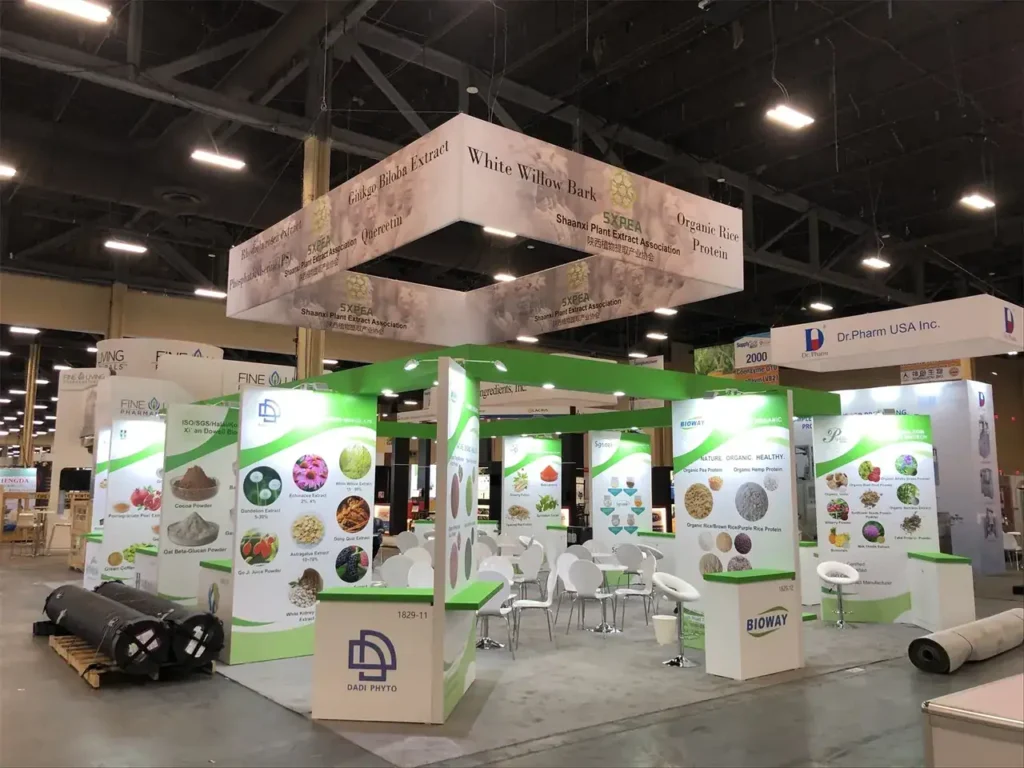
An interactive trade show booth is the single most reliable differentiator between brands that leave a trade show with a full lead sheet and brands that go home with a stack of business cards no one will call. American Guerrilla Marketing has staffed and activated booths at trade shows ranging from CES in Las Vegas to Magic Expo at the Mandalay Bay Convention Center, and the pattern is consistent: booths that ask something of attendees, that make them touch, try, play, decide, or participate, generate 3–5x more qualified leads than comparable static display setups.
This guide covers what makes an interactive booth work at the structural level, the specific formats that perform best in 2026’s trade show environment, how to staff an activation correctly, and the operational details that most exhibitors underestimate until they’re standing on the show floor watching traffic flow past their booth.
Why Interactive Booths Outperform Static Displays
The trade show environment is one of the most visually competitive spaces any brand will encounter outside of Times Square. A typical large trade show floor contains hundreds of exhibitors, each competing for the same finite pool of attendee attention. In this environment, a static display, backdrop, table, literature, is invisible by default. Attendees have trained themselves to scan booth environments in under 2 seconds and filter out everything that doesn’t demand their attention.
Interactive elements break this filter by triggering the brain’s action-orientation system. When someone sees a game they can play, a product they can physically handle, a demo they can participate in, or a question they can answer, the decision architecture shifts from passive observation to active engagement. That shift is everything in a trade show context, it converts a walk-past into a conversation, and a conversation into a lead.
The data supports this at scale. According to exhibitor performance studies, booths with interactive elements, live demonstrations, digital games, VR/AR experiences, sampling stations, or branded challenges, consistently outperform comparable square-footage booths without interactive elements on both dwell time and lead capture rate. Dwell time is the proxy metric that matters: every 30 seconds of additional time an attendee spends in your booth increases the probability of a meaningful sales conversation by a measurable margin.
Interactive Booth Formats That Work in 2026
Live Product Demonstrations
A live product demonstration that attendees can observe and participate in is the most reliably effective interactive format. The key word is “live”, pre-recorded demo loops playing on monitors are not interactive and are ignored at the same rate as static displays. A trained demonstration specialist who can run a 3-minute product demo on repeat, engage individual attendees with questions, and handle technical queries in real time creates a fundamentally different booth energy.
We’ve staffed demonstration specialists at booths for technology, consumer electronics, fitness equipment, and software brands at shows including CES, Natural Products Expo West in Anaheim, and the National Restaurant Association Show in Chicago. The briefing process for demonstration staff is specific and non-trivial: we work with the client’s product team to train every specialist on the full feature set, common attendee questions, and the specific objections that appear most frequently in live demo contexts. Generic staff who learn the product from a one-page brief the morning of the show consistently underperform specialists who’ve had a proper pre-show training session.
Branded Games and Challenges
Game mechanics work in trade show environments because they create a socially acceptable reason to stop. An attendee who passes a static display without stopping has made a social non-event. An attendee who passes a branded game challenge, slows down to look, and then steps in to participate has made a social event out of stopping, and the booth staff now has a natural opening for a conversation.
Game formats that work on trade show floors: spin-to-win wheels with branded prizes (extremely high participation rate, generates social sharing), ring toss or accuracy challenges with brand-relevant theming, digital trivia on a touchscreen with lead capture built into the entry flow, and product-knowledge quizzes where a correct answer earns a prize. Agentic AI kiosk experiences, where an AI character responds to attendee inputs in branded ways, are gaining traction in 2026 for technology and innovation-positioned brands.
For any game format, the lead capture integration must be built into the participation flow rather than added after the fact. The most effective structure: to play, the attendee scans a QR code or swipes a badge, which captures their information into the brand’s CRM or event platform (Cvent, HubSpot Events, Splash) before the game starts. The lead is captured regardless of how long the subsequent conversation runs.
Sampling and Product Trials
For food, beverage, beauty, and consumer goods brands, sampling is the highest-ROI interactive format available on a trade show floor. A product that gets tasted, touched, or tried in person creates a sensory memory that no display can produce. The conversion rate from trial to purchase consideration is dramatically higher than from passive brand awareness.
The operational requirements for sampling stations are specific: food-safe serving equipment, temperature control for perishable items, health department permits for food service in some show environments, and staff trained in food safety protocols alongside the brand’s product narrative. AGM’s trade show staffing team handles all of these requirements as standard practice, we don’t expect clients to work through food service compliance at convention centers independently.
AR and VR Experiences
Augmented and virtual reality experiences create a dwell time advantage that almost no other format matches. An attendee who puts on a VR headset has committed 3–5 minutes to the booth, and during that time, booth staff have the most natural conversation opening available. The challenge is operational throughput: a single VR station can serve 8–12 attendees per hour, which limits the format’s reach on high-traffic show days. For maximum ROI, pair 1–2 VR stations with a higher-throughput interactive element (a game or sampling station) that captures the audience while they wait.
Staffing Your Interactive Booth for Maximum Performance
The most common trade show booth failure is a mismatch between the interactive format and the staff quality. An elaborate AR experience staffed by undertrained, low-energy ambassadors underperforms a simple sampling station staffed by excellent, enthusiastic product advocates. Staff quality is the variable most brands underestimate because it’s harder to photograph in a booth design deck than an impressive display structure.
What AGM Looks for in Trade Show Staff
For trade show deployments, AGM recruits staff who combine three qualities: product fluency (capable of learning a brand’s core narrative and responding to technical questions accurately), interpersonal energy (the ability to engage strangers in a high-stimulus environment without being aggressive or off-putting), and endurance (trade show floors are exhausting, a 10-hour show day at full energy is a physical and mental challenge that not every candidate can sustain).
We brief trade show staff in a minimum 2-hour pre-show session that covers: the brand’s key messages and differentiators, the specific talking points for the booth’s interactive format, common attendee questions and scripted responses, the lead capture process and CRM platform being used, and the booth’s daily traffic and conversation targets.
Staffing Ratios for Different Booth Sizes
The right staffing ratio depends on the booth’s square footage, the number of interactive stations, and the expected traffic volume based on show attendance data. General guidelines from our show experience:
- 10×10 booth with one interactive station: 2 staff minimum, one to run the interaction, one to engage the queue and surrounding traffic.
- 10×20 booth with two stations: 3–4 staff, one per station plus a floater who manages overflow and handles senior attendee conversations that require more depth.
- 20×20 or larger island booth: 5–8 staff depending on station count and traffic projections. A field supervisor is essential for booths of this size to coordinate staff positioning in real time.
Always staff above your minimum. Trade shows are unpredictable, peak traffic hours often concentrate in a 2-hour window that overwhelms under-staffed booths and creates the worst possible impression with exactly the audience density that matters most.
Lead Capture: Turning Interactions into Pipeline
An interactive booth that doesn’t capture leads is an expensive marketing display. Lead capture is the commercial purpose of every trade show activation, and it must be designed into the booth experience from the brief stage, not added as an afterthought after the booth design is finalized.
Badge Scanning vs. QR Codes vs. Manual Entry
Most major trade shows provide badge scanners that capture attendee registration data. These are effective for high-throughput lead capture but limited in the data they collect, typically name, company, and email from the registration form. For richer lead data, a QR-to-form flow that captures self-reported information (interest level, specific product interest, timeline to purchase, job function) produces more actionable CRM records than badge scan data alone.
We recommend a layered approach: badge scan at initial contact (captures the lead), followed by a conversational form at the end of the interaction (enriches the lead data). Staff should be trained to see the form completion as a natural conversation close, “let me pull up our follow-up form so we can send you the right information”, rather than as a separate bureaucratic step.
Post-Show Follow-Up Planning
Lead capture at the show is only valuable if follow-up is planned before the show, not improvised after. The most effective post-show follow-up starts within 48 hours, preferably with a personalized note that references the specific interaction (“You tried the AR demo of our new platform”). Staff should capture conversation notes during or immediately after each interaction, because those details are what differentiate a generic mass email from a follow-up that actually converts.
Trade Shows Where AGM Has Executed Booth Activations
AGM’s trade show experience spans a wide range of industry verticals and show environments. Markets and venues where we have executed staffed booth activations include:
- CES, Las Vegas Convention Center (Las Vegas): The world’s largest consumer technology show. We’ve deployed demonstration specialists and interactive experience staff in the exhibit halls. The staffing challenge at CES is scale, 100,000+ attendees over 4 days, with peak traffic hours during opening morning and the first full show day requiring maximum staff energy and throughput.
- Natural Products Expo West, Anaheim Convention Center: The largest natural products trade show in North America. Sampling stations and product demonstration staff for food, beverage, and beauty brands. Food safety compliance is a specific requirement at Anaheim, we handle the Orange County Health Department permit process as part of activation planning.
- Magic Expo, Mandalay Bay Convention Center (Las Vegas): Fashion and apparel industry’s primary trade show. Brand ambassador programs, runway and display staffing, and interactive engagement in the apparel showrooms.
- National Restaurant Association Show, McCormick Place (Chicago): Food service industry’s flagship event. Sampling, demonstration, and interactive booth staffing for food brands, equipment manufacturers, and technology providers.
- NY NOW, Javits Center (New York City): Home, gift, and lifestyle. Interactive demonstration and ambassador staffing in the gift and tabletop halls.
What Bad Operators Get Wrong at Trade Shows
The most common failure is under-briefing staff. We’ve seen brands bring in agency-staffed ambassadors who don’t know the product name correctly, can’t answer basic differentiator questions, and haven’t been told what a qualified lead looks like for that company’s sales process. The result is a booth full of energy that generates no qualified pipeline, which is worse than a mediocre static display, because the brand has paid for both the booth and the staff.
The second failure is no measurement plan. If you don’t set lead targets before the show, you can’t evaluate performance during or after. AGM establishes specific per-day and per-hour lead capture targets for every trade show activation and tracks performance in real time through the event management platform. When we’re running below target at noon on day one, we adjust staff positioning and engagement tactics, not at the end-of-show debrief when it’s too late.
Contact AGM at americanguerrillamarketing.com/contact to discuss your trade show booth staffing and activation needs. We’ll provide a specific recommendation and transparent pricing based on your show, booth size, and performance goals.
Frequently Asked Questions
Opening up Trade Show Success: The Secret of an Interactive Booth generates better results when placement, timing, creative, and local execution all work together. These questions cover the details brands usually need before launch, during rollout, and while evaluating performance.
For Opening up Trade Show Success: The Secret of an Interactive Booth, the strongest campaigns usually come from tight geographic targeting, message discipline, and enough repetition to be remembered. Market conditions, neighborhood flow, event calendars, commuter behavior, and production logistics all change how the tactic performs, so the planning details matter as much as the idea.
How far in advance should I book trade show booth staff?
For major shows (CES, Expo West, NRA Show), 6–8 weeks minimum is recommended to allow adequate sourcing, vetting, and product training time. For smaller shows, 3–4 weeks is workable for standard brand ambassador roles. Specialized demonstration staff with technical product knowledge require longer lead times.
What does AGM’s trade show staff training include?
Every AGM trade show deployment includes a pre-show briefing covering the brand’s key messages, product talking points, demo or interaction scripts, common attendee questions and responses, lead capture process and CRM platform operation, and daily performance targets. For technical demonstrations, we coordinate with the client’s product team for product-specific training sessions.
Can AGM provide bilingual staff for international trade shows?
Yes. AGM can recruit bilingual and multilingual staff for shows with significant international attendance. Common language requirements at US trade shows include Spanish, Mandarin, Japanese, Korean, and French. Specify language requirements in your brief and we’ll confirm availability.
What lead capture platforms does AGM staff work with?
Our staff are trained on the most common event management and lead capture platforms including Cvent, HubSpot Events, Splash, Attendify, and convention-provided badge scanning systems. If your show uses a proprietary system, provide access credentials 5–7 days before the show for platform training.
Does AGM handle booth staffing only, or can it help with interactive element design?
AGM provides trade show staffing as a standalone service and as part of broader activation design. For brands that need help designing the interactive format, game mechanics, demo flow, sampling station layout, or AR experience, we can advise on format selection and production coordination alongside staffing. Contact us to discuss your full activation scope.
What is the cost of trade show booth staffing through AGM?
Staffing costs depend on show location, staff role complexity, number of days, and crew size. Contact AGM at americanguerrillamarketing.com/contact for a quote specific to your show, dates, and staffing requirements. The trade show ends and most brands shift focus to the next event or internal deadline, allowing lead lists to sit without follow-up until the energy and specificity of the show conversation has evaporated. The exhibitors who convert trade show investment into actual pipeline treat post-show lead nurturing as a campaign unto itself, with the same planning, creative investment, and measurement discipline as the booth activation. AGM recommends developing the post-show nurture sequence before the show opens: the emails, calls, and meeting requests are drafted and staged for deployment within 24–72 hours of show close, while the conversation is still fresh in the lead’s memory. Staff should capture conversation notes in the CRM during or immediately after each interaction at the booth, these notes are the raw material that allows personalized follow-up rather than generic mass email. For brands exhibiting at McEnery in San Jose, Magic Expo in Las Vegas, or NRA Show in Chicago, the quality of the post-show follow-up often matters more than the quality of the booth activation itself. A mediocre booth with excellent follow-up outperforms an excellent booth with mediocre follow-up almost every time. Contact us at americanguerrillamarketing.com/contact to discuss integrating post-show activation into your trade show strategy.
What makes an interactive booth actually draw people in?
A booth needs one obvious activity that people can understand quickly from a few feet away. If visitors have to ask what to do, a lot of them will keep walking.
Should the booth activity be fun or lead-focused?
Ideally both. The best booths use a simple interaction to earn attention, then turn that moment into a scan, lead form, demo, or conversation with the sales team.
How much staffing does an interactive booth usually need?
Enough to greet, guide, reset the experience, and capture leads without creating bottlenecks. Even a strong concept can feel flat if no one is actively managing the flow.
What types of booth interactions work best at trade shows?
Quick games, product demos, touchscreens, contests, and hands-on comparisons tend to work well. The interaction should fit the audience and the amount of time they are willing to spend.
Related Pages and Articles