American Guerrilla Marketing
Nationwide Service
Media planning, media buying, billboard advertising, & guerrilla marketing
From the DC Metro corridor in Northern Virginia to the resort strip of Virginia Beach, AGM deploys high-impact mobile LED billboard trucks across every major Virginia market — executed directly, zero subcontractors.
Virginia is not one market. It is five distinct economic ecosystems layered across a single state — and that geographic complexity is exactly why static out-of-home advertising consistently underdelivers here. A billboard on I-95 near Fredericksburg does nothing for brands targeting the Virginia Beach resort economy. A wallscape in Richmond’s Scott’s Addition reaches a completely different demographic than anything running near Langley, McLean, or the Pentagon corridor in Northern Virginia. Coastal military families, NoVA federal contractors, mountain tourism visitors, and university students in Charlottesville and Blacksburg don’t share media markets, commute patterns, or purchase behavior. They do share the same state, and that’s where mobile LED advertising earns its place.
LED billboard trucks operate on a fundamentally different logic than fixed outdoor media. The truck goes where the audience is — not the other way around. That flexibility becomes a structural advantage in a state as economically and geographically diverse as Virginia. A multi-market Virginia deployment can position your brand at the Virginia Beach Oceanfront on a Friday evening, work the Scott’s Addition brewery corridor in Richmond on Saturday afternoon, and anchor the Rosslyn/Ballston corridor in Northern Virginia for a Monday morning commuter push — all within a single campaign arc. No other outdoor format delivers that range.
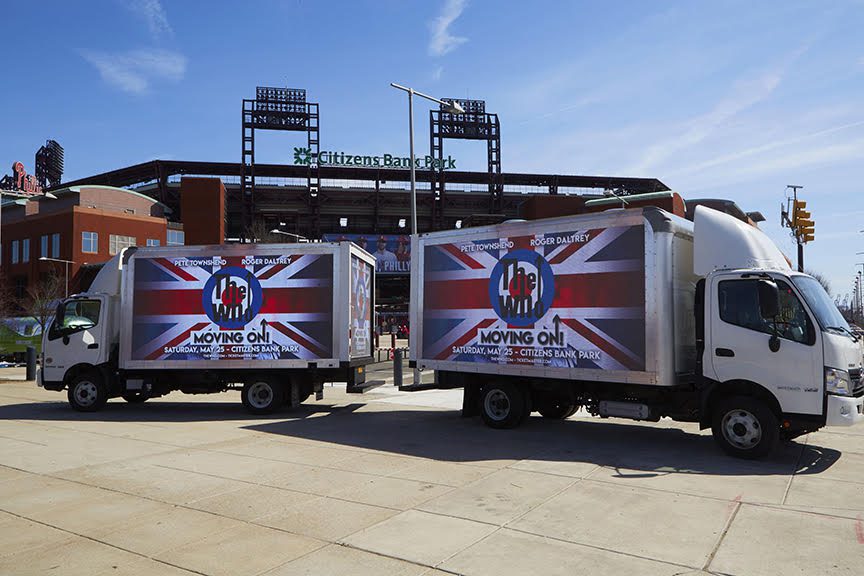
American Guerrilla Marketing has built our reputation executing exactly these kinds of demanding, multi-geography campaigns. We’ve worked with Live Nation on major event activations — including productions at the scale of The Who’s tour in Philadelphia — where brand presence had to land with surgical precision around live event corridors, transit hubs, and venue perimeters. That same discipline transfers directly to Virginia statewide deployments, where route engineering, timing, and market sequencing determine whether a campaign makes an impression or gets lost in the noise. Every Virginia campaign we operate is executed by our own drivers and production staff. No subcontractors. No handoffs. Just direct execution across every mile of every route.
Northern Virginia's defense and tech corridor. Hampton Roads' military and resort economy. Richmond's cultural renaissance. The Shenandoah Valley's outdoor recreation gateway. AGM executes across all of it — direct, professional, and built to perform. Get your Virginia campaign brief to us and we'll engineer a deployment that works as hard as your market demands.
Northern Virginia is arguably the most economically concentrated suburban corridor in the United States. The stretch from Arlington and Alexandria through Fairfax County and into Loudoun County houses a workforce dense with federal government employees, defense contractors, intelligence community professionals, and the technology sector that has made the Dulles corridor one of the country’s most active commercial real estate markets. Amazon HQ2 in Arlington’s National Landing neighborhood added another layer of corporate density to a market already thick with high-income, highly educated households.
What makes Northern Virginia uniquely powerful for mobile LED advertising is the spillover dynamic. NoVA doesn’t operate in isolation from Washington, DC — it feeds it and draws from it simultaneously. The commuter flow across the Potomac on I-66, I-395, the GW Parkway, and the Maryland bridges means that a campaign activating in the NoVA corridor reaches an audience that also circulates through Georgetown, Capitol Hill, and the K Street business district. For brands that want DC metro reach without the complexity of permitting and routing in the District itself, Northern Virginia provides exceptional leverage.
Key NoVA activation corridors include the Rosslyn-Ballston corridor along Wilson Boulevard, the Route 7 commercial strip through Tysons, the Amazon HQ2 National Landing zone along Crystal Drive, and Reston Town Center — which anchors the Dulles Technology Corridor. University market reach extends through George Mason University’s Fairfax campus, which draws a student population exceeding 38,000. For brands targeting defense-adjacent professionals, the Route 123 corridor connecting McLean and Langley is among the highest-income commuter corridors in the country. AGM routes LED trucks through all of these zones with route plans built around morning drive, midday pedestrian volume, and evening commute patterns specific to each corridor.
Hampton Roads — the metro region encompassing Virginia Beach, Norfolk, Chesapeake, Portsmouth, and Suffolk — hosts the largest naval military complex in the world. Naval Station Norfolk, Langley Air Force Base (now Joint Base Langley-Eustis), Naval Air Station Oceana, and a dense cluster of defense contractor facilities create a population base unlike any other civilian metropolitan area in the country. Roughly one in three Hampton Roads households has a direct military or defense-contractor connection. The region’s combined civilian-military economy drives a consumer market that is substantial, consistent, and responsive to brand presence in ways that purely civilian metros sometimes aren’t.
Military communities respond strongly to physical brand presence — the kind of visible, real-world impression-making that LED billboard trucks deliver on base perimeters, along major commuter routes like Military Highway and Hampton Boulevard, and within the commercial corridors that serve the base population. Virginia Beach’s Pembroke commercial district and the Newtown Road corridor serve a dense mix of active-duty families, veterans, and defense contractor employees. Chesapeake’s Greenbrier district is one of the region’s highest-traffic retail zones. LED trucks activating across these corridors reach an audience that has money to spend, clear purchase patterns, and strong brand loyalty once trust is established.
The Virginia Beach Oceanfront adds a separate, seasonally intense layer to the Hampton Roads market. The three-mile Atlantic Avenue resort strip — lined with hotels, restaurants, entertainment venues, and the Virginia Beach Convention Center — becomes one of the East Coast’s highest foot-traffic tourism corridors from Memorial Day through Labor Day. Weekend foot traffic volumes during peak summer weekends rival major urban cores. An LED truck working the Oceanfront during peak season generates impression counts that are difficult to match at any price point in the Hampton Roads market outside of major broadcast buys.
Tell us about your campaign goals, target audience, and preferred locations. Our team will help you plan a high-impact LED Billboard Trucks advertising campaign tailored to your needs.
Award Winning Personalized Service
You will get thoughtful, devoted, and individualized attention from our experienced, qualified, and professional personnel. Being one of the most illustrious agencies in Brooklyn, New York, American Guerrilla Marketing has been awarded the Best of Brooklyn title.
Nationwide
Industry City, Brooklyn, New York 11232
American Guerrilla Marketing
Hours
Mon - Fri: 9 AM - 5 PM
Sat & Sun: Closed
Automate your campaign with AGM’s Request for Proposal Builder. Simply answer a few quick questions about your campaign goals, markets, and timeline, and the system will generate a tailored presentation with recommended strategies, quantities, and pricing. Click the RFP Builder to instantly receive your customized proposal.
Richmond has undergone one of the most dramatic urban reinventions of any mid-sized American city over the past decade. The Scott’s Addition neighborhood — once a light industrial zone north of downtown — has transformed into one of the South’s most active craft beverage districts, with more than two dozen breweries, cideries, meaderies, and distilleries operating within a concentrated walkable footprint. On any given weekend, Scott’s Addition draws thousands of residents and visitors who are actively spending and actively looking for what’s next. That behavioral profile — curious, experience-seeking, brand-aware — is exactly the audience that responds to premium outdoor advertising.
Beyond Scott’s Addition, Richmond’s Carytown retail and dining corridor on West Cary Street draws consistent foot traffic seven days a week. The Manchester warehouse arts district south of the James River has emerged as a hub for studios, galleries, and creative industry tenants. The Shockoe Bottom neighborhood hosts one of the region’s most active nightlife and live event ecosystems. Virginia Commonwealth University’s Monroe Park Campus sits directly in the heart of the city, with an enrollment exceeding 28,000 — making VCU one of the largest urban research universities in the Southeast. Each of these Richmond sub-markets attracts a distinct audience cluster, and a well-routed LED truck can cycle through all of them in a single activation day.
Richmond is also a growing destination for live events, film production, and sports. The Diamond District development anchoring the new Diamond baseball stadium is adding a dense mixed-use district that will further concentrate foot traffic in the near-term. For brands active in entertainment, craft beverage, consumer tech, financial services, or lifestyle categories, Richmond’s current trajectory makes it one of the most undervalued brand activation markets on the East Coast. AGM routes our Richmond LED deployments to capture the evening and weekend concentration patterns that define how this city actually moves.
The Shenandoah Valley and Blue Ridge region represent a different kind of Virginia opportunity — not urban density, but high-value seasonal tourism traffic concentrated along specific corridors. The I-81 corridor running from Winchester through Harrisonburg, Staunton, and into Roanoke is the state’s inland commercial spine. It carries regional freight traffic, but more importantly for brand activations, it moves a constant flow of outdoor recreation visitors heading to Shenandoah National Park, Skyline Drive, and the Blue Ridge Parkway. Luray Caverns, Massanutten Resort, and the network of hiking, cycling, and river recreation destinations in the region generate multi-season visitation patterns that outdoor, recreation, food and beverage, and automotive brands are increasingly targeting with precision.
Harrisonburg is home to James Madison University, which brings a university market of more than 22,000 students to the Shenandoah Valley — a market that is often overlooked by regional brand planners focused primarily on the state’s coastal and NoVA corridors. The combination of a strong university population and high tourist throughput makes Harrisonburg and the surrounding valley an interesting multi-audience target for brands willing to think creatively about geography.
Spring and fall are the peak activation windows for the Blue Ridge corridor — fall foliage season in October drives some of the highest leaf-peeper tourism volumes in the Eastern US, with Skyline Drive seeing daily visitor counts that strain park capacity on peak weekends. A mobile LED truck working the Waynesboro/Staunton gateway area during fall foliage season, or positioned near Front Royal and Luray during spring bloom, delivers premium impressions to a high-intent outdoor recreation and tourism audience. Summer activations targeting the National Forest recreation corridor and river outfitter areas along the South Fork Shenandoah work equally well for brands in adventure gear, craft beverage, and outdoor apparel categories.
Virginia’s higher education ecosystem is one of the most concentrated in the Southeast, with flagship and major research universities distributed across nearly every geographic quadrant of the state. University of Virginia in Charlottesville, Virginia Tech in Blacksburg, George Mason University in Fairfax, Old Dominion University in Norfolk, and Virginia Commonwealth University in Richmond collectively enroll more than 150,000 students and generate auxiliary populations of faculty, staff, alumni, and the commercial districts that have grown around each campus. For brands targeting 18–34 demographics, these university corridors offer some of the state’s highest-density, most receptive audiences.
Each campus market has a distinct character. UVA’s Corner district and the Downtown Mall in Charlottesville attract an audience that skews toward premium consumer categories — outdoor recreation, specialty food and beverage, financial services, and lifestyle brands perform particularly well there. Virginia Tech’s campus in Blacksburg activates strongly around athletic events; Lane Stadium draws 66,000 on football Saturdays, creating one of the state’s densest single-day audience concentrations outside of major urban events. George Mason’s Fairfax campus sits inside the Northern Virginia tech corridor, making it an effective reach point for brands targeting both students and the professional workforce surrounding the university. Old Dominion in Norfolk anchors the Hampton Roads university market alongside the nearby campus presence of Norfolk State. VCU in Richmond operates in direct adjacency to the city’s most active brand activation corridors.
The academic calendar creates predictable activation windows: move-in weekend in late August generates intense parental and student traffic; football and basketball game days create concentrated audiences; graduation weekends in May drive family visitation volumes. AGM maps university campaign timing to these calendar anchors, ensuring LED truck deployments land when student population density is at its highest and audience receptiveness is strongest. Brands that commit to university corridor activations in Virginia are building awareness and loyalty with consumers who will carry brand relationships forward for decades.
Hampton Roads is a dual-audience market with no equivalent anywhere else in the country. The military and defense contractor population base creates a dense, high-income civilian market concentrated along Military Highway, Hampton Boulevard, and the commercial corridors of Chesapeake’s Greenbrier district and Virginia Beach’s Pembroke zone. Overlay the Virginia Beach Oceanfront’s resort economy — three miles of Atlantic Avenue drawing peak seasonal foot traffic from Memorial Day through Labor Day — and you have a market that operates at two different intensities depending on time of year. AGM LED trucks activate across both layers: base perimeter corridors during the year-round military campaign cycle, and the Oceanfront resort strip during peak summer weekends. A full Hampton Roads deployment typically covers the Atlantic Avenue Oceanfront zone, the Town Center of Virginia Beach, the Norfolk Waterfront near Nauticus and Harbor Park, the Chesapeake Greenbrier district, and the Military Highway commercial spine connecting the submarkets. Events such as the Patriotic Festival, the East Coast Surfing Championships, and the Virginia Beach Music Festival create event-adjacent activation opportunities that concentrate audiences at specific venues with predictable timing.
Richmond’s transformation from a post-industrial mid-sized city into one of the South’s most dynamic brand activation markets has been driven by a combination of craft beverage industry growth, arts district development, and university market density. Scott’s Addition is the anchor, but the activation geography extends well beyond it. A complete Richmond deployment routes through Scott’s Addition’s brewery and cidery corridor during Friday evening and weekend afternoon hours, Carytown’s retail and dining strip for midday pedestrian traffic, the VCU Monroe Park Campus zone for morning and evening student concentration, and the Manchester arts district south of the river for evening cultural audience capture. Shockoe Bottom activates well for Thursday through Saturday evening campaigns targeting the nightlife and dining crowd. The Diamond District development area near The Diamond baseball stadium is an emerging zone that AGM tracks for event-adjacent positioning. Richmond’s geographic compactness — all of these districts are within 15 minutes of each other — makes it one of the most efficient multi-district deployments in AGM’s Southeast rotation. Craft beverage, consumer tech, healthcare, financial services, and live entertainment brands have all seen strong performance in Richmond campaigns.
The Northern Virginia corridor is the state’s highest-income, highest-education-attainment market and the one with the strongest overlap into the DC metro economic ecosystem. AGM routes LED trucks through the primary NoVA activation zones based on campaign objectives: Rosslyn-Ballston on Wilson Boulevard for commuter and professional workforce density, National Landing (Amazon HQ2) for corporate and tech professional audiences, Tysons Corner along Route 7 and International Drive for retail corridor dominance, and Reston Town Center for the Dulles Tech Corridor workforce. George Mason University’s Fairfax campus activates student and faculty audiences. Route 1 through Alexandria’s Old Town and Del Ray neighborhoods reaches an affluent urban professional demographic. The Pentagon City and Crystal City zones anchor the Arlington defense-adjacent market. Northern Virginia campaigns frequently begin with a Monday morning commuter push timed to 7:00–9:00 AM on primary arterials, transition to a midday commercial district presence, and close with an evening commuter anchor. For brands seeking DC metro reach without the operational complexity of District permitting, NoVA activations on I-66, Route 50, and the GW Parkway corridor deliver strong spillover impression volume into the federal workforce commuter population.
The Shenandoah Valley and Blue Ridge corridor is Virginia’s outdoor recreation brand activation zone, and it operates on a seasonal calendar that smart brand planners build into annual campaign arcs. Spring bloom season (April–May) and fall foliage season (September–October) are the two peak windows, with summer recreation traffic (June–August) sustaining consistent visitor volume through the National Forest, river recreation, and resort destination system. The primary activation geography runs along I-81 from Winchester through Harrisonburg, Staunton, and into Roanoke, with Route 340 through the heart of the Shenandoah Valley serving as the most direct corridor between Front Royal, Luray, and Waynesboro. Skyline Drive entrance points at Front Royal and Waynesboro/Rockfish Gap are natural campaign anchor positions during peak foliage season when visitor volumes surge. Harrisonburg’s downtown core and JMU campus zone activate the university market layer. Roanoke’s downtown Market Square area serves the southern valley’s urban anchor market. Brands in outdoor recreation, craft beverage, automotive/SUV, travel, apparel, and hospitality categories have found this corridor to be a high-efficiency activation zone where audience density, geographic specificity, and receptiveness align in ways that urban markets rarely duplicate.
contact us for pricing | contact us for pricing (8 hrs)
The workhorse format for Virginia’s urban and university corridors. Sized perfectly for Richmond’s narrow Carytown streets, the Scott’s Addition brewery loop, and NoVA’s Rosslyn-Ballston corridor where alley and side-street access matters. Ideal for single-market day campaigns across VCU, GMU, or ODU campus routes where maneuverability unlocks higher impression density than larger formats.
contact us for pricing | contact us for pricing (8 hrs)
The optimal format for Virginia Beach Oceanfront campaigns, Hampton Roads commercial corridor runs, and Northern Virginia arterial routes like Route 7, Route 50, and the I-395 corridor. The increased screen real estate commands attention on wide resort strips and multi-lane commercial streets. Recommended for Hampton Roads military-market campaigns where physical presence scale reinforces brand authority.
contact us for pricing | contact us for pricing (8 hrs)
Maximum visual impact for Virginia’s premium event-adjacent and high-footfall locations. Deployed at Virginia Beach Oceanfront during peak summer weekends, at the Reston Town Center tech corridor, at Richmond Diamond District events, and at university game-day deployments where standing-out in a visually saturated environment is non-negotiable. The 3D Seamless format generates social media sharing that multiplies earned impression value well beyond the physical route.
~contact us for pricing
Virginia’s largest-format option, engineered for high-elevation visibility in open outdoor environments. Exceptional for Virginia Beach resort zone campaigns where crowd density requires above-crowd sightlines, for I-81 corridor placements in the Shenandoah Valley where road geometry favors taller display profiles, and for Northern Virginia arterial deployments where above-median-strip presence captures multi-direction traffic. Best suited to open-air events, festival perimeters, and wide commercial boulevards.
Virginia’s geographic spread — roughly 430 miles from the DC suburb of McLean in the north to Bristol at the Tennessee border in the southwest — means that statewide campaigns require disciplined logistics planning that most mobile advertising operators aren’t built to handle. AGM’s process for multi-market Virginia deployments is systematic, direct-execution, and built around the operational realities of a state where the major markets don’t cluster conveniently together.
Every Virginia campaign begins with a market-priority conversation. We help clients identify which Virginia sub-markets align with their audience demographic, campaign objective, and budget envelope. A statewide awareness campaign for a consumer brand might sequence Hampton Roads → Richmond → Northern Virginia over three consecutive days, using I-64 and I-95 as the connective tissue between markets. A university recruitment campaign might hit UVA in Charlottesville, VCU in Richmond, and George Mason in Fairfax over a three-day sequence timed to fall enrollment window. We don’t default to a one-size route; we engineer the sequence to the brief.
Within each Virginia market, AGM pre-engineers the specific route before wheels roll. Hampton Roads routes account for Oceanfront pedestrian peak hours, base perimeter traffic patterns on Military Highway, and the Chesapeake Greenbrier commercial concentration window. Richmond routes account for the Scott’s Addition evening brewery crowd versus the Carytown afternoon retail peak versus the VCU morning student commute. NoVA routes account for the AM and PM commuter surge on Wilson Boulevard and Route 7. Every route is timed to audience density, not just mileage.
AGM executes every Virginia campaign with our own drivers, our own trucks, and our own production staff. We do not hand off to subcontractors or regional affiliates. That direct-execution model is how we ensure that the campaign that was planned is the campaign that runs — not a version of it filtered through a third party that has no stake in the creative outcome. Live Nation trusted us with that same model on major national event activations, including productions at the scale of The Who’s Philadelphia engagement. Virginia campaigns operate under the same direct-execution standard.
Following each Virginia deployment day, AGM provides GPS-verified route confirmation, time-stamped photo and video documentation of the truck in market, and impression estimates based on traffic data for each corridor activated. Multi-day Virginia campaigns include cumulative reporting across all markets in the deployment sequence. Clients planning annual campaign calendars around Virginia’s university and tourism seasons receive seasonal performance data that informs the next activation cycle.
Yes — and it’s one of the most common Virginia campaign structures we deploy. The I-95 corridor connects all three major markets, with Richmond sitting roughly halfway between the DC metro and Hampton Roads. A standard three-market Virginia deployment typically runs Monday through Wednesday or Thursday through Saturday depending on campaign objectives. We sequence markets based on audience concentration peaks — Hampton Roads on a Thursday to capture weekend resort and nightlife build-up, Richmond on a Friday for the Scott’s Addition brewery evening crowd, Northern VA on a Monday morning for commuter-corridor saturation. Drive distances between markets range from 90 to 130 miles along I-95, which our direct-execution team handles as part of the standard campaign logistics.
It depends on the target audience and campaign objective. Northern VA should anchor first when the campaign targets federal workers, defense contractors, technology sector professionals, or high-income suburban households — this is the state’s highest-income market and it benefits from establishing brand presence before the campaign moves south. Hampton Roads should anchor first when the campaign targets military families, defense-adjacent consumers, resort and tourism demographics, or brands launching in the coastal Virginia market. For campaigns targeting students or lifestyle consumers equally across the state, Richmond often works best as the campaign opener because its cultural density makes for strong earned media and social amplification that can sustain momentum into subsequent market days.
Hampton Roads military market advertising requires both geographic and tonal awareness. LED trucks operate on public roads and commercial corridors — we do not conduct on-base activations, which require separate installation agreements with base command. The most effective Hampton Roads military-market routes focus on the commercial corridors that serve the base population: Military Highway between Norfolk and Chesapeake, Hampton Boulevard approaching Naval Station Norfolk, the Virginia Beach Pembroke district, and the Chesapeake Greenbrier commercial zone. Messaging that is straightforward, direct, and respects the professional orientation of the military demographic performs consistently better than abstract or heavily ironic creative executions. AGM can advise on route selection that maximizes exposure to the defense-adjacent population without venturing into legally or operationally sensitive base-perimeter zones.
Virginia’s university market has four peak activation windows that align with the academic calendar. Move-in weekend (late August) is the single highest-density moment — campus areas flood with students, family members, and local vendors, creating extraordinary audience concentration for a 48-to-72-hour period. Fall football season (September through November) creates weekly peak moments around game days at Virginia Tech’s Lane Stadium, UVA’s Scott Stadium, and VCU basketball at the Siegel Center. Homecoming weekends amplify alumni and community audience layers beyond the normal student population. Spring graduation season (early to mid-May) brings the semester’s second family-density surge. Summer is the lowest activation period for campus-adjacent campaigns and is better deployed toward the Shenandoah and coastal tourism corridors during those months.
Virginia runs two parallel seasonal tracks that rarely overlap. The coastal tourism season — anchored by Virginia Beach — peaks from Memorial Day weekend through Labor Day, with July 4th weekend representing the single highest foot-traffic moment on the Oceanfront strip. Brands targeting beach, resort, entertainment, and hospitality categories should concentrate coastal activations in June, July, and August. The mountain and outdoor recreation season runs on a different clock: spring bloom peaks in April and May, summer hiking and river recreation sustains June through August, and fall foliage season delivers the year’s second major spike in September and October. Brands in outdoor apparel, automotive, craft beverage, and adventure travel categories often split Virginia campaign budgets across both tracks — coastal in summer, Shenandoah corridor in fall.
AGM executed event-adjacent LED billboard campaigns for Live Nation productions including major tours at the scale of The Who’s Philadelphia engagement — activations that required positioning brand presence precisely around venue perimeters, transit corridors, and fan congregation zones during pre-show windows. That event-activation discipline transfers directly to Virginia’s live event landscape. Virginia has a deep event calendar: the Virginia Beach Amphitheater hosts major summer tours, the John Paul Jones Arena in Charlottesville serves the UVA market, the Ntelos Wireless Pavilion in Portsmouth anchors Hampton Roads, and Richmond’s Altria Theater and National draws nationally touring performers. AGM engineers event-adjacent routes that position LED trucks at transit intersections, parking garage approaches, tailgate zones, and pedestrian corridors during the two-to-three hour pre-show activation window — the period when audience attention is highest and purchase intent for event-adjacent brands peaks.
For meaningful multi-market Virginia reach, we recommend a minimum of three days — one day per major market cluster. A two-day minimum covers a single-region deployment (for example, Hampton Roads only, or Richmond plus Charlottesville). Single-day deployments are available and effective for brands with a concentrated single-market objective, such as a Virginia Beach Oceanfront push during a summer festival weekend or a VCU campus activation timed to move-in weekend. Statewide awareness campaigns that aim to establish brand presence across Northern VA, Richmond, and Hampton Roads perform best at five to seven days, which allows for repeat impressions in each market and gives the campaign enough presence to build recognition rather than one-time exposure.
I-95 is Virginia’s commercial spine, connecting the DC metro edge at the Potomac through Fredericksburg, Richmond, and south toward the North Carolina border. For statewide Virginia campaigns, I-95 serves as the transit corridor between market days rather than an activation route in itself — highway driving generates fewer quality impressions per mile than urban and commercial district routing. What I-95 does provide is efficient multi-market logistics: an LED truck departing Northern Virginia on Day 1 can reach Richmond for a Day 2 activation and continue to Hampton Roads for a Day 3 deployment without adding significant logistics cost. The Fredericksburg market, which sits at the midpoint between DC and Richmond, represents an emerging activation zone for brands targeting the I-95 corridor commuter population that spans both metro areas.
Peak activation windows on the Virginia Beach Oceanfront are Memorial Day weekend, the July 4th holiday week, and Labor Day weekend — in that order of impression density. The July 4th week consistently delivers the highest foot-traffic volumes on the Oceanfront strip, with the three-mile Atlantic Avenue corridor approaching urban-core density levels during evening hours. For brands that can commit only to a single summer Virginia Beach activation, we recommend the week of July 4th through the following weekend as the highest-return single window. For brands able to sustain a summer-long coastal Virginia presence, a May-through-August cadence captures both the early-season audience establishing their summer routine and the peak-summer visitor surge. Morning and evening hours — 9:00–11:00 AM and 6:00–9:00 PM — generate the highest pedestrian density relative to vehicle traffic on the Oceanfront strip.
Scott’s Addition is a compact, walkable district — roughly a half-mile by half-mile footprint — which means an LED truck can cycle through the district multiple times per hour during evening activation windows. The peak activation time is Thursday evening through Saturday evening, when the brewery taprooms draw their highest walk-in traffic. A Scott’s Addition loop typically enters on West Broad Street from the east, circuits through the interior streets of the district (Norfolk Avenue, Ownby Lane, the perimeter of the Science Museum of Virginia), and exits back toward the Boulevard or Lombardy Street before looping again. The concentration of foot traffic — brewery-to-brewery pedestrian movement is the dominant behavior in the district — means a single truck circulating the Scott’s Addition loop generates repeated exposures to the same audience, which builds recall faster than a one-pass route. Brands in craft beverage, consumer lifestyle, health and wellness, and entertainment have all run high-performing Scott’s Addition campaigns with AGM.