American Guerrilla Marketing
Nationwide Service
Media planning, media buying, billboard advertising, & guerrilla marketing
Pearl City is Oahu’s largest suburban residential market — a dense community of military families, local workers, and lifelong Hawaii residents concentrated along the Kamehameha Highway and Pearlridge Center corridors. AGM puts your brand in front of this underserved local audience with in-house installation and GPS-documented proof of every placement.
Pearl City doesn’t appear in Hawaii travel guides. Its name doesn’t come up in conversations about Honolulu’s arts scene or Kailua’s beach town character. It is not a destination for tourists and not a creative district for the island’s design community. Pearl City is where a very large number of people who actually live in Hawaii go home every evening, buy groceries, eat dinner, take their kids to school, and spend their leisure hours within a commercial geography that serves the genuine daily needs of a substantial residential population. That ordinariness, in the context of fly posting, is the point.
Pearl City and its surrounding communities — Aiea, Waimalu, Pearl Highlands, and the residential zones along the Pearl Harbor corridor — represent one of Oahu’s most densely populated suburban stretches. The Kamehameha Highway commercial corridor that runs through the heart of this geography serves tens of thousands of residents who use it as their primary commercial artery for everything from grocery shopping to dining out to entertainment planning. The Pearlridge Center — one of Hawaii’s largest regional shopping centers, and one of the few remaining fully enclosed malls in the state — anchors this commercial geography with a retail and dining concentration that draws consistent foot traffic from across the western Oahu residential market.
For brands whose target audience is Hawaii’s resident consumer — not the tourist, not the Honolulu creative professional, but the broad middle of Hawaiian society that includes military families, long-tenured local workers, government employees, and the multigenerational local communities that have made Pearl City one of Oahu’s most established residential areas — fly posting in the Pearl City commercial corridors reaches that audience directly, efficiently, and in the spaces where they make the spending decisions that matter.
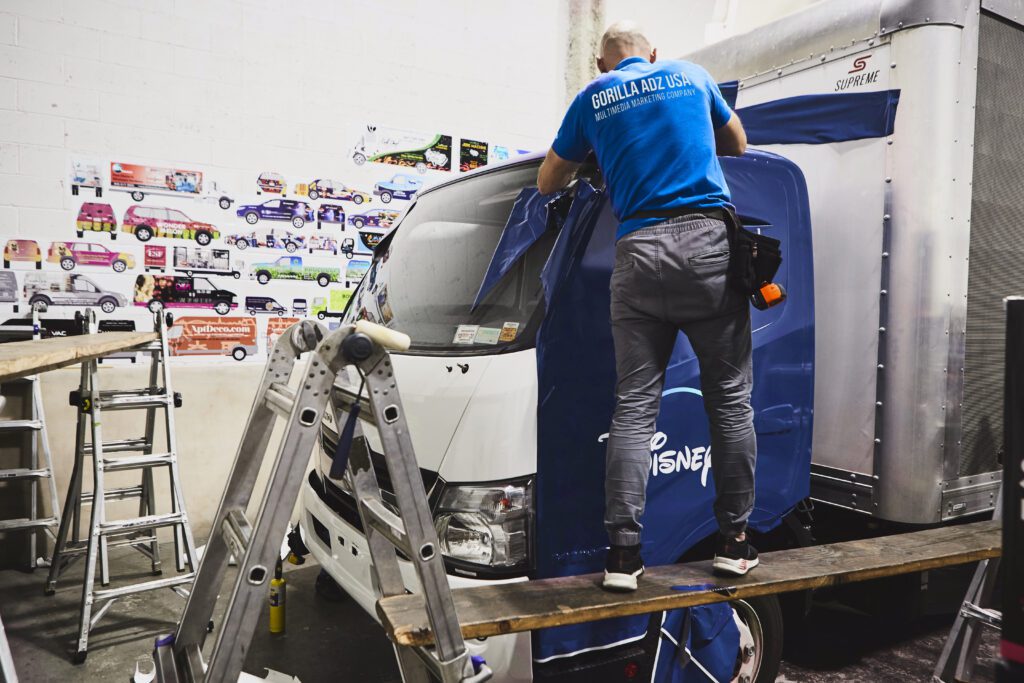
American Guerrilla Marketing executes fly posting campaigns in Pearl City with the same in-house rigor applied to campaigns in Honolulu, Hilo, and Kailua. Every poster placed in Pearl City’s commercial corridors is GPS-tagged and photographed by AGM’s crews. Clients receive documented proof of every installation — coordinate and visual verification that their campaign reached the suburban Oahu streets where their audience lives and shops and eats.
AGM puts your campaign in front of Oahu's residential consumer market where it actually shops — the Pearlridge Center corridor, the Kamehameha Highway commercial strip, Pearl Highlands, and the Waimalu residential zone. In-house printing. In-house installation. GPS-documented proof of every poster placed in Western Oahu.
Select a city to explore Fly Posting Advertising opportunities.
Pearlridge Center on Kamehameha Highway is the commercial anchor of Western Oahu’s suburban market — a fully enclosed regional shopping center that draws shoppers from Pearl City, Aiea, Waimalu, Ewa Beach, and the broader area around Pearl Harbor. The center’s consistent foot traffic, generated by its mix of national retailers, local restaurants, and the community programming that brings families into the facility throughout the week, creates a pedestrian environment in the surrounding commercial zone that extends fly posting reach beyond the mall’s own interior. The retail strips, restaurants, and service businesses that cluster around the Pearlridge anchor on Kamehameha Highway form the highest-density commercial pedestrian zone in Western Oahu’s suburban geography — a geography where foot traffic is generally lower than Honolulu’s walkable entertainment districts but where the concentration of residential consumer spending creates high per-placement value for campaigns targeting the local market. Fly posting in the Pearlridge Center corridor reaches Oahu’s suburban resident population at their primary commercial destination — the place where they already go, week in and week out, to spend money on the products and experiences that their household budgets allocate for discretionary and non-discretionary consumption.
Kamehameha Highway is the spine of Western Oahu’s suburban commercial geography — a long commercial strip that runs from the Pearl City area through Aiea and into the communities surrounding the Pearl Harbor waterfront. The highway corridor is lined with retail centers, fast-casual and sit-down restaurants, auto-oriented service businesses, and the kinds of national and local commercial tenants that serve a residential suburban market with consistent daily needs. The audience moving along this corridor is Oahu’s broad residential consumer — diverse in ethnicity and background, reflecting the military, local, and immigrant communities that have built the Pearl City area’s population over decades. For brands targeting Hawaii’s working-class and middle-class resident market — food and beverage concepts, entertainment platforms, consumer goods brands, financial services, and the broad range of businesses that serve households rather than tourists — Kamehameha Highway’s commercial strip provides the most direct access to that demographic available in Western Oahu. Fly posting along this corridor is auto-visible as well as pedestrian-visible, with retail center parking lot perimeters, commercial building side walls, and construction barriers providing placement surfaces that reach both the driver slowing for the light and the pedestrian moving between the commercial strip’s retail anchors.
The Pearl Highlands area, centered around the Pearl Highlands Center retail development on Kuala Street, provides a secondary commercial hub for the residential communities on the higher ground above the Pearl Harbor plain. Pearl Highlands Center’s mix of national retailers, restaurants, and the daily-need commercial tenants that serve its surrounding residential catchment area generates consistent foot traffic from the neighborhoods that lack the Kamehameha Highway commercial density. The demographic in Pearl Highlands skews toward the military family population — Pearl Highlands’ location relative to Schofield Barracks and the various installations accessible from the H-2 freeway makes it a primary commercial destination for military households from multiple bases. This military family consumer — typically 25–40 years old, with household income that exceeds the local civilian average, spending actively on household goods, food and beverage, entertainment, and lifestyle products — is a high-value demographic that is underserved by the Honolulu-centric focus of most Hawaii marketing campaigns. Fly posting in Pearl Highlands reaches this population in their primary commercial environment, at the moments closest to their household spending decisions.
The Waimalu community and the Salt Lake Boulevard corridor connect the Pearl City area to the approaches to Honolulu, serving as a transit zone for residential communities that send workers into the city each day while supporting their own commercial ecosystem of neighborhood restaurants, retail, and services. The Salt Lake area’s high-density residential development — including significant concentrations of apartment and condominium residents who make up a more urban suburban demographic than the single-family neighborhoods of Pearl City proper — creates a pedestrian commercial environment more similar to Honolulu’s neighborhood scale than the auto-oriented strip retail of the main Kamehameha Highway. For brands that need to reach the denser, more urban-leaning segment of Western Oahu’s residential market — younger professionals, apartment-dwelling singles and couples, the workforce that commutes to Honolulu from the Pearl City area — the Waimalu and Salt Lake corridor adds a demographic complement to the family-oriented suburban consumer concentrated in the Pearlridge and Pearl Highlands zones.
Pearl City’s commercial geography is more auto-oriented than Honolulu’s walkable entertainment districts, and that characteristic shapes format strategy in ways that differ from campaigns in denser pedestrian environments. The Kamehameha Highway corridor and the Pearlridge Center zone see vehicle traffic that outnumbers pedestrian traffic during most hours, which means that poster visibility from the street — from the car slowing for a light, from the parking lot approaching a retail center — matters more in Pearl City than in neighborhoods where every impression comes from foot traffic alone.
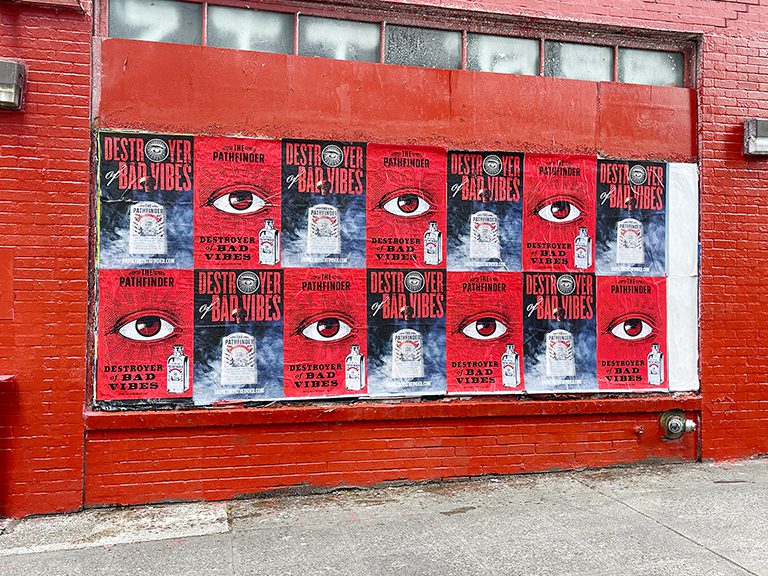
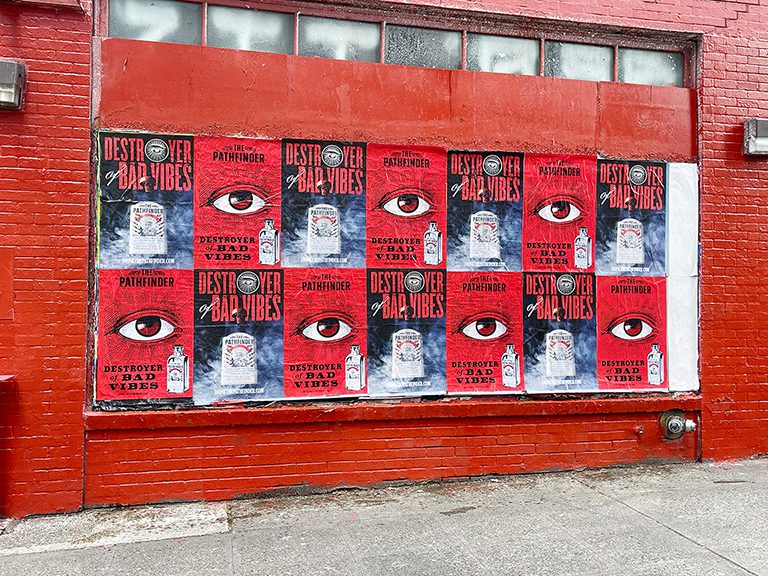
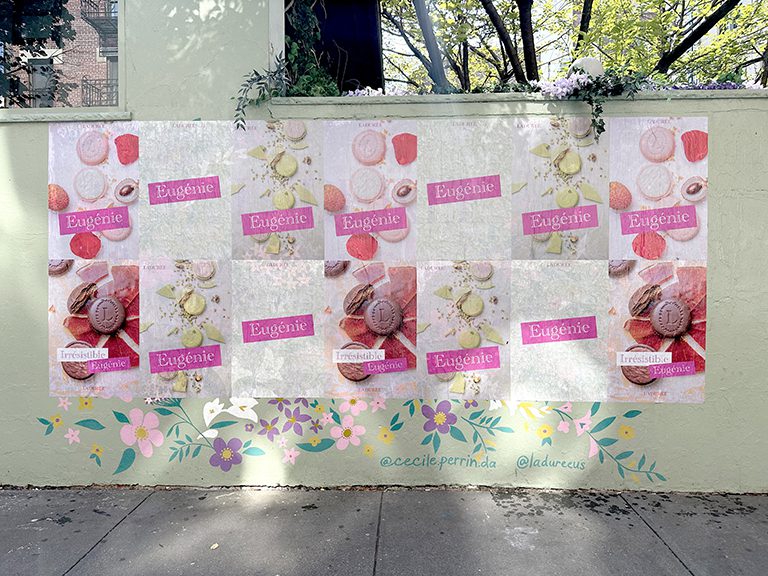
The 24×36-inch format remains effective in Pearl City for the pedestrian zones around the retail centers, restaurant clusters, and the community gathering points where residents move on foot between commercial destinations. Within the Pearlridge Center’s surrounding commercial strip, along the foot-traffic corridors adjacent to popular restaurants, and near the transit stops and parking areas where pedestrian movement concentrates, 24×36 poster placements accumulate impressions through the repeated-exposure effect that makes street poster campaigns memorable. Contact AGM for a quote on 24×36 Pearl City campaigns.
The 48×72-inch format performs particularly well in Pearl City’s more auto-oriented zones, where poster size matters for visibility at the distances and speeds at which drivers encounter commercial wall faces. A large-format poster on the visible exterior wall of a retail building on the Kamehameha Highway, on the perimeter fence of a parking facility visible from the highway approach, or on a construction barrier along a major commercial corridor reads clearly at vehicle speeds in a way that a standard-format poster cannot. For brands that want to reach Pearl City’s auto-commuter consumer population — the driver who takes Kamehameha Highway to work, stops at Pearlridge for errands, and returns the same route to a residential neighborhood — large-format placement on the highway commercial corridor’s visible surfaces delivers vehicle-speed impression volume alongside the pedestrian-environment reach of the retail center zones. Contact AGM for a quote on large-format Pearl City installations.
Award Winning Personalized Service
You will get thoughtful, devoted, and individualized attention from our experienced, qualified, and professional personnel. Being one of the most illustrious agencies in Brooklyn, New York, American Guerrilla Marketing has been awarded the Best of Brooklyn title.
Nationwide
Industry City, Brooklyn, New York 11232
American Guerrilla Marketing
Hours
Mon - Fri: 9 AM - 5 PM
Sat & Sun: Closed
Automate your campaign with AGM’s Request for Proposal Builder. Simply answer a few quick questions about your campaign goals, markets, and timeline, and the system will generate a tailored presentation with recommended strategies, quantities, and pricing. Click the RFP Builder to instantly receive your customized proposal.
Pearl City campaigns require a targeting approach that accounts for the market’s suburban commercial structure. Unlike Honolulu’s concentrated entertainment districts or Kailua’s compact beach town commercial core, Pearl City’s commercial geography is distributed across a several-mile stretch of Kamehameha Highway with distinct commercial nodes — Pearlridge, Pearl Highlands, the Waimalu commercial strip — separated by residential zones and transitional commercial development. Effective Pearl City targeting requires identifying the specific nodes where the campaign’s target demographic concentrates, rather than attempting blanket highway coverage that would spread placement across too large a geography for efficient impression accumulation.
The military family audience requires specific targeting attention in Pearl City. The corridors closest to the entrances of Schofield Barracks, Pearl Harbor Naval Station, and Hickam Air Force Base — including the commercial strips on the access routes that military families use regularly — provide targeted access to this population that general Kamehameha Highway placements may not achieve with sufficient precision. AGM’s operational experience in Pearl City’s military-adjacent commercial zones informs which specific locations provide the best access to the military family consumer within the broader suburban market geography.
Installation timing for Pearl City campaigns accounts for the community’s household rhythm. Weekend afternoons and evenings are the highest-value windows for reaching the broadest cross-section of Pearl City’s residential consumer population — Saturday afternoon at Pearlridge, Sunday evening restaurant traffic, the Friday night leisure hours when families make entertainment decisions for the weekend. Campaign installations timed to have posters in place by Thursday or Friday ensure fresh, visually intact placements are visible during the highest-traffic household spending windows of the week.
Every Pearl City installation is GPS-documented and photographed. Post-campaign reporting delivers the same coordinate and visual proof-of-performance documentation that AGM provides for any campaign in any market — the record of exactly where and when each poster was placed, confirmed by photographs taken at the time of installation by AGM’s on-the-ground crew.
Entertainment and food and beverage brands targeting Oahu’s resident market are the most consistent Pearl City fly posting clients. A new restaurant opening in the Pearlridge corridor uses street campaigns to build community awareness in the weeks before opening — to reach the family that decides where to eat on Saturday, the couple looking for a Friday night dinner spot, the military family exploring the commercial options in their adopted community. A food brand entering Hawaii’s retail market uses Pearl City fly posting alongside Honolulu and Kailua campaigns to ensure its distribution push reaches the full spectrum of Oahu’s residential consumer, not just the tourist-facing and creative-class markets concentrated in the urban entertainment districts.
Entertainment platforms — streaming services, gaming companies, content studios — targeting Hawaii’s broad resident consumer base use Pearl City fly posting to reach the demographic that makes up the majority of actual subscription and entertainment spending in the state. The Pearl City residential population watches television, plays games, subscribes to streaming services, and consumes entertainment at rates comparable to any American suburban market. Fly posting in the Pearlridge Center corridor and along the Kamehameha Highway reaches this consumer in the commercial environments they inhabit most frequently, building brand familiarity that translates into subscription and purchase decisions across the campaign window.
Military-focused brands and service providers use Pearl City fly posting to reach the substantial active-duty and veteran population concentrated in the communities around Pearl Harbor and the associated installations. Financial services brands serving military families, fitness and health brands targeting the active-duty demographic, and entertainment and lifestyle brands whose products align with military family spending patterns all find in Pearl City’s military-adjacent commercial corridors a concentrated access point to an audience that is simultaneously high-value and underserved by conventional Hawaii marketing campaigns focused on tourism and the Honolulu creative economy.
Local Hawaii-born businesses use Pearl City fly posting to reach the established local community — the families who have lived in Pearl City for generations, the multigenerational local consumer whose household spending decisions are shaped by community loyalty and word-of-mouth rather than tourism trends or urban creative trends. For a local business that wants to reach this community in the commercial spaces they use every week, fly posting in Pearl City’s corridors provides direct physical presence in the community’s actual consumer environment.
The dominant narrative about Hawaii advertising focuses on tourism — on reaching the visitor who has arrived with a large discretionary budget and a short window in which to spend it. That focus is rational for certain categories of business, but it systematically undervalues the resident consumer market that accounts for the majority of Hawaii’s actual economic activity. Hawaii’s resident population — working, saving, spending on household needs, entertainment, food, lifestyle, and the range of goods and services that any community requires — represents a consumer market of significant scale and entirely different behavioral characteristics than the tourism-dependent narrative suggests.
Pearl City is where a large portion of that resident consumer market lives. It is the community whose members fill the Pearlridge Center on weekend afternoons, whose households make the restaurant and entertainment decisions that keep Western Oahu’s service economy functioning, and whose spending on food, clothing, electronics, fitness, and lifestyle products represents a significant and consistent commercial base. Brands that focus exclusively on Honolulu’s tourism-facing corridors and creative districts are reaching a slice of Hawaii’s market while systematically missing the suburban residential consumer who accounts for a substantial portion of the state’s total retail and service spending.
AGM’s fly posting capabilities in Pearl City give brands the operational ability to reach this market — to put physical advertising presence in the commercial corridors where the resident consumer actually shops and eats and makes purchasing decisions, without the cost or complexity of traditional outdoor advertising and without the audience quality compromises of digital campaigns that target geography but cannot distinguish the tourist from the lifelong local. The Pearl City resident who sees a brand’s poster in the Pearlridge corridor on Saturday morning is a different consumer — with different purchase habits, different brand loyalty patterns, and different community-influence networks — than the Waikiki tourist who sees the same brand on a digital banner. Fly posting reaches both, but Pearl City fly posting reaches the one that most Hawaii campaigns overlook entirely.
Campaigns typically run one to two weeks. Pearl City’s Oahu location and subtropical outdoor conditions are factored into material selection for every installation. All printing handled in-house. GPS-documented photo proof delivered for every placement. Contact AGM for a quote based on your Pearl City target corridors, format preferences, and campaign timeline.
The strongest Pearl City fly posting corridors are the Pearlridge Center area on Kamehameha Highway for retail consumer reach, the broader Kamehameha Highway commercial strip for highway-corridor visibility, Pearl Highlands for the military family demographic, and the Waimalu and Salt Lake corridor for the denser residential and commuter population adjacent to Honolulu. AGM recommends targeting based on the specific audience segment and campaign objectives.
Pearl City’s military family population shops the Pearlridge Center and Pearl Highlands commercial zones, uses the Kamehameha Highway corridor for daily commuting and commercial trips, and concentrates in the communities adjacent to Pearl Harbor Naval Station, Hickam Air Force Base, and the other installations in the Western Oahu area. Fly posting in the commercial corridors that serve these communities reaches military families during their regular household shopping and leisure movements — not through targeted digital ads that require data permissions and screen time, but through physical presence in the actual spaces where their consumer decisions are made.
Pearl City reaches the Oahu resident consumer that Honolulu campaigns — focused on Kakaako, Chinatown, and Waikiki — systematically miss. The residential suburban market concentrated in Western Oahu represents a large consumer population with different demographic characteristics, different spending patterns, and different community-influence dynamics than the tourism-facing and creative-class audiences of Honolulu’s entertainment districts. A brand that runs only in Honolulu is reaching a slice of Oahu’s market; adding Pearl City reaches the resident consumer base that represents the majority of the island’s actual day-to-day spending.
Every poster AGM places in Pearl City is photographed at installation and GPS-tagged with the precise coordinates of the placement location. Post-campaign reporting provides visual and coordinate verification for every poster placed — the same proof-of-performance documentation standard that AGM delivers for campaigns in Honolulu, New York, or Los Angeles, regardless of the market’s size or suburban character.
Contact AGM for a quote based on your target corridors, format selection, and campaign timeline. Pearl City’s suburban commercial geography means that targeting strategy has significant impact on campaign efficiency; AGM can help identify the specific corridors that maximize reach to your target demographic within Pearl City’s multi-zone commercial structure.
Digital advertising targeting Pearl City’s residential consumer reaches the same demographic across screens simultaneously with every other brand targeting that profile — military families, suburban Oahu residents, Hawaii working-class consumers. The competitive environment for digital attention in this demographic is intense, and ad recall rates for the suburban household consumer scrolling social media or streaming television are low relative to impression volume. Fly posting in Pearl City’s commercial corridors encounters this consumer in a physical environment where there is no competing advertiser at the specific placement surface — the poster on the Pearlridge retail strip wall or the Kamehameha Highway commercial face has no digital competitor for attention at that specific location.
Yes. Multi-neighborhood Oahu campaigns covering Pearl City alongside Honolulu’s Kakaako, Chinatown, or Waikiki are a standard AGM capability. Coordinated installation ensures both the resident suburban market and the urban entertainment-district market receive fresh campaign placements simultaneously, giving the campaign presence across the full range of Oahu’s consumer geography rather than focusing exclusively on the tourism-facing and creative-class corridors of Honolulu proper.
Food and beverage brands targeting Oahu’s resident market, entertainment platforms building subscriber bases among Hawaii’s local population, retail brands entering the Hawaii market through suburban distribution, military-adjacent service and lifestyle brands, local Hawaiian businesses building community awareness, and any brand whose target demographic includes the working-class and middle-class Hawaiian resident rather than exclusively the tourism consumer all benefit from Pearl City fly posting. The common thread is a need to reach the resident Oahu consumer in the commercial spaces they actually use.
The Pearlridge Center and its surrounding commercial strips represent the highest-concentration commercial pedestrian zone in Western Oahu’s suburban geography. The mall’s consistent foot traffic, generated by its mix of retail, dining, and community programming, makes the surrounding area one of Pearl City’s strongest targets for fly posting campaigns seeking broad residential consumer reach. AGM targets the available placement surfaces in the commercial corridors adjacent to the mall entrance areas and the retail strips along Kamehameha Highway that serve the same population of regular shoppers.
Oahu-wide entertainment events that draw Western Oahu residents — Aloha Stadium concerts and sports events, community festivals at the Pearlridge Center and Pearl Highlands, military base open events, and the Pearl Harbor anniversary commemorations that bring significant visitor and local foot traffic to the Western Oahu corridor — all create campaign windows where Pearl City’s commercial corridors experience above-average pedestrian density. AGM can time installations to these windows to maximize impression quality and volume during periods of peak community activity.
Yes. For time-sensitive Pearl City campaigns — retail opening announcements, entertainment platform launches with hard market dates, brand moments requiring immediate street presence — AGM offers 72-hour rush production and installation for 24×36 format campaigns up to 500 units. Contact AGM as early as possible when rush deployment is needed to ensure production scheduling can accommodate the Pearl City timeline.
Pearl City’s Kamehameha Highway corridor and suburban commercial zones are more auto-oriented than Honolulu’s walkable entertainment districts. AGM accounts for this in format recommendations — often recommending 48×72 large-format placements for highway-corridor surfaces that need to be legible at vehicle speeds — and in surface selection, targeting the commercial building walls, parking structure faces, and construction barriers that provide visibility to both vehicle and pedestrian traffic. Contact AGM to discuss the specific targeting and format strategy appropriate for your Pearl City campaign goals.