American Guerrilla Marketing
Nationwide serivce
Media planning, media buying, billboard advertising, & guerrilla marketing
Case Study:

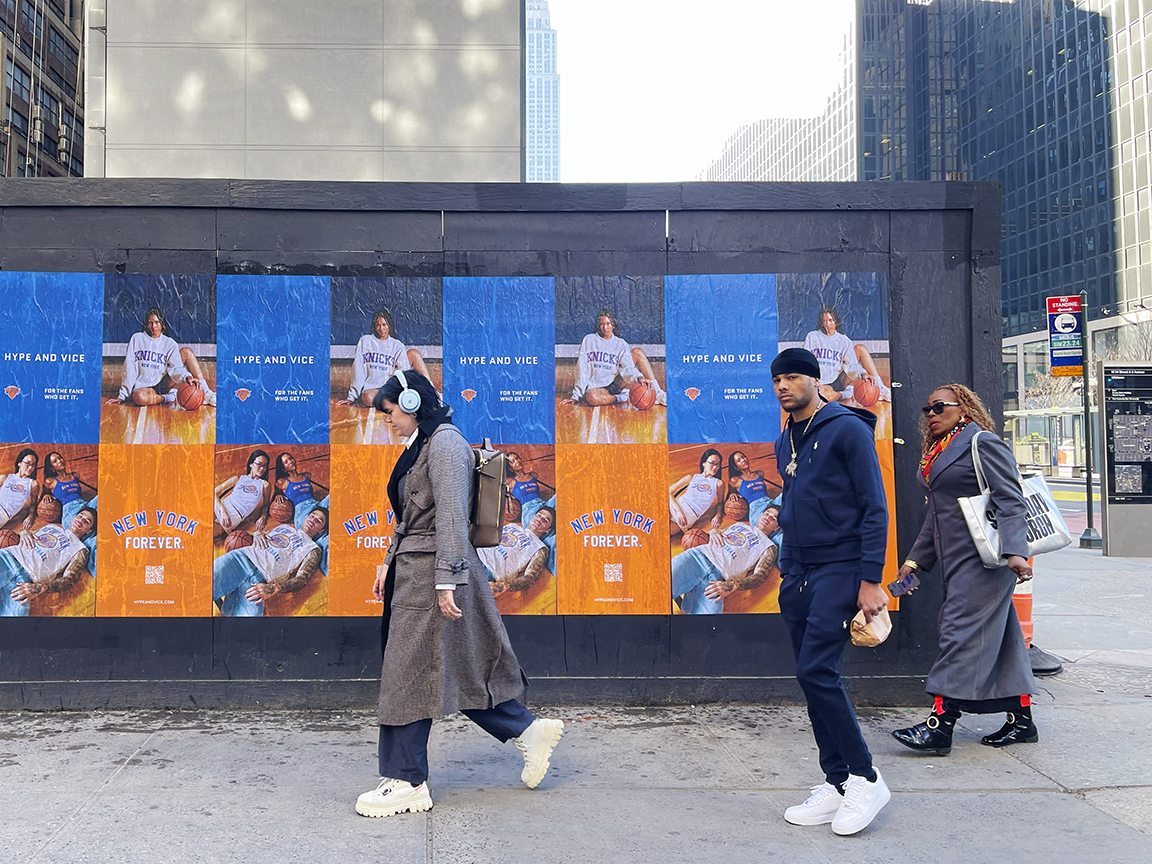
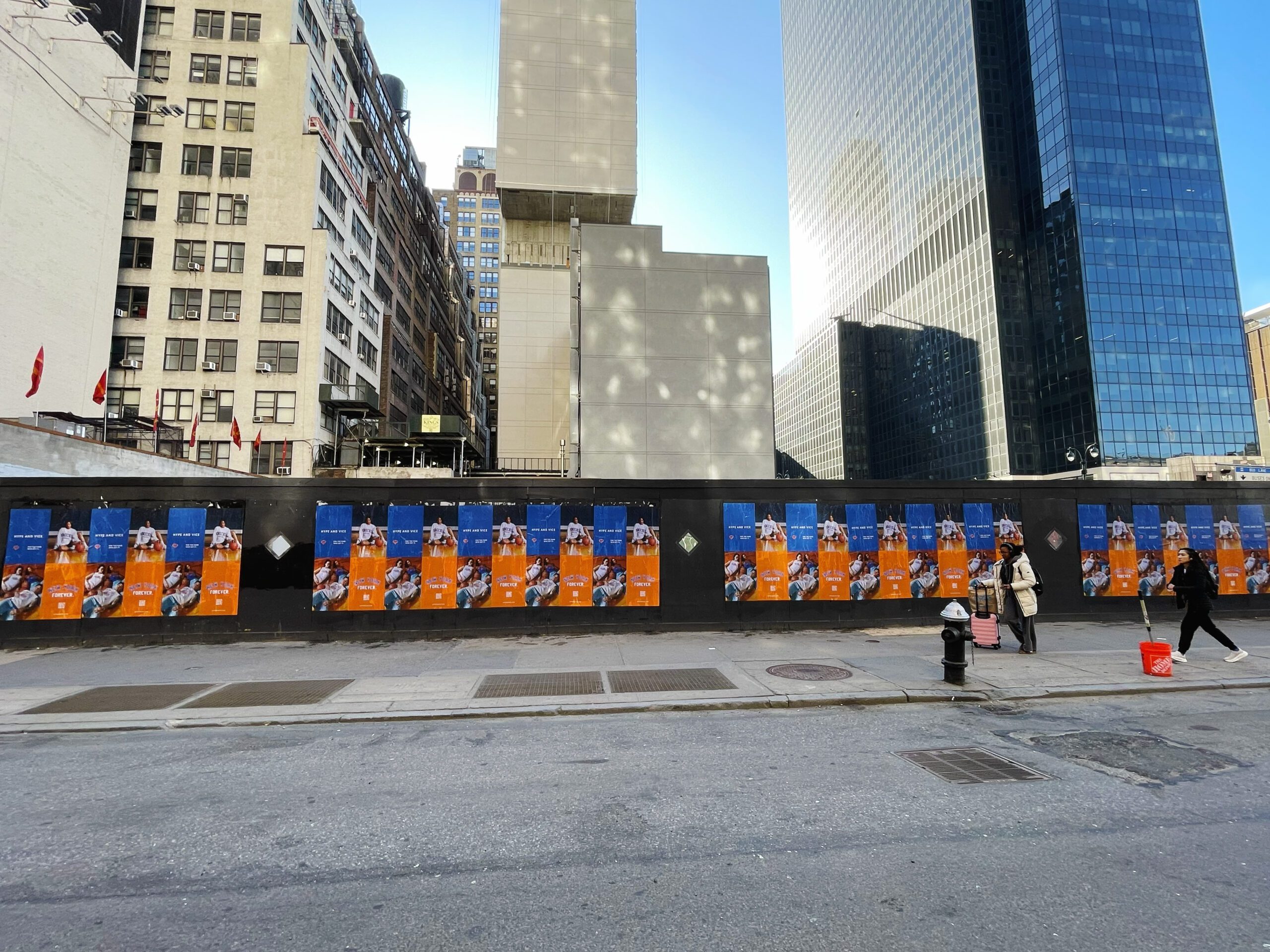
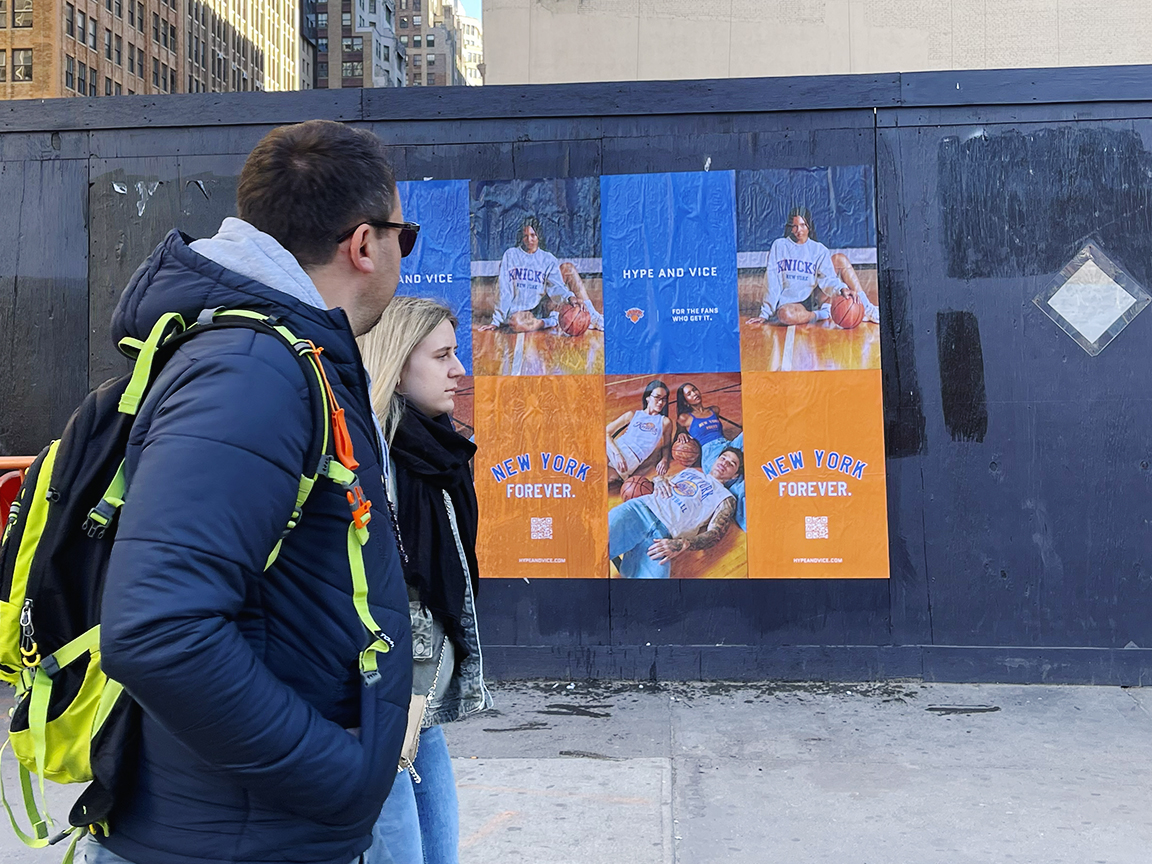
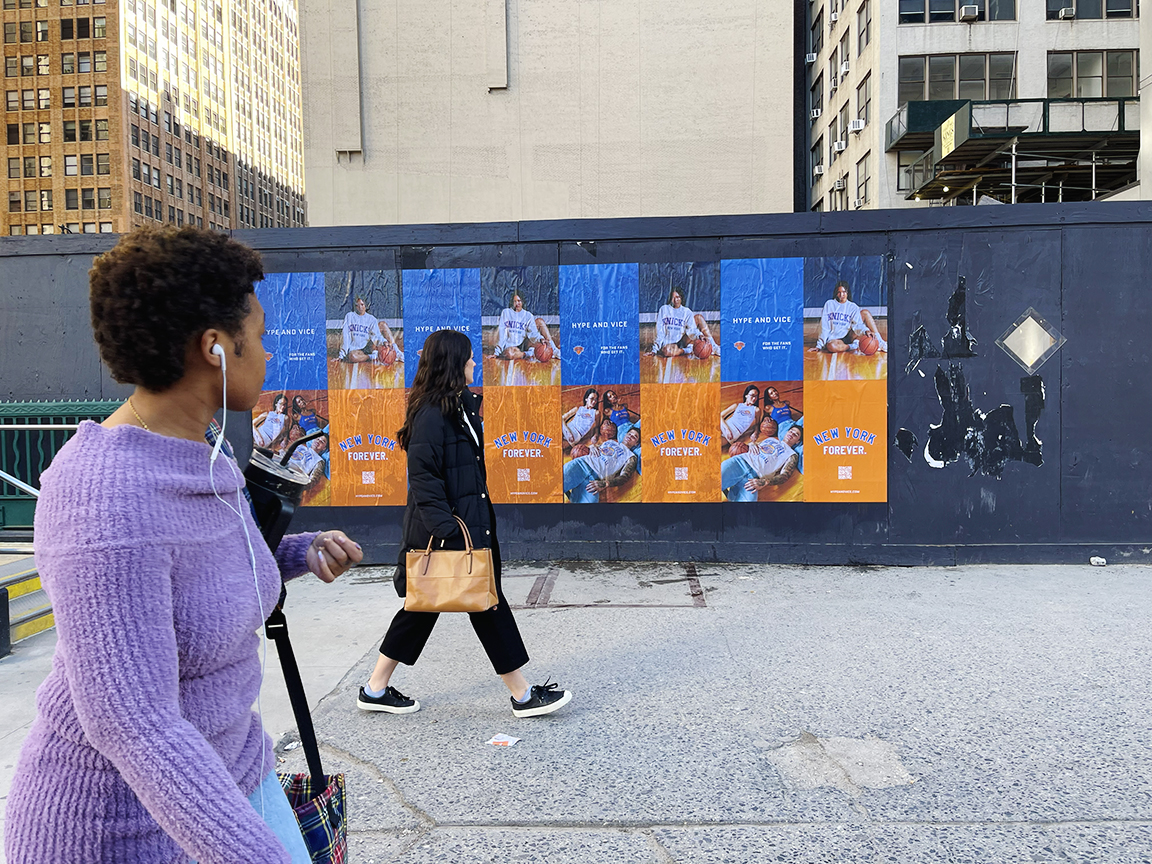
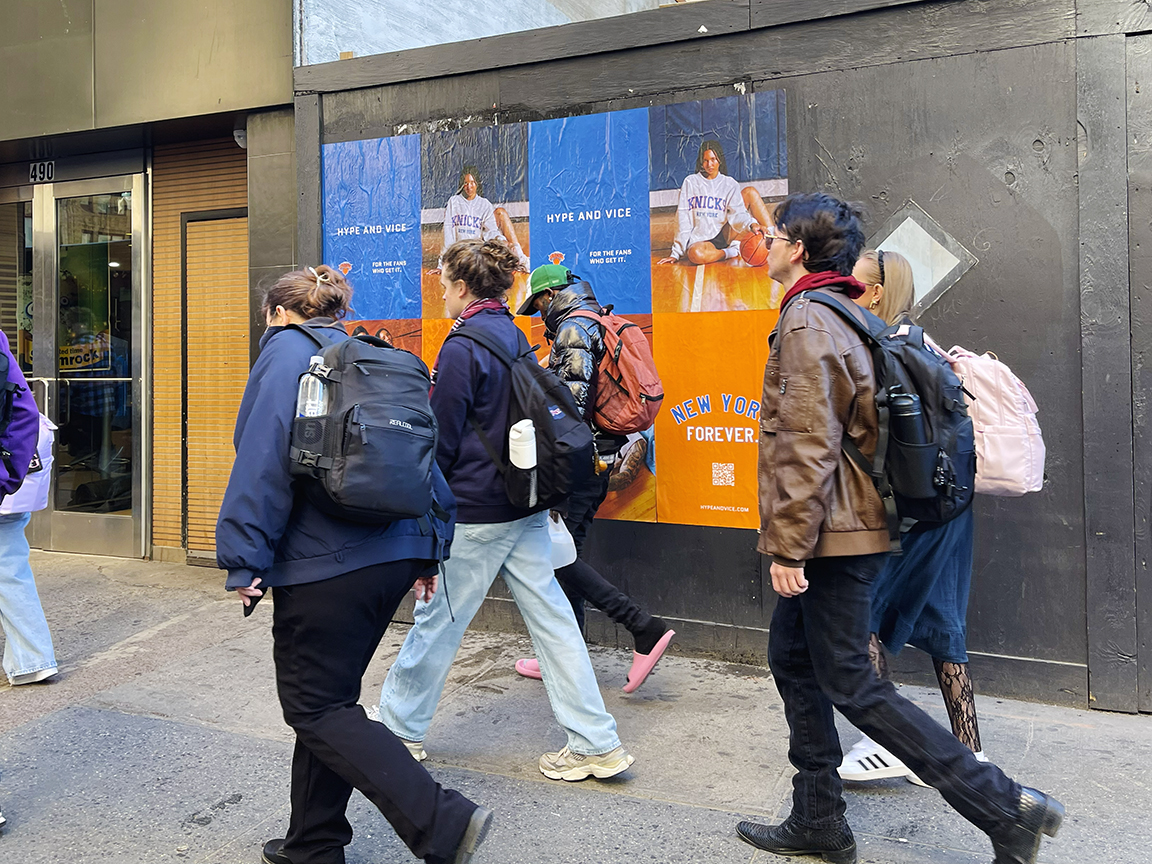
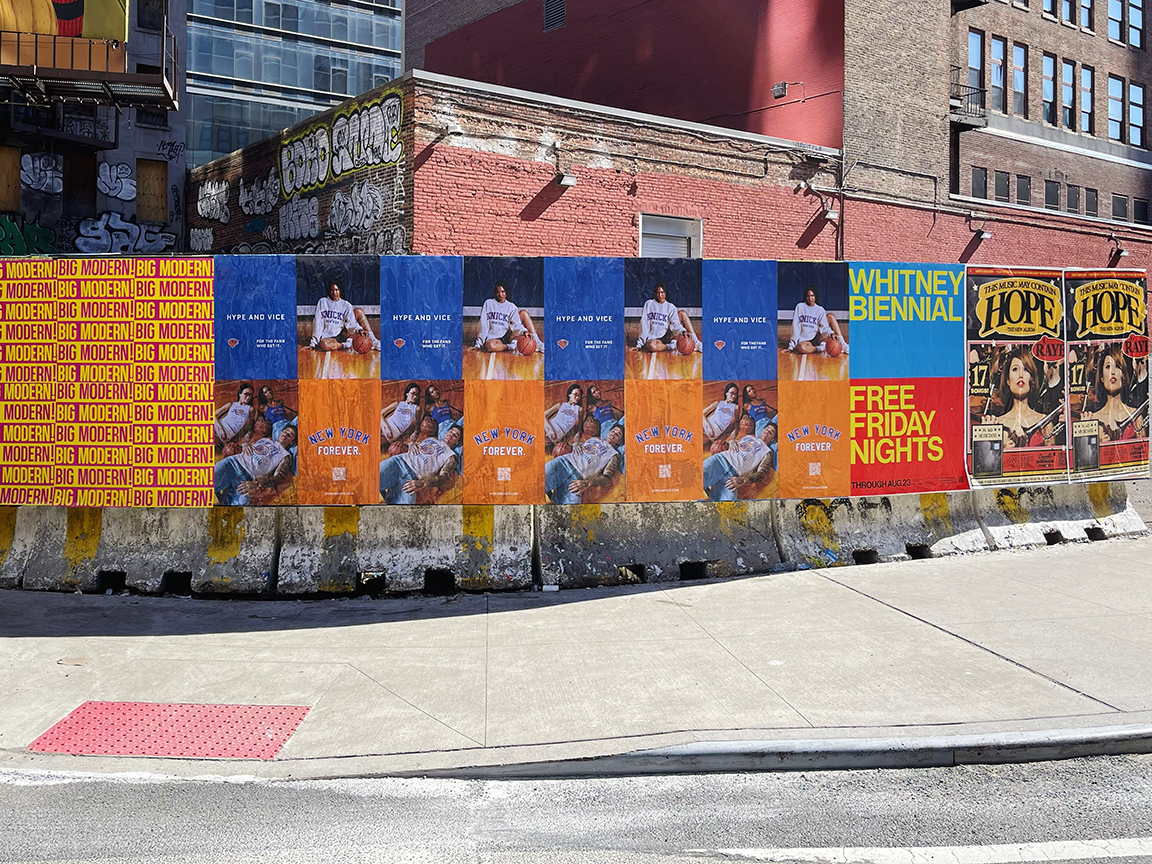
Madison Square Garden is one of the most concentrated sports fan environments in the country. On game nights, the blocks surrounding MSG fill with Knicks fans moving between Penn Station, sports bars, restaurants, and the arena itself. American Guerrilla Marketing built the Knicks Apparel campaign around that natural concentration, deploying 200 large-format 24×36 wheatpaste posters across Manhattan in the neighborhoods where basketball fans already gather. Four creative designs kept the campaign visually fresh throughout the area while the poster installations served a second function: they became the backdrop for a live apparel photoshoot, turning advertising placements into content production assets in the same campaign.
The Knicks Apparel campaign was built around a specific audience in a specific place at a specific time. Rather than spreading placements across Manhattan broadly and hoping to reach sports fans through general foot traffic, the entire campaign was engineered around Madison Square Garden and the network of venues, transit corridors, and entertainment destinations that Knicks fans move through on game nights and throughout the basketball season.
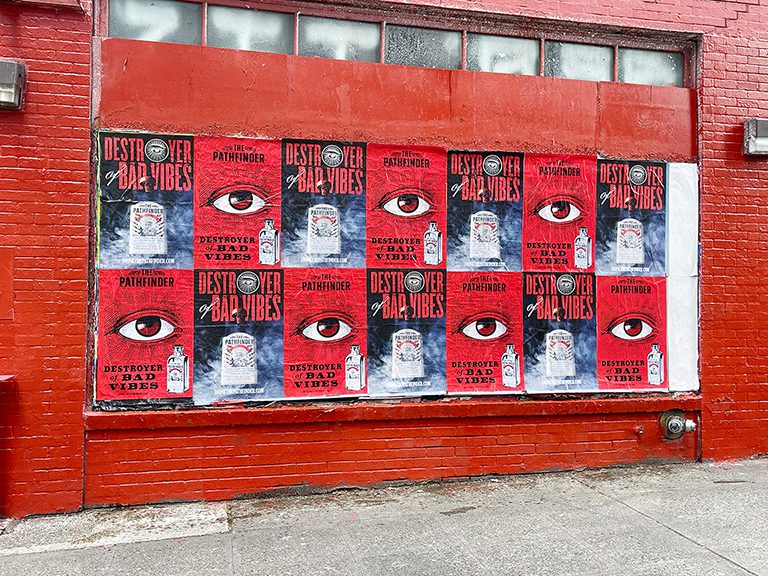
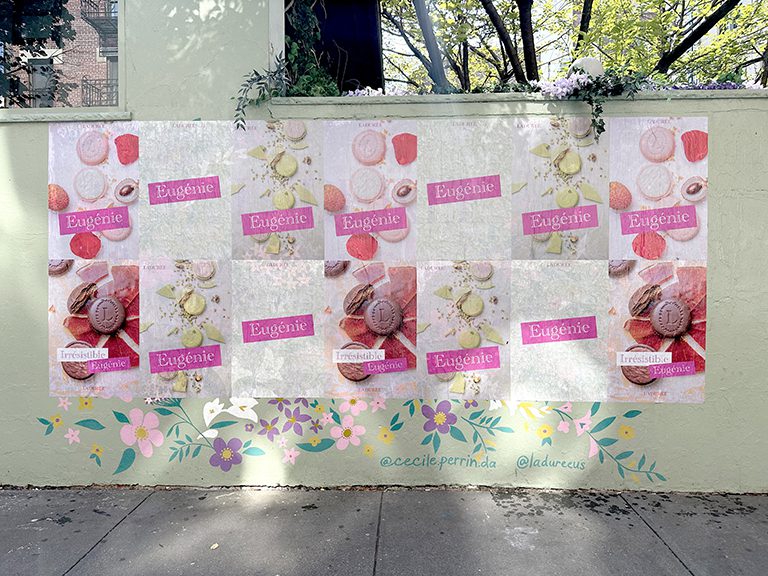
Two hundred 24×36 wheatpaste posters were installed at five or more locations across Manhattan, with four separate creative designs rotating throughout the campaign footprint. Installation launched March 14, 2026, following a March 6 design deadline that built in a full week for production and scouting before the campaign went live.
The campaign also served as a production environment for an apparel photoshoot. Installed poster walls were used as authentic urban backdrops for Knicks Apparel photography, capturing street-level lifestyle imagery that reflected the actual neighborhoods where the brand’s audience lives rather than a studio interpretation of urban aesthetics. This made the campaign do two things at once: build awareness through street advertising and generate content through the same installations.
The core strategic insight behind this campaign is straightforward. Knicks fans congregate around Madison Square Garden. That concentration is predictable, consistent throughout the basketball season, and geographically defined enough to target with high precision. Rather than spending budget on broad Manhattan coverage to reach a sports audience scattered across five boroughs, the campaign concentrated all 200 placements in the specific neighborhoods where that audience reliably shows up.
Sports apparel campaigns often default to digital advertising and stadium signage. Street-level guerrilla marketing reaches the same audience in a completely different consumer state. A fan walking to the game from Penn Station, stopping for a beer at a sports bar two blocks from the arena, or heading home through the surrounding neighborhood after a win is not scrolling a feed and is not watching pre-roll ads. They are physically present in their environment, moving through a city they know, and naturally inclined to engage with what they see on the walls around them. That is a better environment for apparel creative than most digital placements can produce.
Four creative designs gave field teams flexibility to vary placements throughout the target area while maintaining enough creative variety to stay interesting for fans who moved through multiple locations on the same night. It also allowed the photoshoot to capture different visual contexts across the campaign footprint, producing a more varied content library than a single creative design would allow.
Award Winning Personalized Service
You will get thoughtful, devoted, and individualized attention from our experienced, qualified, and professional personnel. Being one of the most illustrious agencies in Brooklyn, New York, American Guerrilla Marketing has been awarded the Best of Brooklyn title.
Nationwide
Industry City, Brooklyn, New York 11232
American Guerrilla Marketing
Hours
Mon - Fri: 9 AM - 5 PM

Sat & Sun:Â Closed
Automate your campaign with AGM’s Request for Proposal Builder. Simply answer a few quick questions about your campaign goals, markets, and timeline, and the system will generate a tailored presentation with recommended strategies, quantities, and pricing. Click the RFP Builder to instantly receive your customized proposal.
Two hundred 24×36 wheatpaste posters were the single format for this campaign. The 24×36 size hits the right balance for a Manhattan street campaign built around neighborhood saturation near a specific venue. Large enough to read clearly at a glance from the other side of the street, manageable enough to place at a wide variety of wall surfaces throughout a concentrated geographic area, and sized appropriately for the type of apparel creative that benefits from clean, readable typography and strong visual impact without requiring the scale of a hero wall.
Wheatpaste installations in the neighborhoods surrounding MSG landed on surfaces where basketball fans would encounter them naturally throughout their game-night movement patterns. Construction hoarding near transit corridors. Walls adjacent to bars and restaurants. Surfaces along the walking routes between Penn Station, the arena, and the surrounding entertainment district. Every placement was positioned with sight line and pedestrian flow in mind rather than placed based on wall availability alone.
Four creative designs rotated across the 200 placements, ensuring that a fan making multiple stops in the area encountered different visual executions of the same brand throughout their evening. This variety is particularly important in sports entertainment neighborhoods where the same audience returns repeatedly throughout the season, and where a single static campaign design loses its impact after the first few encounters.
The installed wheatpaste walls served as the production backdrop for the Knicks Apparel photoshoot. This was not an afterthought or a convenient addition to the campaign plan. It was a deliberate integration that made the campaign more efficient and the resulting content more authentic.
Studio photography for apparel creates controlled, clean images that lack the texture of the environments where urban sportswear is actually worn. A Knicks fan does not wear team apparel in a photography studio. They wear it to the game, to the bar, on the walk back to the train. Shooting the campaign apparel against installed poster walls in the actual Manhattan neighborhoods where those fans move produced images that reflect the brand’s real environment rather than a constructed approximation of it.
The result was a dual-output campaign. The poster installations built awareness in the target neighborhoods throughout the campaign window. The photoshoot captured lifestyle imagery that could be used across social, digital, and retail channels, with the authentic street context of the AGM installations giving every image a texture that no studio backdrop could replicate. One budget, two deliverables. The advertising campaign and the content library were the same operation.
Targeting for this campaign concentrated on the geography immediately surrounding Madison Square Garden, with particular attention to Penn Station commuter corridors that deliver the largest volumes of game-night foot traffic, sports bars and restaurants in the surrounding blocks where fans gather before and after games, and the walking routes between those locations and the arena itself.
Rather than mapping to general Manhattan foot traffic data, the targeting was built around how Knicks fans actually move through the neighborhood on game nights. That specific behavioral geography produces meaningfully different placement decisions than standard pedestrian density analysis. A location that sees high daytime foot traffic from office workers may have significantly lower game-night value than a side street that fills with sports bar traffic on game evenings.
The photoshoot locations were selected from within the existing campaign footprint, ensuring that every image captured during the production reflected the same neighborhoods that the poster campaign was actively targeting.
The Knicks Apparel campaign worked because it placed the brand where the audience already was, in the exact physical environment where they were most receptive to it. A basketball fan walking to Madison Square Garden on a game night is already in the mindset of that world. Knicks apparel creative on the walls of the neighborhood they are walking through meets them in that moment rather than interrupting an unrelated activity.
The dual-purpose structure of the campaign, combining poster advertising with photoshoot production, produced value beyond the awareness campaign alone. The lifestyle imagery captured using the installed walls as backdrops gave Knicks Apparel authentic urban content that reflected the actual environment of the brand’s audience, which is significantly harder to produce in a studio setting and significantly more valuable for reaching that audience through the channels they use.
This campaign is a strong example of how guerrilla marketing installations can double as content creation tools when the planning accounts for it from the beginning. The advertising campaign and the content production were the same operation. The poster walls did both jobs at the same time.
Sports apparel brands have audiences with a strong sense of place and community. Knicks fans do not just follow the team. They are part of a specific New York City culture that concentrates in specific neighborhoods, attends the same venues, and moves through the same city geography throughout the season. Guerrilla marketing meets that audience in their own environment rather than reaching them through a media channel they share with every other advertiser. Street-level advertising in the neighborhoods where basketball fans actually gather creates brand contact in a context that is already emotionally primed for engagement with the brand’s world.
Targeting was built around the specific movement patterns of Knicks fans on game nights rather than general Manhattan pedestrian density data. The priority locations were Penn Station commuter corridors carrying the highest game-night foot traffic, sports bars and restaurants in the surrounding blocks, and the walking routes between those venues and the arena entrance. This behavioral geography produces different placement decisions than standard foot traffic analysis. A location with high daytime office traffic may have entirely different game-night value than a sports bar side street that sees concentrated fan foot traffic on specific evenings throughout the season.
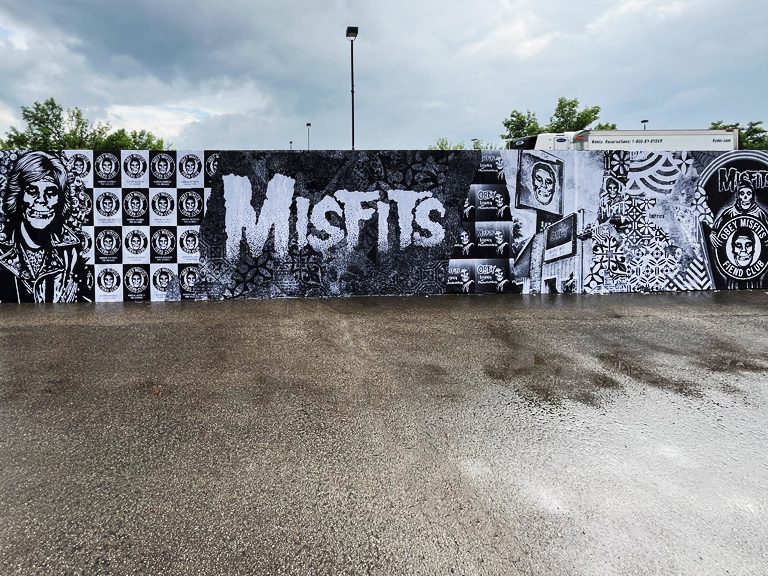
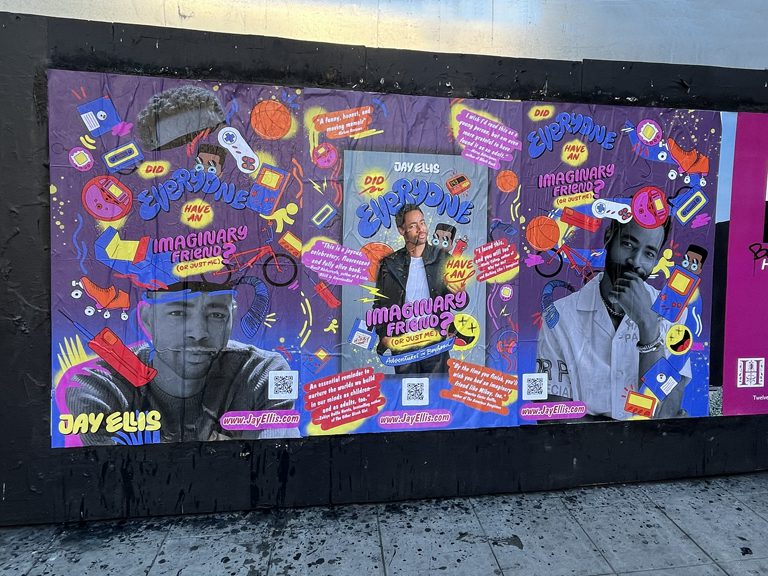
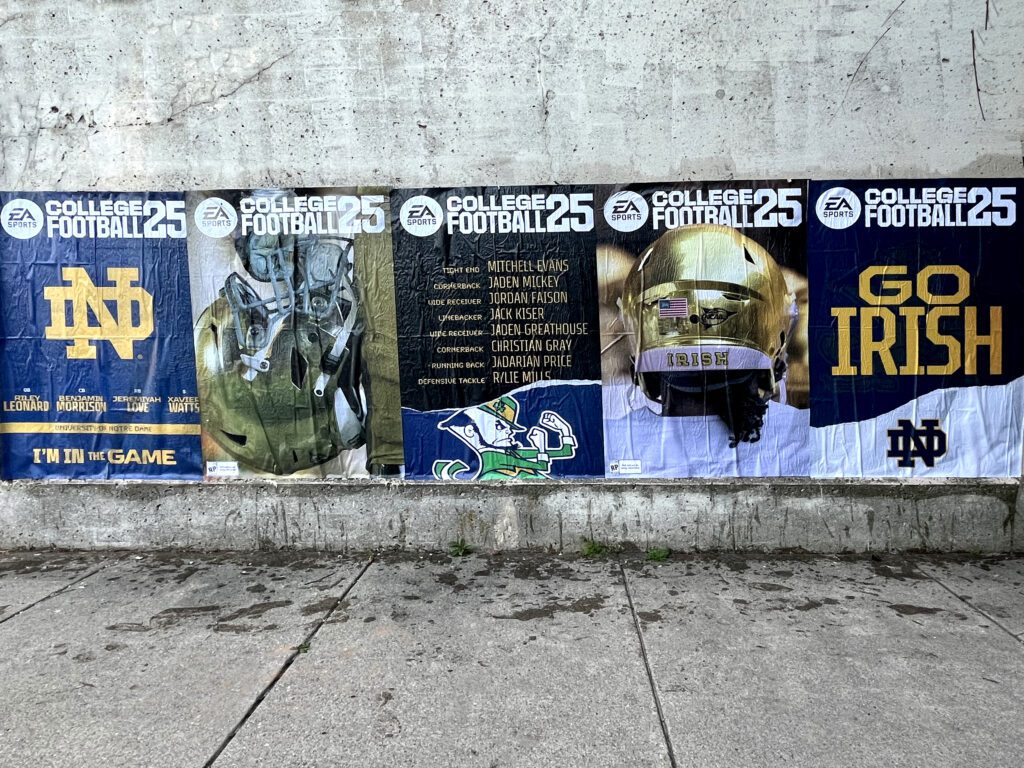
Wheatpaste posters installed flush against brick walls, construction hoarding, and building facades in real urban neighborhoods create an authentic street context that no studio backdrop can replicate. The combination of the poster graphic, the underlying surface texture, the surrounding urban environment, and the natural street lighting produces imagery that reflects the actual environment where the brand’s audience lives. For apparel brands whose identity is rooted in urban culture and specific city neighborhoods, shooting product against installed poster walls in those exact locations produces stronger, more authentic content than a studio setup designed to simulate the same context.
Four creative designs across 200 placements served two purposes. First, it kept the campaign visually fresh for fans who move through multiple locations in the target area on the same evening or who return to the same neighborhood repeatedly throughout the basketball season. A fan who encounters a different creative execution at each stop in the neighborhood reads the campaign as richer and more fully present than a campaign that repeats the same design at every location. Second, multiple creative designs produced a more varied content library from the integrated photoshoot, giving Knicks Apparel more options for social, digital, and retail use from a single production effort.
Wheatpaste poster advertising applies large-format printed posters to urban surfaces using a water-based adhesive paste that bonds the poster to the wall flush without frames or mounting hardware. The result is a graphic that reads as part of the surface it occupies. In urban environments, wheatpaste installations typically remain visible for several weeks to several months depending on weather, pedestrian contact, and competition from other installations in the same area. For campaign windows of one to three weeks, wheatpaste provides a durable, high-visibility presence that holds up through normal street conditions throughout the active window.