American Guerrilla Marketing
Nationwide Service
Media planning, media buying, billboard advertising, & guerrilla marketing
Billboard Advertising in Alabama
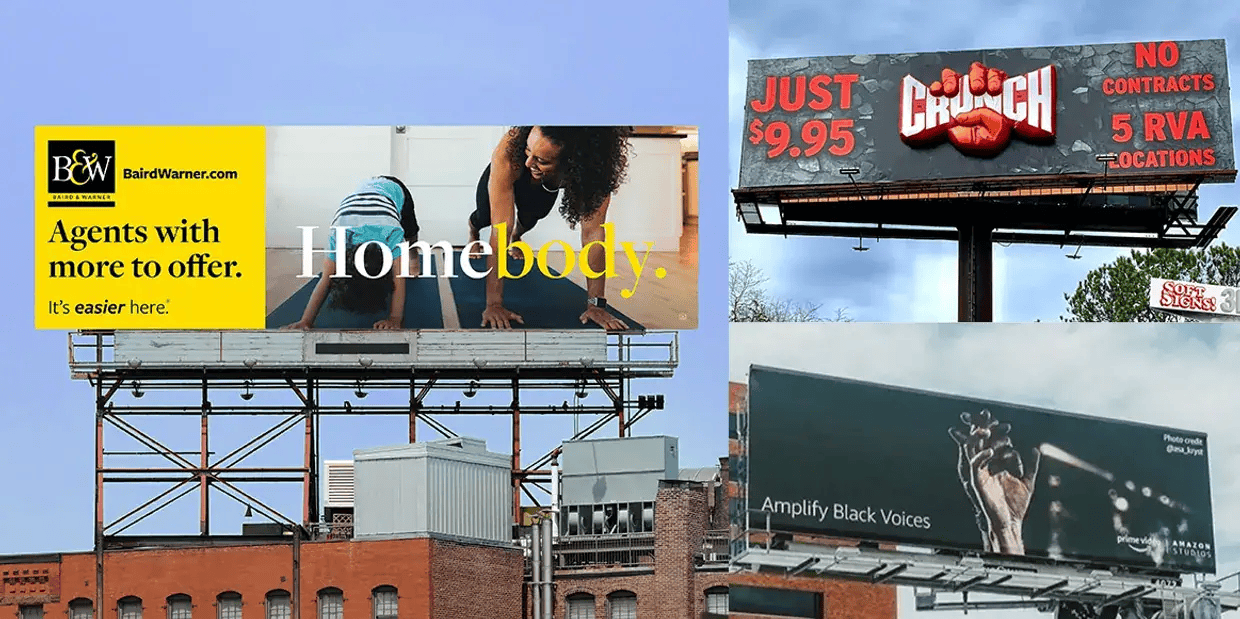
Alabama is a strong outdoor advertising market. Birmingham anchors the state with heavy commuter traffic along I-65 and I-20/59, and the corridor network reaches south through Montgomery all the way to Mobile on the Gulf Coast. The mix of static and digital inventory gives you options whether you want long-term brand presence or a short-burst campaign that can change quickly. If you are trying to reach Alabama drivers, billboards deliver consistent impressions at a cost that is hard to match with most other media.
American Guerrilla Marketing places billboard ads across Alabama — from metro Birmingham and suburban Huntsville to the port city of Mobile and the state capital in Montgomery. We scout locations, negotiate with vendors, and document every install with GPS-verified photos so you know exactly where your ad is running.
See What Billboard Inventory Is Available in Alabama
Tell us where you want to reach people and what you are trying to accomplish. We will find the right inventory, show you the locations on a map, and get you real rates for real available boards in Alabama.
Alabama Billboard Market — Birmingham, Huntsville, And Beyond
Alabama’s outdoor advertising market is built on static bulletins. Static billboards are the standard format across the state — they are installed on steel poles or painted structures along state highways, interstates, and county roads. They are cost-effective and work well for campaigns that run four weeks or longer. Static is especially dominant outside of the major metros. If you are targeting rural counties, US highway routes, or smaller cities like Tuscaloosa, Dothan, or Gadsden, static is what you will find.
Digital billboards are growing but remain concentrated in Birmingham and Huntsville. Birmingham’s interstate system — I-65, I-20/59, and US-280 — has seen the most digital growth in the state. Huntsville’s Research Park corridor and the I-565 connector to Redstone Arsenal have also added digital faces in recent years. Digital boards allow shorter run times, faster creative turnarounds, and the ability to run multiple messages in rotation, which makes them popular with time-sensitive campaigns like events, political ads, and retail promotions.
CPMs in Alabama are affordable compared to the Southeast coastal markets like Atlanta, Nashville, or Charlotte. This makes Alabama a good option for regional advertisers who want real reach without overpaying for impressions. Auto dealerships have historically been the top billboard buyer in this state — franchise dealers and independent lots both use roadside billboards heavily. Healthcare systems, regional universities, law firms, and political campaigns round out the major buying categories.
The state highway network runs north-south along I-65 from Huntsville through Birmingham and Montgomery down to Mobile, and east-west along I-20/59 through Birmingham into Tuscaloosa. These corridors carry consistent daily traffic counts and represent the spine of Alabama’s billboard inventory. Rural stretches along US-231, US-82, and US-431 also carry usable volume, especially for campaigns targeting commuters between smaller cities.
Urban and rural Alabama behave differently as advertising environments. Birmingham, Huntsville, and Mobile have enough density to support targeted placements by neighborhood or corridor. Rural placements are simpler — fewer boards, less segmentation — but they still reach high daily traffic counts on the major US routes. Alabama rewards a straightforward approach: pick the right corridor for your audience, choose the right format, and let the impressions build.
Where We Place Billboards In Alabama
Birmingham
Birmingham is Alabama’s largest city and its most active billboard market. The interstate system here is busy and well-networked. I-20/59 is the main east-west route, carrying heavy commuter traffic between the suburbs and downtown. I-65 runs north-south through the metro and connects Birmingham to both Huntsville and Montgomery. US-280 is the suburban retail corridor heading southeast toward Hoover, Vestavia Hills, and beyond — this stretch is one of the most advertiser-heavy roads in the state, with auto dealers, medical practices, and restaurants all competing for roadside attention.
Downtown Birmingham offers static and digital options near the convention district, the BJCC, and Regions Field. The Southside neighborhood and Five Points South area have pedestrian density that works well for entertainment, dining, and lifestyle brands. Homewood and Mountain Brook are upscale suburban neighborhoods with educated, higher-income commuters — good for financial services, healthcare, and premium retail.
Cahaba Road and 20th Street North are both active local advertising corridors. UAB Medical Center and its network of affiliated hospitals make healthcare one of the dominant billboard categories in this metro. Auto dealerships line US-280 and several US-31 stretches. Law firms, regional banks, and entertainment venues are also active billboard buyers here.
Birmingham supports the full range of formats: large digital boards on the interstates, static bulletins on suburban corridors, poster panels near retail strips, and junior posters closer to neighborhoods. This is the most versatile market in the state for format and placement variety.
Montgomery
Montgomery is the state capital, and its billboard market reflects that. Government agencies, advocacy organizations, and political campaigns all use outdoor advertising here. I-65 is the main artery through the city, and placements along it reach a steady mix of state workers, local commuters, and visitors traveling between Birmingham and Mobile.
Eastern Boulevard (US-82) is the main retail corridor on the east side of the city. It runs past shopping centers, car dealers, fast food strips, and national chains — high-traffic, commercial, and well-suited to retail and auto advertising. US-231 heading south toward Dothan carries commuter and regional traffic. Court Street downtown runs near the state government complex and civil rights landmarks, making it a natural spot for campaigns tied to public awareness, tourism, or civic causes.
Montgomery’s Civil Rights Trail draws visitors from across the country. The National Memorial for Peace and Justice and the Equal Justice Initiative offices have made the city a destination for history tourism. Hospitality brands, hotels, and event venues do well with billboard placements near the downtown core and along the I-65 approaches to the city.
The Montgomery market is mostly static. Digital options exist but are more limited here than in Birmingham. For campaigns focused on the state capital audience — government, advocacy, regional retail, and local services — static bulletins along the main corridors are the right choice.
Huntsville
Huntsville is Alabama’s fastest-growing metro and arguably its most economically distinct. The presence of NASA Marshall Space Flight Center, Redstone Arsenal, and a dense cluster of defense contractors and aerospace firms creates a workforce that is highly educated, technically skilled, and relatively well-paid. This is a different demographic profile than most other Alabama markets, and it shows in what advertisers buy here.
US-72 and Bob Wallace Avenue are two of the core commercial corridors. I-565 connects downtown Huntsville to the Arsenal and carries a consistent stream of government and contractor workers. Research Park Boulevard runs through the tech employment center where companies like Boeing, Lockheed Martin, and SAIC have operations — advertisers targeting engineers, project managers, and defense professionals focus their placements here.
University Drive near the University of Alabama in Huntsville (UAH) is an active corridor for student-facing and education-related campaigns. UAH and Calhoun Community College both use billboards to reach prospective students. Retail brands targeting the younger Huntsville population also concentrate near University Drive.
Digital billboard inventory is growing in Huntsville faster than in any other Alabama market outside Birmingham. Campaigns that benefit from rotation — multiple messages, day/night switching, event-driven creative — work especially well here. Tech companies, aerospace employers, healthcare systems, and local retailers have all used Huntsville billboards effectively.
Mobile
Mobile sits at the intersection of I-65 and I-10, which makes it a natural billboard market for both local and pass-through traffic. I-65 is the main north entry into the city. I-10 runs east-west along the coast and is one of the highest-traffic routes in the region, connecting Mobile to Pensacola and New Orleans. Advertisers who want reach across the Gulf Coast corridor often start placements here.
Airport Boulevard (US-90) is Mobile’s main retail strip — grocery stores, car dealers, national chains, and local service businesses all line this route. It is consistent, affordable, and reliable for local retail advertising. Dauphin Street runs through the entertainment district and connects to the historic downtown core, which works well for restaurants, event venues, and hospitality brands. Water Street along the waterfront sees foot traffic tied to the tourism economy — cruise passengers, visitors to the USS Alabama battleship memorial, and waterfront event attendees.
Mobile’s economy mixes port and logistics operations with hospitality, seafood, healthcare, and manufacturing. The Port of Mobile is one of the largest in the country. Shipping, warehousing, and logistics companies occasionally use billboards for recruiting and B2B brand awareness. Tourism advertising — especially from Gulf Shores and Orange Beach resorts — also flows through Mobile’s outdoor inventory during spring and summer.
Mobile is primarily a static market. Bulletins and poster panels on the interstate approaches and main commercial streets are the standard format. If you are reaching Gulf Coast travelers or local Mobile consumers, this market offers strong reach at affordable rates.
Get a Quote for Billboard Advertising in Alabama
Fill out the form below and we'll put together a list of available billboard locations in Alabama — with real pricing and a map showing each placement. No commitment required to get a quote.
Award Winning Personalized Service
You will get thoughtful, devoted, and individualized attention from our experienced, qualified, and professional personnel. Being one of the most illustrious agencies in Brooklyn, New York, American Guerrilla Marketing has been awarded the Best of Brooklyn title.
Nationwide
Industry City, Brooklyn, New York 11232
American Guerrilla Marketing
Hours
Mon - Fri: 9 AM - 5 PM
Sat & Sun: Closed
Automate your campaign with AGM’s Request for Proposal Builder.
Automate your campaign with AGM’s Request for Proposal Builder. Simply answer a few quick questions about your campaign goals, markets, and timeline, and the system will generate a tailored presentation with recommended strategies, quantities, and pricing. Click the RFP Builder to instantly receive your customized proposal.
Billboard Formats Available in Alabama
Alabama’s outdoor advertising market includes several formats. Each one serves a different purpose. Here is what we work with:
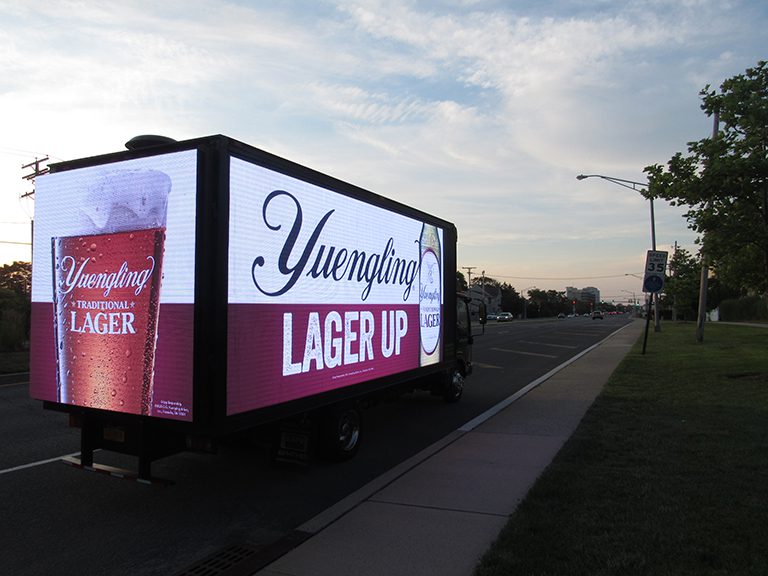
Digital Billboards: Electronic LED displays that rotate between multiple advertisers on a 6-to-8-second interval. They allow fast creative changes, day-parting (running different messages at different times of day), and shorter booking windows. Digital boards are concentrated on interstates and major commercial corridors in Birmingham and Huntsville.
Static Bulletins: The standard large-format billboard. Typically 14 feet by 48 feet. Vinyl or painted. These are the most common format across Alabama, especially outside the major metros. Static bulletins are cost-effective for long-running campaigns and work well on interstates and US highways where drivers see them repeatedly over time.
Poster Panels: Smaller than bulletins — usually around 12 feet by 24 feet. Common on secondary roads, retail corridors, and suburban streets. Good for reaching specific neighborhoods or corridors at a lower cost than a full bulletin.
Junior Posters: The smallest standard format, roughly 6 feet by 12 feet. Used near retail locations, in urban neighborhoods, or in areas where large formats are not permitted. Good for hyper-local campaigns targeting a specific intersection or block.
Spectaculars: Oversized, custom structures that fall outside the standard dimensions. Rare in Alabama, but available in a few premium locations in Birmingham. Spectaculars are built for maximum visual impact and are typically reserved for major brand campaigns.
How The Process Works — Running A Billboard Campaign In Alabama
We follow the same five-step process for every campaign, regardless of market size or format. Here is how it works:
Step 1 — Define your audience, geography, and goals. Before we look at a single board, we want to understand what you are trying to accomplish. Are you driving traffic to a dealership on US-280? Building awareness for a new practice at UAB? Running a political ad through Montgomery? The answers shape everything else — which markets we target, which corridors we focus on, and what format makes the most sense.
Step 2 — Scout Alabama inventory. AGM has relationships with billboard vendors across the state. We identify available faces in your target markets, review their daily traffic counts, check visibility and sight lines, and filter out anything that does not meet our standards. You are not choosing from a generic catalog — we bring you options that match your specific campaign goals.
Step 3 — Client reviews GPS-pinned locations. Before anything is booked, we give you a map with every proposed location pinned by GPS coordinates. You can see exactly where each board sits, what road it faces, and what direction traffic is traveling. If a location does not look right, we find an alternative. You approve the map before we move forward.
Step 4 — Booking, production, and installation. Once locations are approved, we handle the contracts, permits, vinyl production, and installation coordination. You provide the artwork or we can connect you with a designer. We manage the timeline and confirm install dates.
Step 5 — GPS-documented proof of posting. After installation, we provide post-install photos with GPS coordinates for every board in your campaign. You see exactly what went up, where it is, and what it looks like in the field. No guessing.
Who Advertises on Billboards in Alabama
Billboard advertising in Alabama draws from a wide mix of industries. Some categories have been using outdoor for decades and show no signs of slowing down. Others are newer to the format but finding it effective.
Auto dealerships are the top billboard buyer in this state. Franchise dealers and independent lots both use roadside advertising heavily. US-280 in Birmingham, Eastern Boulevard in Montgomery, and Airport Boulevard in Mobile are all lined with auto-dealer billboard placements.
Healthcare systems — UAB Medicine, Ascension St. Vincent’s, Huntsville Hospital, and regional medical groups — use billboards to build name recognition and drive patients to new service lines. The Birmingham metro is especially active for healthcare outdoor.
State universities — the University of Alabama, Auburn University, UAH, and the University of South Alabama — use billboard advertising for enrollment, athletics, and event promotion.
Political campaigns are heavy users, especially in Montgomery and throughout the I-65 corridor. Local, state, and federal races all use outdoor advertising during election cycles.
Tourism and hospitality brands use Alabama’s interstate corridors to reach travelers. Gulf Shores and Orange Beach resorts advertise heavily along I-65 and I-10. Hotels, event venues, and regional attractions also buy outdoor in the Mobile and Montgomery markets.
Regional retailers, law firms, food chains, construction companies, and real estate developers all use billboards across Alabama for local brand building and lead generation. If your customers drive past your boards on the way to work or on the way to shop, outdoor advertising compounds over time.
Common Questions About Billboard Advertising in Alabama
Billboard costs in Alabama vary based on format, location, and market. A static bulletin on a secondary road in a smaller city costs significantly less than a digital board on I-65 in Birmingham. The best way to get an accurate number is to tell us your target city and campaign goals — we will come back with real available options and actual rates.
Most static billboard campaigns run in four-week blocks. That is the standard unit most vendors use, and it gives your message enough time in front of the same audience to register. Shorter runs are sometimes available on digital boards. Longer campaigns — multiple months — are common for dealerships, healthcare systems, and other advertisers who want sustained presence on a corridor.
A static billboard holds one image for the entire campaign run. It is printed on vinyl and installed on the structure. A digital billboard rotates between multiple advertisers on a timed loop — typically every 6 to 8 seconds. Digital allows faster creative changes and shorter minimum runs. Static holds your message exclusively and is generally more affordable for long-term campaigns. In Alabama, static is far more common outside of Birmingham and Huntsville.
Yes. Alabama has significant billboard inventory along its rural US highway network — US-231, US-431, US-82, and others. Rural placements have lower cost, less competition for eyeballs, and can deliver strong reach for businesses targeting commuters between cities or travelers on regional routes. We can source rural inventory across most of the state.
Every campaign we manage comes with GPS-documented proof of posting. After the board goes up, we send you install photos tied to the board’s GPS coordinates. You can see exactly what the board looks like from the road, where it is located, and confirm that the creative is correct. This is a standard part of our process — not an add-on.
The most common large-format billboard is a bulletin, which is 14 feet tall by 48 feet wide. This is what most people picture when they think of a highway billboard. Poster panels are smaller — typically 12 by 24 feet — and junior posters are smaller still. Digital boards vary by structure but often match bulletin dimensions or are slightly smaller. We will tell you the exact dimensions for any board before you approve it.