🚀 NEW WHEATPASTING MARKETS Discover our wheatpasting campaigns in : 🇬🇧 London
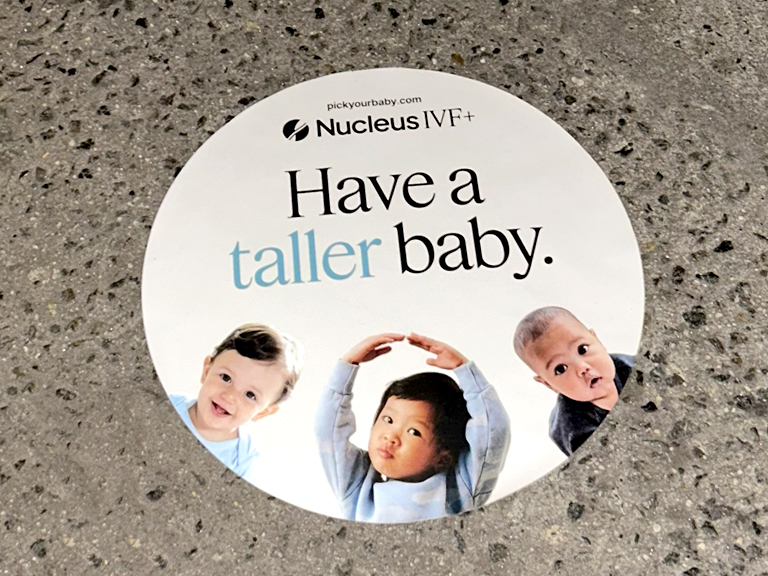
Nucleus IVF+ circular sidewalk decal advertising Have a Taller Baby with infant photography on concrete pavement — American Guerrilla Marketing

Full-service marketing agencies are essential because they eliminate the strategic fragmentation that destroys campaign performance when a brand manages separate vendors for outdoor, digital, creative, experiential, and PR simultaneously. American Guerrilla Marketing has operated as a full-service outdoor and experiential agency for brands including Nike, Wrangler, and EA Sports, and across 500+ campaigns, the performance gap between coordinated single-agency execution and fragmented multi-vendor campaigns is the most consistent finding in our client results. Brands that brief one agency across all their street-level, outdoor, and experiential channels consistently outperform brands running the same budget through three or four siloed vendor relationships. This guide explains precisely why that gap exists, what full-service agencies actually do differently, how to evaluate whether an agency claiming full-service capability actually delivers it, and how to decide when specialist agencies are the right choice.

The argument for full-service is not about convenience or the appeal of a single invoice. It’s about the performance cost of fragmentation. When a brand’s digital agency, outdoor vendor, PR firm, and experiential company each receive an independent brief and execute without visibility into each other’s work, three things happen: the creative diverges across channels in ways that erode brand coherence, the timing of activations isn’t coordinated to create the audience surround effect that multiplied impact requires, and each vendor optimizes for their own metrics rather than the brand’s actual business outcome. These are structural problems, not execution failures, no individual vendor is doing anything wrong, but the system produces worse results than a unified approach.

What Full-Service Actually Means in the Outdoor and Experiential Context

The term “full-service” has been diluted by overuse. Every agency in every category claims it. In the outdoor, experiential, and guerrilla marketing context specifically, genuine full-service means the agency can own strategy, media planning and buying, creative development, field execution, staffing, campaign documentation, and measurement reporting across the full scope of physical and physical-digital campaign formats, without requiring the client to manage coordination between external specialists for any of these elements.

AGM’s full-service scope within its core competencies covers outdoor media buying (OOH and DOOH), guerrilla and street-level campaign execution (wheat posting, street poster advertising, stencils, projections), experiential activation design and management, brand ambassador staffing and training, LED truck campaign production and deployment, mural and signage production, and unified campaign documentation and performance reporting. For digital channels that extend campaign reach (social amplification, geofenced retargeting, TikTok), we coordinate with integrated partners rather than operating those channels in-house, which keeps our in-house expertise concentrated where we have genuine operational depth, while maintaining the client’s single-brief relationship.

The Strategic Cost of Fragmented Vendor Management

Creative Divergence Across Channels

When different agencies develop creative for different channels independently, even with a shared brand guidelines document, the executions diverge in ways that erode brand coherence over the course of a campaign. Typography weights shift slightly. Color treatments vary between the vendor who had the original brand files and the one working from a screenshot. Tone of voice is confident in the outdoor and tentative in the experiential. Each execution might pass a quality review in isolation. Collectively, they create a brand presence that feels assembled rather than designed.

In our campaigns, we’ve seen brand identity coherence audits at the end of fragmented campaigns that show 4–6 distinct visual treatments for the same brand running simultaneously across different channels, each technically within brand guidelines but collectively producing the impression of a brand with no clear point of view. A full-service agency develops a single unified visual and messaging treatment and adapts it for each channel, maintaining consistency of voice and aesthetic while optimizing for each format’s specific requirements.

Timing Misalignment

The power of a multi-channel campaign comes from timing activations to create audience surround, the brand appearing in multiple environments in the same week, reinforcing the same message from multiple angles, building the frequency that turns an impression into a memory. This timing coordination only happens when a single agency controls the deployment schedule across all channels.

In fragmented multi-vendor structures, each vendor delivers on their own timeline, which is driven by their operational constraints rather than the brand’s strategic requirements. The outdoor vendor installs in week one. The experiential company’s event runs in week three. The social amplification starts in week five when the social agency finally gets the content from the event team. The audience never experiences all three simultaneously, and the compounding effect of multi-channel surround is never achieved, even though the brand paid for all three channels.

Metric Misalignment

Each vendor in a fragmented campaign reports on the metrics they control: the outdoor vendor on impressions, the experiential company on attendee counts, the social agency on followers and engagement rate. None of these metrics connect to each other or to the brand’s actual business outcomes. At the campaign debrief, the brand hears that every vendor delivered against their targets, and still has no way to assess whether the total investment generated meaningful business return.

A full-service agency is responsible for the brand’s outcome, not just for its own channel’s performance. This accountability difference changes how campaigns are structured: instead of each channel being optimized independently, the channel mix is designed around the conversion path, awareness formats leading to engagement formats leading to action formats, with the total path measured as a unified journey rather than a collection of disconnected touchpoints.

What AGM’s Full-Service Approach Delivers in Practice

Single Brief to Full Execution

When a brand briefs AGM, a single campaign document flows through strategy, creative, media, and field execution without translation between vendors. The strategy team defines the audience, objective, and channel approach. The creative team develops the visual and messaging system. The media team buys placements that match the strategy. The field operations team installs, activates, and documents. Every element of the campaign reflects the same strategic intent because it was all developed by people who share the same brief and talk to each other daily.

We’ve taken over campaigns from fragmented structures mid-flight and the first thing we do is a channel audit to understand what each vendor was doing independently. The most common finding: the outdoor buy is concentrated in neighborhoods where the target audience doesn’t actually live, the experiential event is scheduled on a date that conflicts with a major competitor activation, and the social amplification is based on hashtags nobody searches for. These aren’t individual vendor failures, they’re system failures that only a coordinated structure prevents.

Route and Timing Optimization Across Channels

AGM plans campaigns around the target audience’s physical movement patterns, where they live, commute, shop, and spend leisure time, and times each channel activation to create maximum overlap with those patterns. A product launch campaign might run wheat posting in target neighborhoods starting three weeks before launch (building awareness), an LED truck routing the week before launch (building anticipation), street team and sampling activations on launch day (driving trial), and retargeted digital follow-up in the two weeks after (converting awareness to action). Each element is timed to the next and their combined reach is larger than any individual activation because each one builds on the audience state the previous one created.

Unified Reporting That Connects to Business Outcomes

AGM’s campaign reporting covers all managed channels in a single document with consistent metrics and a unified attribution framework. Clients don’t receive four separate reports from four vendors with four different measurement methodologies and four different definitions of “success.” They receive one document that answers the question the brand actually cares about: did this campaign work, how do we know, and what should we do differently next time?

For campaigns with digital integration, retargeted digital advertising following outdoor exposures, QR-tracked landing pages, social amplification of physical activations, we connect the physical and digital metrics into a single conversion path analysis. The OOH impression leads to the QR scan leads to the landing page visit leads to the conversion. Every step is documented. The total cost divided by the total conversions gives a CPA that makes the campaign directly comparable to purely digital channels.

When Specialist Agencies Are the Right Choice

Full-service isn’t always the right answer, and pretending otherwise would be dishonest. For brands with a single-channel focus, a purely digital campaign with no physical component, or a PR-only initiative with no experiential or outdoor element, a specialist agency with deep channel expertise consistently outperforms a generalist. The full-service value comes from coordination across channels; when there’s only one channel, there’s nothing to coordinate.

Full-service also creates the most value when the campaign requires meaningful coordination over weeks or months, not a single one-day activation. A one-day event staffing deployment doesn’t require the coordination infrastructure of a multi-channel brand campaign. A six-week product launch across five cities combining outdoor, experiential, and digital channels absolutely does.

Contact us at americanguerrillamarketing.com/contact to discuss whether a full-service engagement or a specialist channel engagement is the better fit for your current campaign objectives and budget.

Questions to Ask Before Hiring a Full-Service Agency

Not every agency that claims full-service capability delivers it. These questions separate genuine capability from positioning:

  • Can you show examples of campaigns where you managed outdoor, experiential, and at least one digital channel from a single brief? What were the measurable results?
  • Who specifically handles media buying for outdoor placements, and can you demonstrate negotiated rates below published rate card for comparable inventory?
  • How do you handle channels outside your core competency, do you have integrated partners, or do you outsource without visibility?
  • What does your measurement and reporting framework look like across physical and digital channels?
  • How quickly can you deliver post-campaign documentation, and what does it include?
  • Have you previously managed campaigns in our specific target markets, and can you demonstrate physical knowledge of those markets’ geography?

AGM’s Track Record as a Full-Service Outdoor and Experiential Agency

AGM has managed 500+ campaigns across the United States and Canada, with permanent crew infrastructure in New York City, Los Angeles, Chicago, Miami, and 40+ additional markets. Our client roster includes Nike, Wrangler, and EA Sports at the major brand level, alongside hundreds of independent brands, startups, and regional businesses that have used AGM as their primary outdoor and experiential marketing agency.

The range of formats we own in-house, wheat posting, LED trucks, brand ambassador staffing, mural production, event activations, projection advertising, and OOH media buying, means that almost any physical-world campaign objective can be served without external vendor coordination. For brands transitioning from fragmented multi-vendor structures to a full-service outdoor and experiential relationship, the performance improvement in the first 90 days is typically measurable and significant.

How to Transition from a Fragmented Structure to a Full-Service Relationship

For brands currently managing multiple specialist vendors, transitioning to a full-service outdoor and experiential agency doesn’t require cancelling all existing relationships simultaneously. The most practical transition path: identify the campaign or channel where the fragmentation is creating the most visible performance problems, and bring that into a full-service engagement first. Once the performance improvement from coordinated execution is measurable, the case for extending the full-service model across additional channels builds itself from the results.

In our experience onboarding brands from fragmented structures, the most common first engagement is a product launch or market entry campaign where the coordination requirement is highest, multiple channels, multiple markets, compressed timeline. These are exactly the campaign types where fragmentation creates the most damage and where a unified brief-to-execution structure creates the most immediate, visible improvement. The brand sees the difference in the first campaign; subsequent campaigns build on that foundation.

During the transition, we provide a full audit of existing vendor relationships and campaign structures to identify coordination failures, budget overlap between channels, and measurement gaps. This audit is included in the onboarding process for full-service engagements and typically identifies specific inefficiencies that quantify the cost of the previous fragmented approach. Understanding that cost creates the internal business case that justifies the transition for marketing teams managing stakeholder scrutiny of their agency spend.

Contact AGM at americanguerrillamarketing.com/contact to start the conversation about transitioning to a coordinated full-service outdoor and experiential engagement.

Frequently Asked Questions

Why Full-Service Marketing Agencies Are Essential for Success generates better results when placement, timing, creative, and local execution all work together. These questions cover the details brands usually need before launch, during rollout, and while evaluating performance.

For ar, the strongest campaigns usually come from tight geographic targeting, message discipline, and enough repetition to be remembered. Market conditions, neighborhood flow, event calendars, commuter behavior, and production logistics all change how the tactic performs, so the planning details matter as much as the idea.

What is the difference between a full-service agency and a specialist agency?

A specialist agency owns deep expertise in one channel or format, a wheat posting company, a digital media buyer, a PR firm. A full-service agency coordinates strategy, creative, media, and execution across multiple channels from a single brief. The value of full-service is in the coordination itself: timing, creative consistency, and unified measurement that siloed specialists cannot provide to each other.

Does using a full-service agency cost more than using specialists separately?

Total cost comparison requires scope-for-scope analysis. Full-service agencies often achieve lower total media spend through better vendor negotiations and elimination of channel overlap. Internal coordination overhead, staff time spent managing multiple vendor relationships, is also a cost that disappears with a single agency relationship. Contact AGM for a direct comparison against your current agency structure.

How does AGM handle digital channels it doesn’t operate in-house?

AGM coordinates with integrated digital specialist partners for programmatic, paid social, and search channels where those are part of a client’s campaign mix. We manage the brief alignment, creative coordination, and reporting consolidation, the client maintains a single point of contact for all channels rather than managing separate digital and physical agency relationships independently.

Can AGM work alongside an existing agency?

Yes. AGM regularly operates as the outdoor, experiential, and guerrilla specialist within a broader agency ecosystem. We collaborate with digital agencies, PR firms, and creative studios, either owning coordination or working within a client-defined structure. Contact us to discuss the collaboration model that fits your existing team setup.

What is the minimum campaign scope for a full-service engagement with AGM?

Contact us at americanguerrillamarketing.com/contact with your campaign scope and objectives. We’ll advise on whether a full-service integrated engagement, a multi-format specialist engagement, or a single-format deployment is the best fit for your goals and budget.

How does AGM’s outdoor media buying deliver better rates than buying directly?

AGM’s established relationships with outdoor media operators across 50+ markets create pricing advantages that aren’t available through one-off direct buys. We regularly achieve 20–40% below published rate card for OOH placements through negotiation, volume commitments, and timing flexibility that fills inventory gaps operators are motivated to solve. For clients switching from direct buying to AGM-managed placements, the media cost savings alone frequently offset the agency fee.

Does AGM offer creative services alongside campaign execution?

Yes. AGM provides creative development for outdoor, experiential, and street-level formats, from initial concept to print-ready files or video formatted to outdoor panel specifications. For brands with existing creative assets, we adapt and reformat for each channel’s specific requirements. Full creative development is available as part of a campaign engagement or as a standalone service.

What industries does AGM serve?

AGM has executed full-service outdoor and experiential campaigns for brands in fashion and apparel (including Nike and Wrangler), consumer electronics and gaming (including EA Sports), food and beverage, entertainment, fitness and wellness, financial services, retail, and CPG. Our operational experience spans the full range of consumer brand categories, and our market infrastructure in major US and Canadian cities supports campaigns across all verticals.

What does a full-service marketing agency usually handle?

Most full-service agencies cover strategy, creative, media planning, campaign execution, and reporting under one structure. Some also manage web, production, PR, or social depending on their model.

When is a full-service agency the right choice?

It is a strong fit when a business needs several channels coordinated at once and does not want to manage multiple specialist vendors internally.

Related Pages and Articles

Ready to Run Your Campaign?

Call us or email us. We’ll tell you exactly what we can do in your market and what it costs.

American Guerrilla Marketing — Los Angeles

★★★★★ 5.0 · 34 Google reviews

Street-level campaigns in Los Angeles and nationwide. Wheatpasting, LED trucks, street teams, and more.

(646) 776-2770

Related Services

Explore similar advertising solutions offered by American Guerrilla Marketing.