Most brands are leaving money on the table when they manage their own media buying. Not because the people managing their campaigns are incompetent, but because media buying is a discipline where experience, relationships, and aggregated spend produce outcomes that individual in-house buyers cannot replicate. A media planning and buying agency brings negotiating leverage, strategic channel expertise, and audience intelligence that most marketing teams simply do not have in-house, regardless of their talent level.
But media planning and buying agencies vary enormously in quality, channel focus, and business model. The right agency for a direct-to-consumer food brand is not the same as the right agency for a B2B technology company. Understanding what these agencies do, how to evaluate them, and what to expect from the relationship is essential to making a hire that actually maximizes your advertising budget rather than consuming a percentage of it in fees without corresponding performance gains.
This guide covers the full scope of what media planning and buying agencies do, how they create value, how to evaluate candidates, and how to integrate physical advertising channels, including the street-level and out-of-home work our team at American Guerrilla Marketing executes, into a complete media plan that achieves what digital-only plans cannot.
What Media Planning and Buying Agencies Actually Do
The functions of a media planning and buying agency span from strategic audience analysis to tactical day-to-day campaign management. Understanding each function clarifies where the agency creates value and where the client’s own team retains responsibility.
Audience Research and Media Consumption Analysis
Effective media planning starts with deep audience research: who the target consumer is, where they spend their media time, which channels they trust for different types of information, and how their media consumption patterns vary by day, time, season, and life circumstance. Media agencies have access to syndicated research databases, panel data, and proprietary audience insights that most brand teams cannot purchase or analyze independently. This audience intelligence is the foundation of a media plan that spends efficiently rather than by assumption.
Strategic Channel Selection
Given audience research and campaign objectives, a media planning agency recommends a channel mix that balances reach efficiency, audience quality, and cost-per-outcome metrics across the channels most relevant to the brand’s goals. This recommendation should be grounded in evidence rather than habit, and it should be revisited as campaign performance data accumulates. The best media plans are not static; they evolve as channel performance data reveals where budget is working hardest.
Media Buying and Rate Negotiation
Media buying is the transactional function: negotiating rates, purchasing inventory, executing placements, and managing the administrative relationship with media vendors. Agencies that represent significant aggregate spend from multiple clients negotiate better rates than individual brands can achieve directly. This buying power advantage is most meaningful in traditional media channels where rate negotiation is standard practice, including out-of-home, broadcast, and print. In programmatic digital channels, buying power manifests through preferred access and lower CPMs from platform partnerships.
Campaign Management and Optimization
Once media is purchased, the agency manages placement execution, monitors delivery against contracted terms, and optimizes performance where possible. For digital channels, this includes ongoing campaign management including bid adjustments, audience refinements, and creative rotation. For physical channels, it includes placement verification and performance reporting. For all channels, it includes consolidated reporting that gives the brand a unified view of campaign performance across all media.
How Media Planning Maximizes Advertising Budget
The value of media planning and buying agency services should be assessed against what it costs and what it produces in terms of improved media efficiency, negotiated savings, and strategic channel optimization.
Negotiated Rate Advantages
For traditional media channels, agency buying power produces rate advantages that typically exceed the agency’s management fees. An agency that represents $10 million in annual OOH spend across its client base negotiates dramatically better rates with publishers than a brand spending $200,000 per year on OOH independently. The rate differential varies by channel and market, but 15 to 40 percent savings on comparable placements are realistic for brands that are upgrading from direct buying to agency representation.
Strategic Allocation Improvements
Beyond rate negotiation, media planning agencies produce value through smarter allocation decisions. A plan that concentrates budget on the channels and audience segments most likely to produce the desired outcomes, and avoids the channels where the brand’s budget is too small to achieve effective frequency, outperforms a plan built on habit or vendor relationships. Ongoing optimization that shifts budget toward higher-performing channels as data accumulates further compounds this efficiency advantage.
Reach and Frequency Optimization
Reaching the right audience enough times to produce brand memory and behavior change without wasting budget on excess frequency is one of the fundamental challenges of media planning. Agencies with audience data tools and cross-channel reach/frequency modeling can optimize this balance more precisely than individual channel management allows. This optimization is especially important for brands running multiple channels simultaneously, where uncoordinated individual channel buying often produces both under-frequency and over-frequency for different audience segments.
Physical and OOH Media in a Complete Media Plan
A complete media plan in 2026 includes physical advertising channels alongside digital. Media agencies that plan only digital channels are providing incomplete coverage of the media landscape that consumers actually inhabit.
The Case for Physical Media in Modern Plans
Physical advertising, including out-of-home, transit, and guerrilla marketing, reaches consumers in the physical world where digital advertising cannot. Commuters in the subway, pedestrians on high-traffic streets, event attendees in crowded venues: all of these contexts are rich with target audience members who are physically present and contextually receptive but not accessible through a digital ad buy. Physical media’s role in complete media plans is to cover the audience moments that digital cannot reach.
Guerrilla Marketing as a Media Channel
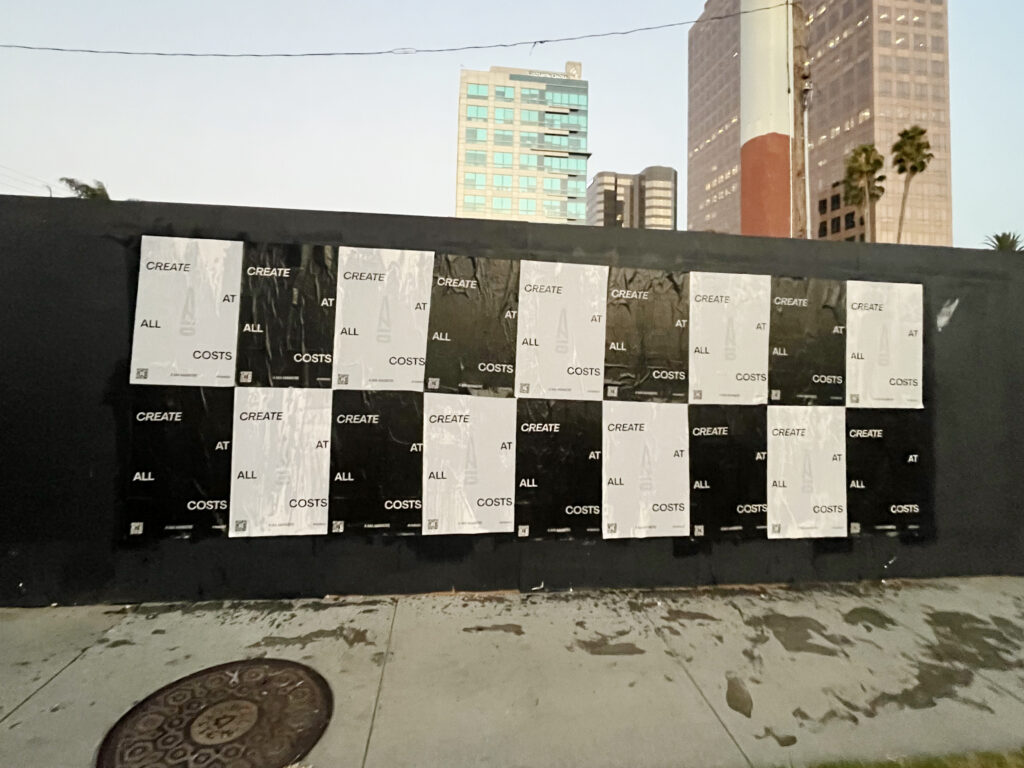
Guerrilla marketing operates differently from conventional OOH media because it creates impressions through unconventional placement and execution rather than purchased media inventory. Poster campaigns, sidewalk stencils, street team activations, and ambient media placements reach audiences at eye level, on the streets they walk daily, in contexts where conventional advertising is absent. For brands whose target audiences concentrate in specific urban neighborhoods or market districts, guerrilla marketing delivers neighborhood-level frequency that media-planned OOH buys rarely achieve.
Transit Advertising Integration
Subway and transit advertising offers a combination of mass reach and captive audience dwell time that makes it one of the highest-frequency physical media channels available in major urban markets. In New York, the subway system reaches more than 3.6 million daily riders across a network of stations that span every borough. Media plans for brands targeting New York consumers that exclude transit advertising are missing one of the most efficient reach vehicles in the market.
Mobile and LED Truck Media
LED billboard trucks bring advertising to audiences rather than waiting for audiences to come to fixed locations. This mobility is particularly valuable for brands that need to reach audiences concentrated at specific events, in specific neighborhoods during specific time windows, or near competitor locations where fixed placements are unavailable. Mobile units integrate into media plans as flexible, targeted supplemental reach vehicles that extend campaign presence to locations fixed media cannot cover.
Evaluating and Selecting a Media Planning and Buying Agency
Agency selection is a consequential decision that deserves a structured evaluation process rather than a choice made on pitch deck quality or existing relationship familiarity.
Assessing Category Experience
Category experience matters because media consumption patterns, competitive intensity, and regulatory constraints vary significantly across verticals. An agency experienced in consumer packaged goods understands retailer co-op programs, in-store media, and the seasonal purchase patterns that shape CPG media calendars. An agency experienced in financial services understands compliance requirements and the trust-building media cadence that long consideration-cycle purchases require. Ask candidates to describe their experience in your specific category and ask for reference clients who can speak to that experience directly.
Evaluating Channel Coverage
A media planning agency that does not have active buying relationships with physical and out-of-home media channels cannot produce a complete media plan. Evaluate candidates on the breadth of channel relationships they maintain, including OOH, transit, guerrilla marketing partnerships, print, broadcast, digital programmatic, and social. Agencies that plan only the channels they have relationships with will systematically exclude channels that may be highly appropriate for your specific audience and objectives.
Fee Structure Transparency
Media agency fee structures are a frequent source of client dissatisfaction and should be examined carefully during evaluation. Common models include a percentage of media spend (typically 12 to 20 percent), flat monthly retainers, and hybrid models. In addition to the disclosed fee, confirm how the agency handles agency commission from media vendors, whether they rebate this commission to clients or retain it as additional revenue. Lack of transparency on this point is a significant due diligence red flag.
Reporting and Attribution Transparency
Request samples of reporting deliverables during the evaluation process, not just descriptions of what reporting you will receive. Evaluate whether reported metrics align with your business KPIs or only with channel-level activity metrics that do not connect to revenue impact. Agencies that report impressions and clicks but cannot connect media to pipeline, revenue, or customer acquisition are providing information without insight.
Making the Agency Partnership Work
Even the best-selected agency partnership underperforms if the working relationship is not structured for success. Client-side discipline in the agency relationship is as important as agency-side capability.
Shared Audience and KPI Definition
Before the first media plan is presented, ensure that the agency and the brand share an identical definition of the target audience, the campaign objectives, and the KPIs by which success will be measured. Misalignment on any of these three foundational elements produces a media plan optimized for the wrong outcome. Documenting these definitions and revisiting them at each campaign planning cycle prevents drift over time.
Timely Feedback and Approval Processes
Media planning has lead times. OOH placements need to be reserved weeks or months in advance. Digital campaign setups require time for pixel installation, audience configuration, and creative QA. Delays in client approval cycles compress these lead times and force execution compromises that reduce campaign quality. Establish clear approval timelines at the start of the agency relationship and protect them from competing internal priorities.
Integrating Physical Channel Partners
When your media plan includes physical channels managed by specialist partners like American Guerrilla Marketing, build the integration points into the agency relationship from the start. Share campaign briefs with all partners simultaneously. Establish who owns coordination between digital and physical execution. Confirm that reporting from physical campaigns will be integrated into the agency’s consolidated performance dashboard. These coordination decisions made upfront prevent the fragmented reporting and misaligned execution that plagues campaigns where agency and specialist partner relationships are managed independently.
Frequently Asked Questions
What does a media planning and buying agency do?
A media planning and buying agency analyzes your target audience, campaign objectives, and budget to develop a strategic media plan selecting the most effective channels and placements. They then negotiate and purchase media inventory on your behalf, often at rates unavailable to direct buyers, and manage campaign execution and performance reporting across all purchased channels.
When should a brand hire a media planning and buying agency?
A brand should hire a media planning and buying agency when their advertising budget is large enough that professional negotiation and strategic allocation will produce savings or performance improvements that exceed the agency’s fees. Most brands benefit from agency media services at monthly media spend levels of $30,000 or more. Below that threshold, managed services within individual platforms are often more cost-effective.
What is the difference between media planning and media buying?
Media planning is the strategic function: determining which channels, audiences, placements, and timing will best achieve campaign objectives within budget. Media buying is the execution function: negotiating rates, purchasing inventory, managing placements, and optimizing performance once campaigns are live. Strong agencies perform both functions in coordination; splitting them between different partners often produces strategic misalignment.
How do media buying agencies negotiate better rates?
Media buying agencies negotiate better rates than individual brands can achieve directly because they represent aggregated spend from multiple clients. Publishers and platforms offer volume discounts, preferred placement access, and added-value inventory to agencies whose combined client spend gives them meaningful leverage. Rate savings of 15 to 40 percent compared to direct buying are realistic for brands upgrading from independent buying to agency representation.
Does American Guerrilla Marketing work with media planning agencies?
Yes. Our team works regularly with media planning agencies as the physical advertising execution partner for their clients’ campaigns. We provide location scouting, permitting, deployment, and GPS-documented performance reporting that integrates with the agency’s overall campaign reporting infrastructure. Call (646) 776-2770 to discuss partnership arrangements for your clients’ campaigns.
How do you evaluate a media planning and buying agency?
Evaluate media planning agencies on their category experience, the breadth of media channels they have active buying relationships with (including physical and OOH channels), transparency in reporting and agency fee structures, case studies showing measurable campaign performance improvement, and their willingness to be accountable to your specific business KPIs rather than generic industry benchmarks.